
Somewhere between the bedtime stories we begged for and the computer games we button‑mashed, castles moved into our imaginations and refused to leave. A glimpse of ramparts from a train window, the hollow clank of a drawbridge in a film trailer—each one yanks us back to picture‑book kingdoms where dragons circled and courage wore shining mail. A pilgrimage to these real‑world fortresses isn’t escapism; it’s archaeology of the heart, digging up the wonder we mislaid between grown‑up spreadsheets.
To chart the thirty strongest shockwaves of that feeling, we began with an avalanche of images—postcards, drone reels, fog‑soaked Instagrams—filtering everything through three lenses. First, Fairytale Aesthetic: does the castle look freshly escaped from an illustrated story? Second, Setting & Surroundings, because a cliff, forest or tidal causeway can amplify enchantment. Third, Architectural Uniqueness—the quirk or mastery that keeps stone from blending into generic medieval wallpaper. Highly scientific? Hardly. But when it comes to wonder, gut instinct is often the best measuring tape.
1. Castillo de Colomares, Spain
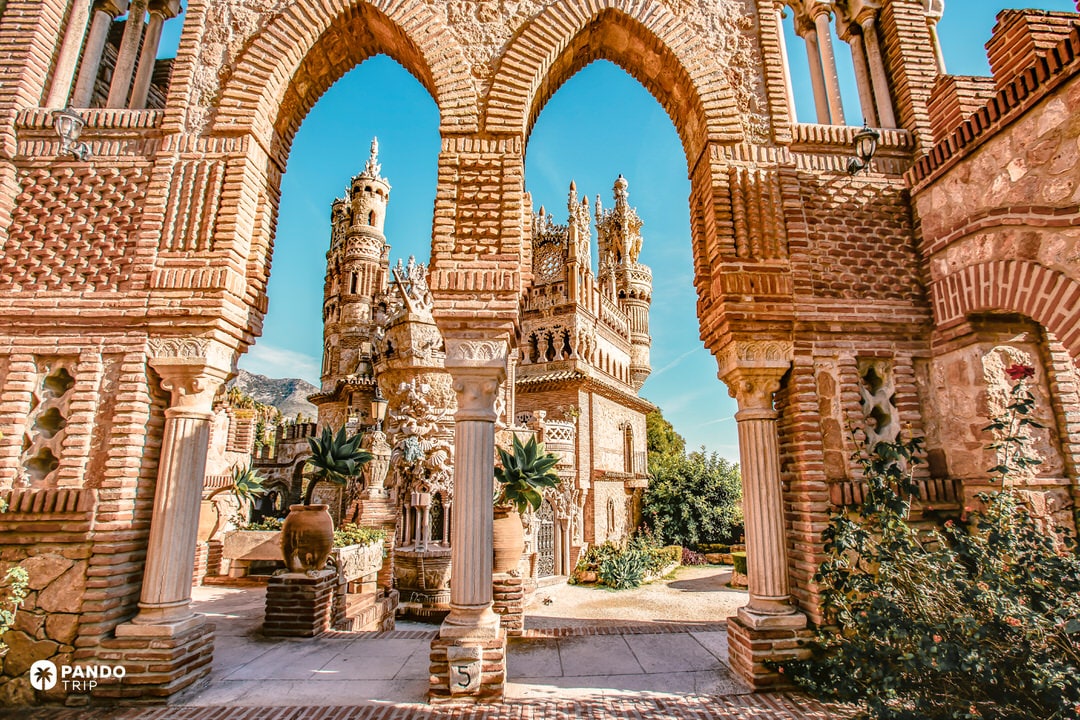
Colomares isn’t the obvious first pick for “most fairytale.” It was finished in 1994, long after knights and sieges had disappeared. Yet that very modernity lets it mash every storybook trope into one sun‑bleached sculpture. Byzantine domes glint beside Gothic spires; Mudéjar tiles coil around Romanesque arches; carved caravels, lions and saints pop up like cameos from a child’s picture book. Strolling its courtyards feels as if Gaudí’s imagination raided Disney’s prop room and refused to choose a single style.
The result isn’t the tallest or oldest castle on the list, but it delivers something rarer: the quick, delighted gasp that says “I’ve stepped inside a myth.” That sense of wonder – more than battlements or battle scars – is what earns Colomares the number‑one fairytale slot.
2. Pena Palace, Portugal
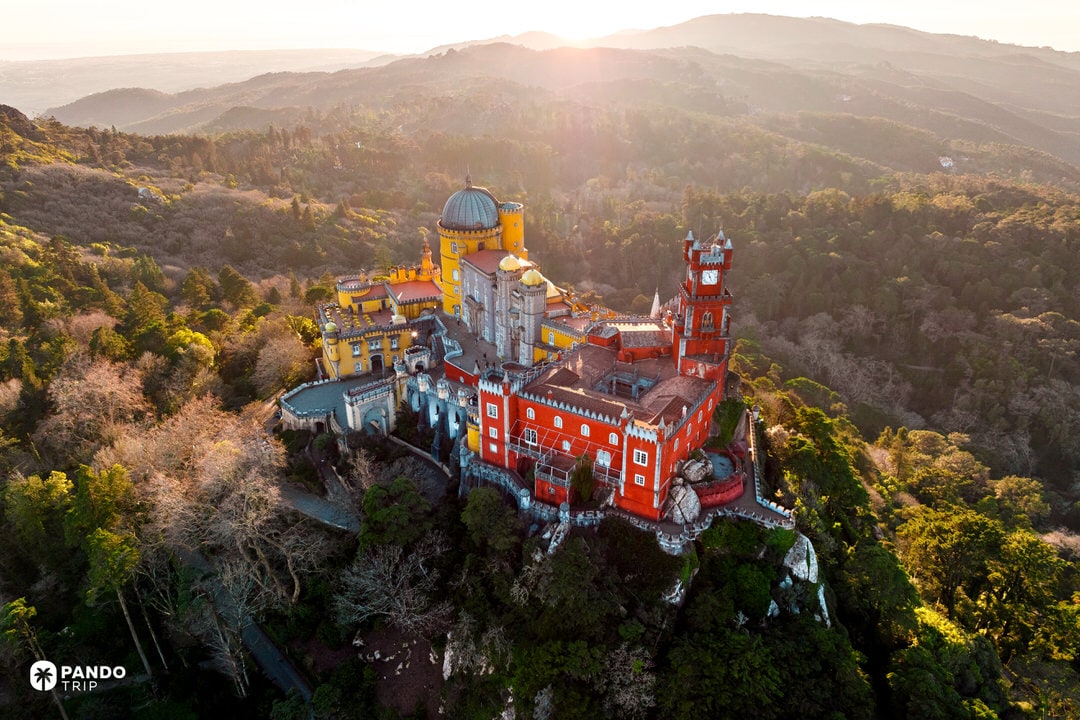
Pena Palace is Portugal’s technicolour reverie crowning Sintra’s highest ridge. Red keeps, canary‑yellow wings and cobalt watchtowers burst from Atlantic mist like stacked toy blocks that somehow grew into royalty.
The bravado works because King Ferdinand II treated architecture like a paintbox, fusing Moorish horseshoe arches, Manueline rope‑work and Bavarian onion domes into one exuberant cliff‑top day‑dream. The surrounding park, two hundred hectares of camellias, ferns and hidden follies, frames the palace so it always peeks through green like a storybook illustration come to life.
3. Mont Saint‑Michel, France
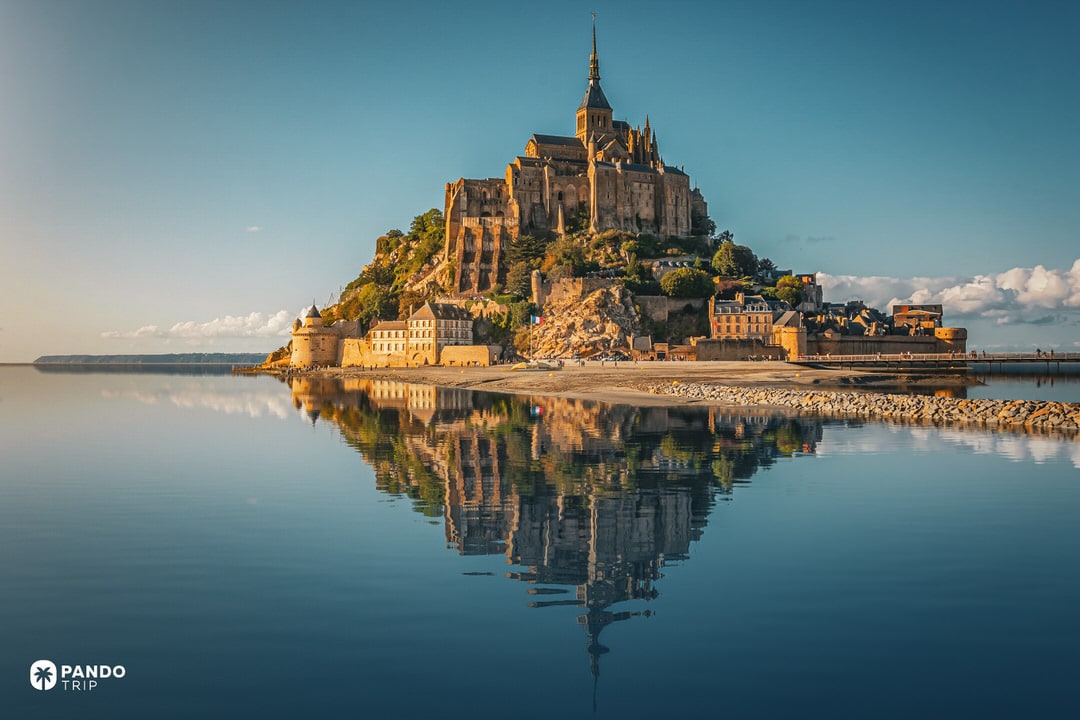
Mont Saint‑Michel performs a twice‑daily illusion: when Normandy’s tides surge, the granite spire and medieval village detach from the mainland and drift into myth. Stacked roofs and flying buttresses taper to the gilded archangel at 92 m, a vertical pilgrimage from sand to sky.
The wonder lies in the union of setting and stone – solid Norman masonry balanced above quick‑silver flats – plus the audacity of founding a monastery on a rock that vanishes beneath water. Few castles turn landscape and architecture into a single, miraculous silhouette so completely.
4. Neuschwanstein Castle, Germany
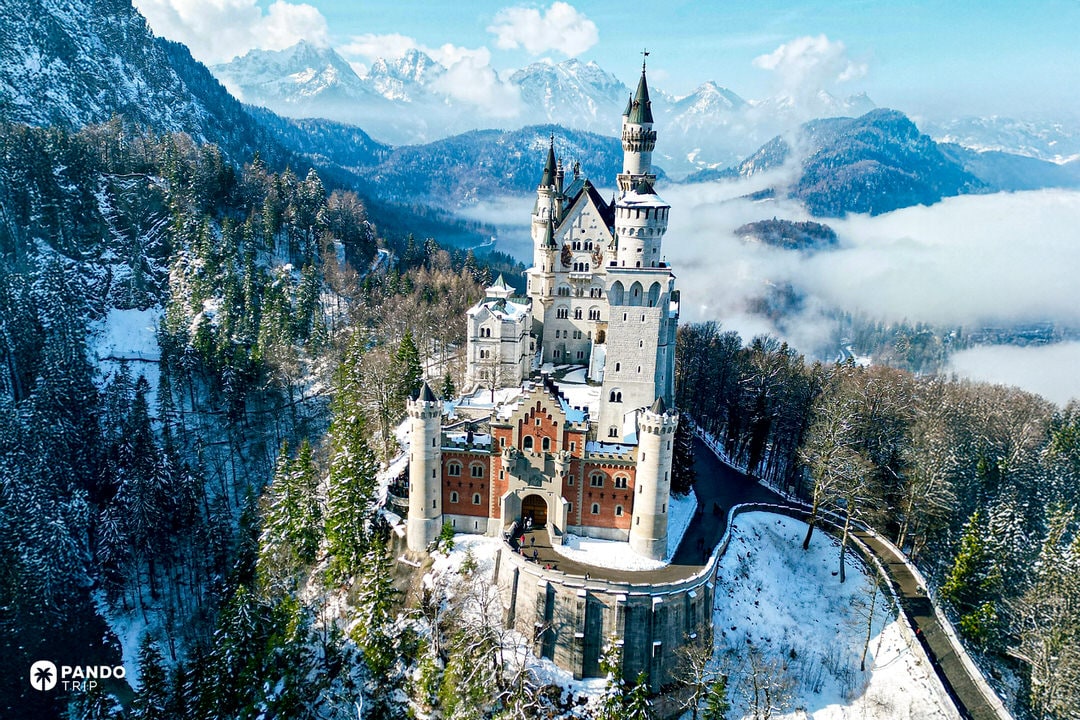
Neuschwanstein is the poster child for German castles – Ludwig II’s private stage for Wagnerian dreams. Perched on a limestone crag above emerald lakes and dark firs, its slate roofs and needle‑thin turrets seem to hatch from cloud rather than stone.
Inside, murals of swans and Grail knights complete the legend, but it is the balcony‑like setting, high over the Bavarian Alps, that turns this 19th‑century pastiche into the template for every animated palace that followed. Escapism, it turns out, can be quarried and carved.
5. Himeji Castle, Japan
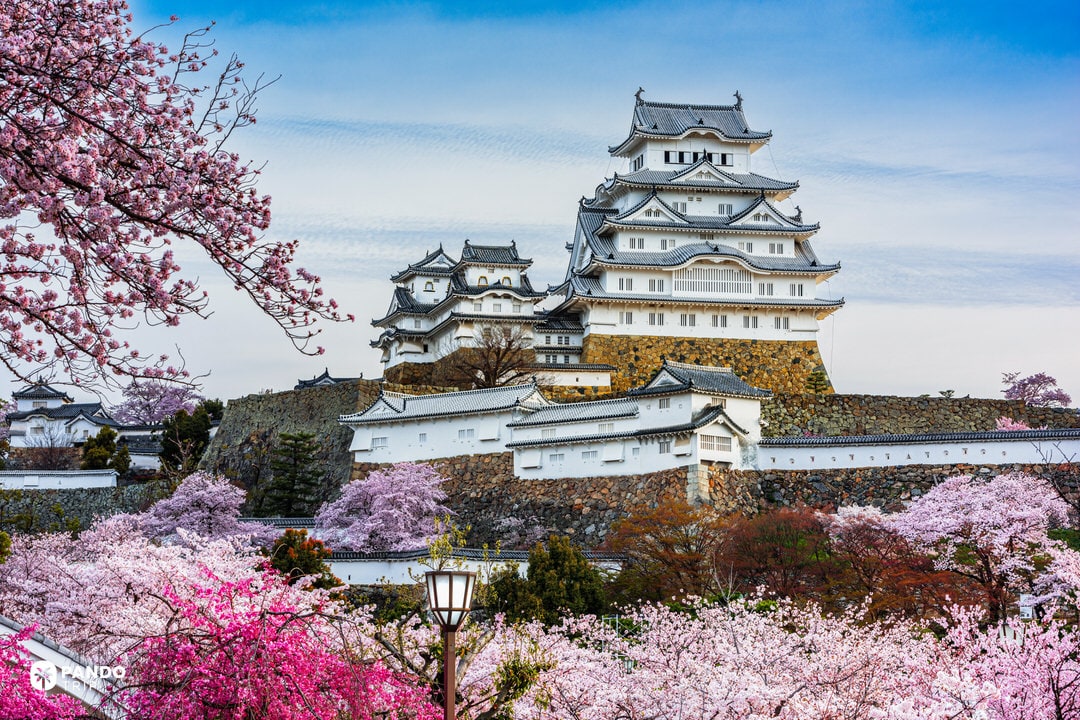
Himeji, the White Heron, spreads tiered roofs like poised wings above a low hill. Chalk‑white plaster meets charcoal tiles, so the fortress appears to hover when evening light catches the curves.
Its grace disguises cunning: maze‑like approach paths, concealed archer holes and 400‑year‑old wooden joints that flex with earthquakes. Cherry blossoms, autumn maples or flood‑lit nights – each season repaints the same immaculate outline, turning Himeji into Japan’s own scroll‑painting in timber and light.
6. Eltz Castle, Germany

Eltz appears suddenly through Moselle forest mist: eight steep‑roofed towers huddled on a rocky spur, their half‑timber frames and slate caps overlapping like pages in a pop‑up book. The same family has guarded these walls for eight centuries, and that unbroken lineage lends the place the patina of a well‑loved legend.
Forest, river bend and rising dawn fog stage‑manage the reveal so perfectly that the first glimpse feels scripted. Architectural coherence – Romanesque lower halls, Gothic upper rooms – keeps the jumble graceful, making Eltz a study in medieval elegance rather than brute defence.
7. Scaligero Castle, Italy

Scaligero stands ankle‑deep in Lake Garda, its pale stone mirrored so cleanly that battlements appear to float. A single drawbridge leads into a courtyard scarcely wider than a postcard, concentrating every ripple and echo of the water.
Perfect symmetry, milky‑blue moat and distant Alpine peaks lend the fortress the compact neatness of an illustration – proof that romance sometimes arrives in pocket‑size proportions.
8. Walzin Castle, Belgium
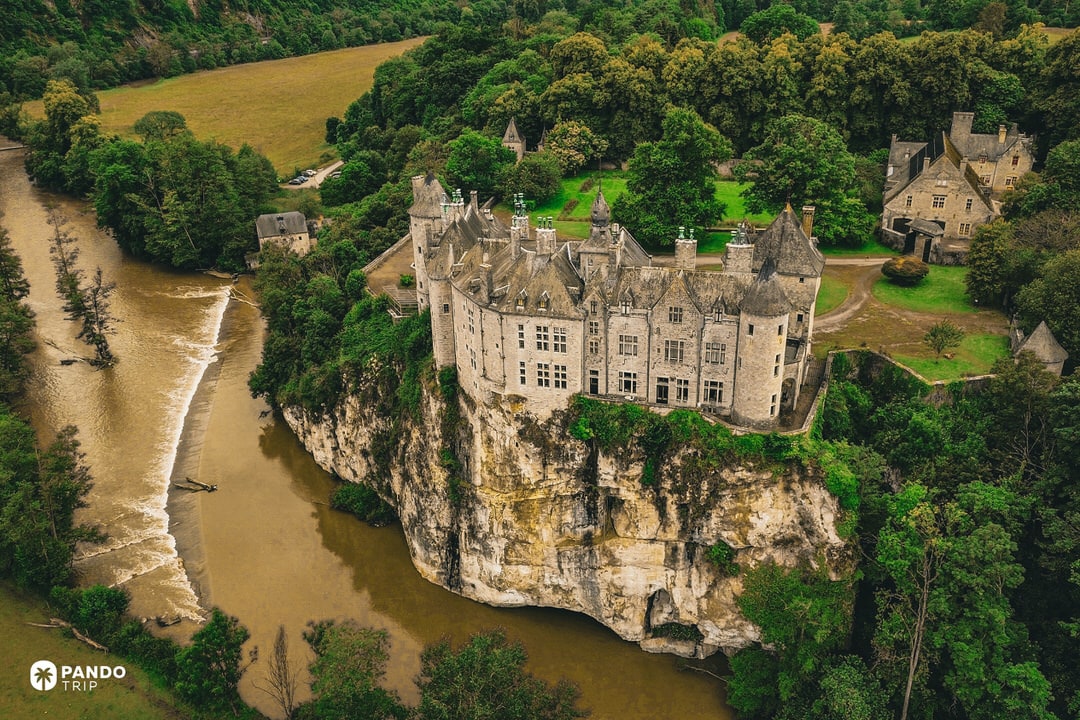
Walzin clings to a limestone cliff 100 m above the Lesse, its pointed roofs draped over the precipice like a child’s block tower left daringly on a table’s edge. Seen from the riverside path, castle and reflection fuse into a still, storybook cover.
Nature supplies the theatrics: spring washes stone and forest in emerald, autumn lays on bronze, winter dusts everything with frost, yet the silhouette never changes – half manor house, half eagle’s nest.
9. Cochem Castle, Germany
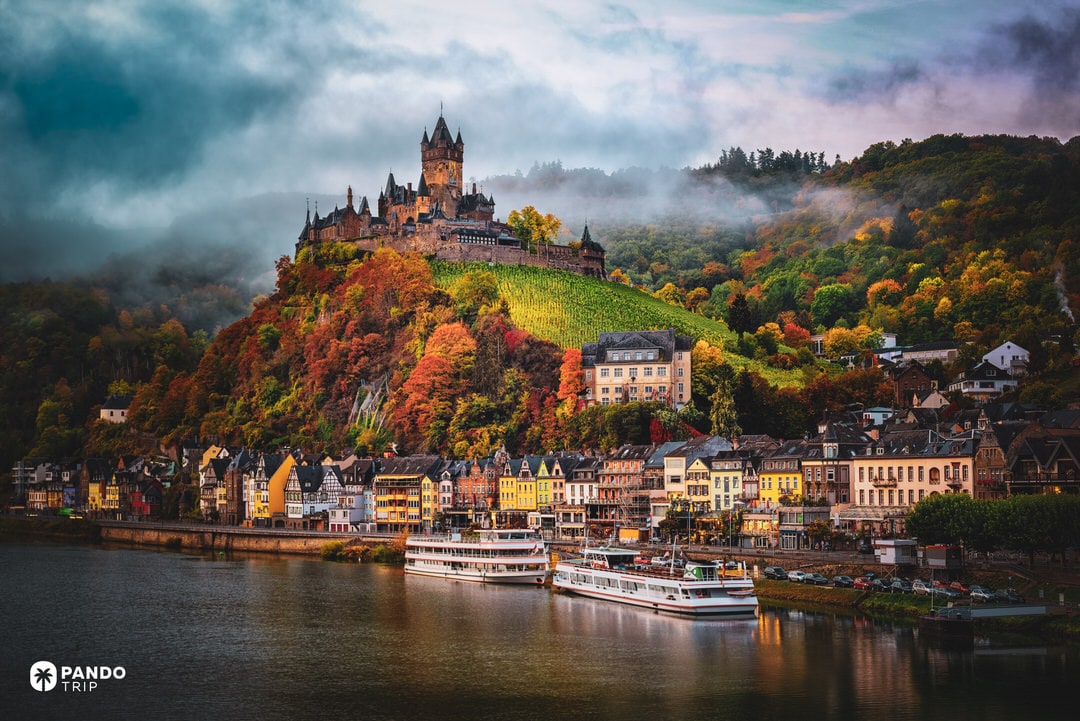
Wine terraces spiral up the Moselle valley, then break to reveal Cochem’s neo‑Gothic keep perched like a dark‑chocolate crown. Pointed turrets, black slate roofs and a flag snapping in valley wind outline the castle against vines and river shimmer.
Though rebuilt in the 19th century, its revival carpentry and stained glass feel sincere, anchoring the fantasy in craftsmanship as rooted as the surrounding vineyards.
10. Bran Castle, Romania
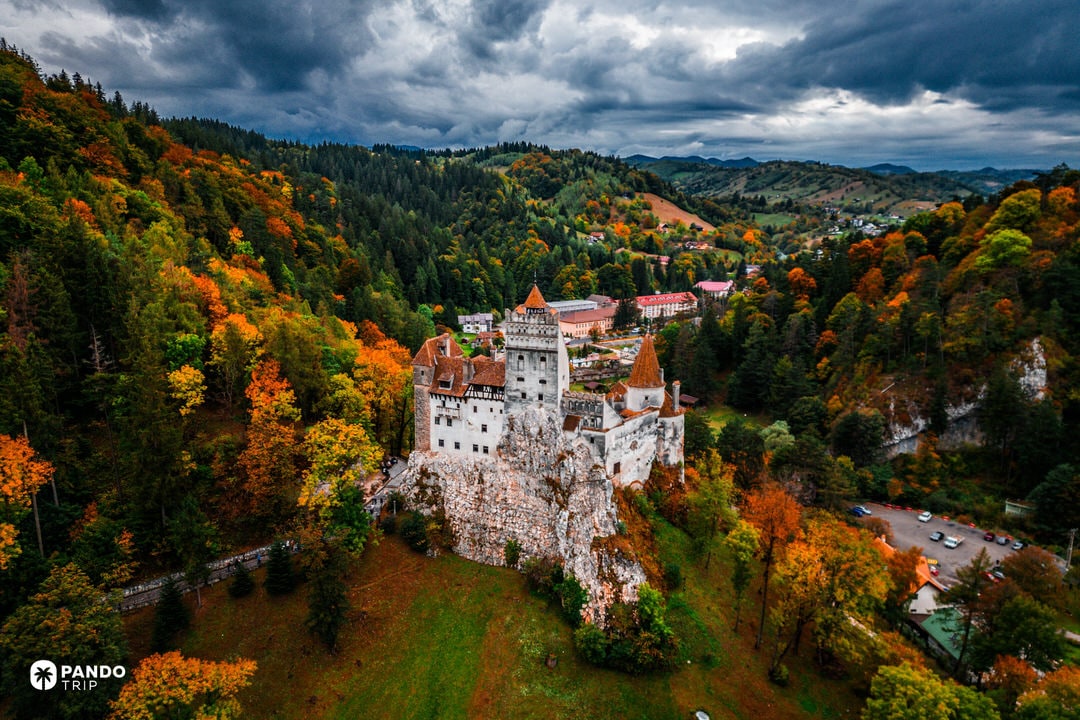
Bran’s turrets punch above pine tops just as every Dracula poster promises, yet the true magic hides inside: crooked courtyards, timber galleries and secret stairs that refuse straight lines. Perched on a rocky saddle between valleys, the castle filters mountain light into dramatic pools of shadow.
Whether or not Vlad the Impaler ever lingered here hardly matters; the tangle of roofs and corridors already feels storyboarded for folklore.
11. Lichtenstein Castle, Germany
Picture a miniature Neuschwanstein balanced on a cliff ledge: that’s Lichtenstein. A 19th‑century baron compressed Gothic fantasies to doll‑house scale, then linked them to land with a stone bridge seemingly upheld by willpower alone.
The precipice supplies the thrill, but inside, tight spiral stairs and jewel‑box stained glass prove small can still be spectacular.

12. Moszna Castle, Polan
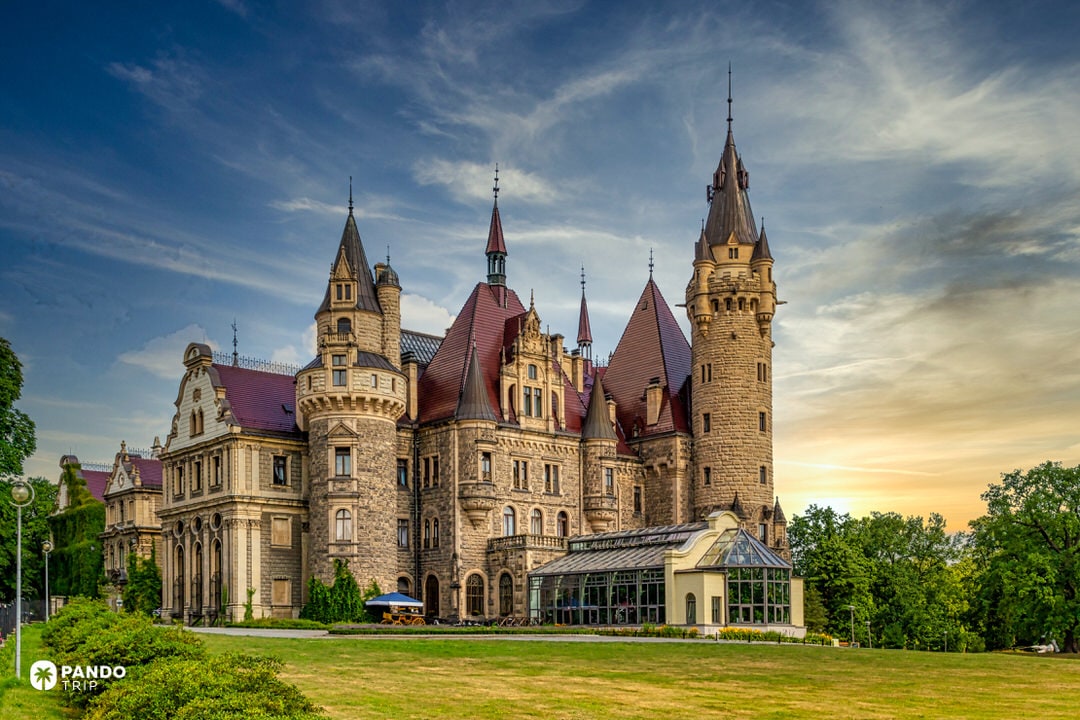
Moszna feels like three palaces signed an uneasy truce: Baroque wings, a Renaissance centre and a neo‑Gothic arm sprouting 99 turrets. The improbable collage works because everything sits in a calm sea of lawns and oaks, turning architectural excess into fairy‑tale splendour.
Sunrise gilds the eastern façades; dusk ignites the western towers, so the castle glows twice each day like a slow‑motion firework.
13. Hohenzollern Castle, Germany
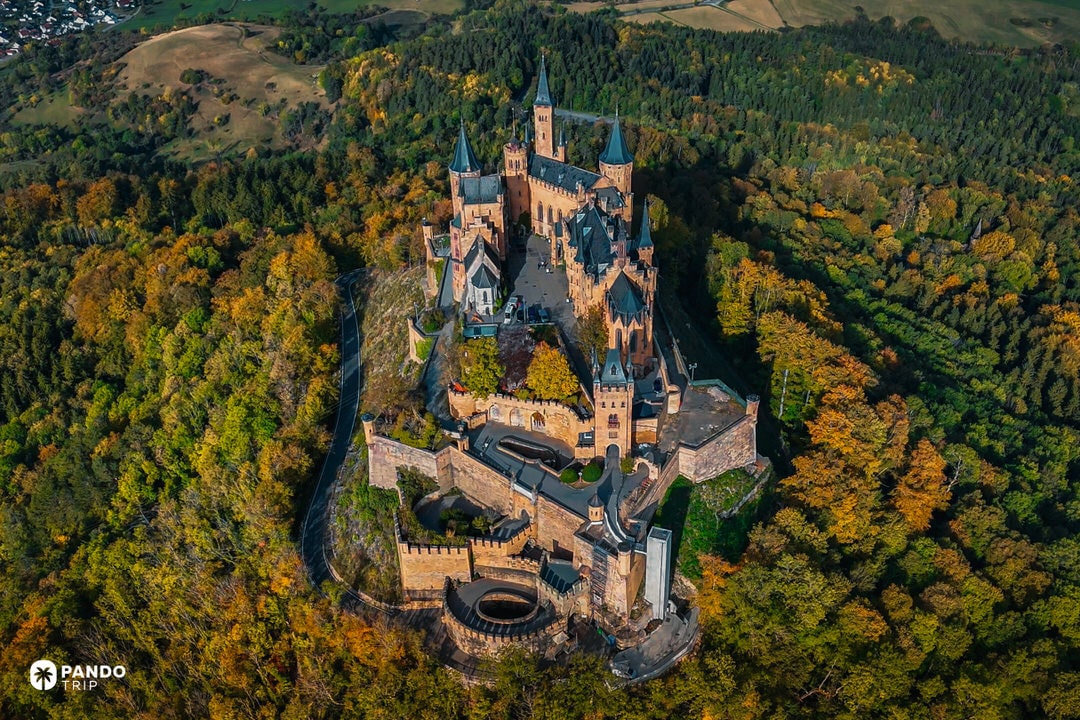
Hohenzollern crowns an 855 m volcanic cone, its ring of towers rising straight from forest canopy into cloud. Approach on a foggy morning and the fortress appears in fragments – first a turret, then a wall – until the full crown emerges like a conjurer’s finale.
Despite its 19th‑century rebuild, the concentric ramparts and arrow‑straight keeps stage a textbook medieval spectacle.
14. Trakai Castle, Lithuania
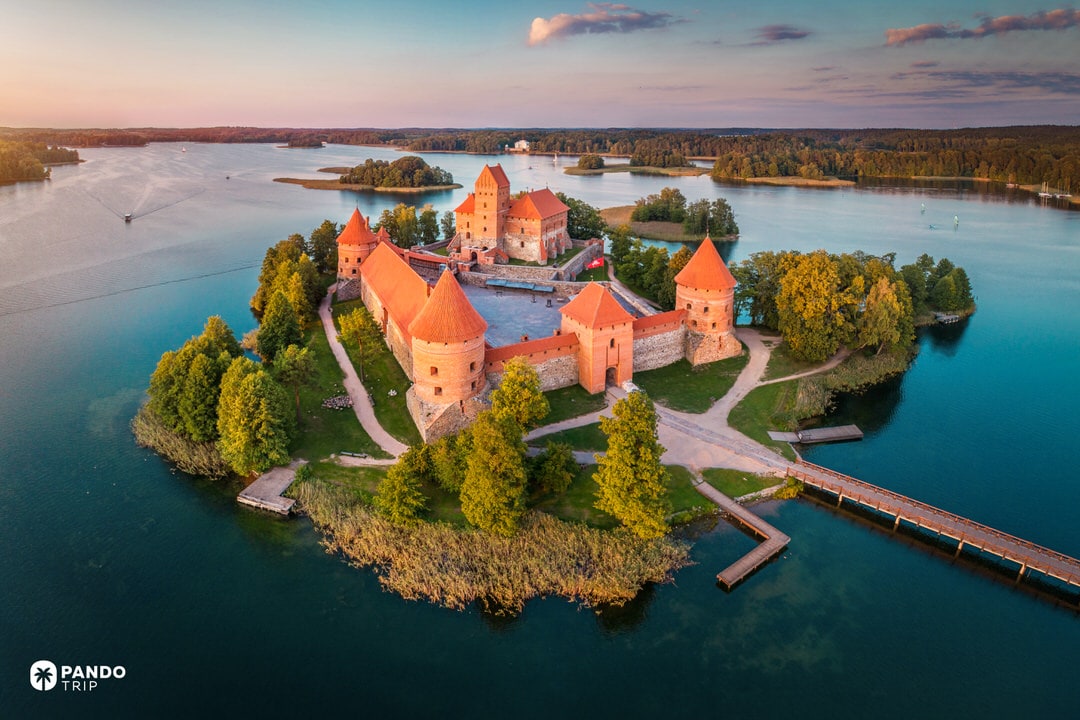
Red‑brick walls surrounded by sapphire water make Trakai more island jewel than fortress. Rowboats drift under Gothic arches in summer; come winter, lake ice hardens into a mirror that doubles the towers.
Centuries of Lithuanian and Karaim heritage meet here, and the result feels both homely and legendary – like a folk tale that grew battlements instead of words.
15. Château de Chambord, France
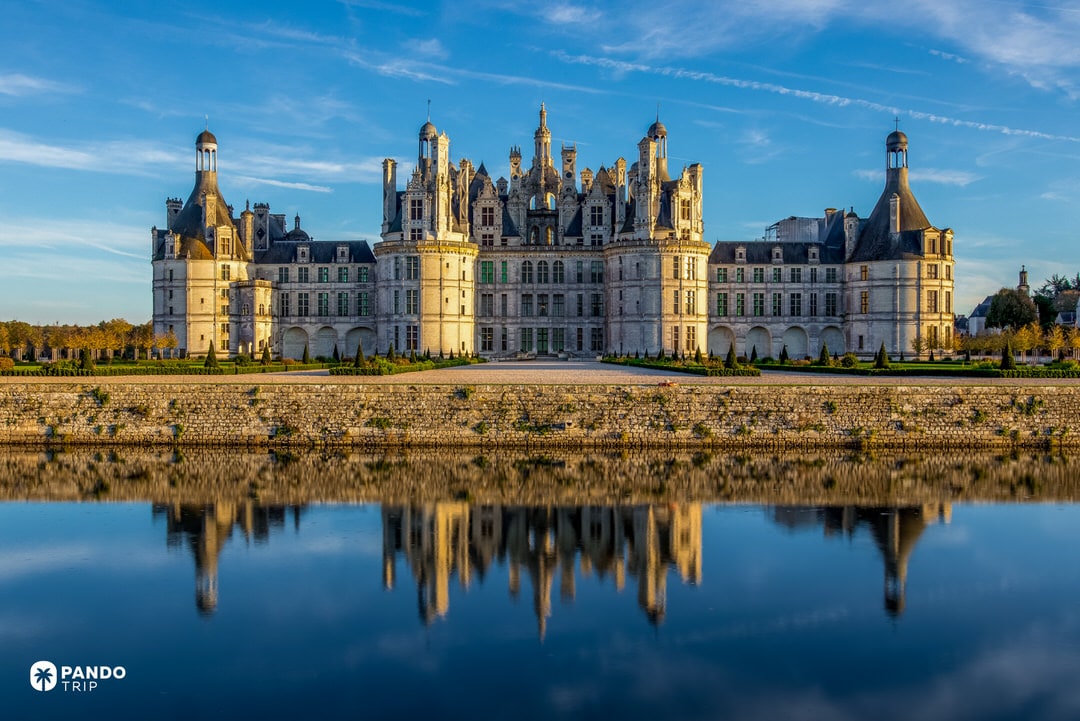
If castles could boast, Chambord would outtalk them all: 440 rooms, a double‑helix staircase and a roofline crowded with chimneys that look stolen from a chess set. Yet within a 5,400 ha forest, the white‑stone giant feels strangely weightless.
Leonardo da Vinci may have whispered into the blueprints – explaining why every angle reveals fresh symmetries. Chambord isn’t just grand; it’s genius rendered in limestone.
16. Isola di Loreto, Italy
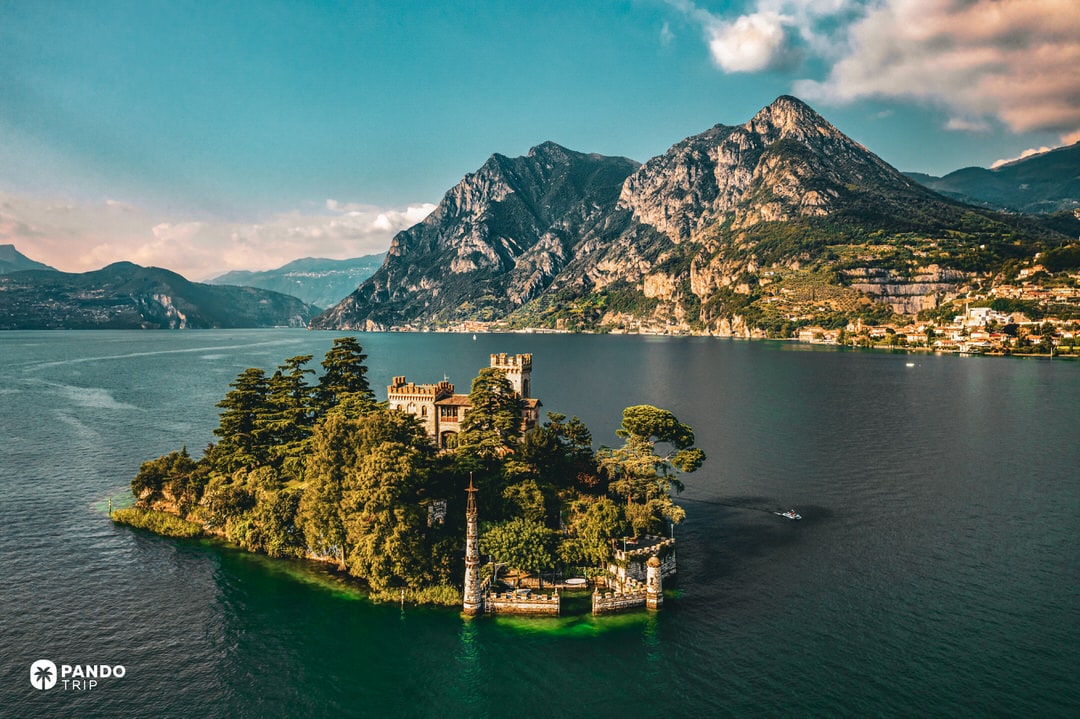
Lake Iseo’s tiniest island wears a 1910 neo‑Gothic villa like a toy crown. With no public landing, the castle remains forever just out of reach, drifting past ferry windows like a moving illustration.
Encircled by deep‑blue water and pale limestone peaks, Loreto shows that wonder ignores scale: even a pocket‑sized fortress can command an entire panorama.
17. Alhambra Palace, Spain
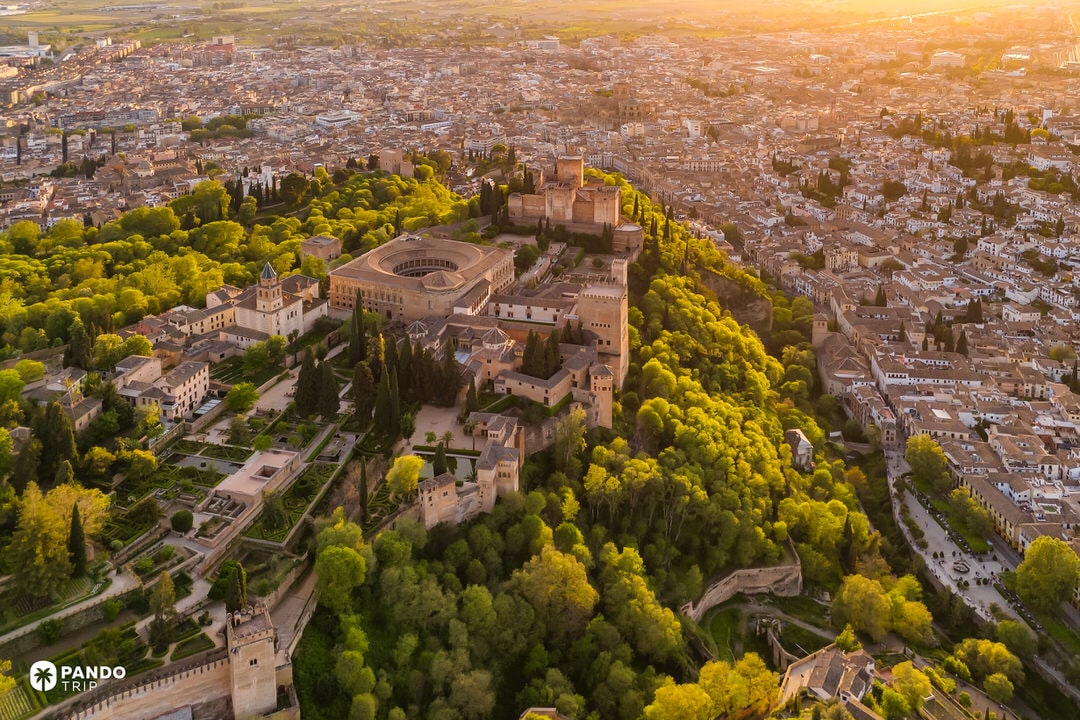
More fortified city than single castle, the Alhambra is a walled anthology of Moorish poetry: stucco lace, cedar ceilings and tiled courtyards threaded along the Sabika hill. Snow‑tipped Sierra Nevada peaks frame its russet walls; sunset turns them ember‑red.
Every horseshoe arch and reflecting pool multiplies beauty, choreographing light and shadow into an endless refrain.
18. Bamburgh Castle, England
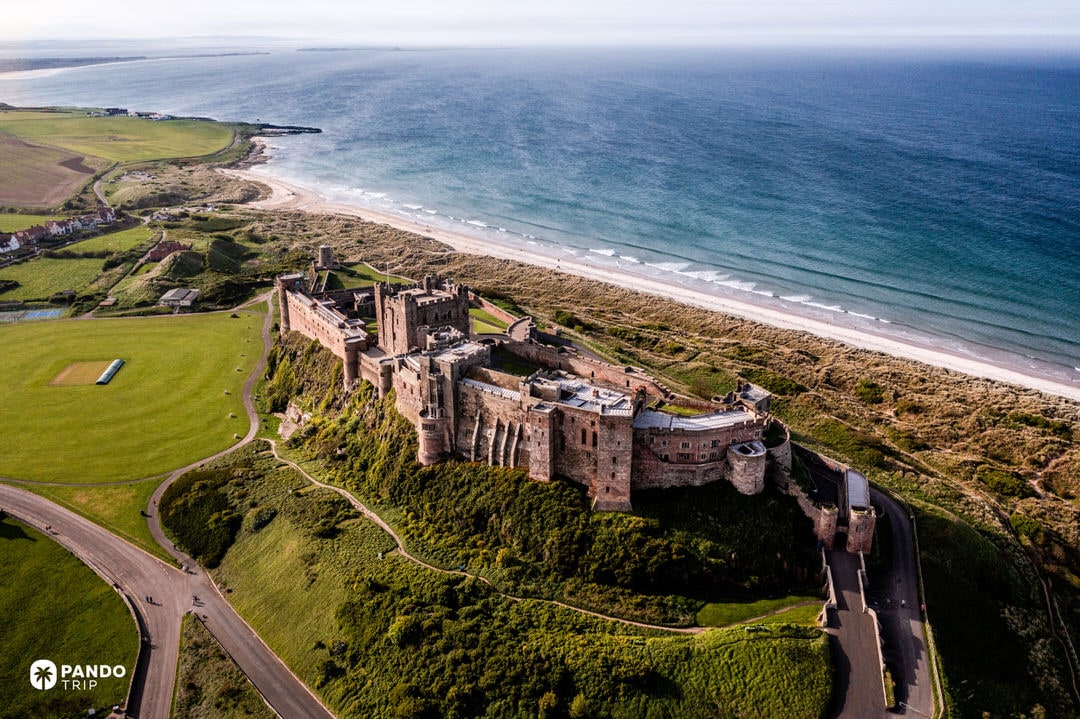
Bamburgh sprawls across a Northumberland headland like a sleeping sea‑dragon, sandstone walls braced against Atlantic gales. Waves hammer its base, seabirds wheel overhead, and cliffs blaze orange at dawn, setting the ramparts aflame.
Layered Anglo‑Saxon, Norman and Victorian stone shows that endurance can be as breathtaking as romance.
19. Gravensteen, Belgium
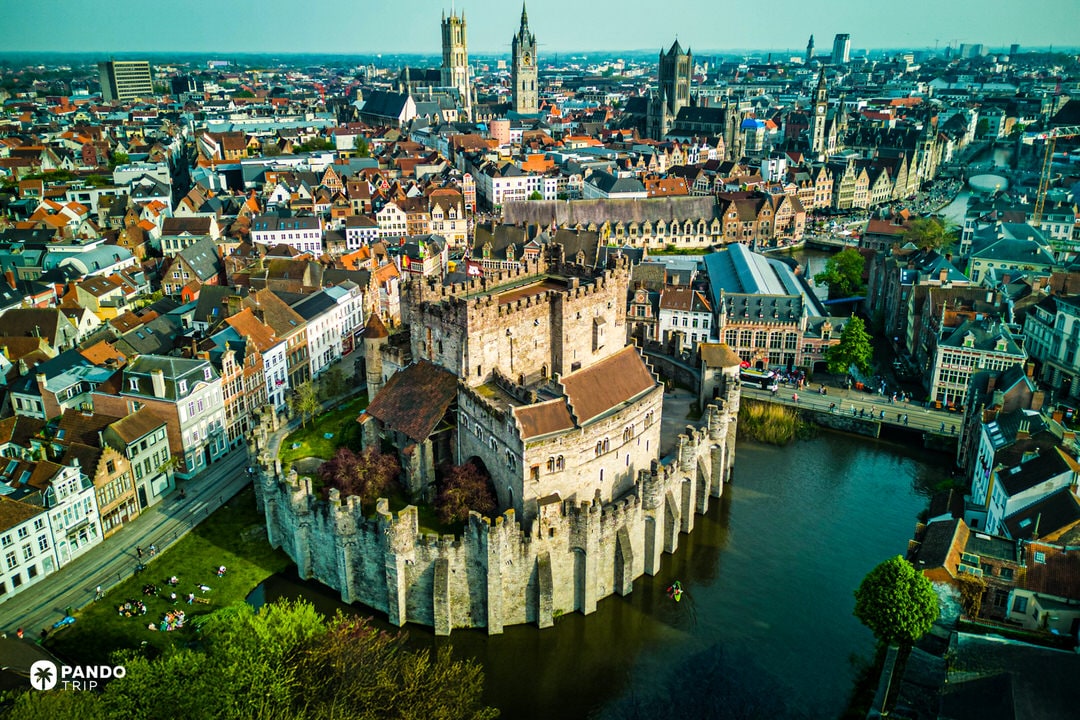
Rising grim and grey inside lively Ghent, Gravensteen’s moat and murder holes glare at canal‑side cafés as if the Middle Ages never ended. Yet from the roof, the city’s trio of church towers align on the skyline, marrying urban bustle to knightly past.
The stark keep reminds passers‑by that fairy tales once carried very real threats.
20. Turpelbaach Castle, Luxembourg

Hidden among beech woods in the Eisch Valley, ivy cloaks Turpelbaach’s modest towers like a green veil. Closed to visitors, it functions as a visual whisper: crenellations flicker between leaves, hinting at a private story.
Its magic is discretion itself – the feeling that somewhere, a secret chapter is still being written.
21. Najac, France
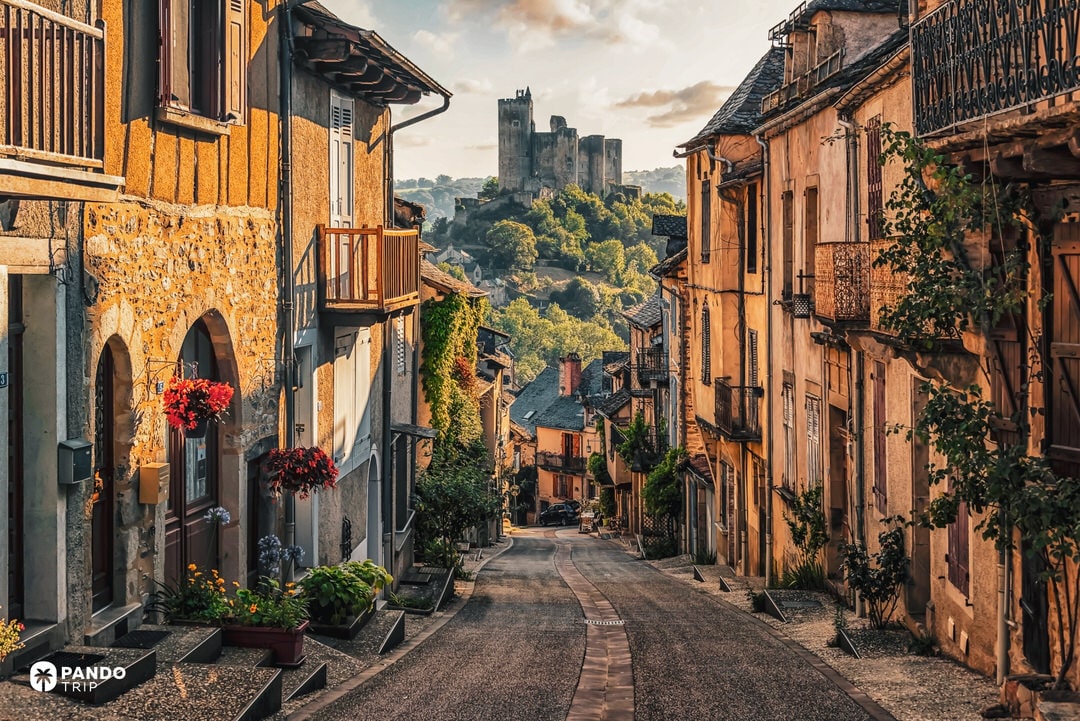
A single street climbs a razor‑back ridge toward Najac’s solitary keep, arrow slits framing quilted Aveyron valleys. The ascent feels medieval cardio; reach the battlements and the landscape unfurls like a woven tapestry.
Sparse, stern and perfectly sited, Najac shows how one tower can dominate miles of countryside—and imagination.
22. Ashford Castle, Ireland
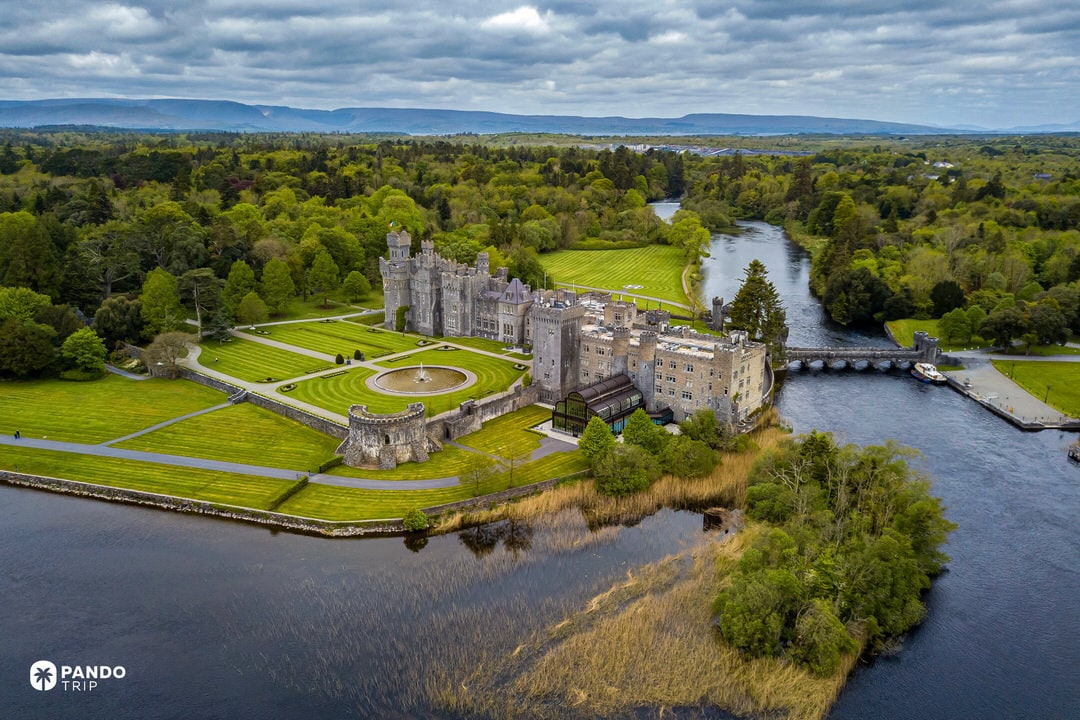
Ashford flanks Lough Corrib with grey curtain walls fronting Victorian luxury. Ivy, turrets and manicured lawns suggest polite romance, but sudden storm clouds rolling off the lake can switch the scene to Gothic drama in minutes.
Water, woods and distant Connemara peaks frame the castle like a living panoramic painting.
23. Castle of the Moors, Portugal

Granite battlements zigzag over Sintra’s spine, draped with moss and lichen. From any turret the Atlantic glints to the west, and across the valley the candy‑coloured outline of Pena Palace reminds you that rough stone and Romantic whimsy share this mountain.
Climbing the stairs feels like walking the backbone of a sleepy giant.
24. Chapultepec Castle, Mexico

Above Mexico City’s sprawling park, Chapultepec reimagines European neoclassicism in volcanic stone, its balconies surveying both skyscrapers and distant volcanoes. Rivera’s murals splash revolutionary colour across marble halls.
The fusion of imperial ambition and indigenous landscape turns the castle into both lookout and mirror for a nation’s layered history.
25. Edinburgh Castle, Scotland

Edinburgh’s fortress crowns a volcanic crag, black cliffs plunging 80 m above the city’s medieval spine. The One O’Clock Gun booms daily, echoes ricocheting off granite terraces, while winter fireworks reflect off slate roofs.
From Princes Street Gardens, the castle balances raw basalt with crown‑jewel sparkle; geology becomes pageantry’s best stage.
26. Classiebawn Castle, Ireland
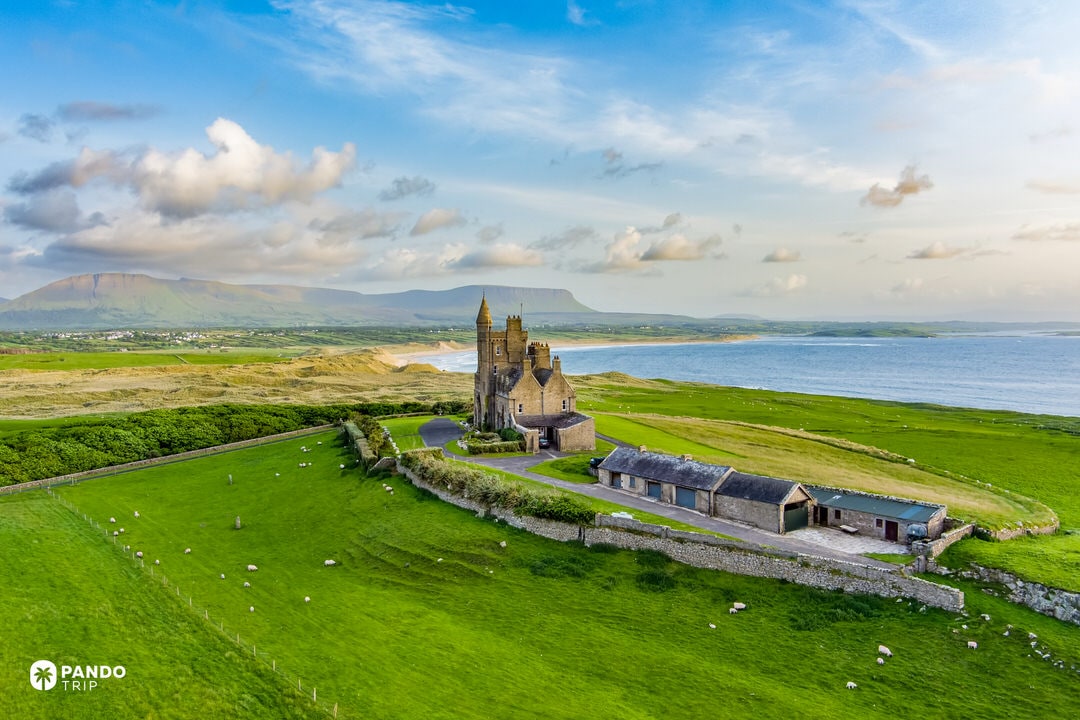
Classiebawn stands aloof on the Atlantic coast, a honey‑coloured neo‑Gothic silhouette backdropped by the table‑top Benbulben mountain. Summer paints the fields electric green; winter hurls breakers that explode against sea walls, trading romance for raw drama.
Though private, the view from Mullaghmore Head feels like stumbling upon a hero’s hideout between chapters.
27. Windsor Castle, England

For nearly a thousand years Windsor’s round keep has watched the Thames valley, banners snapping above layers of Norman, Gothic and Georgian stone. Evening floodlights burnish the battlements gold, while passing aircraft blink overhead—royal tradition anchored beneath a modern sky.
The contrast between working residence and living museum grants Windsor its unique fairy‑tale credibility.
28. Bodrum Castle, Turkey
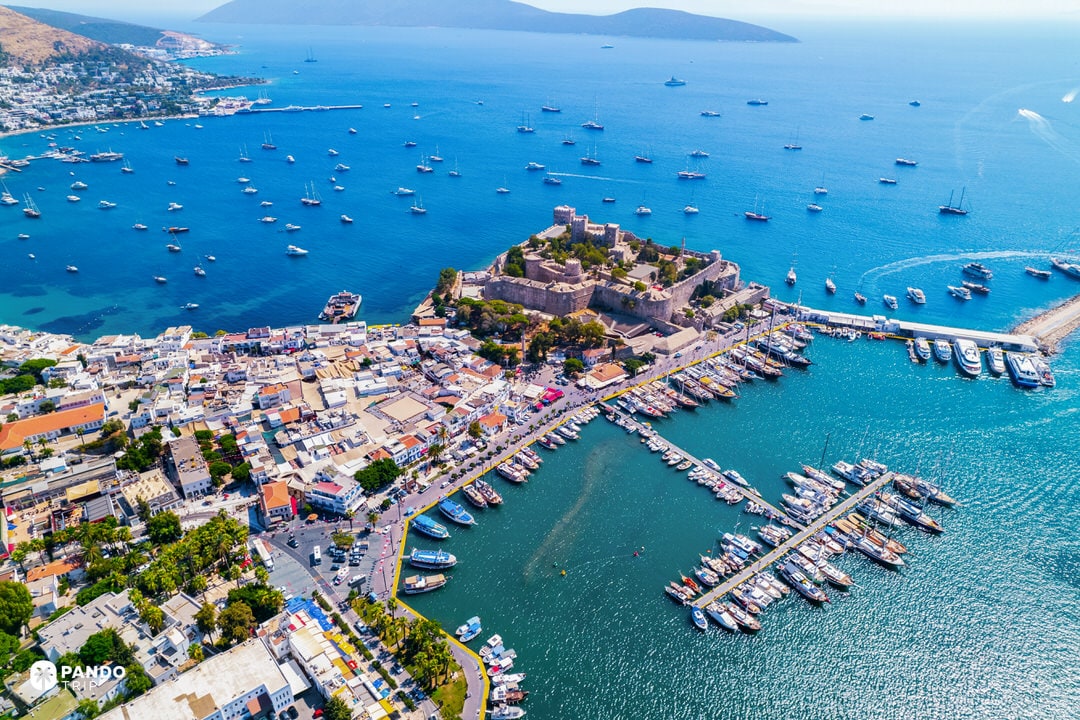
Knights Hospitaller quarried blocks from the Mausoleum of Halicarnassus and planted their cross‑shaped fortress on a tongue of land where Aegean blue laps tan ramparts. Today, Bronze Age shipwrecks sleep in towers once bristling with cannons.
Few castles layer civilizations so literally—their stories written in the very stones.
29. Thun Castle, Switzerland
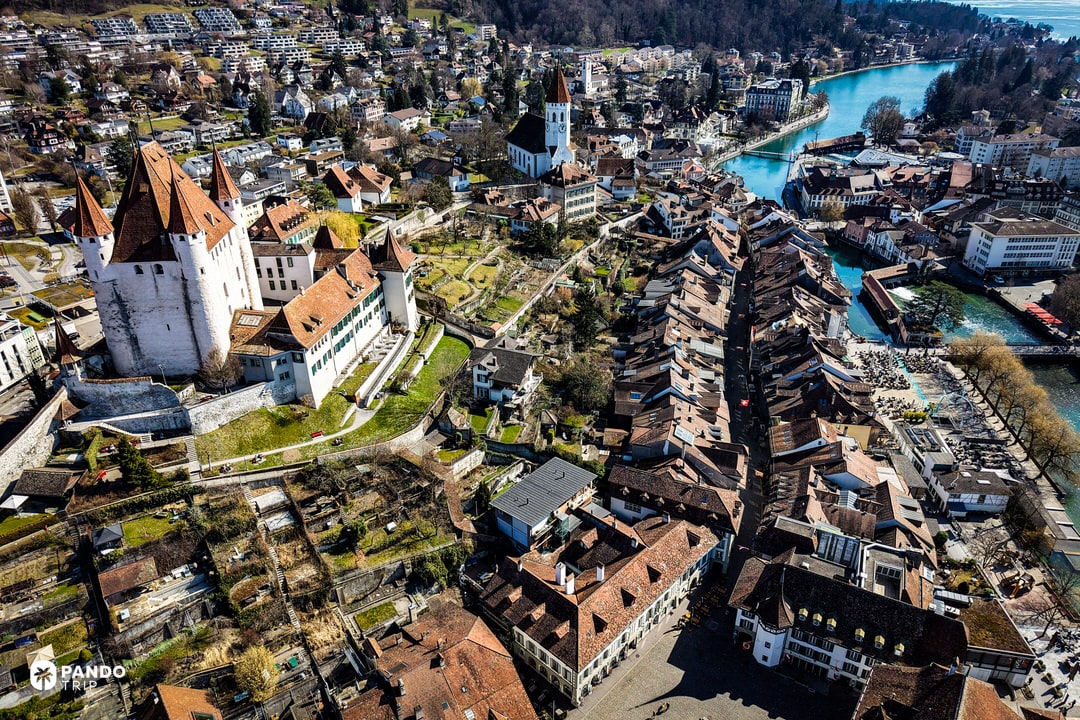
Four tidy corner towers puncture alpine sky above Lake Thun, their steep tiled roofs mirroring nearby peaks. Inside, a timber‑roofed Knights’ Hall hosts concerts that spill out windows over water, mingling music with mountain echoes.
Crisp geometry and lake‑meets‑snow backdrop make the castle seem engineered for a snow‑globe—one shaken by actual wind.
30. Santa Barbara Castle, Alicante, Spain
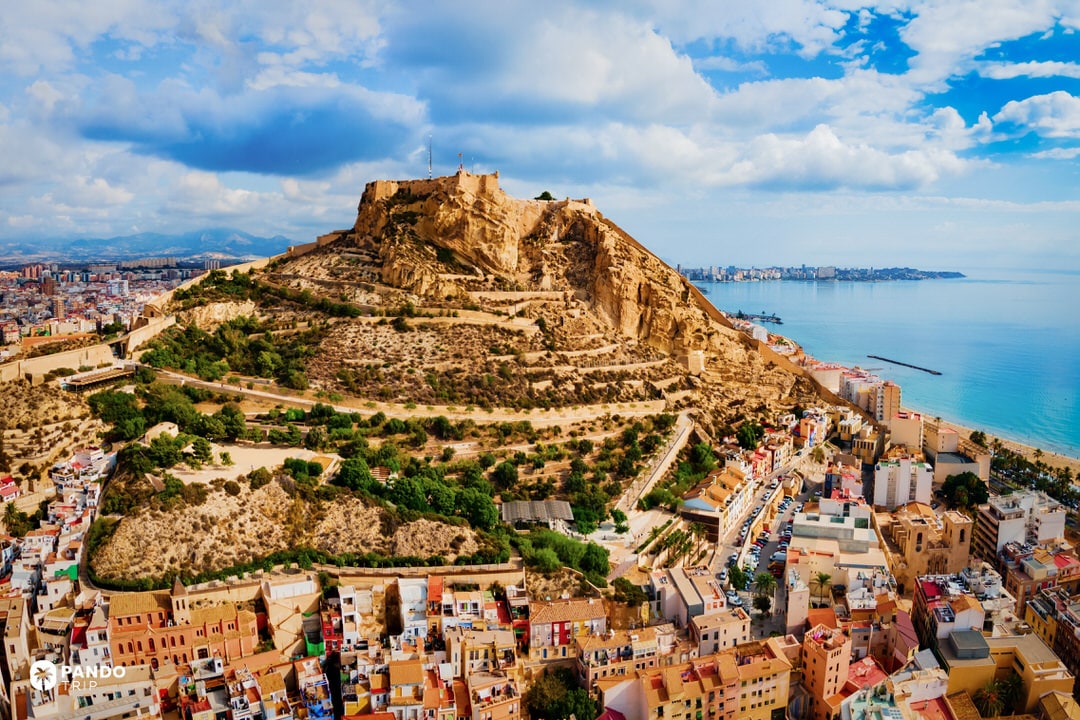
Carved into pale limestone, Santa Barbara sprawls across Mount Benacantil like a tiered desert citadel. From the highest bastion the Mediterranean horizon curves so wide it feels planet‑sized.
Sun, sea and bleached stone strip the scene to essentials, and a fortress can astonish with nothing more than mass and light.