People come to Verona for a love story. That’s fair. Shakespeare set his most famous tragedy here. A 14th-century house in the old city has a balcony where millions stand to photograph themselves pretending to be Juliet calling down to Romeo.
The skeptics will tell you it’s not authentic. The balcony was added in the 1930s. The house belonged to the Cappello family, not the Capulets. Shakespeare never visited Verona. Romeo and Juliet never existed.
But that doesn’t make it meaningless. The pull is real.
Here’s what happens next: balcony photo, quick walk through Piazza delle Erbe, maybe gelato, back on the train to Venice or Milan by 5pm.
They experience Verona as a postcard. Not as a city.
They leave before sunset turns the terracotta rooftops amber. Before 15,000 candles light up a 2,000-year-old amphitheater for opera under the stars. Before the market stalls vanish from the main square and locals reclaim it for €3 spritzes. Before the city that sheltered Dante and hosted Maria Callas reveals what it actually is.
Day-trippers get the prologue. Staying overnight gets you the whole story.
The Love Story Is Real (In the Ways That Matter)
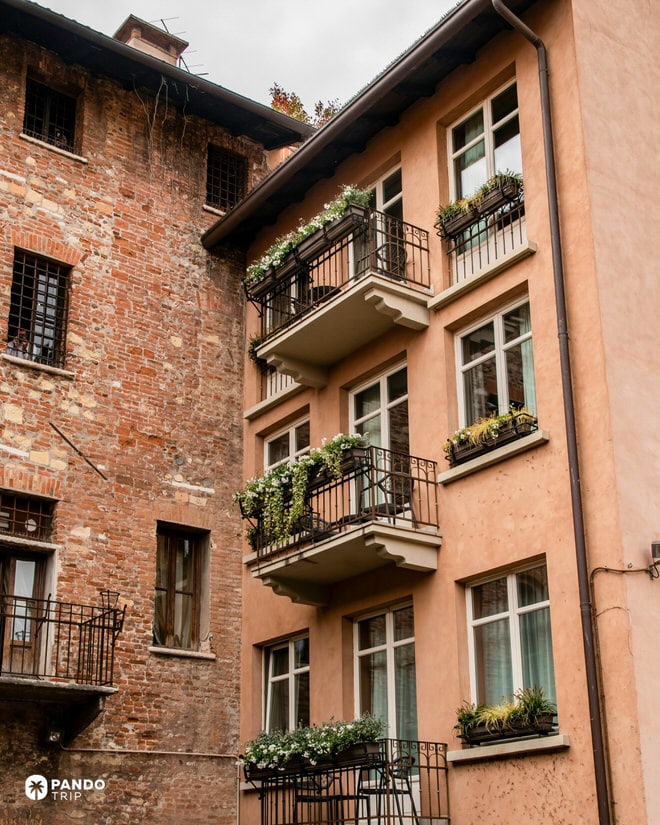
Casa di Giulietta (Juliet’s House) sits on Via Cappello in the historic center. The courtyard is always packed. The famous balcony juts from the brick facade about twelve feet up. Tourists crowd underneath, arms outstretched, pretending to reach for an imaginary Romeo.
The skeptics love pointing out the balcony is fake. Added in 1936 by the city to satisfy tourists who’d been arriving for decades asking to see “Juliet’s balcony.” The cynical take: Verona built a movie set and called it history.
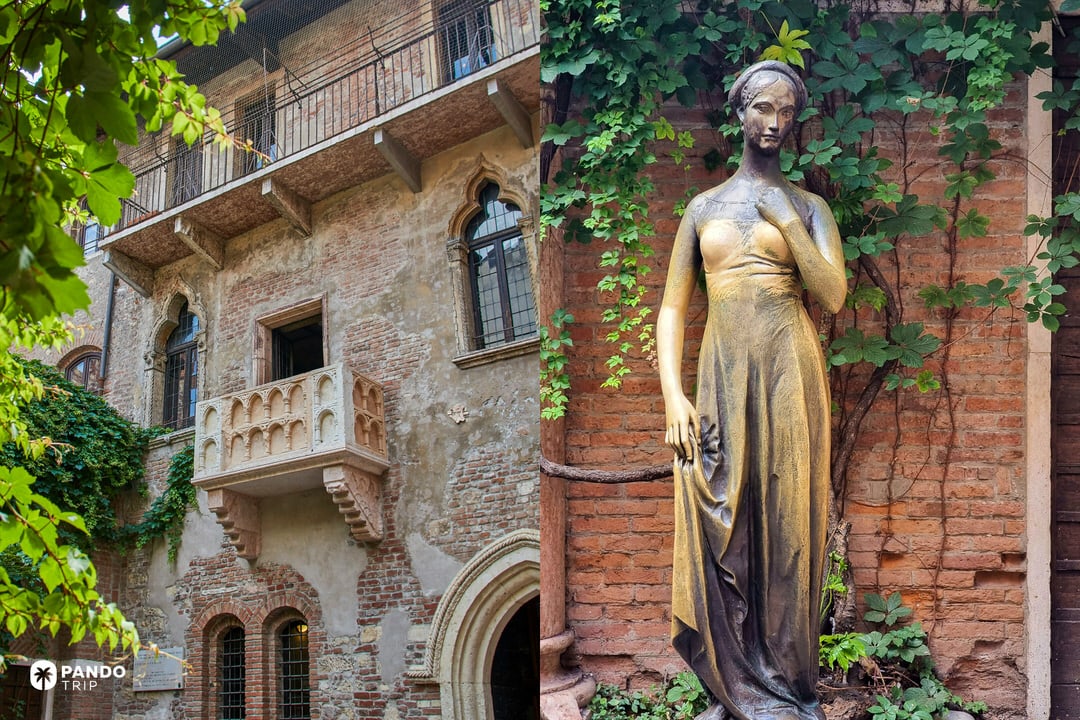
But here’s what actually happens at Casa di Giulietta.
Since the 1930s, people have been leaving letters for Juliet. Not metaphorical letters. Actual handwritten letters from teenagers in Alabama and grandmothers in Tokyo and heartbroken thirty-somethings from everywhere. About 10,000 arrive each year. Letters addressed simply to “Juliet, Verona, Italy” still make it to the right place.
Volunteers answer every single one. They’ve been doing it for 90 years. They sign them “Juliet’s Secretary.”
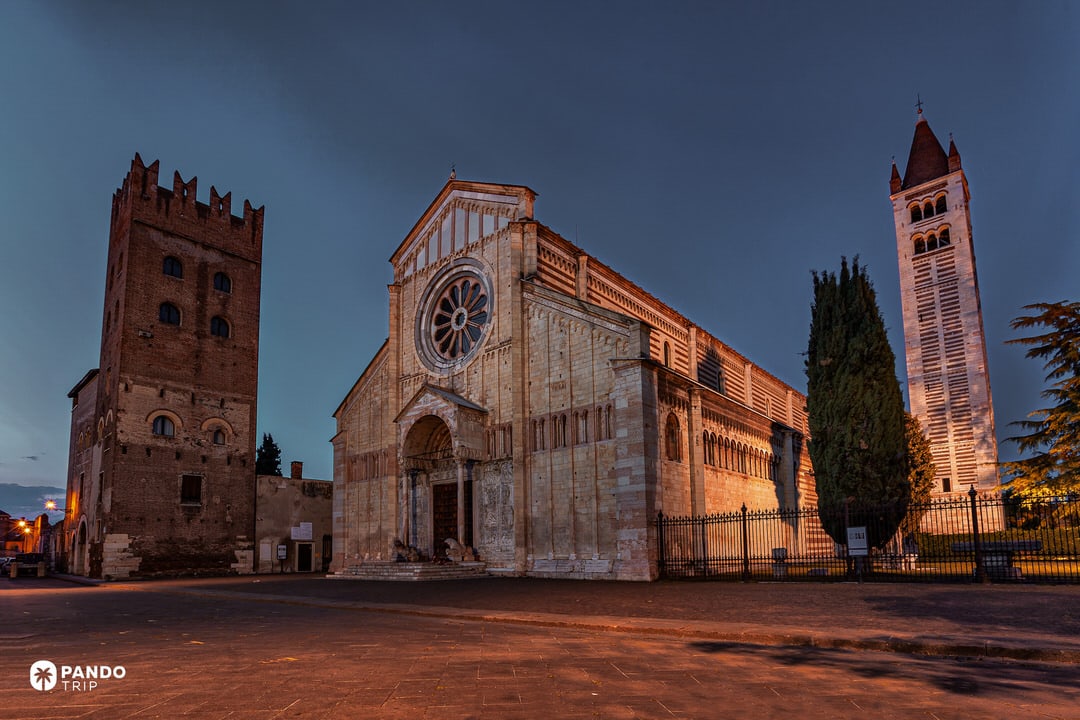
A city that takes romance seriously enough to employ volunteers to answer letters to a fictional character has earned the right to that balcony. The 1930s addition isn’t cynicism. It’s commitment to the story people needed to believe in.
The love story brought you here. Good. But it’s also the reason most people leave too soon.
When the City Returns to Itself
Most visitors leave Verona between 4pm and 6pm.
Around 7pm, something shifts.
Piazza delle Erbe – the market square that’s been crowded since morning with stalls selling produce, cheese, spices, and tourist trinkets – empties out. The vendors pack up. The tourists disperse.
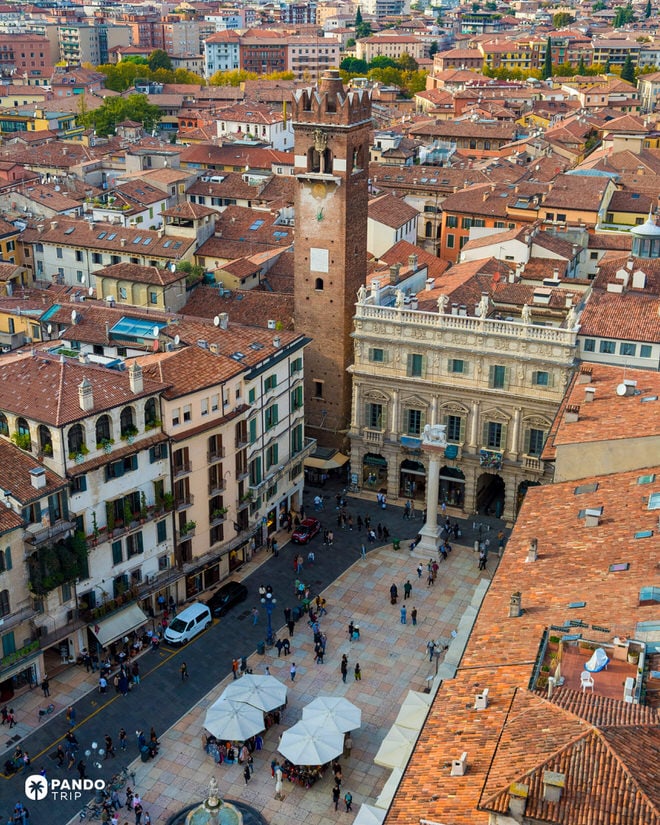
Then the square transforms.
Tables from surrounding restaurants take over the cobblestones. The architecture becomes visible without competing for attention. The fountain in the center glows under lights. You can actually see the buildings now – medieval facades, frescoed walls, the Torre dei Lamberti rising above.
This is when locals arrive for aperitivo. They’re not here for sightseeing. They’re here because it’s Tuesday evening and this is what you do in Verona. €3 spritzes. Standing outside, watching the sky change color. Casual in a way tourists never are.
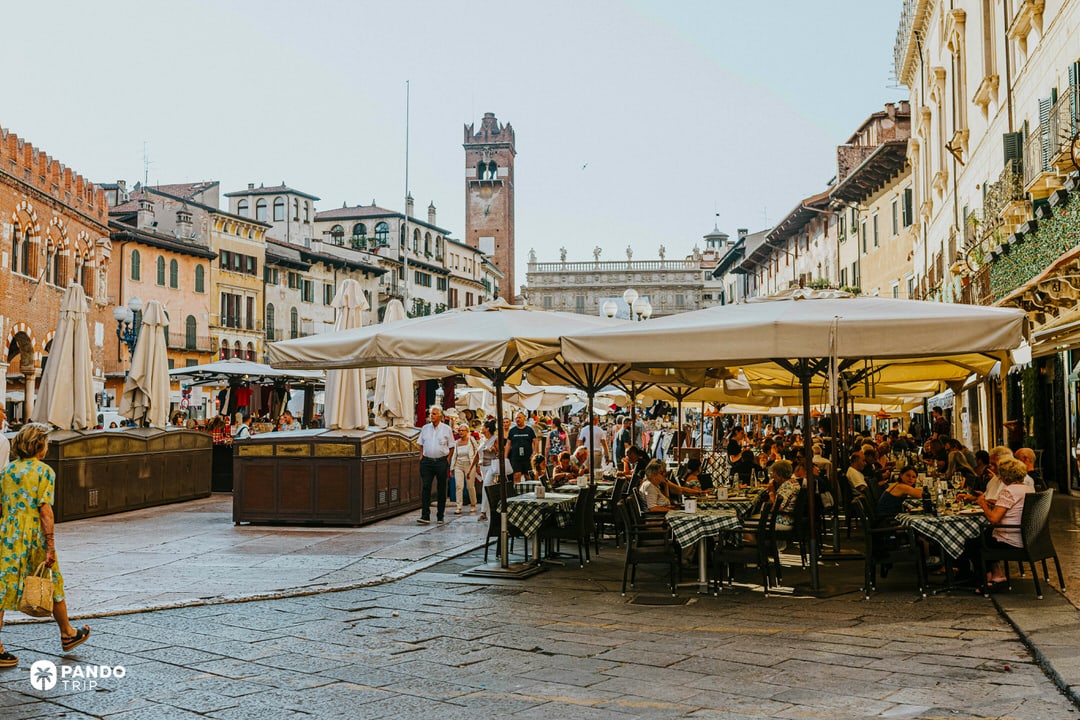
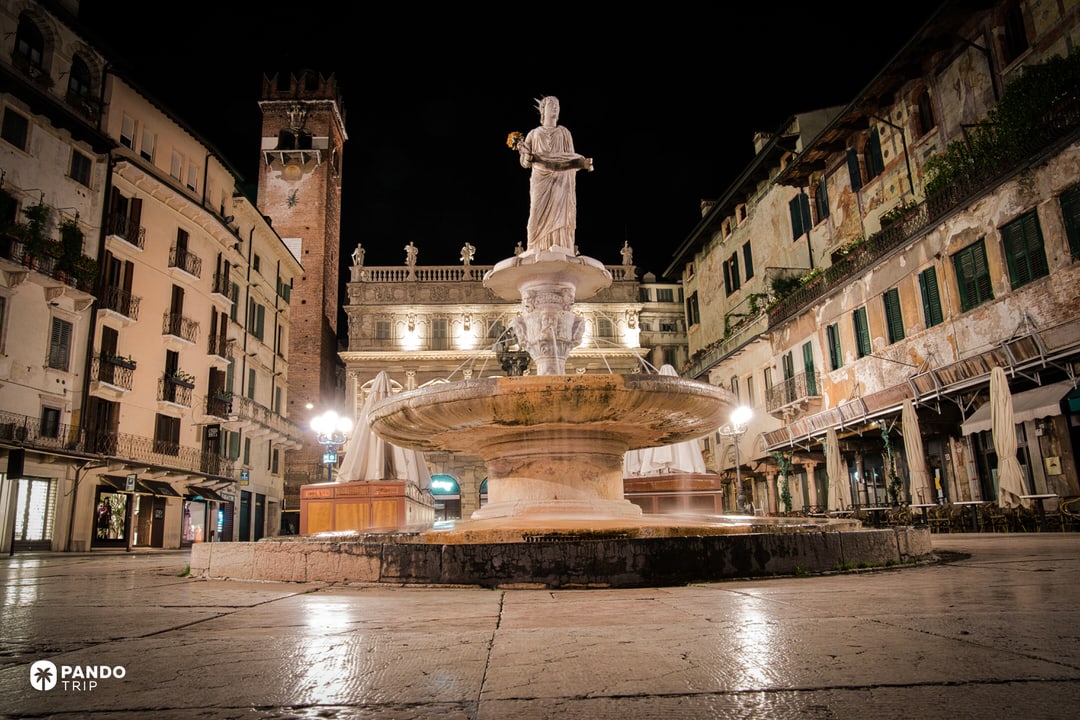
The fountain they’re gathered around has a story. The Madonna Verona was commissioned in 1368, but the central statue is much older – a Roman sculpture from around 380 AD, repurposed centuries later as a personification of the city. Roman body, medieval head and arms, assembled from various pieces. During the day, when the square is packed, you can barely see it. At night, under lights, without crowds blocking the view, the details emerge.
This is the Verona that actually lives here.
The Amphitheater That Became an Opera House
By 9pm, that evening aperitivo crowd has moved on. Some head home. Others head to dinner. A few thousand make their way to the Arena.
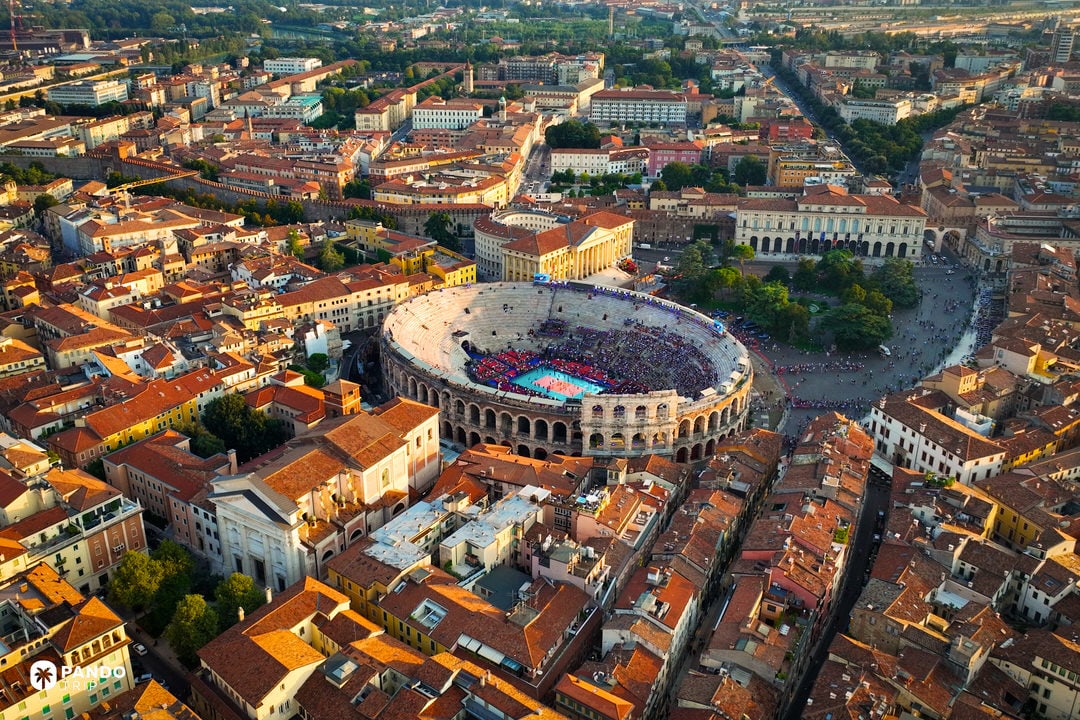
The massive elliptical structure dominating central Verona is the Arena. If you visit during the day, you’ll see an ancient Roman amphitheater. If you stay until after dark, you’ll see something else entirely: the largest open-air opera venue in the world.
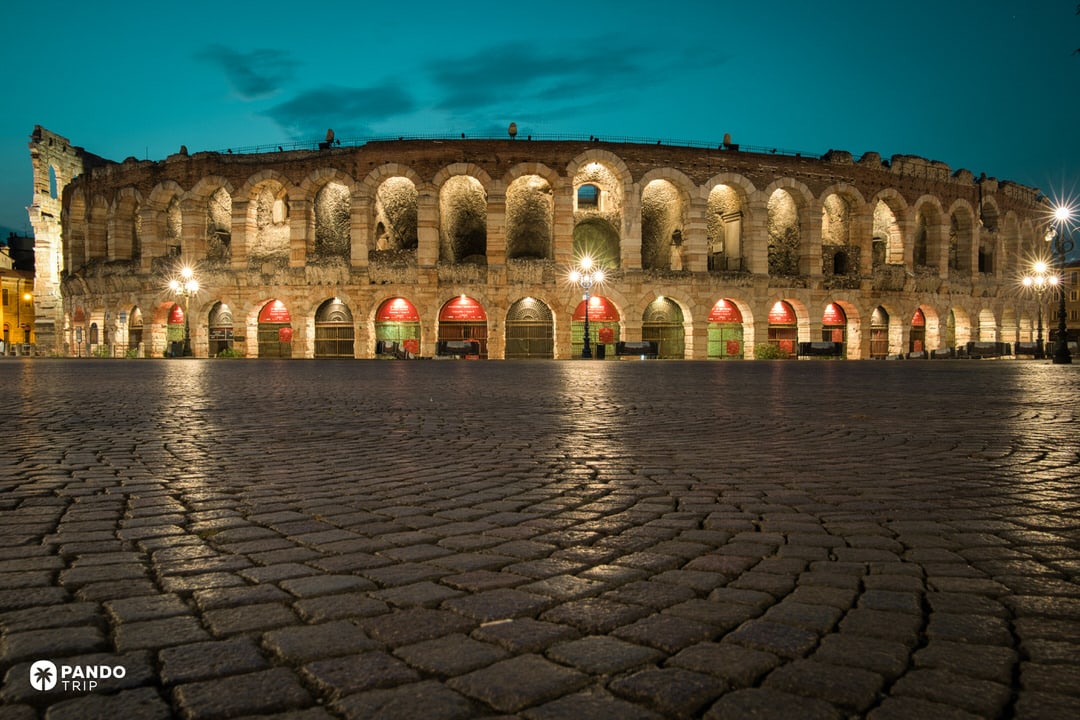
The Arena was completed around 30 AD, roughly 50 years before the Colosseum in Rome. Built for gladiatorial combat and wild animal hunts. The Latin word “arena” literally means sand – what they spread across the floor to absorb blood.
An earthquake destroyed most of the outer ring in 1117. Only four arches of the original facade survive. But the interior is intact – 15,000 to 22,000 people depending on how the seating is configured.
In 1913, a Veronese tenor named Giovanni Zenatello had an idea. Legend says he once sang an aria in the empty amphitheater, astonished by how his voice carried, and decided the Arena should host opera. That summer, he staged Verdi’s Aida to celebrate the centenary of Verdi’s birth. Opening night drew Puccini and Mascagni.
Opera in Verona has run every summer since – interrupted only by world wars and COVID.
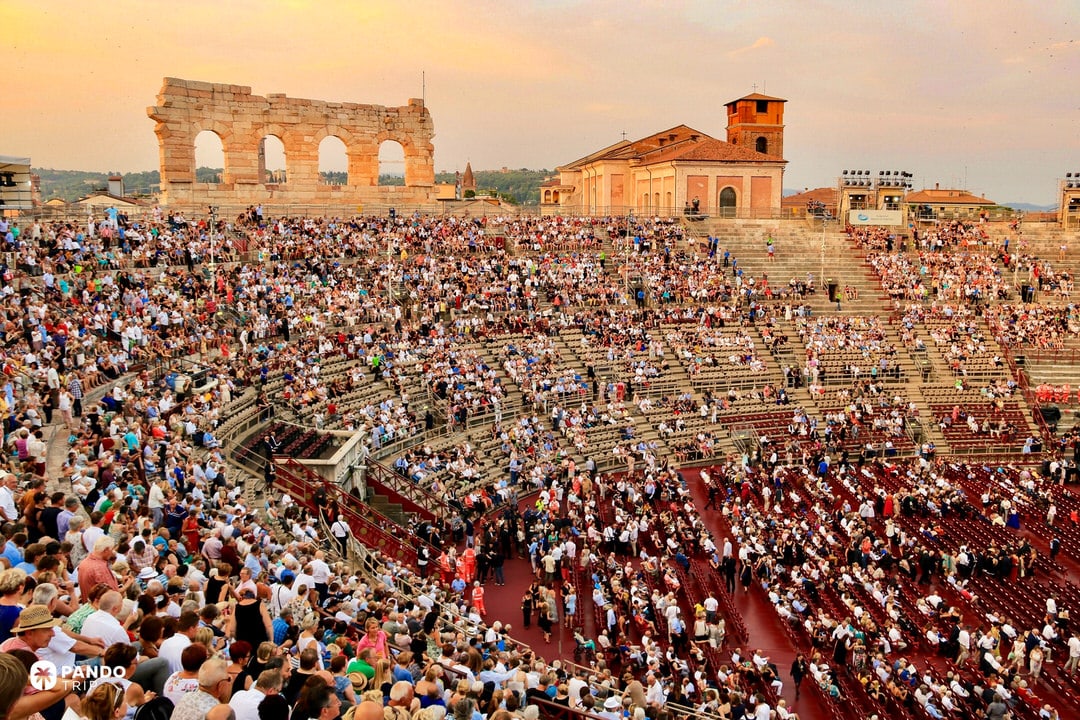
Here’s what makes it different from every other opera house: no microphones, no roof, no walls. The elliptical shape and concentric stone rows create natural amplification. Voices carry to the upper tiers without electronics. You’re sitting in the same acoustic space that Roman crowds used 2,000 years ago, except now it’s amplifying Verdi instead of dying gladiators.
The candle ritual happens every night before the performance starts.
At the 1913 premiere, there was no electricity in the Arena. Spectators brought candles to read their programs and see the scenery. The tradition faded but was revived in the 1980s. Now small candles are distributed at the gates before every show. As darkness falls and the performance begins, 15,000 tiny flames fill the ancient amphitheater.
Bring your own lighter. The candles don’t come lit.
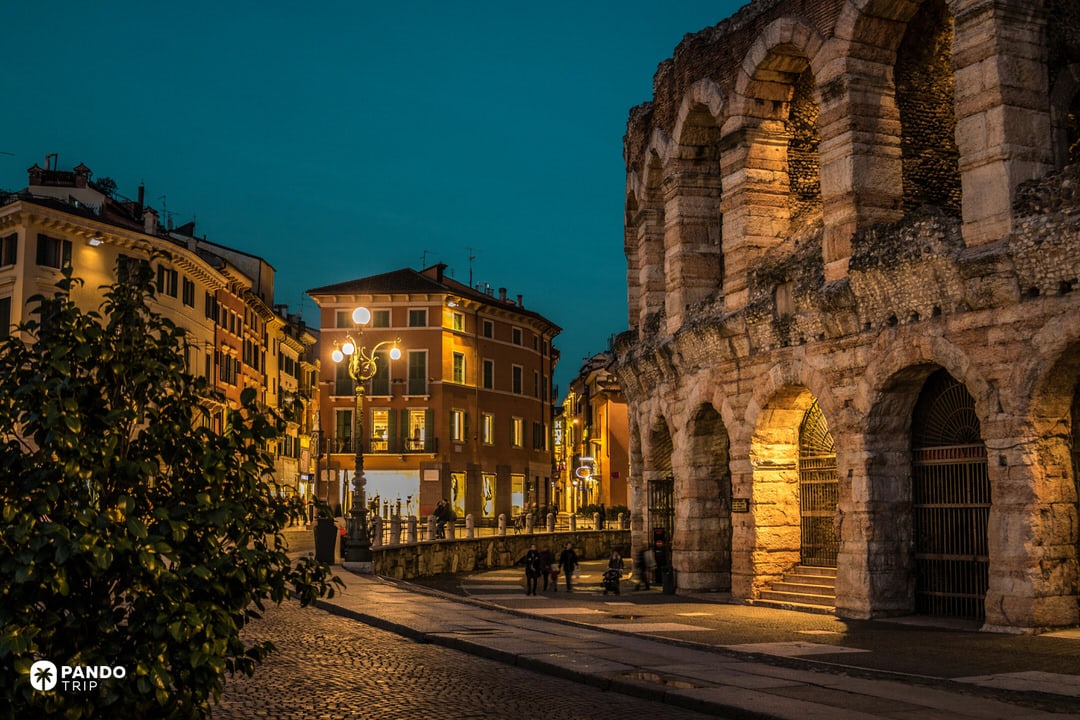
Maria Callas made her Italian debut here in 1947, age 24, singing La Gioconda. She met her future husband the night before the performance. The Arena’s history is full of those moments – singers who performed here, relationships that started here, summer nights that mattered.
The season runs mid-June through early September. Performances start at 9pm. You need to stay overnight. That’s not a suggestion. That’s logistics.
Attending opera in Verona is what separates a day trip from an actual visit.
Traditional opera houses around the world are magnificent – gilded interiors, perfect acoustics, centuries of history. But sitting under stars in a Roman amphitheater while 15,000 people hold candles and unamplified voices carry through 2,000-year-old stone is something else entirely.
The City From Above
Before the opera, before the evening crowds, there’s a window between late afternoon and sunset that day-trippers miss entirely.
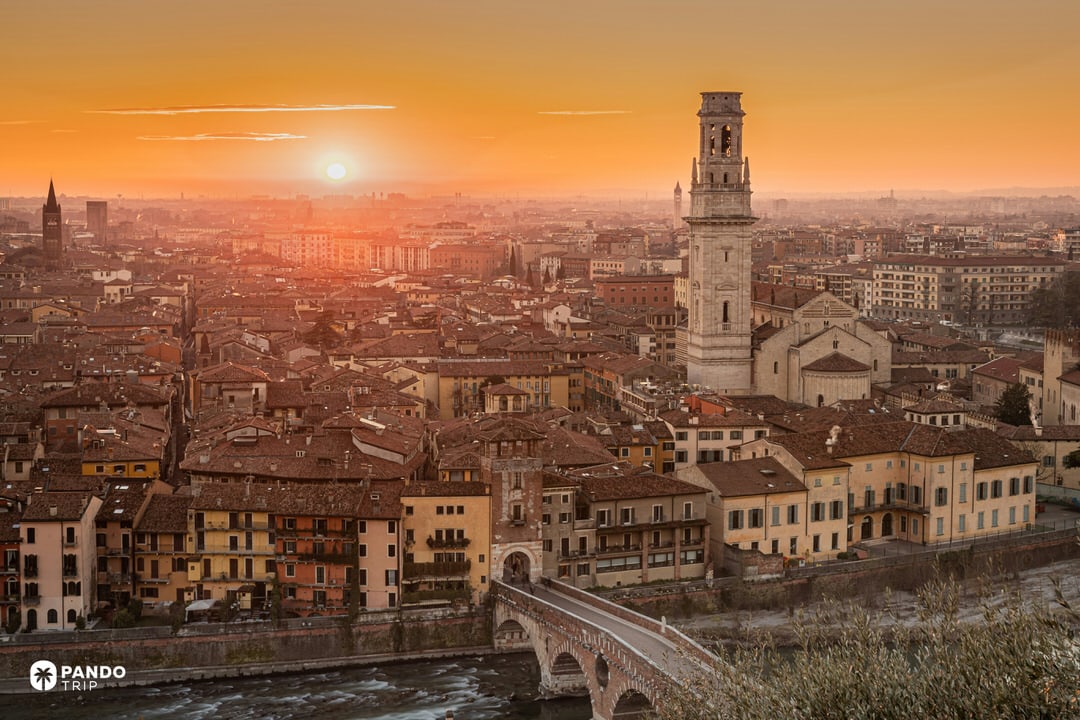
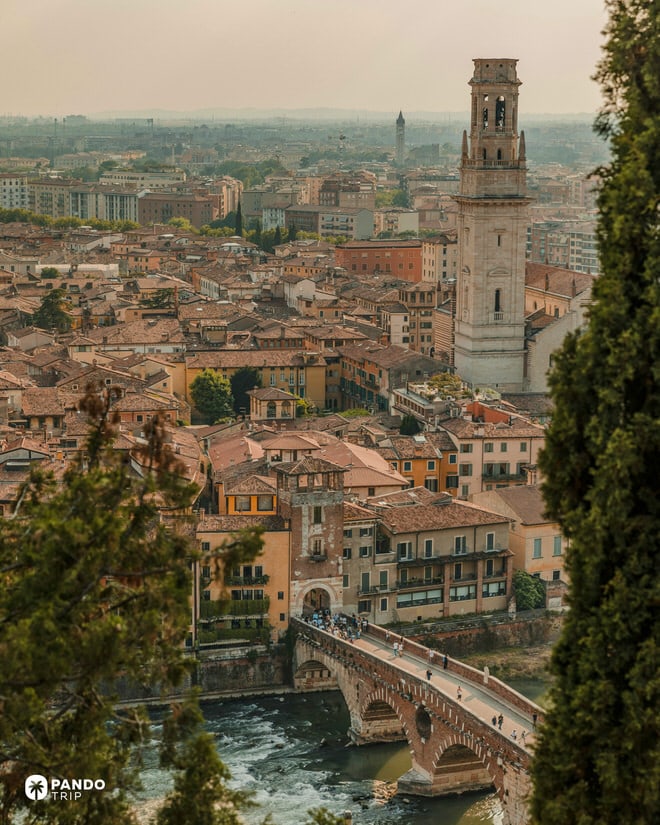
The best view of the city is from Castel San Pietro, a hilltop fortification above the old town. You can climb 200 steps from Ponte Pietra bridge or take the two-minute funicular. Either way, you arrive at a terrace built on layers of history – Roman temple, medieval citadel, Scaliger fortress, all destroyed by Napoleon in 1801. The Austrians built barracks here afterward. Now it’s a viewpoint.
Go at sunset.
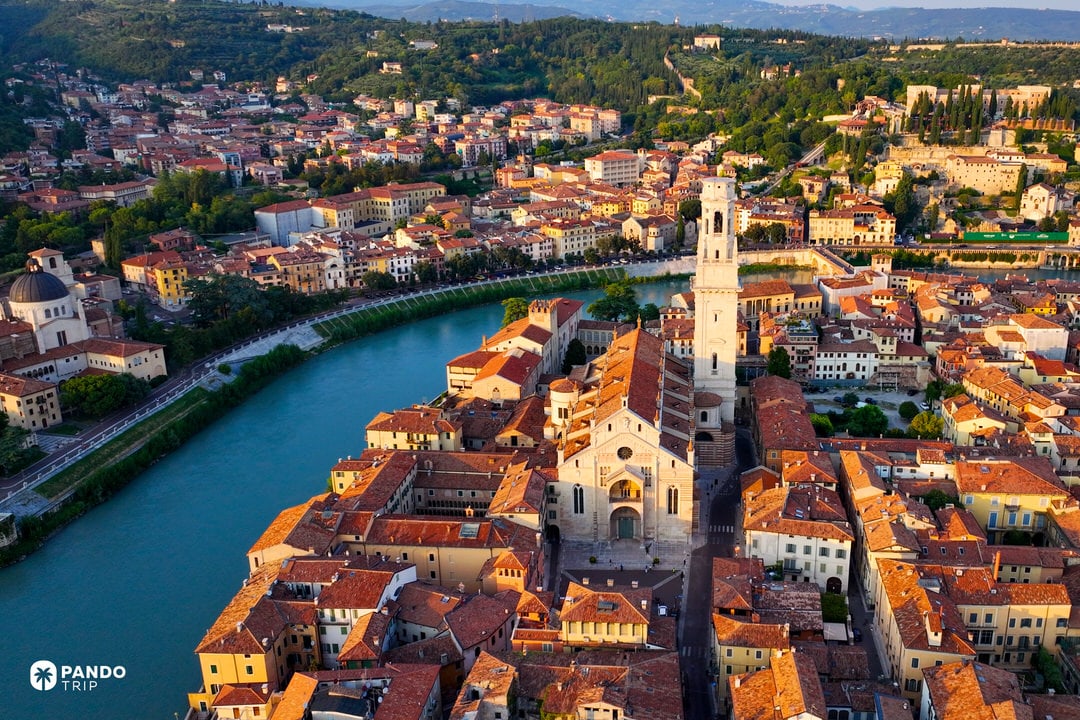
Local musicians often play guitar at the top. The terracotta rooftops below turn amber as the light drops. The Adige River curves through the city in a wide loop. The Arena sits in the distance, waiting for darkness.
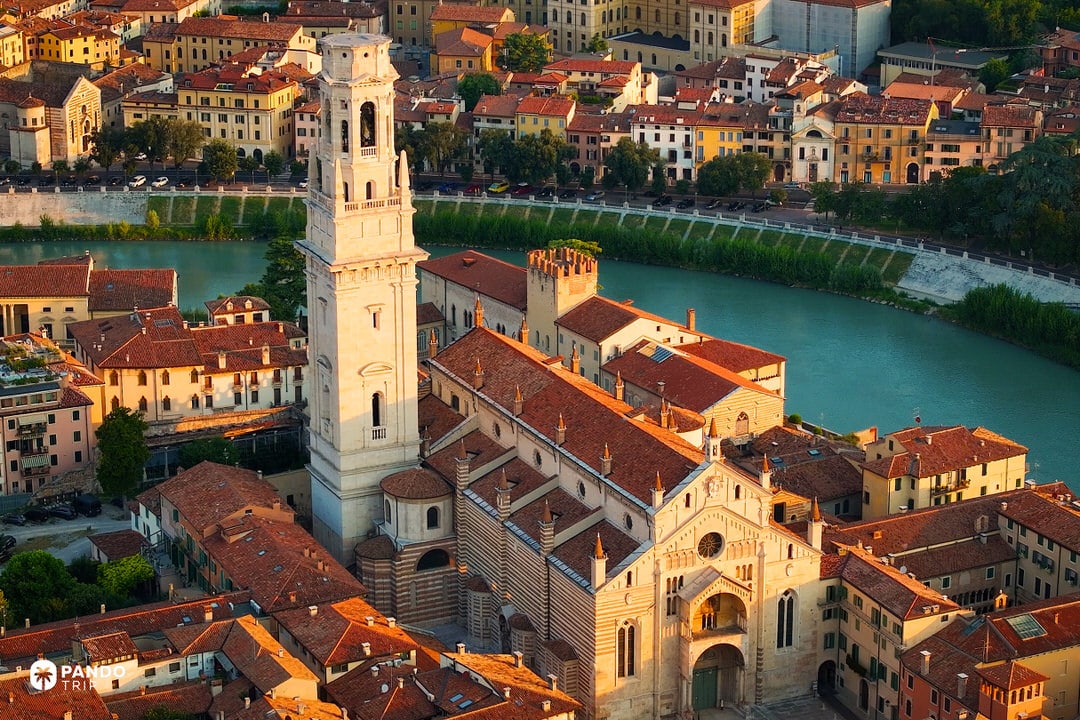
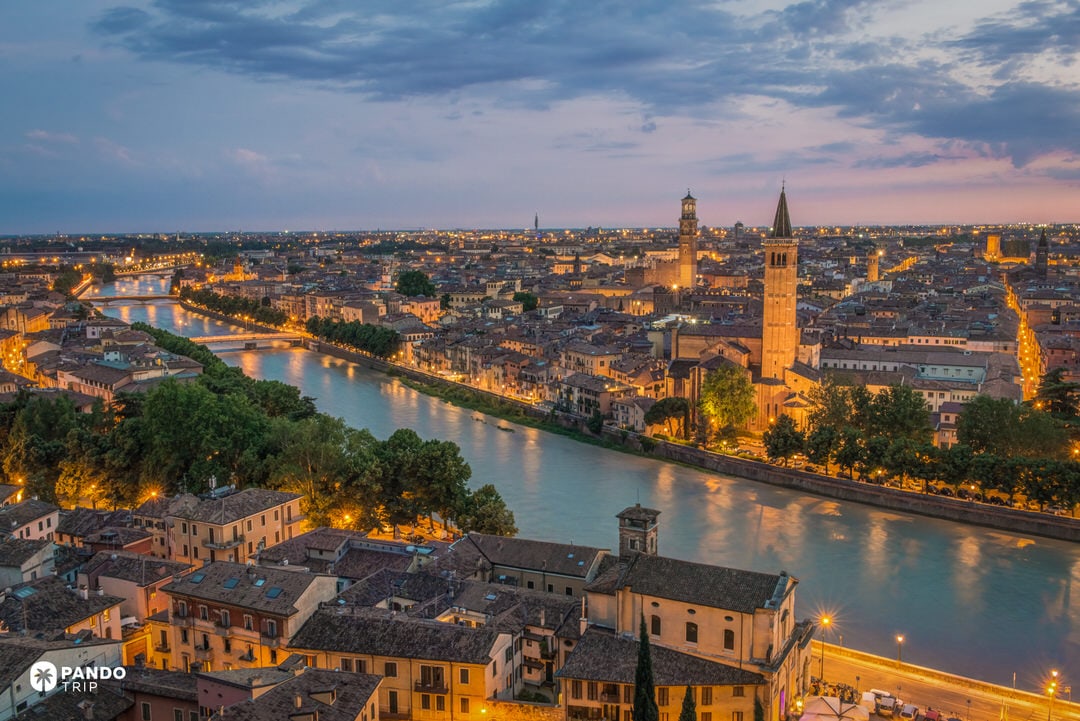
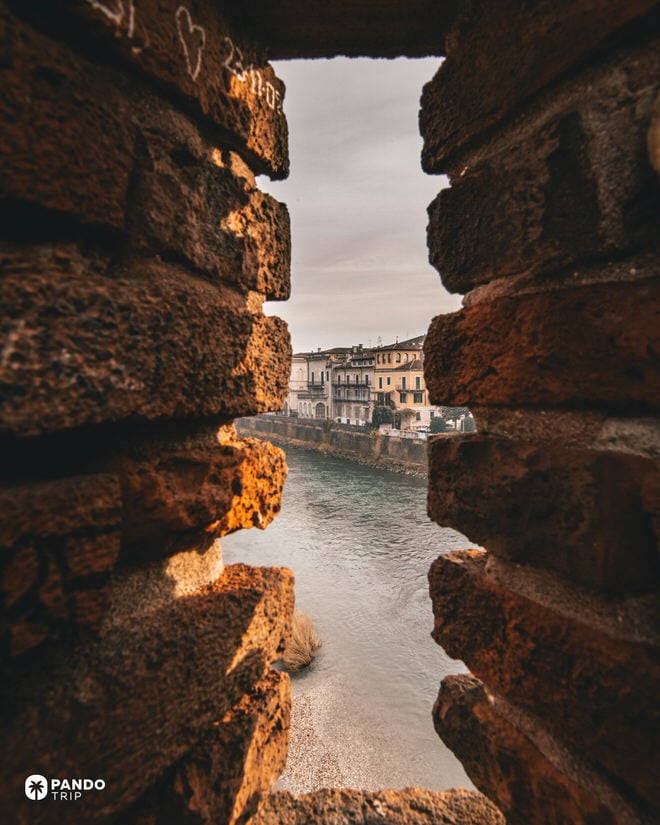
Directly below is Ponte Pietra, Verona’s oldest bridge. Originally built by Romans in 100 BCE. The Germans destroyed it in 1945 while retreating. The city rebuilt it using stones recovered from the riverbed, matching the original construction. Between mid-December and early January, the sun sets directly behind the arch. Stone steps at the base serve as informal sunset seating.
At night, the bridge is nearly empty. In daylight, it’s a busy throughway. After dark, it belongs to couples and locals taking evening walks.
A City of Exiles
Verona has always been a city of temporary residents. People passing through. People in exile. People who stayed longer than they planned.
Dante Alighieri spent seven years here after being banished from Florence in 1302. Political exile, the kind where returning home meant execution. He was 37 years old, famous enough that other cities competed to host him, bitter enough that he never stopped writing about it.
He wrote much of the Divine Comedy’s Paradiso in Verona. In one passage, he references his refuge here: “Your first refuge and your first inn shall be the courtesy of the great Lombard.” The great Lombard was his host – the Scaligeri lord who ruled Verona.
Dante’s descendants still live in the region. They run a Valpolicella winery called Serego Alighieri, founded by his son Pietro in the 1300s. You can drink wine made by the family of a man who wrote the most famous poem in Italian literature while living in exile in the city you’re visiting.
One place Dante spent time was the Biblioteca Capitolare – the library attached to Verona’s cathedral.
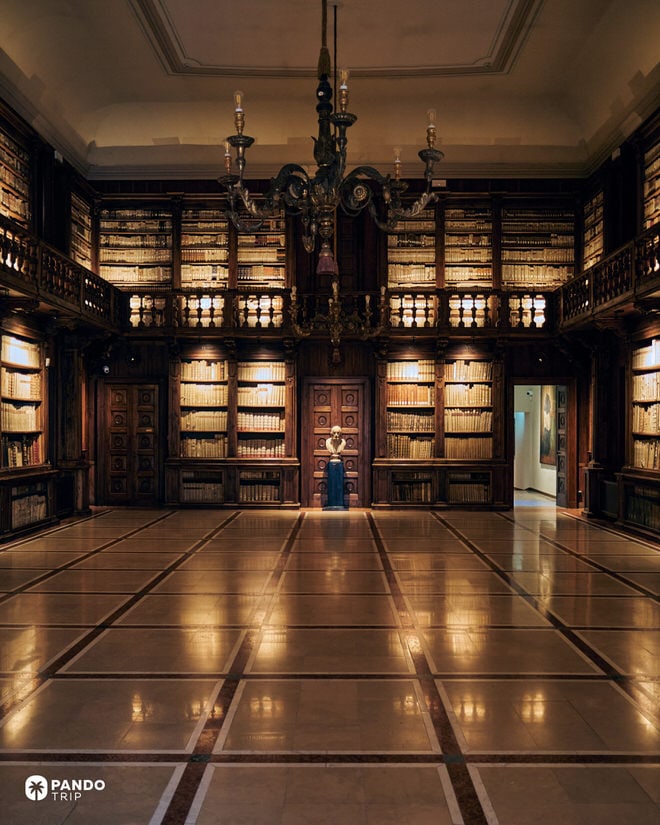
This library has been operating continuously since at least 517 AD. Not “one of the oldest.” The oldest. The earliest dated document is a manuscript transcribed on August 1, 517, by a man named Ursicinus, who identified himself as “Lector of the church of Verona.”
During the plague of 1630, which killed 35,000 of Verona’s 55,000 inhabitants, the head librarian hid the most precious manuscripts somewhere in the building to protect them from looters and chaos. Then he died. The hiding place died with him.
The manuscripts stayed lost for 82 years.
In 1712, another librarian discovered them concealed in the hollow top of a cupboard, hidden under rags. A library that survived plague, war, and occupation because a dying man cared enough to hide books nobody would find for a century.
Dante studied here during his exile. His son Pietro used the library in the 1340s to write his commentary on the Divine Comedy. Generations of exiles and scholars passing through, leaving their marks.
In the center of Verona, in Piazza dei Signori, stands a statue of Dante. It was unveiled on May 14, 1865, for the 600th anniversary of his birth. Verona was under Austrian rule at the time. Italian nationalism was considered subversive. The statue was installed secretly overnight to avoid interference from authorities who would have stopped it.
The base reads: “A Dante lo suo primo rifugio” – To Dante from his first refuge.
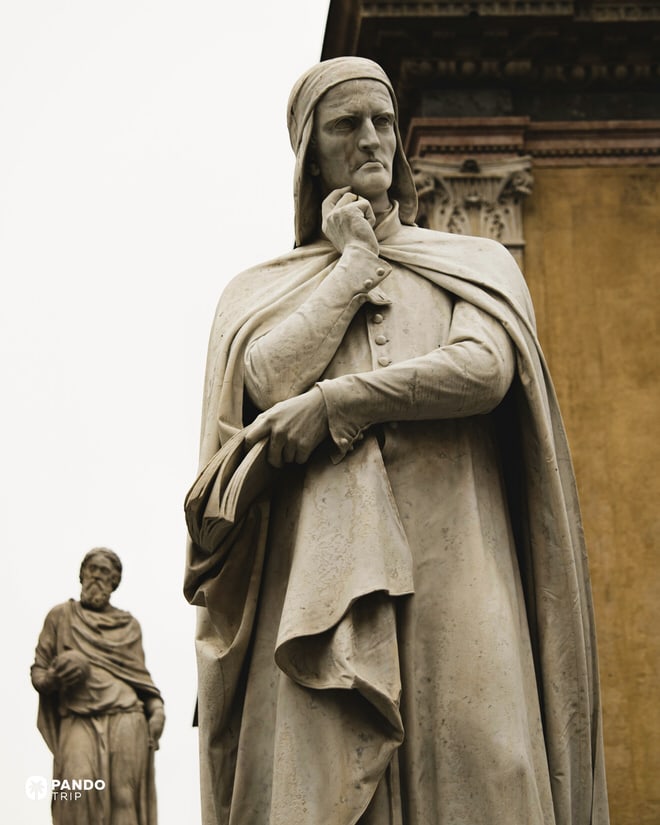
The statue depicts him with a gloomy, almost violent expression. This is a man who found sanctuary but never stopped being bitter about exile. Who lived in Verona for seven years but never really belonged. Who was grateful for refuge and resentful about needing it.
That’s what connects Dante to the day-trippers. They’re all passing through. The difference is Dante stayed long enough to understand the city. Long enough to write poetry here. Long enough to matter.
The day-trippers photograph the balcony and leave. Dante spent seven years here and still ended up memorialized in bronze in the city’s main square.
Staying longer changes your relationship to a place. That’s what Verona has always understood.