
Frozen lakes are among the most breathtaking winter landscapes in the world. The freezing process is a fascinating natural phenomenon that transforms familiar summer spots into entirely new environments. As water freezes, it creates a variety of textures—from glass-clear ice to intricate patterns of trapped bubbles and frost formations.
Often surrounded by snowy mountains, frosted trees, or open plains, frozen lakes offer a striking contrast between the hard, smooth ice and the softer textures of the winter landscape. This juxtaposition amplifies the feeling of stepping into a winter fairytale.
Here’s a list of some of the most beautiful frozen lakes in the world—take a look and see if any are near you. It might just be the perfect time for a visit!
1. Lake Baikal, Russia
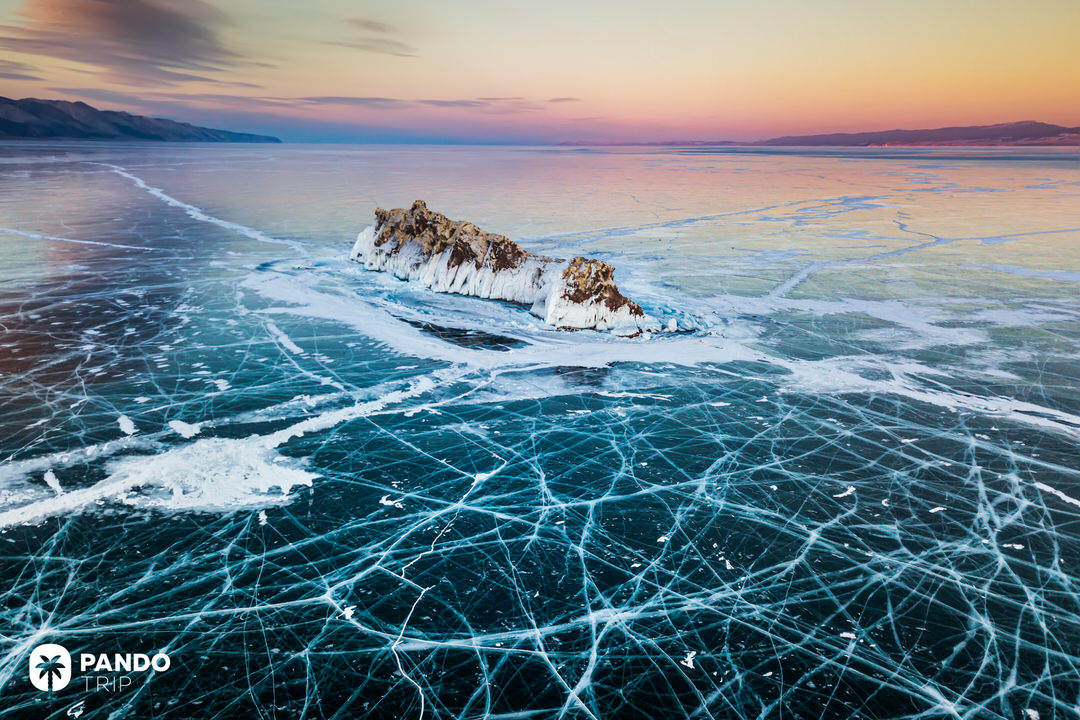
Located deep in Siberia, Lake Baikal is the world’s deepest, oldest, and largest freshwater lake by volume. A UNESCO World Heritage Site and often called to as the “Pearl of Siberia,” it’s undoubtedly the most stunning frozen lake in the world. Baikal begins to freeze in December, typically becoming fully ice-covered by early January. The ice remains until late April or May, reaching up to 1.5 meters (5 feet) in thickness—strong enough to support not just people but even vehicles.


Baikal’s ice is incredibly clear, resembling glass, allowing visibility up to 40 meters (130 feet) below the surface, revealing underwater rocks, plants, and fish. Scattered across the ice are striking turquoise ice hummocks, formed when wind and temperature fluctuations cause the ice to crack and refreeze into vivid blue ridges. Another unique feature of Baikal’s ice is the methane bubbles. Gases released from organic material on the lakebed become trapped as bubbles in the ice, creating intricate patterns that look like frozen pearls.
2. Abraham Lake, Canada

If any lake can rival Baikal’s title as the most beautiful frozen lake, it’s Abraham Lake in Alberta, Canada. Surrounded by the majestic Canadian Rockies, including Mount Michener, Elliot Peak, and Abraham Mountain, this man-made lake is famous for its turquoise color, caused by glacial silt.
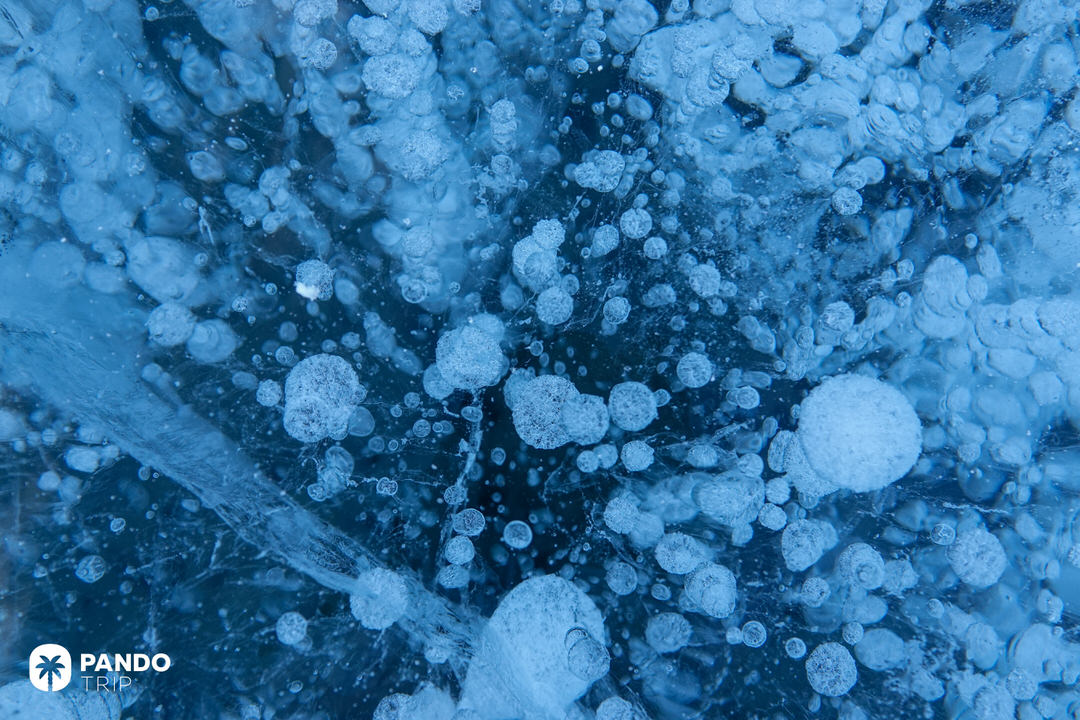

Like Baikal, Abraham Lake is known for its frozen methane bubbles, but the concentration here is even higher due to the abundance of organic matter at the lakebed. The lake’s ice is also remarkably clear, polished by strong winds in the area that act like nature’s squeegee. It starts freezing in December, but the best time to catch the frozen methane bubbles is from mid-January to early February when the ice is clearest.
3. Plitvice Lakes, Croatia
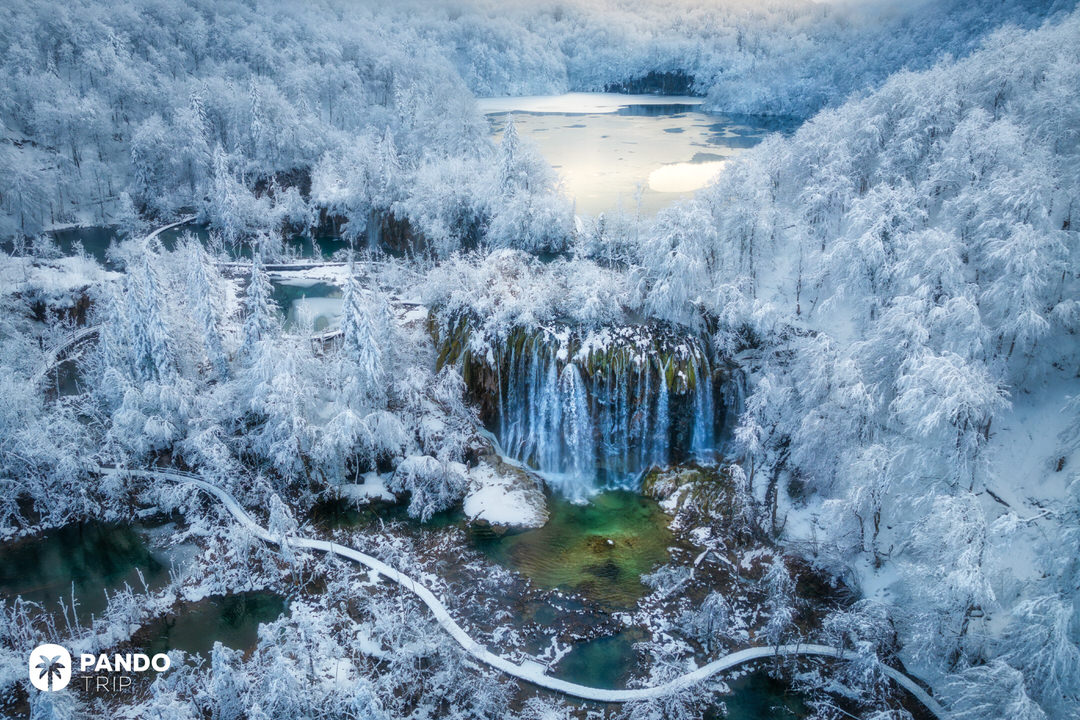
Plitvice Lakes is one of the most stunning places you can visit in Europe. This national park in Croatia is home to 16 interconnected lakes and over 90 waterfalls, with the Great Waterfall (Veliki Slap) being the tallest, at 78 meters (256 feet)—and it’s the park’s main highlight.
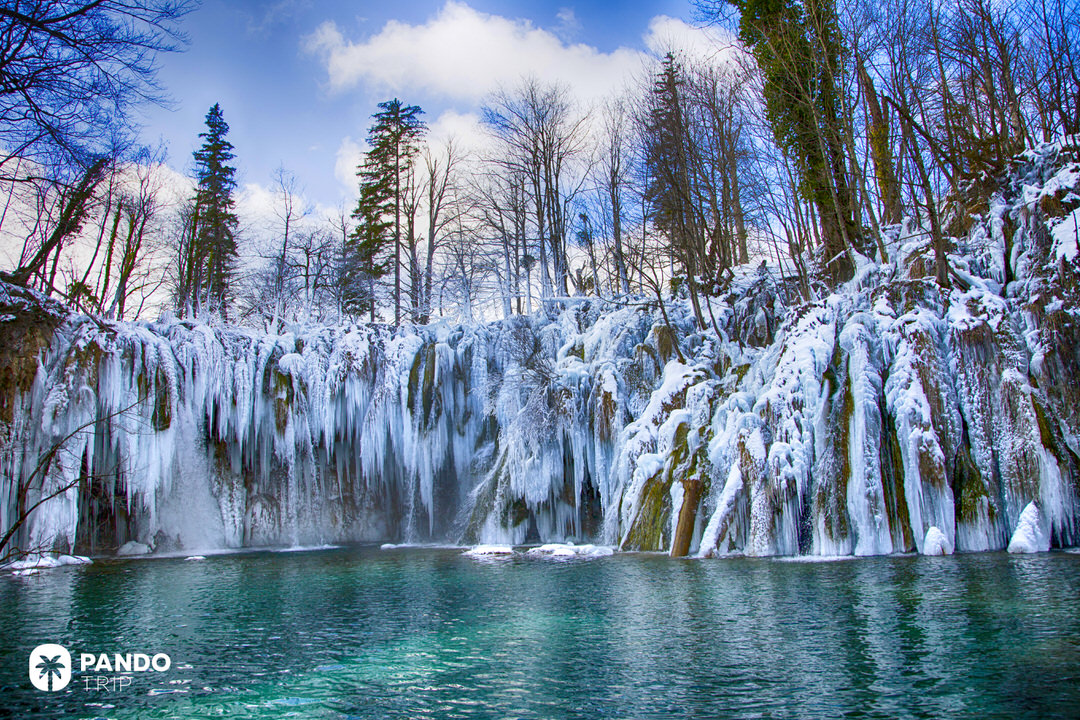

The lakes typically freeze during the coldest winter months (December and January), when temperatures stay below zero and snow often falls. Along with the lakes, the waterfalls—including the Great Waterfall—freeze, creating intricate ice formations that look like sculptures crafted by artists. The surrounding forest is also blanketed in thick snow, further enhancing the sense of entering a snowy, icy kingdom. Winter is the best time to visit Plitvice Lakes if you’re looking for peace and quiet—the park sees fewer visitors, and the only sound you might hear is the water flowing from waterfalls that haven’t fully frozen yet.
4. Pangong Tso, India/Tibet

Pangong Lake, or Pangong Tso, is often called the most beautiful lake in the Himalayas. Located on the India-Tibet border at an altitude of 4,350 meters (14,270 feet) above sea level, it’s one of the highest saltwater lake in the world. Despite its salty nature, during January and February, the lake completely freezes, creating an incredible scene. The frozen surface sparkles in the sunlight, reflecting the surrounding snow-covered mountains.


Even though the temperature can drop as low as -25°C during these months, the lake hosts the Pangong Frozen Lake Marathon at the end of February. This event is recorded in the Guinness World Records as the highest marathon held on a frozen lake.
5. Jökulsárlón Glacier Lagoon, Iceland

Located at the edge of Breiðamerkurjökull Glacier, part of the massive Vatnajökull Ice Cap, Jökulsárlón Glacier Lagoon is Iceland’s largest glacial lake. Formed in the early 20th century as the glacier retreated, the lagoon has quadrupled in size due to ongoing glacial melting. At 260 meters (853 feet) deep, it’s also Iceland’s deepest lake.


Even during the coldest months, the lagoon rarely freezes completely due to its depth and connection to the Atlantic Ocean via the Jökulsá River. While thin layers of ice may form in some areas, the lagoon remains navigable for floating icebergs, which are the lagoon’s signature feature. These icebergs, calved from the Breiðamerkurjökull Glacier, come in blue, white, and black hues (the latter from volcanic ash), creating a surreal scene against the snowy landscape. Nearby, visitors can also explore crystal-blue ice caves in the Vatnajökull Glacier, enhancing the magical, otherworldly experience.
6. Lake Superior, USA/Canada

Lake Superior, the largest freshwater lake in the world by surface area, spans the borders of three U.S. states and Canada. Due to its massive size, the lake rarely freezes completely—the last time this occurred was in 1996. In an average winter, ice covers 40–50% of the lake’s surface, peaking in early March. However, in colder years like 2014 and 2019, ice coverage reached over 95%, while in warmer years, such as 2024, coverage was as low as 12%.
One of Lake Superior’s winter highlights is its ice caves, particularly near the Apostle Islands in Wisconsin. These caves feature frozen waterfalls and intricate ice formations that resemble natural sculptures. They’re accessible only when the lake freezes sufficiently to create safe walking paths, a phenomenon that’s becoming increasingly rare.


Even without the caves, the lake’s winter trails transform into serene, snow-covered pathways. Parks like Tettegouche State Park and Pictured Rocks National Lakeshore offer scenic hikes with views of frozen waterfalls and the lake’s icy expanse.
7. Namtso Lake, Tibet

Namtso Lake, also known as the “Heavenly Lake,” is one of Tibet’s three holiest lakes, alongside Yamdrok and Manasarovar. This saltwater lake sits even higher than the already mentioned Pangong Tso, at an elevation of 4,718 meters (15,479 feet) above sea level, making it the highest saltwater lake in the world.

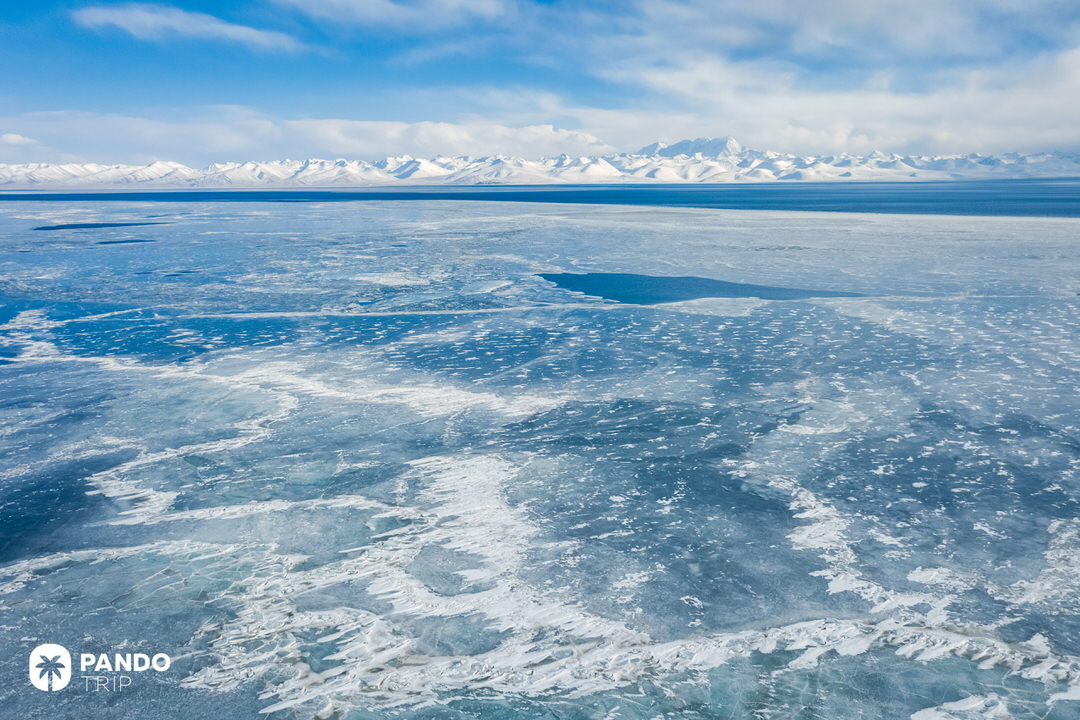
Namtso begins to freeze in mid-November, with the ice reaching depths of up to 2 meters by January. During this time, not only can you walk on the ice, but vehicles can also drive across it. The frozen lake remains until late April, offering a spectacular icy expanse set against a backdrop of snow-capped mountains. Adding to its allure, the clear winter skies make it an ideal spot for stargazing, with breathtaking views of the constellations lighting up the night sky.
8. Lake Kaindy, Kazakhstan
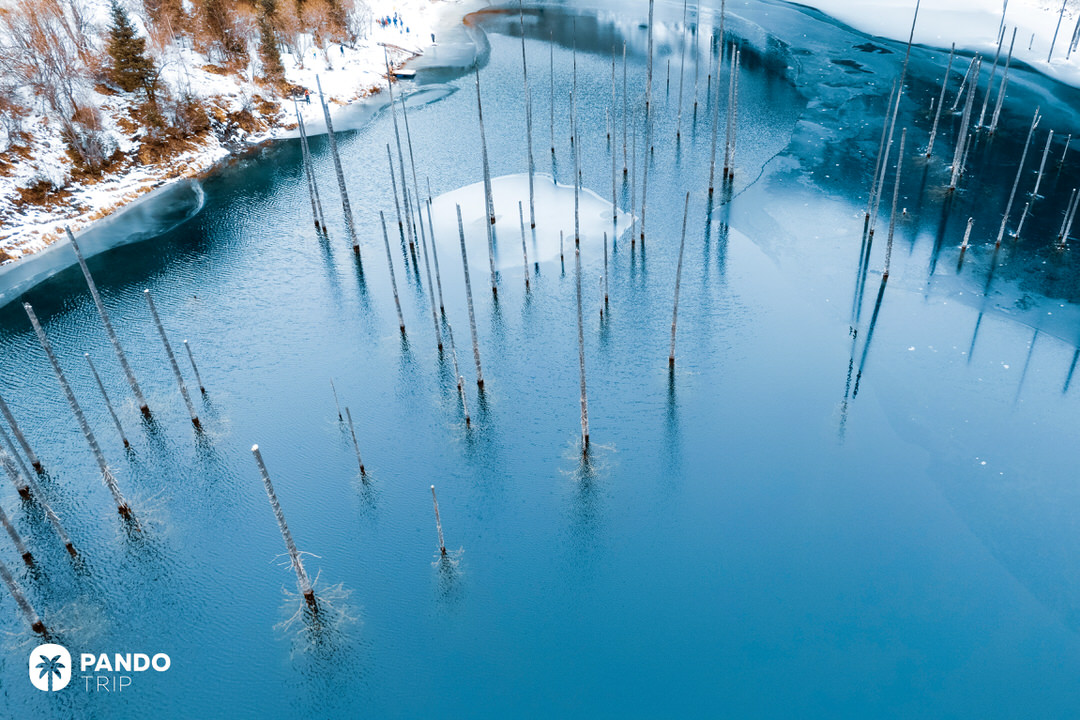
Located in Kazakhstan’s Tien Shan Mountains, Lake Kaindy is famous for its “sunken forest,” where submerged spruce trees rise eerily out of the icy blue water. Situated at around 2,000 meters in elevation, the lake remains cold year-round.
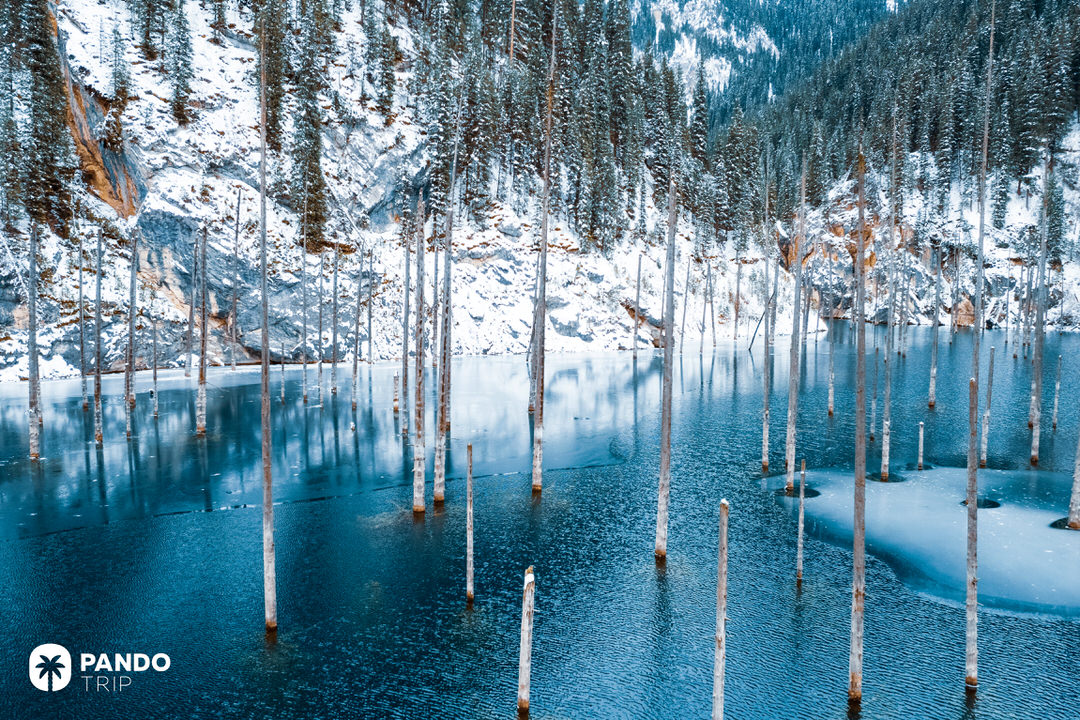

It typically freezes in late autumn when temperatures drop sharply, remaining frozen through the winter months—from December to March. During this time, Lake Kaindy transforms into a true winter wonderland, with its frozen surface blending harmoniously with the surrounding snow-covered landscape. The cold, oxygen-rich water further enhances the beauty of the submerged trees, creating an almost magical scene. Adventurous travelers can even go ice diving in the lake, where the crystal-clear water allows you to explore the underwater forest.
9. Lake Michigan, USA
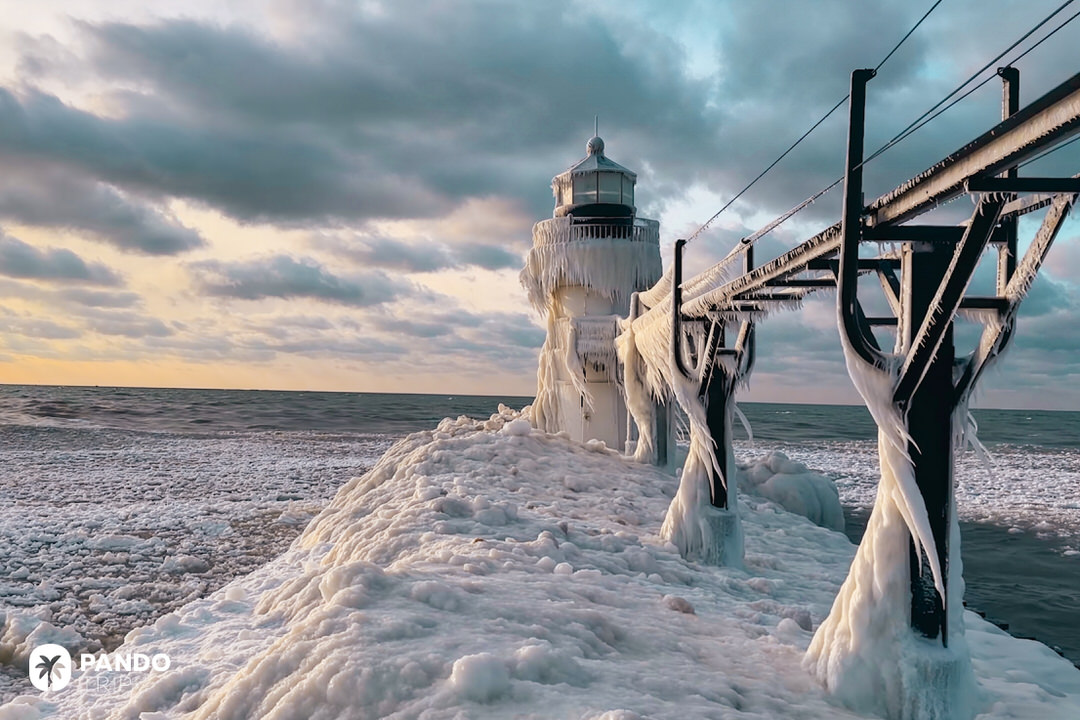
Lake Michigan, the only Great Lake entirely within the U.S., turns into a fascinating winter landscape. While it rarely freezes completely, about 50% of the lake’s surface is typically covered in ice during winter. However, its real winter charm lies in its ice formations.
One of the most iconic sights is the frozen lighthouses, especially at St. Joseph North Pier. During winter storms, strong winds blow waves over the lighthouses, creating layer upon layer of ice that forms intricate sculptures.
Another phenomenon is pancake ice, which appears as round, plate-like discs that form when waves break up thin ice sheets, rounding their edges. Though more commonly seen in polar regions, pancake ice occasionally forms on Lake Michigan under the right conditions.

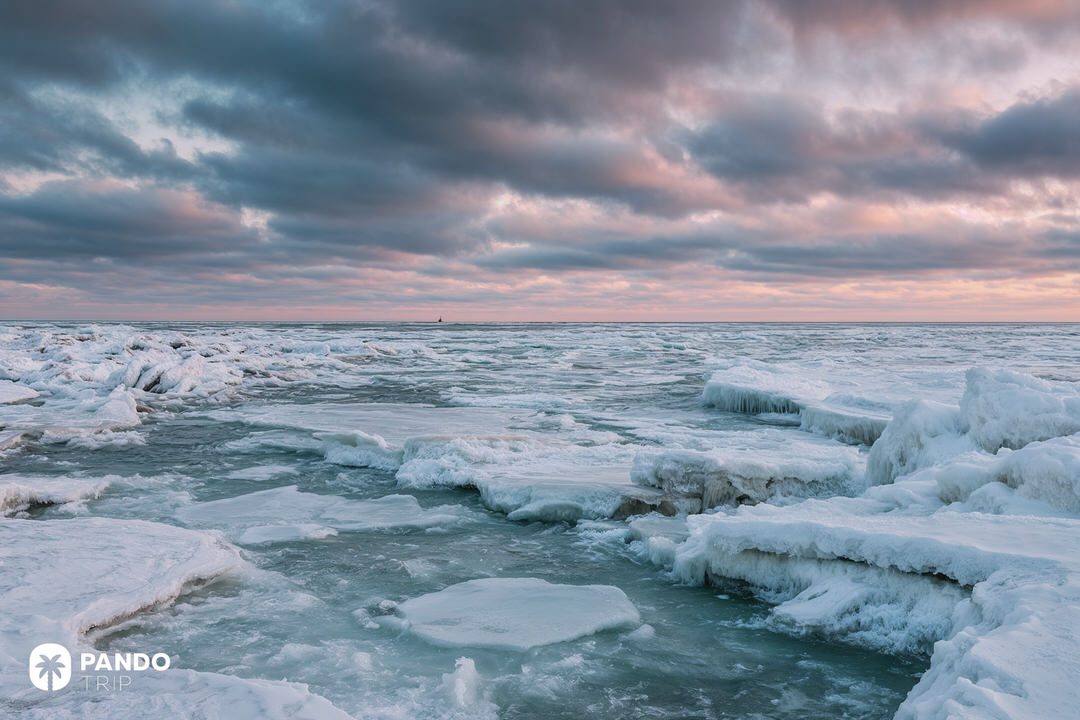
By late winter, the lake’s shores often feature ice shards, created as melting ice is pushed to one side by wind and waves. These sharp, jagged piles of ice create dramatic, natural sculptures along the shoreline, showcasing the raw beauty of winter.
10. Grey Lake, Chile

Grey Lake (Lago Grey) is a stunning lake located in Torres del Paine National Park in southern Chile. It is fed by the Grey Glacier, which flows down from the ice field, delivering massive icebergs into its waters. The lake takes its name from its grayish hue, caused by glacial sediment.
Despite the freezing temperatures of Patagonia’s winter months (June to August), when the mercury can drop to-7°C (19°F), Grey Lake never completely freezes due to the continuous influx of icebergs and cold water from the glacier. However, ice and snow often cover parts of the lake and the surrounding landscape during this season.

