
One of these buildings changes color with the moon. Another has a 28-second echo. A third is slowly losing a war with the Atlantic Ocean.
These ten buildings broke rules. They hid math in their walls that science didn’t prove for 500 years, turned light and sound into building materials, and none of them make sense until you see the numbers.
What you need to know about Islamic architecture first
Most religious art traditions paint humans. Angels. Saints. Islam went the other direction. Depicting God or prophets was off limits, so artists poured everything into geometry, calligraphy, and light. The result was the most complex mathematical art in history.
How complex? In 2007, physicists from Harvard and Princeton proved that tile patterns in 15th-century Uzbek mosques used a type of geometry called quasi-crystalline symmetry. Western math didn’t figure this out until the 1970s. The artisans were 500 years ahead. With a ruler and a compass.
About 3.6 million mosques across 50 countries on four continents. The tradition gave Europe the pointed arch that made Gothic cathedrals possible and developed acoustic engineering centuries before Western science had a name for it.
1. Sheikh Zayed Grand Mosque, Abu Dhabi: the building that breathes with the moon
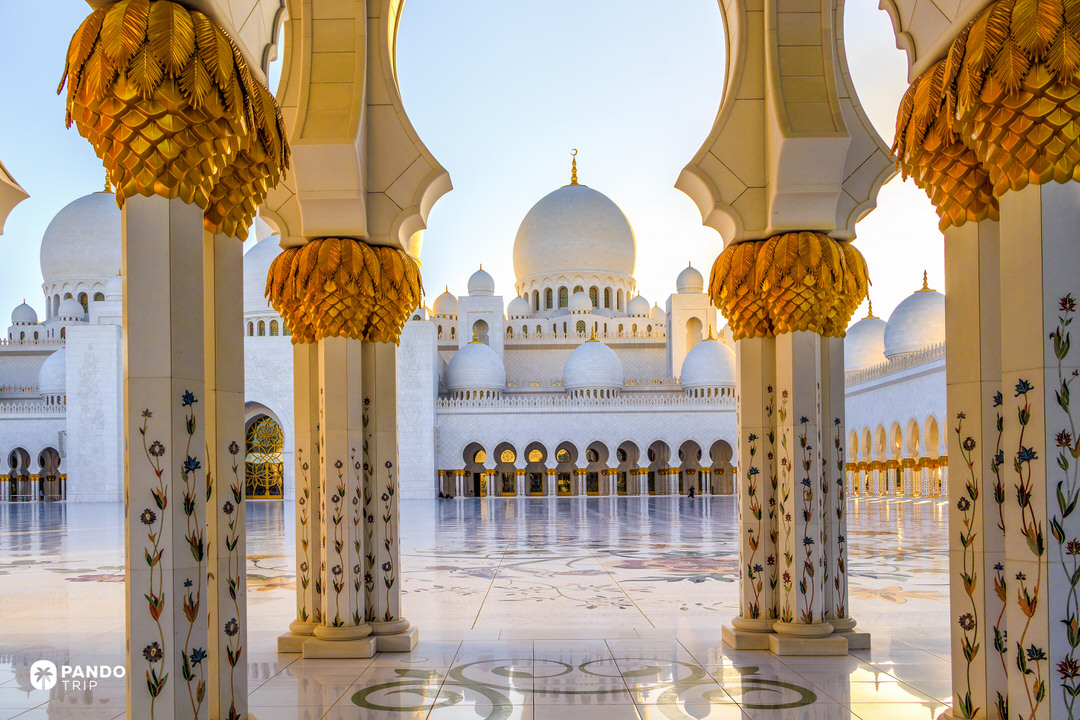
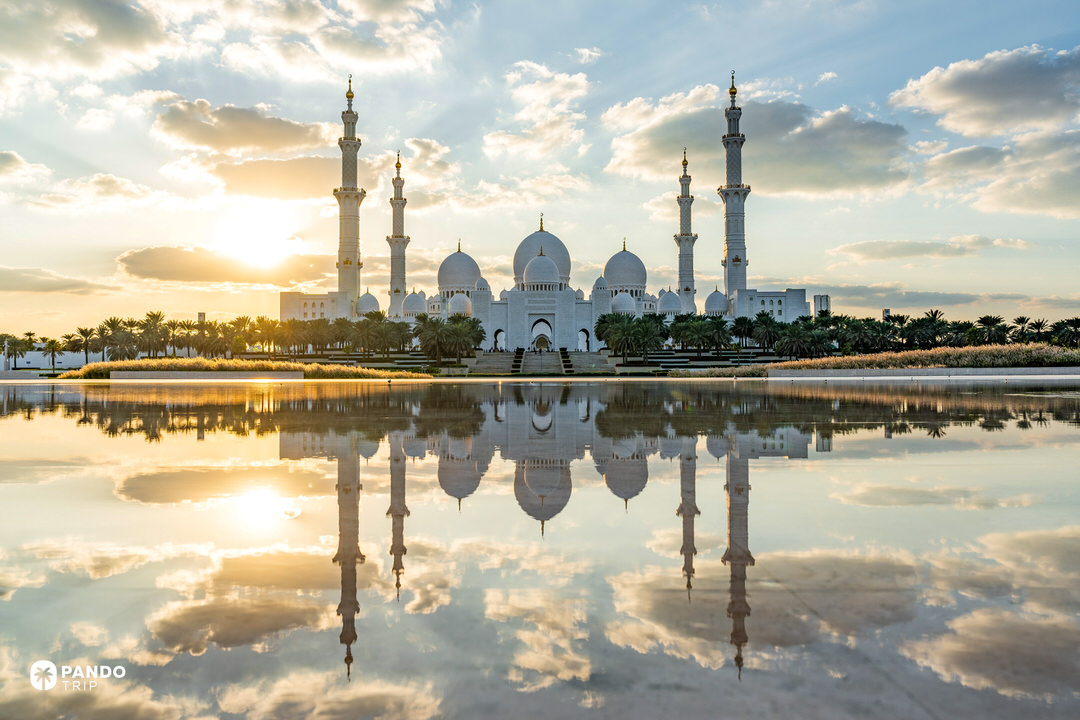
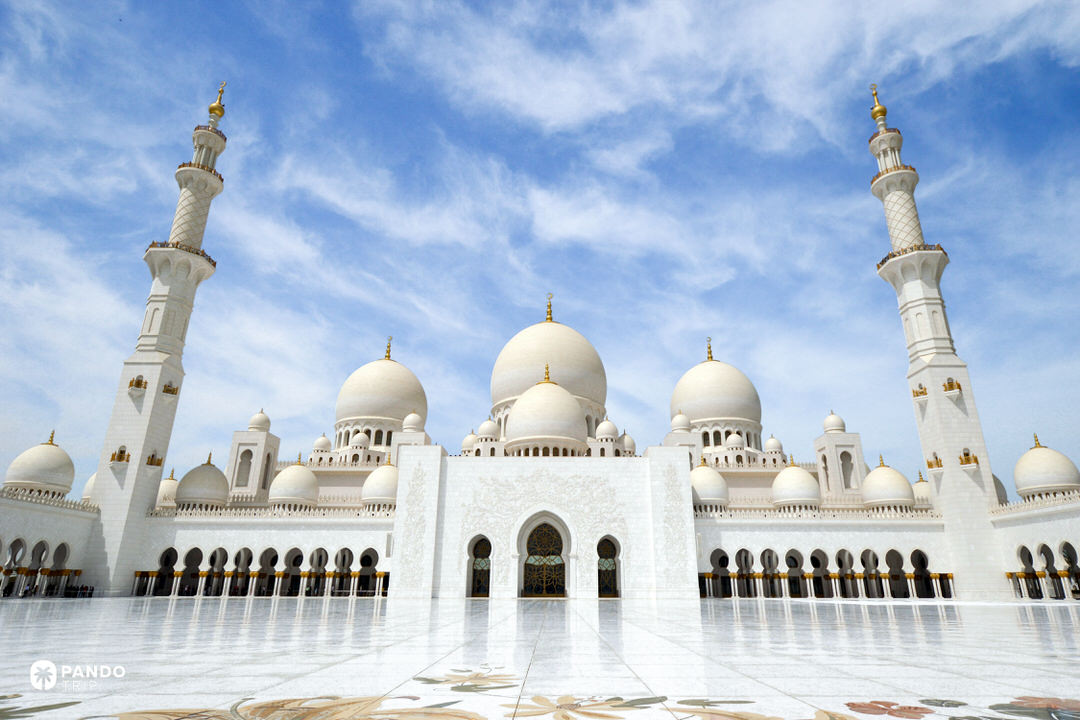
Every night, this mosque changes color. A lighting system tracks the real lunar cycle through 14 shades of blue and white. Full moon: bright white marble. New moon: deep blue. No other building on Earth is synchronized to a celestial body.
Below the main dome sits a carpet with 2.2 billion hand-tied knots. 1,200 artisans wove it over two years, then shipped it in nine pieces and stitched it on site. It weighs 35 tonnes. The prayer lines on its surface are invisible in every photo. You can only feel them under your feet.
Sheikh Zayed, who started the project, died three years before it opened. Quran reciters have been rotating at his tomb 24 hours a day since.
Visiting: Open to all, free. Women need ankle-length clothing and headscarf, men need covered shoulders and long trousers.
| Fact box: |
| Built: 1996–2007 (11 years) Style: Mughal, Moorish, Ottoman fusion Patron: Sheikh Zayed bin Sultan Al Nahyan Cost: ~$545 million Size: 82 domes, capacity 40,000+. Bigger than five football fields. Open to non-Muslims: Yes |
2. Nasir al-Mulk Mosque, Shiraz, Iran: the building that performs a light show at 7am, then turns it off
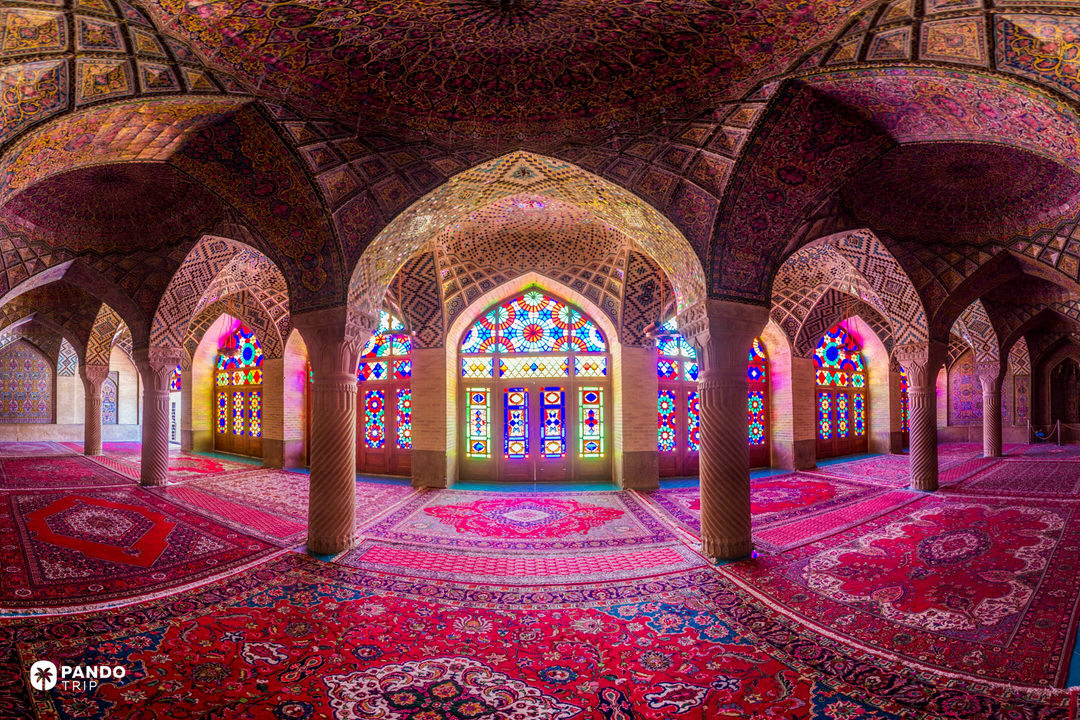
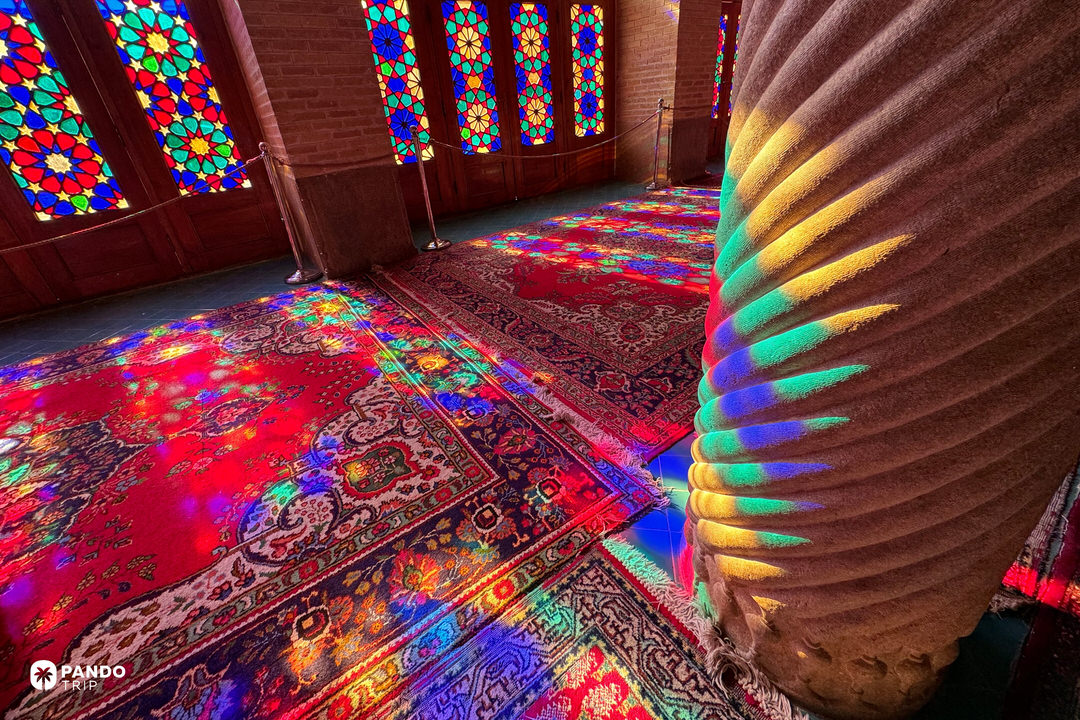
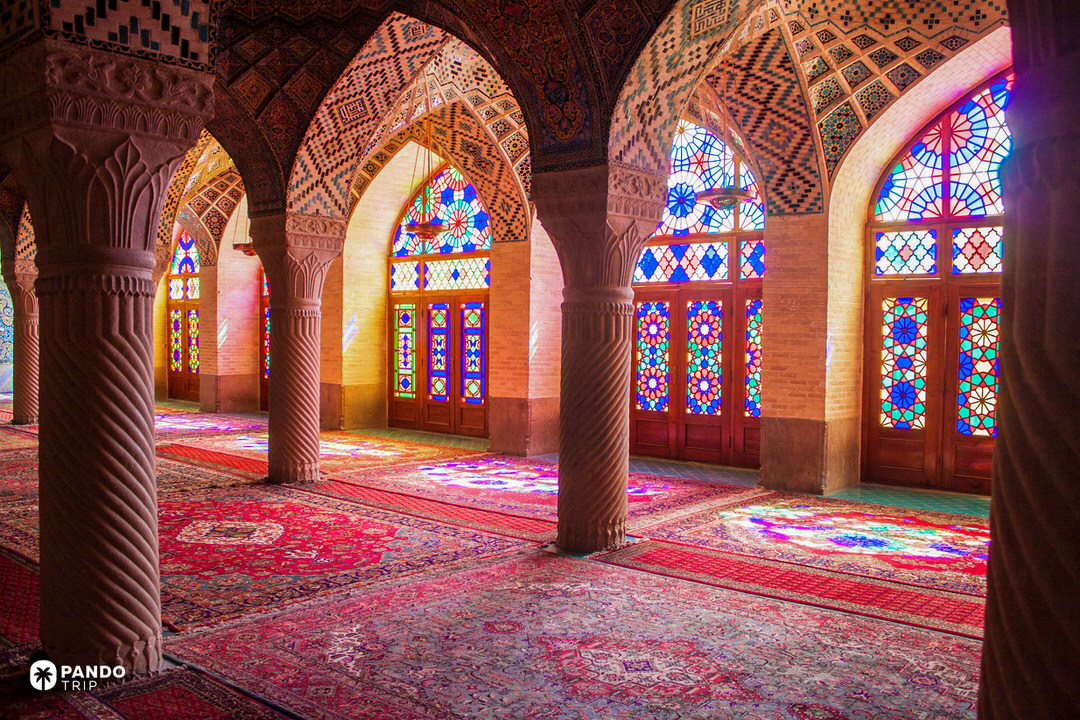
Every morning, sunlight hits seven stained-glass doors on the west wall. Thousands of colored glass pieces shatter the light into reds, blues, greens, and golds across Persian carpets and stone columns. By noon, it stops. The room goes quiet.
The stained glass was not part of the original design. The mosque was finished in 1888, but the famous colored windows were added decades later by a craftsman called Mirza Ayat. The most photographed feature of this building was an afterthought.
It is also much smaller than photos suggest. About 20 people fill the prayer hall comfortably. The viral images use wide-angle lenses that make the space look five times its actual size.
Visiting: Non-Muslims welcome. Women receive a chador at the entrance. Best time: 7–9am, October through early winter.
| Fact box: |
| Built: 1876–1888 (12 years) Style: Qajar Architect: Mohammad Hasan-e-Memār Patron: Mirza Hasan Ali Nasir ol-Molk Size: ~2,980 m². The prayer hall is about half a basketball court. Cozy, not grand. Open to non-Muslims: Yes |
3. Alhambra, Granada, Spain: where tile makers cracked math that wouldn’t be proved for 500 more years
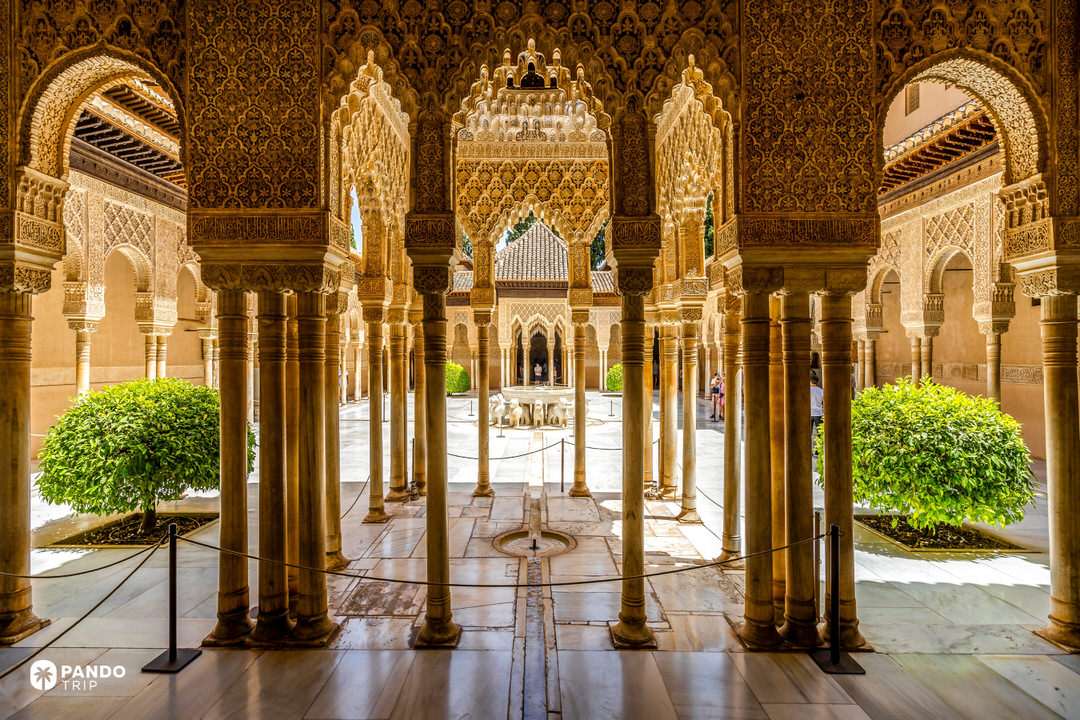
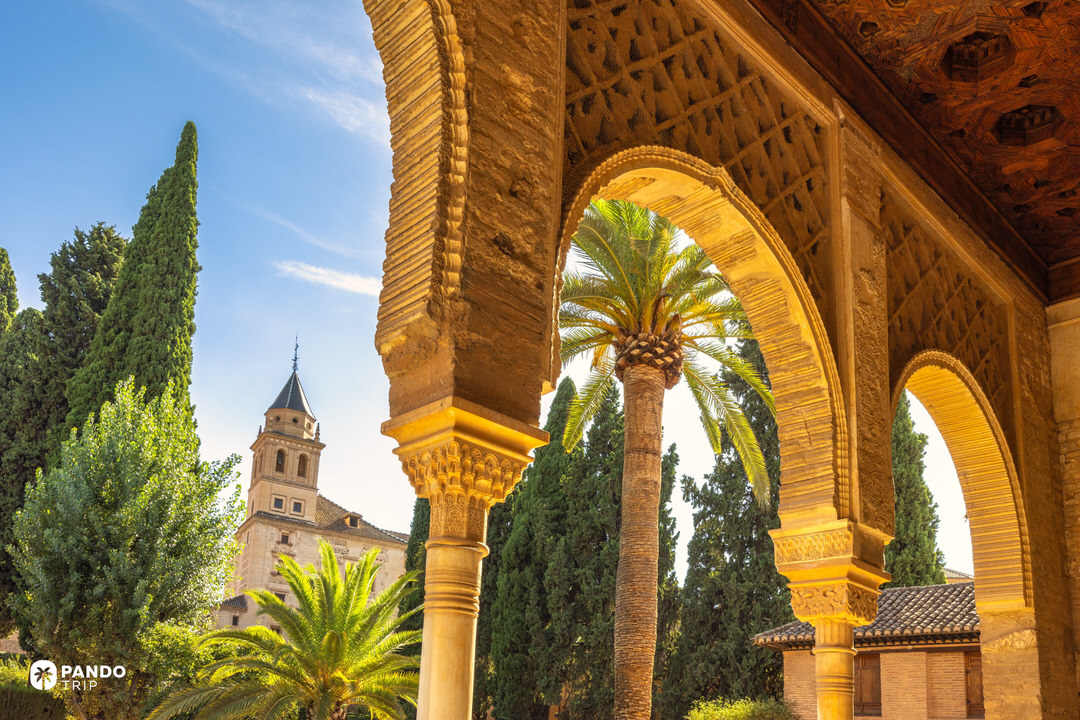
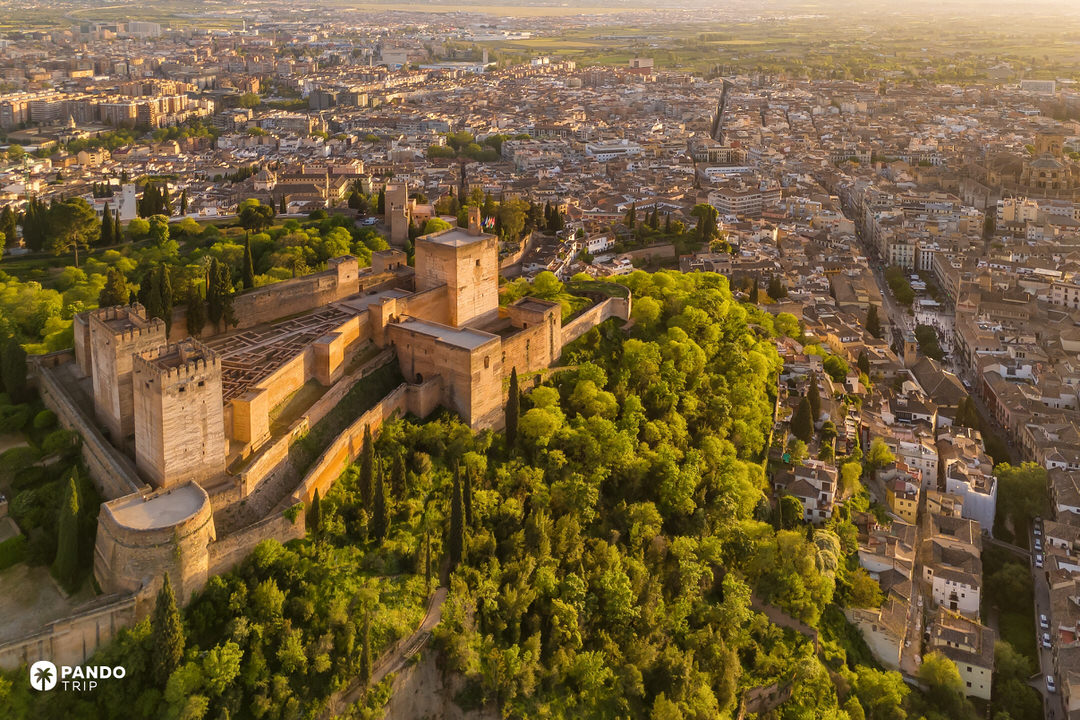
There are exactly 17 possible wallpaper symmetry groups in mathematics. A Russian mathematician proved this in 1891. The tilework on these walls uses at least 13 of them. Possibly all 17. Nasrid artisans worked this out with a ruler and a compass, five centuries before the formal proof existed.
The walls were never white. Lab analysis found the originals: lapis lazuli blue, cinnabar red, malachite green, gold leaf. Centuries of fading erased what was once the inside of a jewel box.
In the courtyard, the Lion Fountain was a water clock. Twelve marble lions with hollow insides and hidden plumbing released water one by one as the basin filled. All twelve spouted at noon. Then the whole system reset. No electricity. No gears. Just gravity.
Visiting: Open to all, €21. Book 2–3 months ahead for peak season. Only 300 people per 30-minute slot in the Nasrid Palaces. Arrive late and you lose your ticket.
| Fact box: |
| Built: From 1238, main construction 14th century Style: Nasrid/Moorish Patron: Nasrid dynasty Size: ~142,000 m² (35 acres), 30 towers. Larger than 20 football fields, but the famous rooms feel surprisingly small. Open to non-Muslims: Yes (not a mosque) |
4. Taj Mahal, Agra, India: the tomb where a whisper hangs in the air for 28 seconds
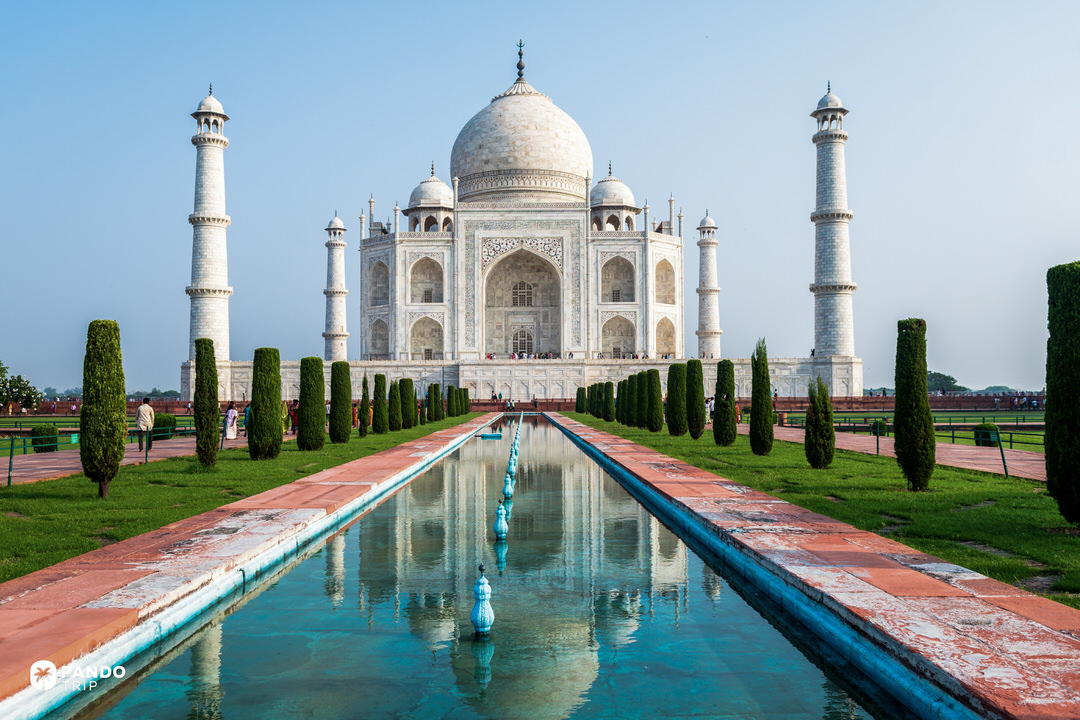
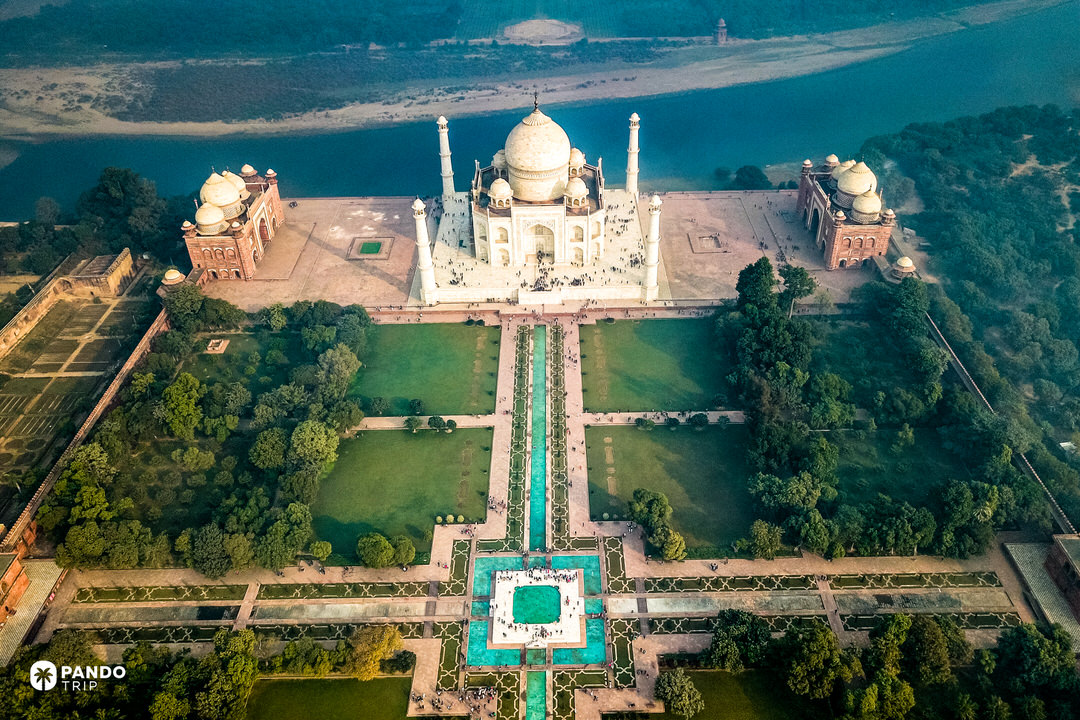
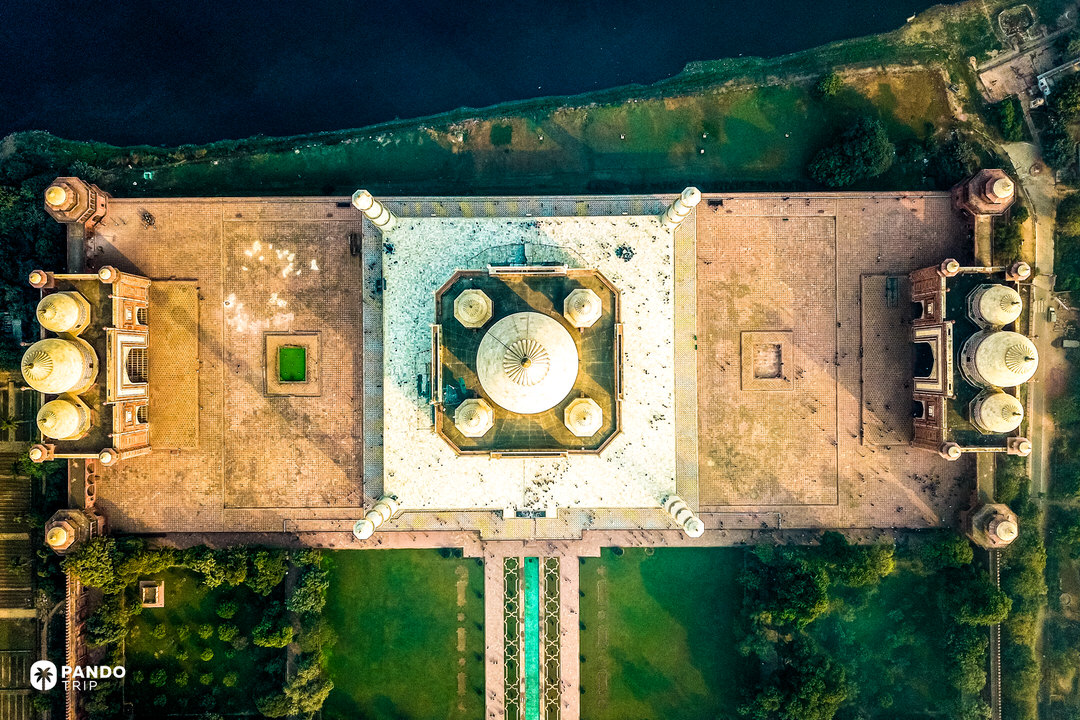
Inside the main chamber, a sound echoes for 28 seconds. This was designed on purpose. The dome shape, marble surfaces, and octagonal geometry were calculated so that Quran chanting would overlap in the air, creating an unbroken hum that never fully stops.
In 1968, jazz flutist Paul Horn recorded an album inside, improvising over his own echo. It sold a million copies.
The marble changes color throughout the day. Pink at dawn. Blinding white at noon. Gold at sunset. Silver-blue under moonlight. Different light wavelengths interact with the 900-million-year-old stone at different angles. Shah Jahan’s architects picked this exact marble because it does this.
Shah Jahan was later imprisoned by his own son. He spent his last eight years watching the Taj through a small window.
Visiting: Open to all, ~$15 for foreigners. Full moon viewing limited to 400 people per night. The river behind the monument runs thick with pollution. The contrast is hard to ignore.
| Fact box: |
| Built: 1632–1653 (21 years) Style: Mughal Architect: Ustad Ahmad Lahauri (team lead) Patron: Emperor Shah Jahan Cost: ~32 million rupees (over $800 million today) Size: 73m tall, 17-hectare complex. The dome is slightly shorter than the Leaning Tower of Pisa. Open to non-Muslims: Yes |
5. Blue Mosque, Istanbul, Turkey: the 21,043 tiles that killed a 200-year art form
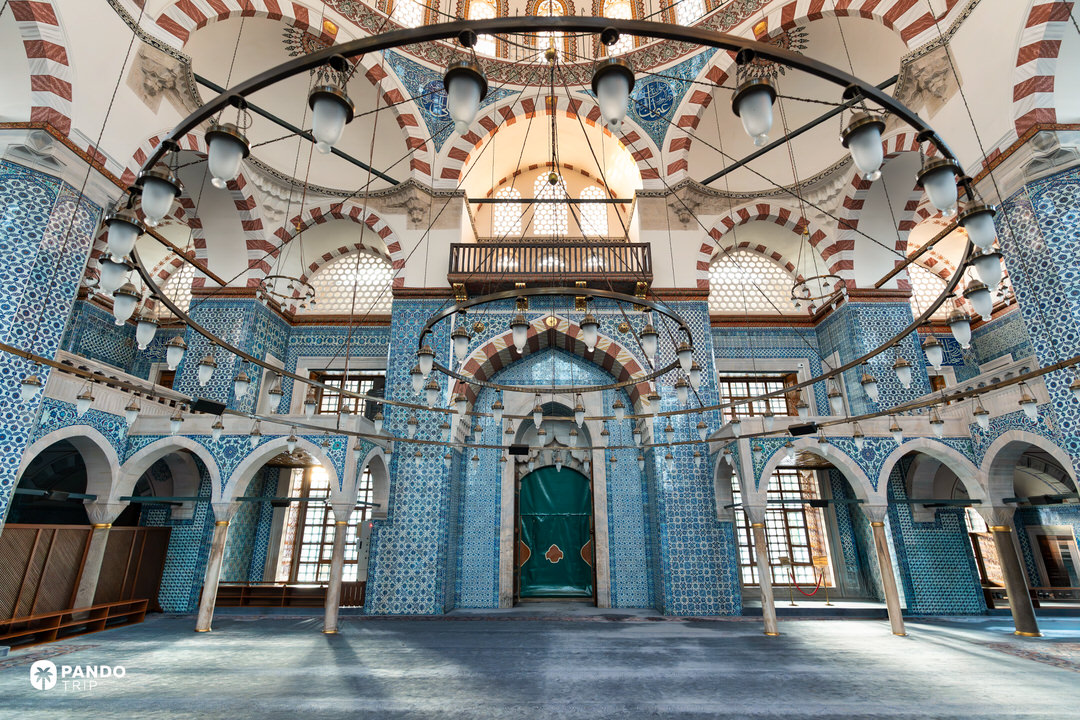
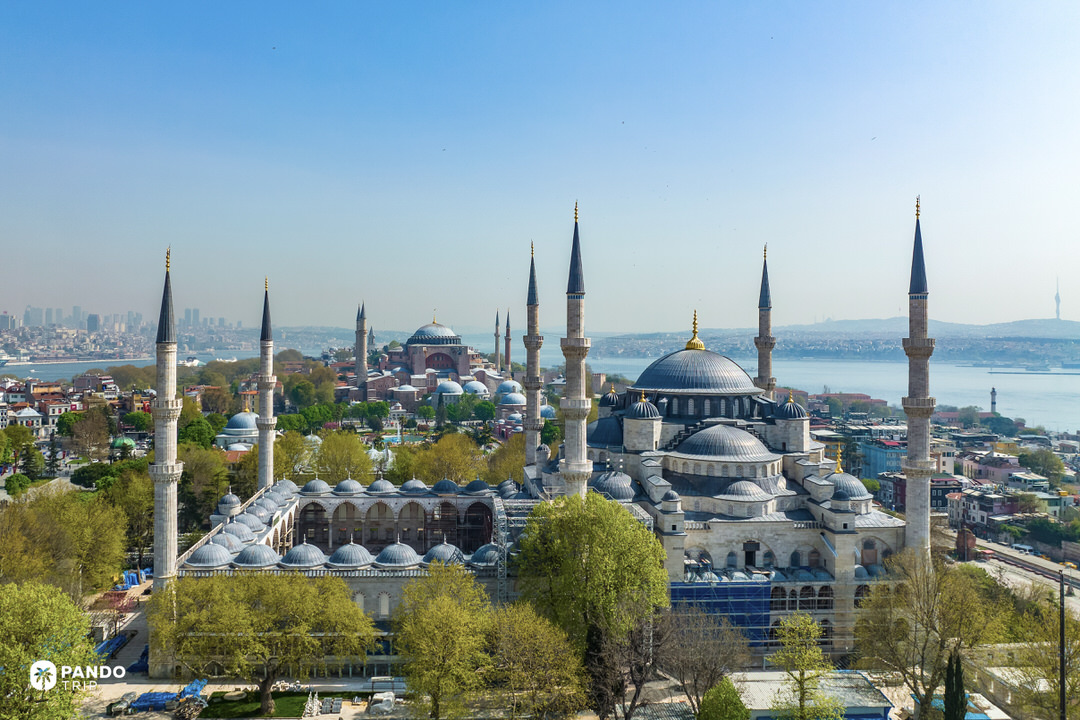
The blue comes from 21,043 handmade Iznik ceramic tiles on the lower walls. Over 50 tulip designs. Cobalt blue from Persia. The famous “Iznik red” from a raised clay formula nobody has been able to copy since.
These tiles are the last masterpiece of a ceramic tradition that died with them. Sultan Ahmed I demanded so many that he consumed the entire output of Iznik’s workshops. Within years, the formulas for both the blue and the red were permanently lost. Every tile here is irreplaceable.
He ordered the mosque at 19. He died at 27, shortly after it was finished. No military victories, which mattered, because Ottoman tradition required imperial mosques to be paid for with war spoils. He broke the rule anyway.
Visiting: Free entry. Closed during five daily prayers and on Friday mornings. The blue is subtler in person than Instagram suggests.
| Fact box: |
| Built: 1609–1617 Style: Classical Ottoman Architect: Sedefkâr Mehmed Ağa (last student of Mimar Sinan) Patron: Sultan Ahmed I Size: 64 × 72m prayer hall, dome 43m high, capacity 10,000. Size of an aircraft hangar, but massive pillars break the space into something more intimate. Open to non-Muslims: Yes |
6. Hassan II Mosque, Casablanca, Morocco: the mosque with a laser beam to Mecca that’s losing a war with the ocean
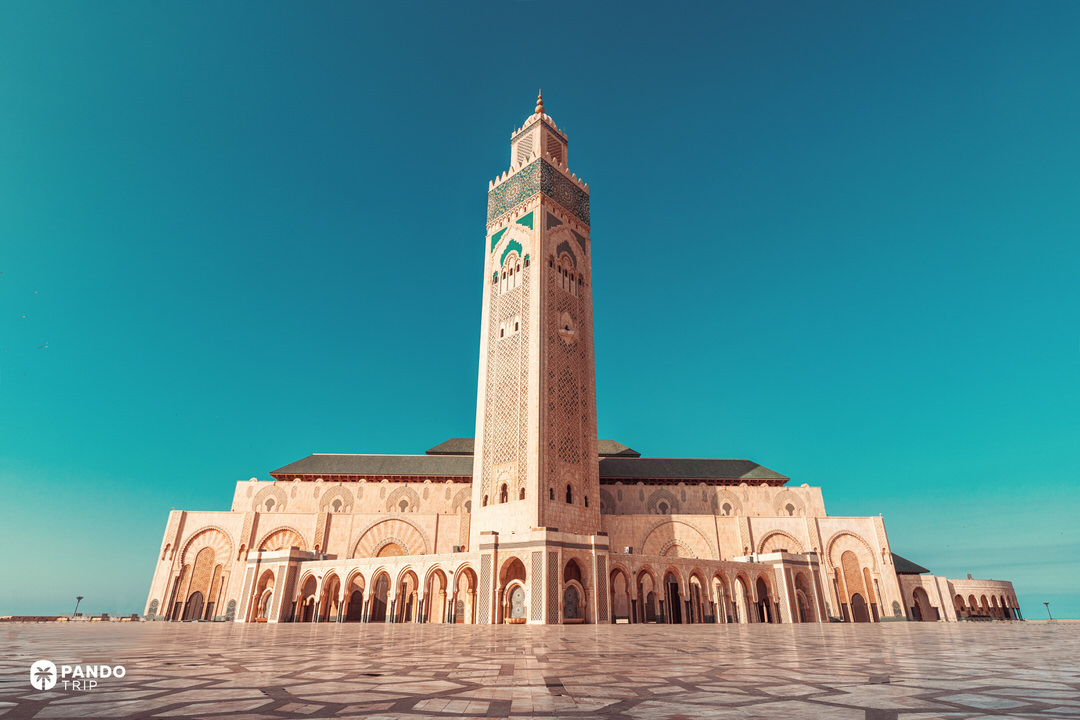
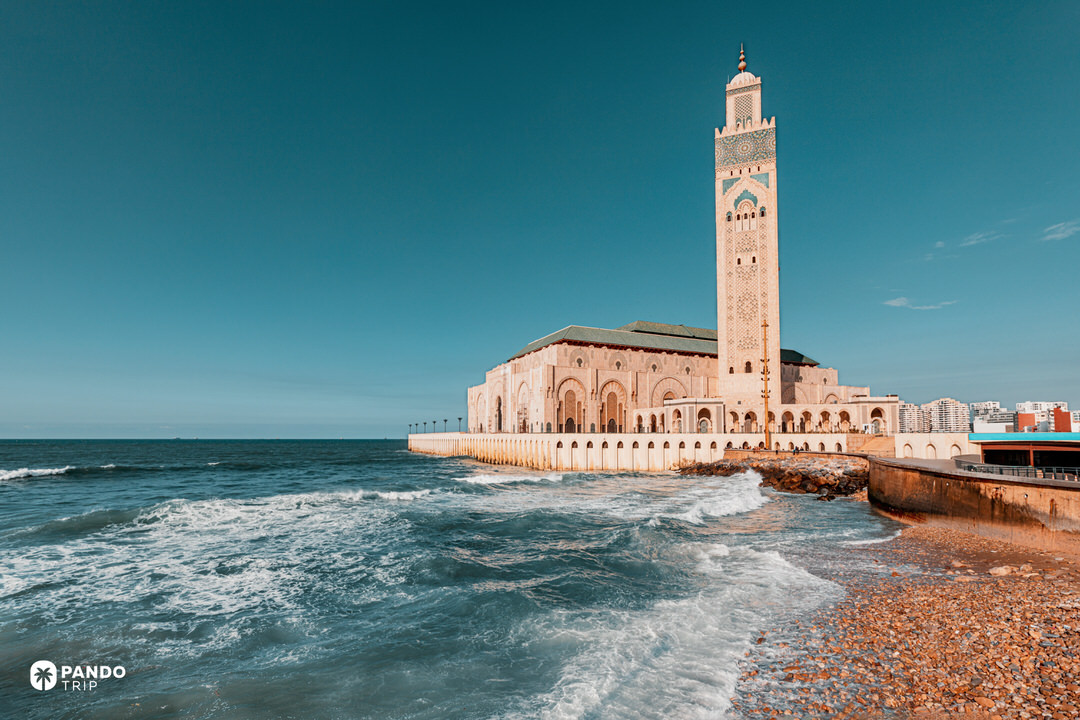
One-third of this mosque sits on a platform over the Atlantic Ocean. 40,000 tonnes of steel driven into the seabed. Two breakwaters holding back ten-meter waves.
Within ten years of opening, saltwater had corroded the foundations so badly that 6,000 cubic meters of concrete had to be demolished and rebuilt. The repair cost €10 million. The ocean is not done.
From the 210-meter minaret (60 stories tall), a laser fires 30 kilometers toward Mecca every night. It doubles as a lighthouse for ships.
Funding was not simple. King Hassan II raised most of the money through “public subscription” that international reports consistently describe as less than voluntary. Twelve million Moroccans donated during a period of economic austerity.
Visiting: The only mosque in Morocco open to non-Muslims. Guided tours only, ~$13. Casablanca itself is not Morocco’s most charming city. Many visitors prefer Marrakech or Chefchaouen.
| Fact box: |
| Built: 1986–1993 (7 years) Style: Traditional Moroccan with modern engineering Architect: Michel Pinseau Patron: King Hassan II Cost: ~€585 million Size: Prayer hall 200 × 100m, minaret 210m, capacity 105,000. The prayer hall alone is bigger than two football fields. Open to non-Muslims: Yes |
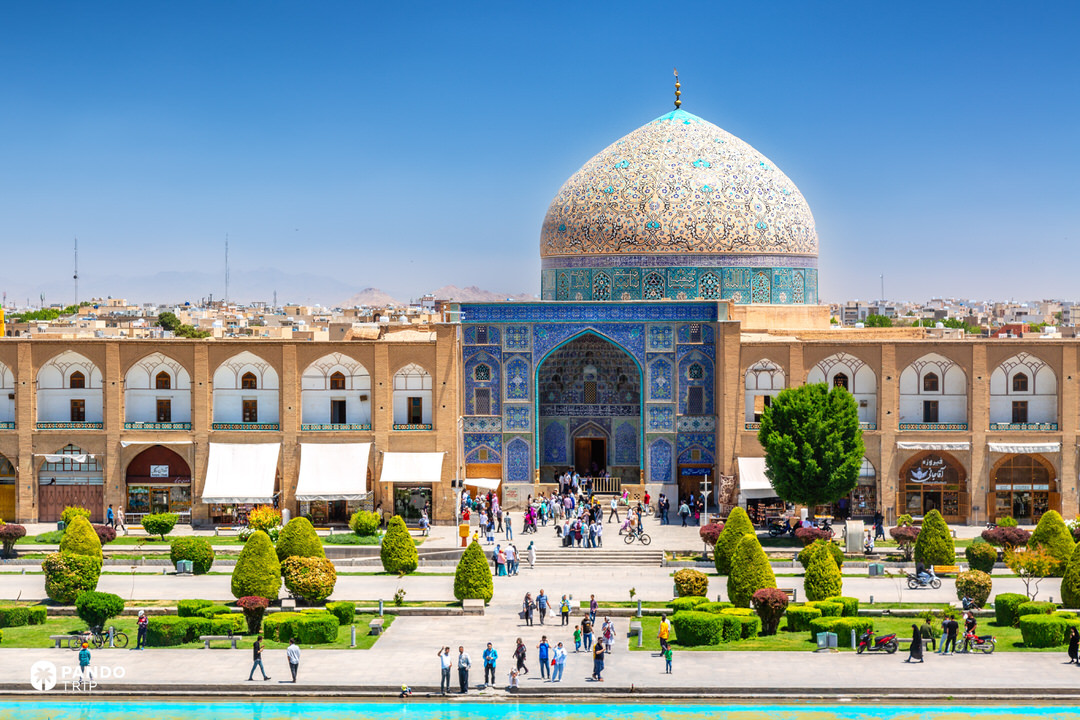
7. Sheikh Lotfollah Mosque, Isfahan, Iran: the dome where God finishes the architect’s painting
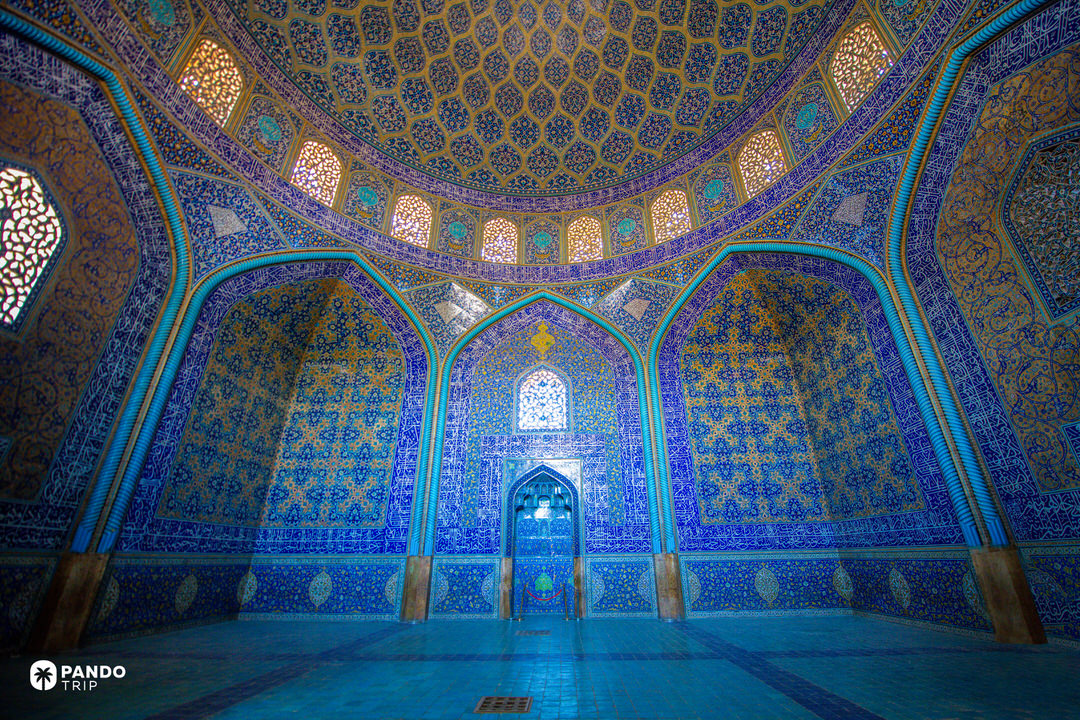
At the center of the dome, the architect painted a peacock. Without a tail.
The tail is made of sunlight. When rays pass through 16 lattice windows at the dome’s base, they form the peacock’s missing feathers in pure light. The bird is complete only when the sun cooperates. The effect shifts every hour. Some visitors come back three times in one day to watch it change.
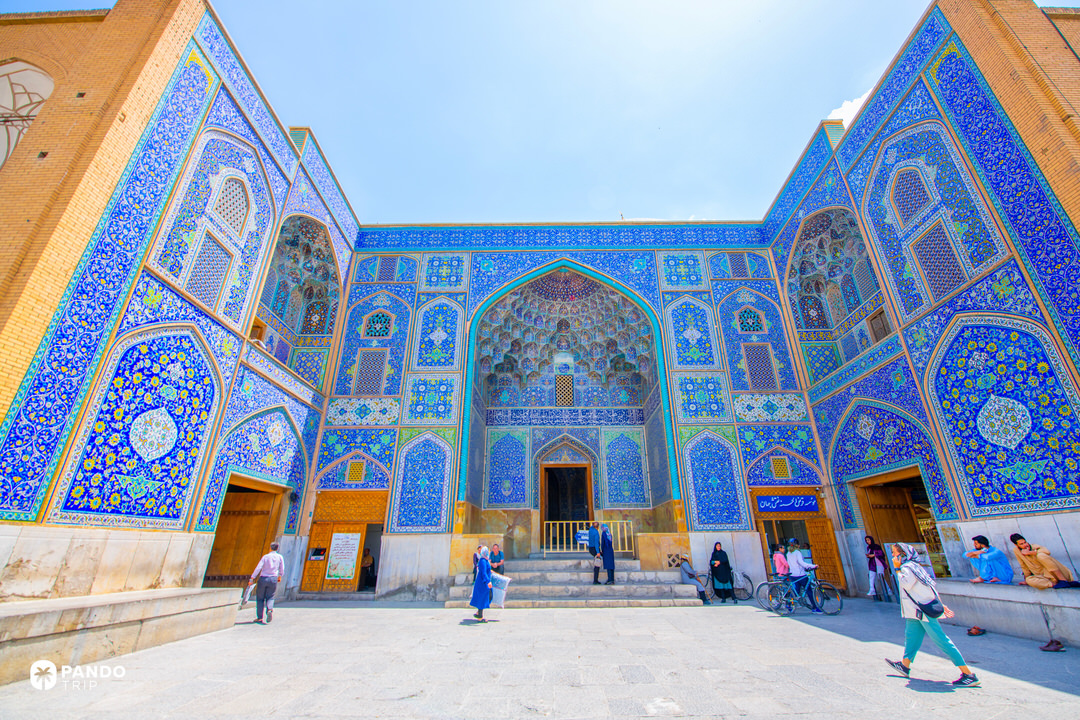
No minarets. No courtyard. This was not built for the public. Shah Abbas I built a secret tunnel under Isfahan’s enormous main square so women of the harem could walk to prayer unseen.
The dome itself changes color. Pink at dawn. Cream at noon. Brick-red at sunset. The tiles stay the same. The light does the work.
Visiting: Open to all. The mosque is tiny. You can see everything in minutes.
| Fact box: |
| Visiting: Open to all. The mosque is tiny. You can see everything in minutes. Built: 1603–1619 (16 years) Style: Safavid Architect: Mohammad Reza Isfahani Patron: Shah Abbas I Size: Single chamber, dome 13m wide. About the size of a large living room. The smallest building on this list. Many say the most beautiful. Open to non-Muslims: Yes |
8. Mosque-Cathedral of Córdoba, Spain: an 8th-century forest with a cathedral growing inside it
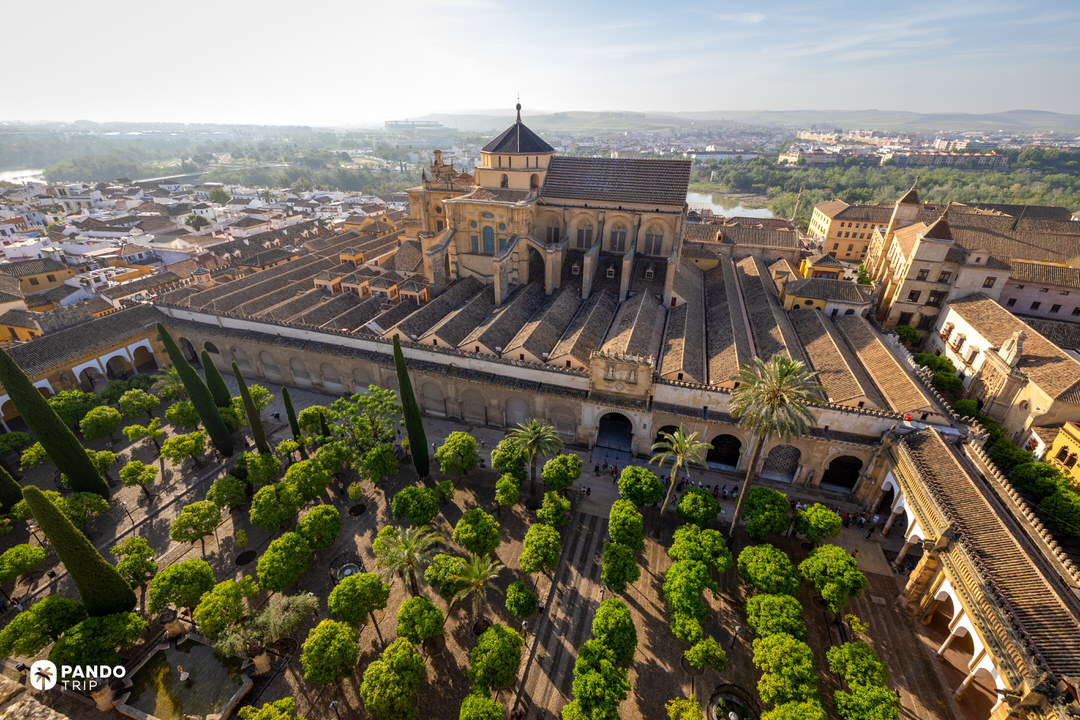
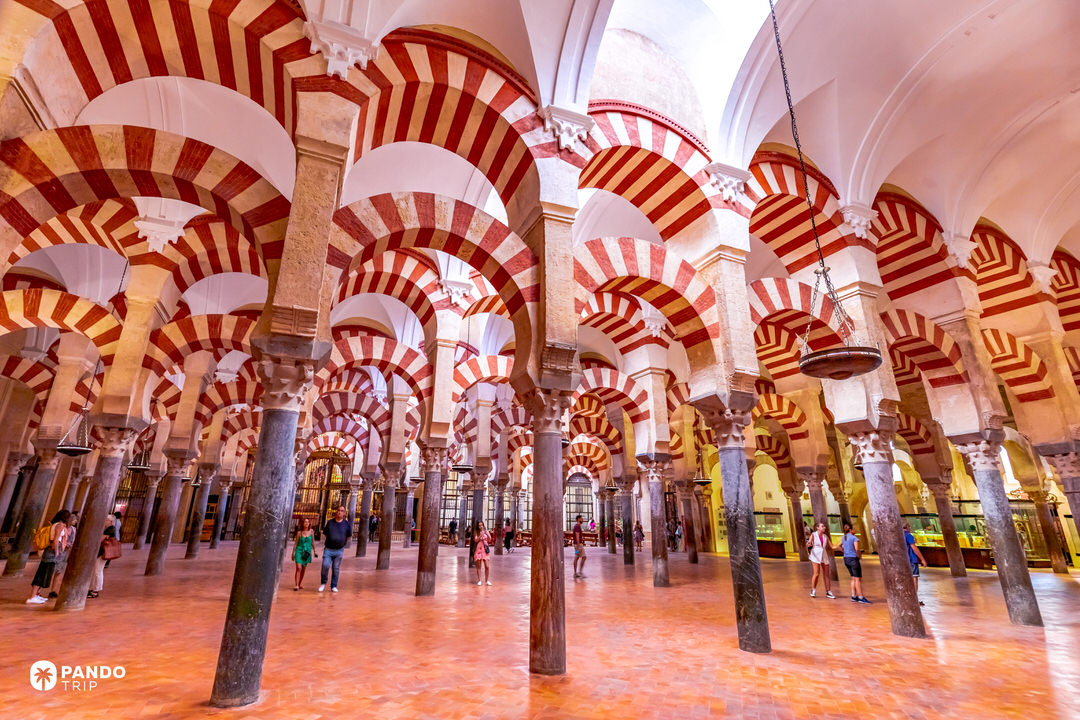
856 columns of jasper, onyx, marble, and granite in every direction. Red-and-white striped arches 11 meters overhead. It looks like a stone forest.
Then you turn a corner and hit a full Renaissance cathedral. Baroque altars. Gothic vaults. Built into the center of the mosque by tearing out part of the original. No other building in the world has a Christian cathedral physically growing from inside an Islamic mosque.
The columns were recycled from Roman ruins, but they were too short. So the architects stacked one arch on top of another to reach the ceiling. A structural problem that became the building’s most famous feature.
Muslim prayer has been banned here since 1236. The controversy is alive. In 2010, two tourists were arrested for kneeling to pray.
Visiting: Open to all, €13. Free Mon–Sat 8:30–9:30am. A 2025 fire damaged a small section; some scaffolding may remain.
| Fact box: |
| Built: Mosque 785 CE; cathedral insertion from 1523 Style: Umayyad/Moorish + Renaissance/Gothic/Baroque Patron: Abd al-Rahman I (mosque); Bishop Alonso de Manrique (cathedral) Size: ~23,400 m² (180 × 130m). Three Olympic pools would fit inside. Open to non-Muslims: Yes (functioning Catholic cathedral) |
9. Dome of the Rock, Jerusalem: the golden power play built 70 centimeters smaller than its rival on purpose
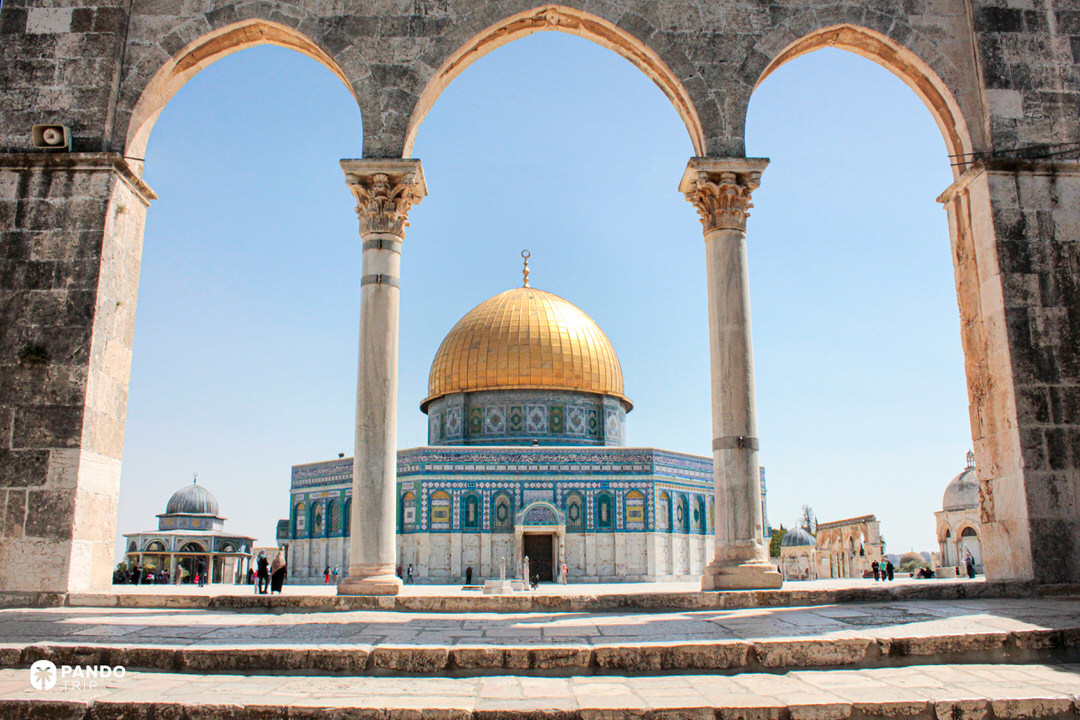
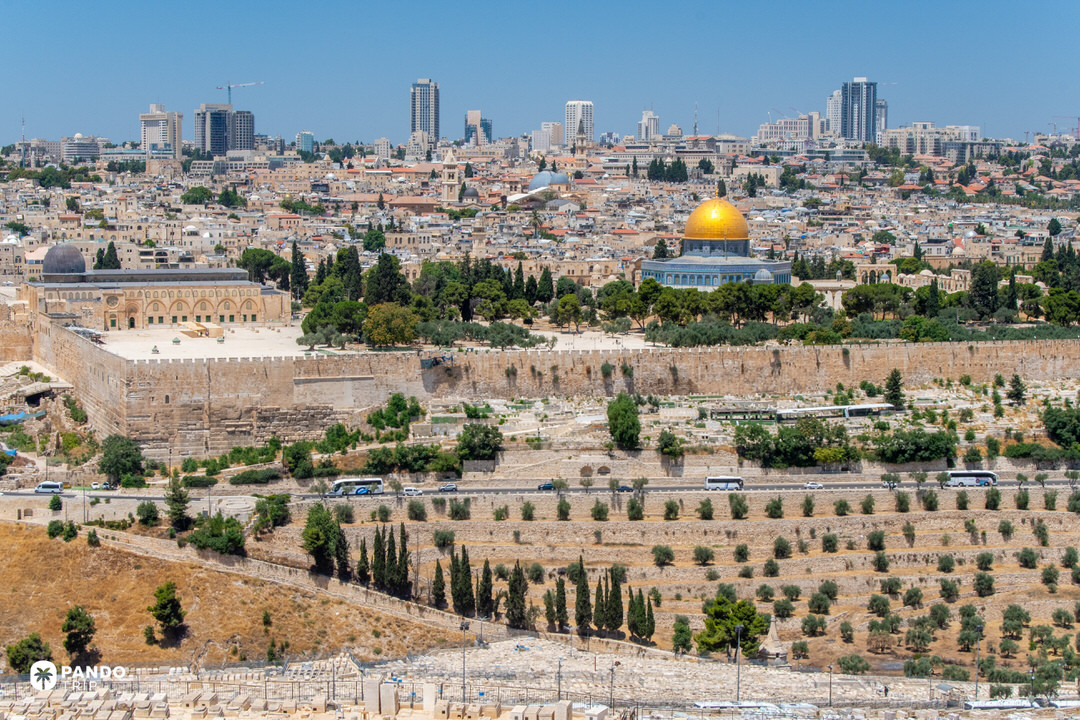

Built 59 years after Muhammad’s death. Its dome was made almost exactly the same size as the Church of the Holy Sepulchre. 70 centimeters narrower. But placed on a platform 16 feet higher. Sized to overshadow, not to copy. Historian K.A.C. Creswell proved the match was intentional.
This is not a mosque. It is a shrine over the Foundation Stone, where Judaism, Christianity, and Islam converge. The Al-Aqsa Mosque (silver dome, 200 meters south) is the actual mosque. People confuse them because the gold photographs better.
The gold you see today was paid for in 1993 by Jordan’s King Hussein, who sold one of his London houses to fund it. He refused Saudi Arabia’s offer. Accepting would have weakened Jordan’s role as guardian of the site.
Visiting: Non-Muslims cannot enter the interior (restricted since ~2000). Exterior walkable Sunday–Thursday mornings only. Hours change without notice. One of the most politically sensitive places on Earth.
| Fact box: |
| Built: ~685–691 CE Style: Early Islamic/Umayyad Patron: Caliph Abd al-Malik Cost: Seven years of Egypt’s tax revenue Size: Dome 20m wide, ~35m tall. Height of a 10-story building. Small compared to later mosques, but the gold makes it impossible to miss. Open to non-Muslims: Exterior only |
10. Ithra, Dhahran, Saudi Arabia: 350 km of custom steel tubes on the spot where Saudi oil first flowed
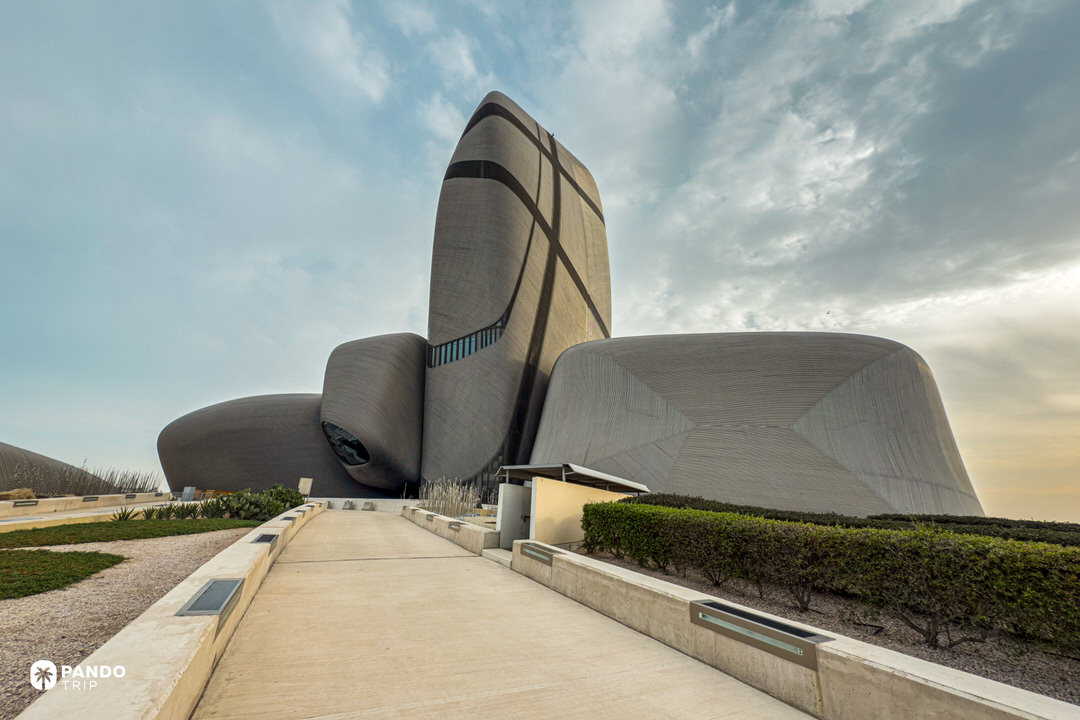
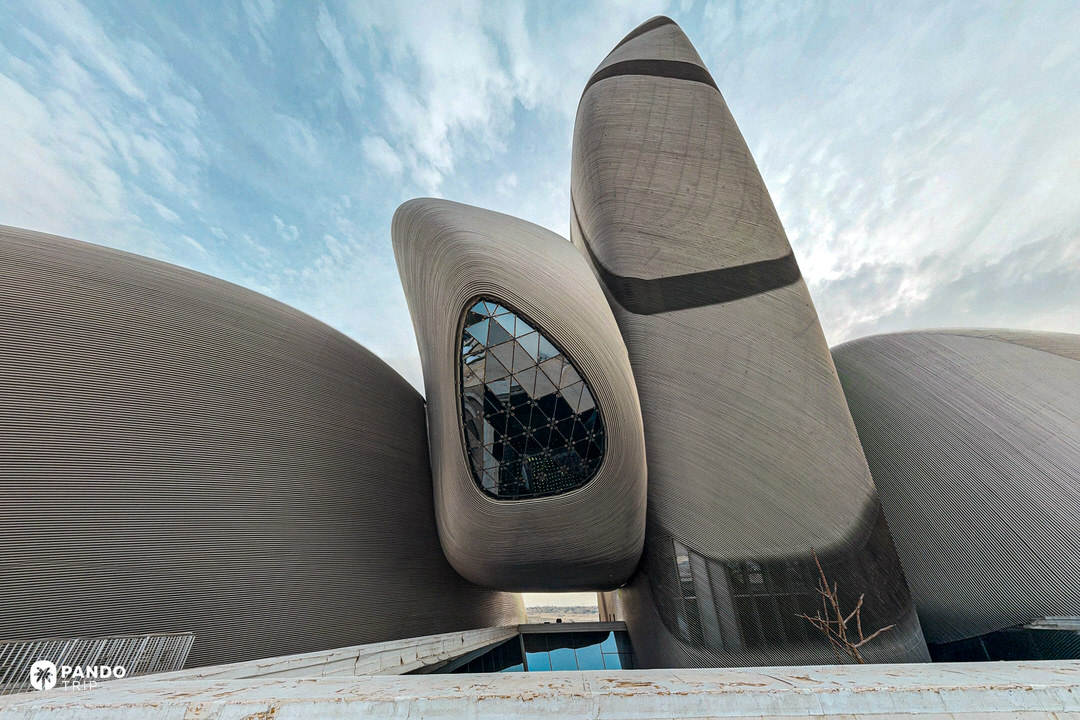
The building’s skin is made of 350 kilometers of individually bent stainless steel tubes. That is enough to stretch from Dhahran to Riyadh. About 80,000 unique pieces. Every single tube has its own QR code and laser-engraved assembly instructions. Installers maintained a 10mm gap between each one.
It sits beside the Prosperity Well, the exact spot where oil first flowed commercially in Saudi Arabia in 1938. The building’s message is hard to miss. A country built on oil, investing in something else.
Inside, 42 timber columns twist 90 degrees from floor to ceiling, each 25 meters tall. They reinterpret the traditional Islamic lattice screen at a scale the original builders could not have imagined.
Visiting: Dhahran is not a tourist destination. Highways and desert, no walkable neighborhood. Visitors have been turned away for wearing shorts. General admission free. Open until midnight.
| Fact box: |
| Built: Conceived 2006, opened 2018 Style: Neo-futurist/parametric Architect: Snøhetta (Norway) Funder: Saudi Aramco Cost: ~$400 million (estimated) Size: 80,000–100,000 m², tower 110m. Five pebble-shaped volumes that feel more like a landscape than a building. Open to non-Muslims: Yes |
If the geometry behind these buildings interests you, take a look at the 10 most famous geometric architectural buildings.