
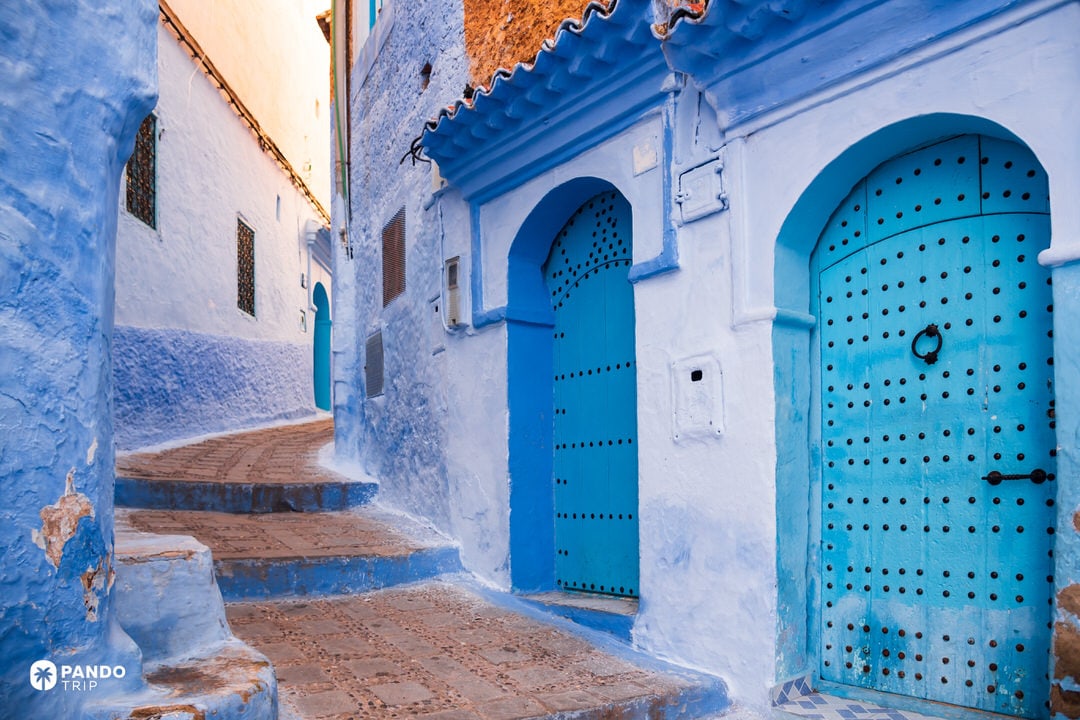
Why did an entire Moroccan mountain town paint itself blue? The answer isn’t as straightforward as you might expect. Chefchaouen Morocco spreads across the Rif Mountains like spilled indigo paint, its blue-washed buildings creating one of the most photographed cities in North Africa. Every corner, doorway, and staircase offers another shade of blue – from powder blue to deep cobalt – transforming ordinary architecture into something that stops two million visitors in their tracks each year. Your Instagram feed has probably already shown you those famous shots: travelers posing against cerulean walls, cats lounging on sapphire steps, morning light turning the medina into a photographer’s playground.
After visiting Chefchaouen four times across different seasons and diving deep into its history, I’ve put together this comprehensive guide to the blue city Morocco. Beyond the photogenic facades, there’s a working mountain town with its own rhythms, traditions, and stories. This guide walks you through everything from navigating the medina’s maze of blue alleys to understanding the various theories behind the city’s famous color scheme. Whether you’re planning a day trip from Fez or settling in for a longer stay, you’ll find the practical details and cultural context to make the most of your visit to Morocco’s most distinctive destination.
- Why is Chefchaouen Blue?
- Where is the Blue City in Morocco? Location & Geography
- How to Get to Chefchaouen: Complete Transportation Guide
- Best Time to Visit Chefchaouen
- Best Chefchaouen Photography Spots & Instagram Locations
- Top Things to Do in Chefchaouen
- Where to Stay in Blue City: Best Hotels & Riads
- What to Eat in Chefchaouen
- Frequently Asked Questions
Why is Chefchaouen Blue?
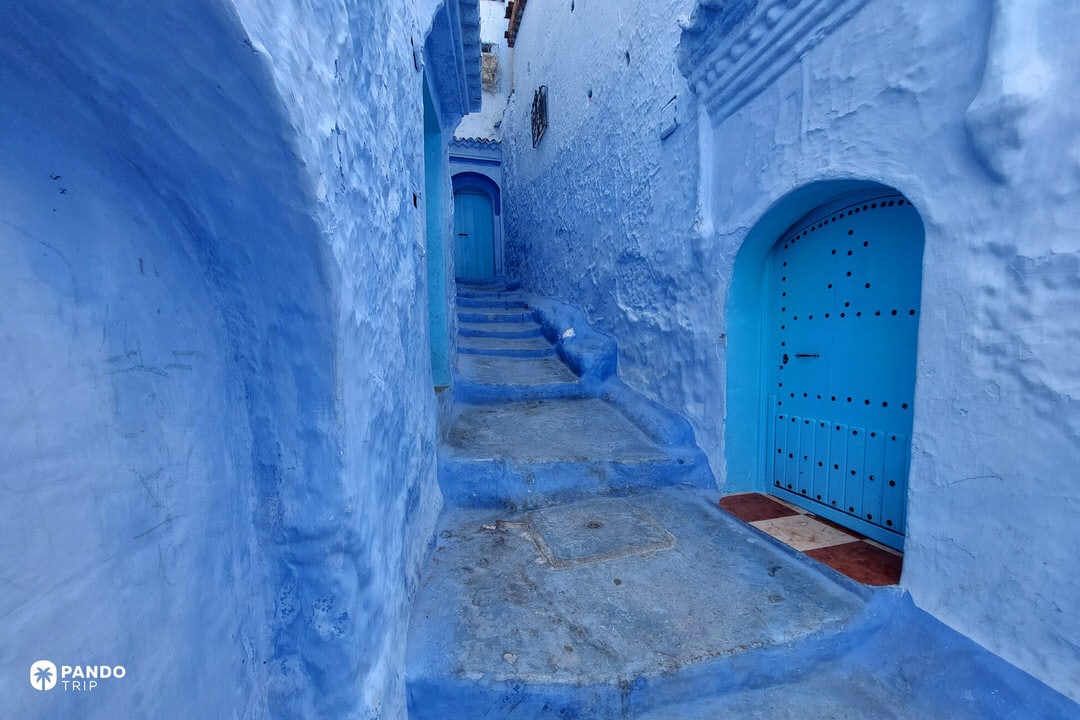
The blue walls of Chefchaouen have sparked countless theories since tourists first discovered this mountain town. Ali ibn Rashid al-Alami founded the city in 1471 as a fortress against Portuguese invasions, but the blue paint came later. The truth is, no single explanation fully accounts for why an entire city committed to one color scheme. Instead, multiple theories – each with supporting evidence – point to a fascinating intersection of faith, function, and economics.
The Jewish Heritage Theory
The most widely accepted explanation traces the blue tradition to Chefchaouen’s Jewish community. Sephardic Jews fleeing the Spanish Inquisition in the 15th century found refuge in this mountain fortress, bringing their customs with them. A second wave arrived in the 1930s, escaping persecution in Europe.
In Jewish tradition, blue represents the sky and, by extension, heaven and divinity. Painting homes blue served as a daily reminder of their connection to God – a way to create sacred space in unfamiliar territory. The mellah, or Jewish quarter, was reportedly the first neighborhood to adopt the blue paint. From there, the practice gradually spread throughout the medina. This theory gains credibility from the timing and the concentration of blue buildings in formerly Jewish areas.
Symbolic and Cultural Meanings
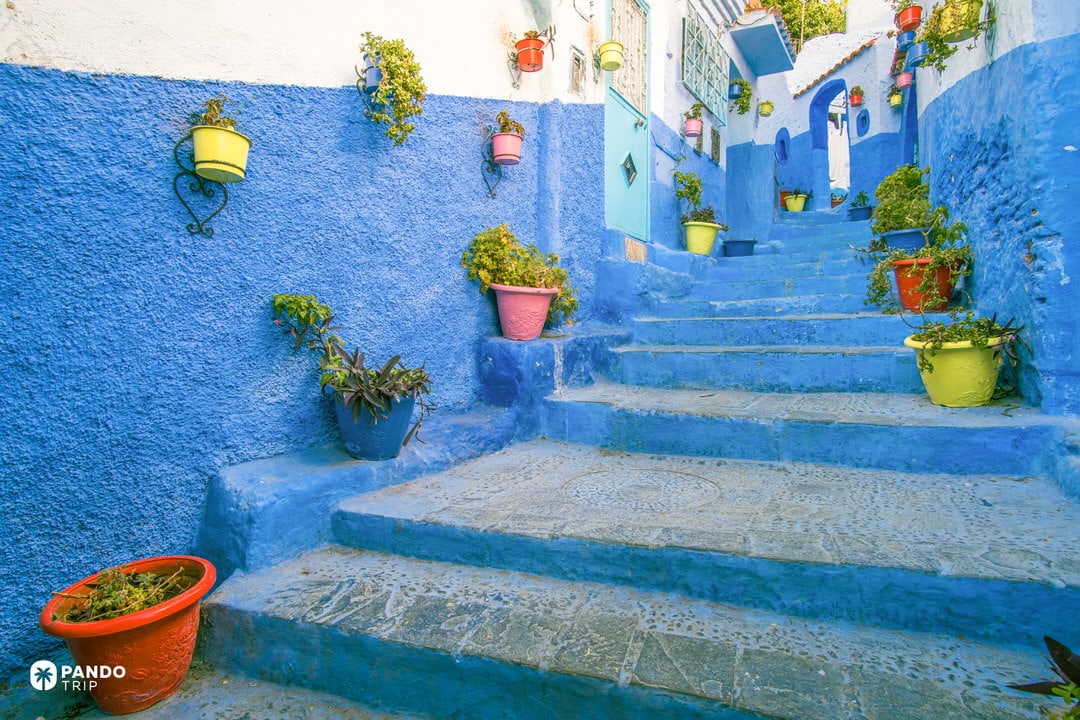
Blue carries weight beyond religious tradition. In Islamic culture, the color represents happiness and optimism. The various shades throughout Chefchaouen – from soft powder blue to deep indigo – evoke both sky and water, precious elements in any mountain town. This visual connection to water symbolizes purity and life, while the sky blue creates an atmosphere of tranquility that visitors immediately notice.
The aesthetic harmony matters too. Blue walls against whitewashed accents and the green Rif Mountains create a color palette that feels intentional rather than accidental. This visual coherence suggests deliberate choices rather than random tradition.
Practical Explanations
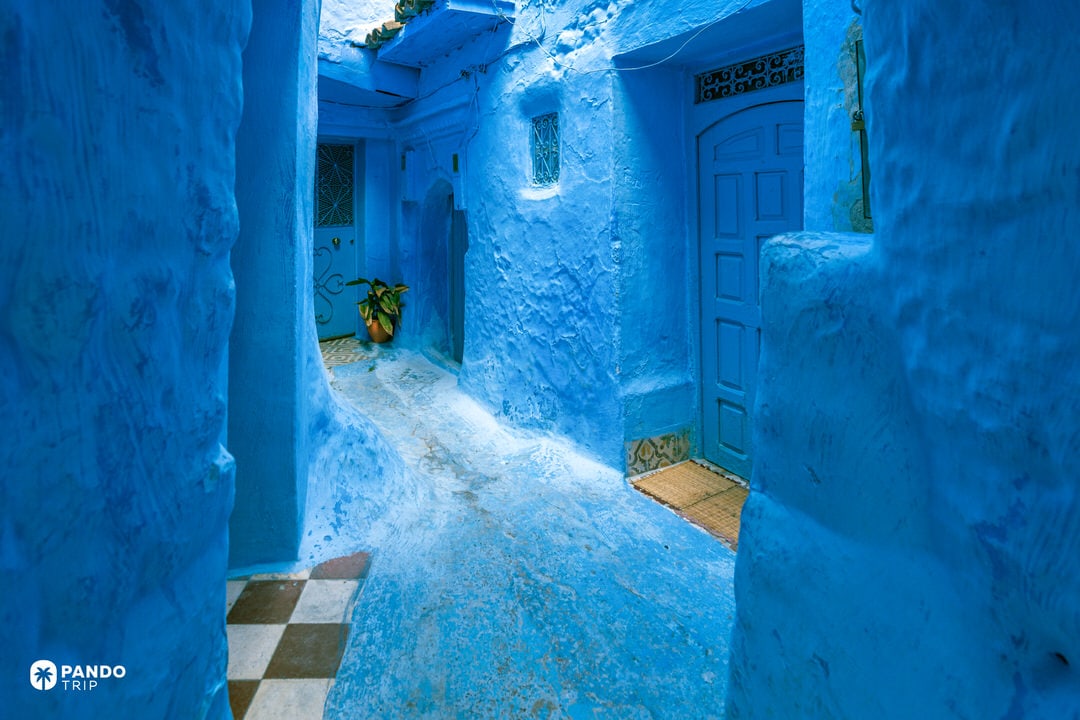
Not all theories involve symbolism. Some locals insist the blue paint serves practical purposes. One persistent belief holds that blue walls repel mosquitoes. The logic follows that mosquitoes avoid areas resembling water, and blue-painted walls might deter these insects, potentially reducing malaria risk. While scientific evidence for blue paint as mosquito repellent remains thin, residents of blue-painted quarters historically reported fewer mosquito problems than their neighbors.
The cooling effect offers another practical angle. Light blue shades reflect sunlight more effectively than darker colors, keeping interiors cooler during summer months. Though Chefchaouen’s mountain elevation provides natural cooling, the reflective properties of blue paint contribute to comfortable indoor temperatures.
The Tourism Factor
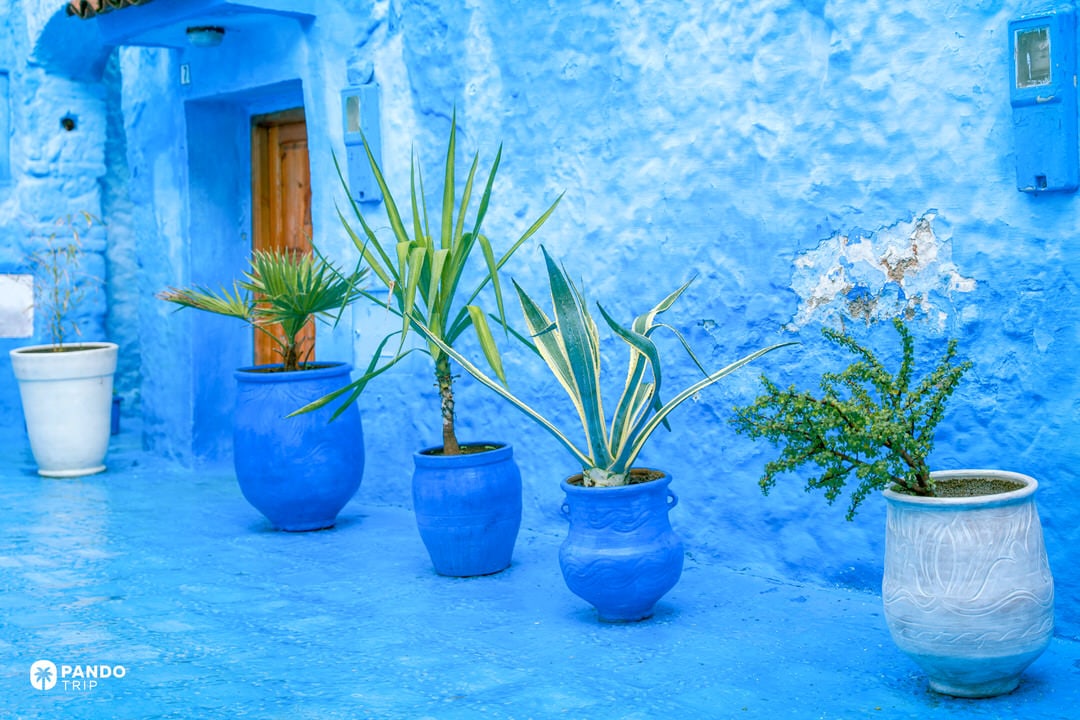
A more cynical theory emerged in recent decades. Some residents claim local authorities promoted the blue painting in the 1970s specifically to attract tourists. Chefchaouen remained relatively isolated until the late 20th century, when word of its blue medina began drawing international visitors.
This theory explains the maintenance and expansion of the blue tradition but not its origins. Tourism certainly incentivizes keeping walls freshly painted – the city’s two million annual visitors contribute significantly to the local economy. But the practice predates the tourism boom by centuries.

The Most Likely Answer
Chefchaouen’s blue identity probably developed through layers of influence rather than a single decision. The tradition likely began with Sephardic Jewish refugees in the 15th or early 20th century, found acceptance among Muslim residents who appreciated its practical and aesthetic qualities, and received official encouragement once tourism potential became clear.
Today, maintaining the blue requires constant effort. Residents repaint their walls regularly, using specific shades of blue paint that create the city’s signature palette. The result transforms an ordinary mountain town into something extraordinary – a place where color itself becomes the main attraction. Whatever combination of faith, function, and economics originally inspired the blue walls, the outcome remains the same: a city unlike any other in Morocco or beyond.
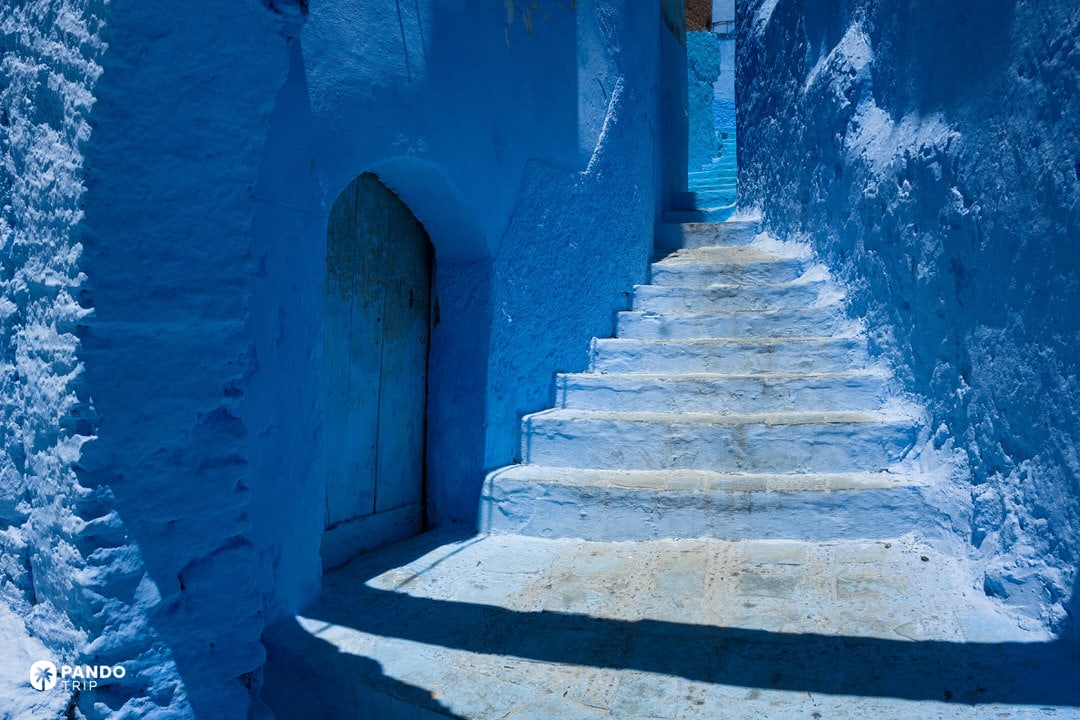
Where is the Blue City in Morocco? Location & Geography
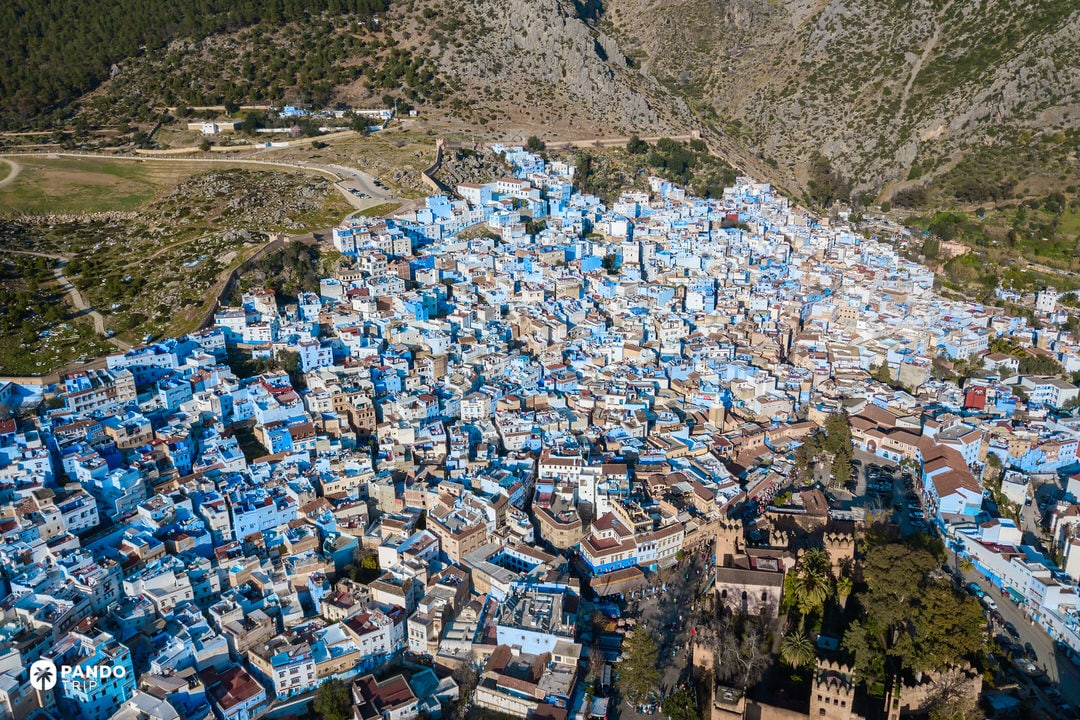
Chefchaouen sits 600 meters above sea level in Morocco’s Rif Mountains, positioned between two distinctive peaks that gave the city its name. The twin summits of Jebel Kebdana and Jebel Tisouka rise like horns above the town – ichawen in Berber means “horns,” making Chefchaouen essentially “look at the horns.” The surrounding Rif range creates a biodiverse landscape of cedar and pine forests, isolating the city from Morocco’s desert interior.
This mountain setting defines daily life in Chefchaouen. The medina’s steep cobblestone streets zigzag up the hillside, making every walk a climb. But the altitude pays dividends in climate – summer temperatures peak around 29°C (84°F) during the day and drop to 17°C (63°F) at night, while cities like Marrakech swelter above 40°C. The mountain location provides natural cooling, with breezes flowing down from the peaks through narrow alleyways.
How to Get to Chefchaouen: Complete Transportation Guide
Chefchaouen has no airport or train station, so reaching the blue city requires road travel for the final stretch. The closest major hubs are Tangier to the north and Fez to the south. Most visitors arrive by bus or shared taxi, with journey times ranging from two hours (from Tangier) to a full day (from Marrakech).
From Tangier (Closest Airport)

Tangier’s Ibn Battouta Airport serves as the main gateway for international visitors. CTM buses depart several times daily for Chefchaouen, taking 2.5 hours via Tetouan for MAD 60-70 (about $6-7). Book ahead in high season – these buses fill up. For the scenic mountain views, grab a right-side seat. Alternatively, shared grand taxis (large Mercedes carrying six passengers) leave when full from near Tangier’s bus station. The fare runs MAD 70 per seat, or pay MAD 400-420 for the entire taxi to depart immediately. Journey time: two hours.
From Fez

CTM operates four to six daily buses on this four-hour route, costing MAD 90-100 (about $10). The journey winds through rural towns with a rest stop midway. Shared grand taxis aren’t direct – you’d need to change in Ouezzane, making this option complicated unless you speak Arabic. Private taxis cost MAD 1,000-1,500 ($100-150) for the four-hour drive but eliminate the hassle of connections.
From Marrakech
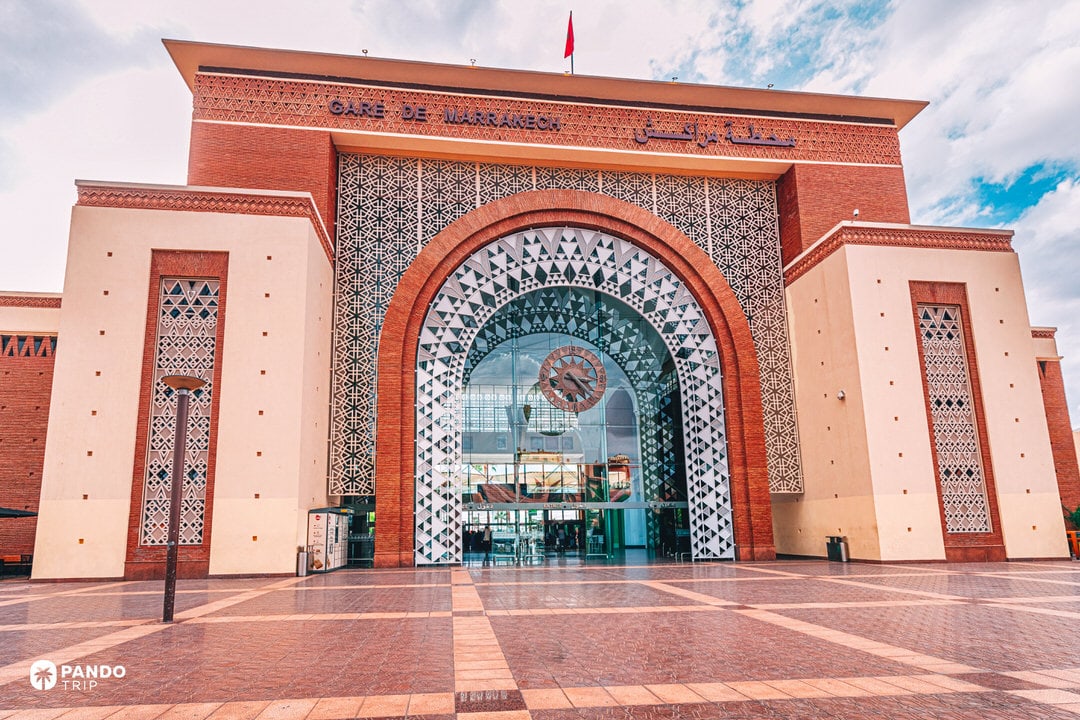
At 570 kilometers, Marrakech to Chefchaouen requires eight to 12 hours of travel. The most efficient route combines Morocco’s high-speed train with road transport. Take the morning train to Casablanca (three hours), transfer to the Al-Boraq TGV to Tangier (two hours), then catch a bus or taxi for the final leg. Total journey time runs eight to nine hours plus connections. Many travelers break this journey, stopping in Fez or Rabat to explore rather than spending an entire day in transit.
From Casablanca

The Al-Boraq high-speed train connects Casablanca to Tangier in just two hours (MAD 200-250), making this the fastest option. From Tangier, continue by CTM bus or shared taxi as described above – total travel time about five hours. CTM also runs one direct bus daily from Casablanca to Chefchaouen, departing around 1:30 PM and arriving by 8 PM. At MAD 185 ($18), it’s cheaper than the train-taxi combination but takes 6.5 hours on the road.
Best Time to Visit Chefchaouen
Spring and autumn offer the best conditions for exploring Chefchaouen. From March through May, temperatures range from 13-23°C (mid-50s to 70s°F), with wildflowers covering the hillsides and occasional light rain keeping the blue walls fresh and vivid. September through November brings similar comfort – days warm to 20-26°C (68-78°F) before cooling at night, while autumn colors frame the mountain views.

Best Chefchaouen Photography Spots & Instagram Locations
Most visitors come to Chefchaouen with cameras ready, searching for the specific blue alleyways and decorated doorways that appear across social media. The spots listed below have emerged as the most photographed locations in the medina, each for different reasons – some for their concentrated blue paint, others for unique decorative elements or viewpoints. Each listing includes Google Maps links to help you navigate the medina’s maze of blue alleys and find these exact spots without wandering aimlessly.
Callejon El Asri (Derb El Assri): Chefchaouen’s most photographed street features narrow blue stairs lined with dozens of red and green flower pots. Arrive before 9 AM to beat both crowds and harsh shadows – sunrise offers the best light. Local kids sometimes request a few dirhams “for maintenance” of this public street. The contrast between bright pots and azure walls creates the composition that launched a thousand Instagram posts.

Calle Sidi Bouchouka (Rue Sidi Bouchouka): Wide blue stairs with mosaic tile accents lead to an arched doorway decorated in blue-and-white Andalusian patterns. Located in the western medina off the main paths, this spot sees fewer tourists than other famous corners. Frame shots to include the curving stairway and overhanging vegetation for depth.
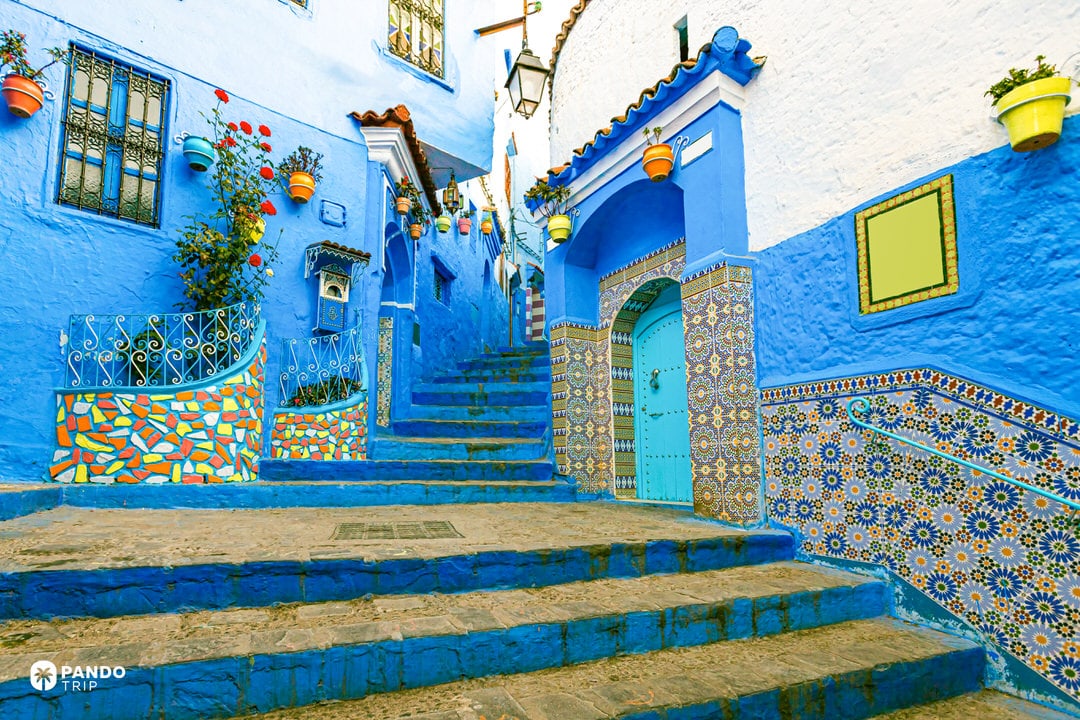
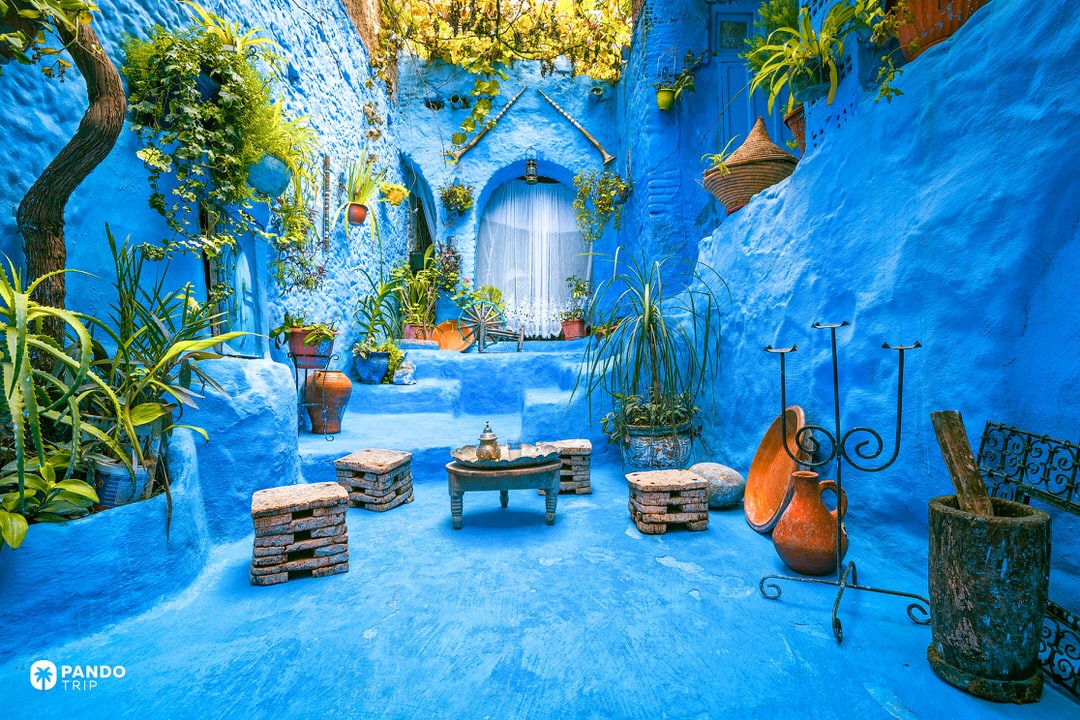
The “Paid Setup” Courtyard: This privately-owned patio charges 5 MAD (about $0.50) for five-minute photo sessions. The owner has arranged pots, textiles, and traditional furniture to create an intensely blue outdoor living room. Longer shoots cost extra, but the curated setup delivers Instagram-ready shots without searching for angles.
Said’s Orange Juice Shop: An orange juice vendor decorated his stall with an artificial orange tree and yellow bench against blue walls. The orange-on-blue color combination works perfectly for photos. Buy a glass of fresh juice (MAD 10-20) before photographing – the vendor expects it. Late afternoon provides ideal side lighting for this spot.
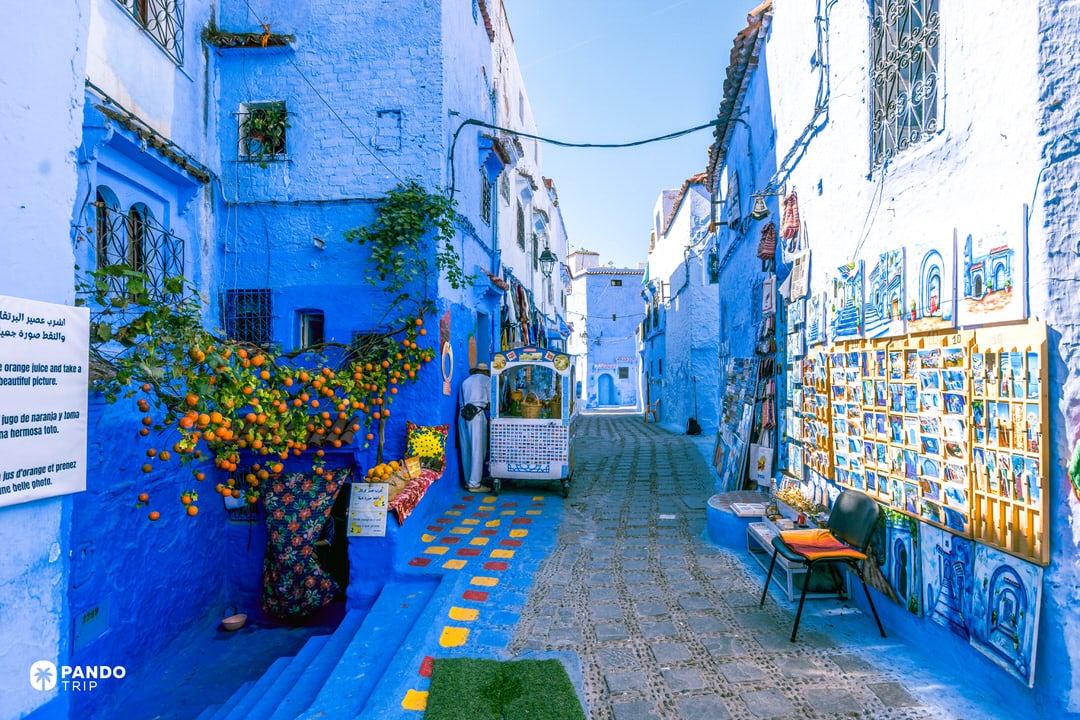
“Blue Street” (Near Orange Juice Shop): This short staircase alley shows Chefchaouen at its most monochromatic – walls, steps, and flowerpots all painted uniform blue. Wide-angle lenses capture the intensity best. Wearing red, orange, or yellow clothing creates maximum contrast against the blue backdrop.

The Spanish Mosque (Mosquée Bouzaafar): A 20-30 minute uphill walk from the medina leads to this small mosque overlooking the entire blue city. This spot offers Chefchaouen’s best panoramic views, especially at sunset. Arrive 30-45 minutes before sunset to secure your position – the hilltop gets crowded. Bring a jacket for cooling temperatures and a flashlight for the descent. Access is free.

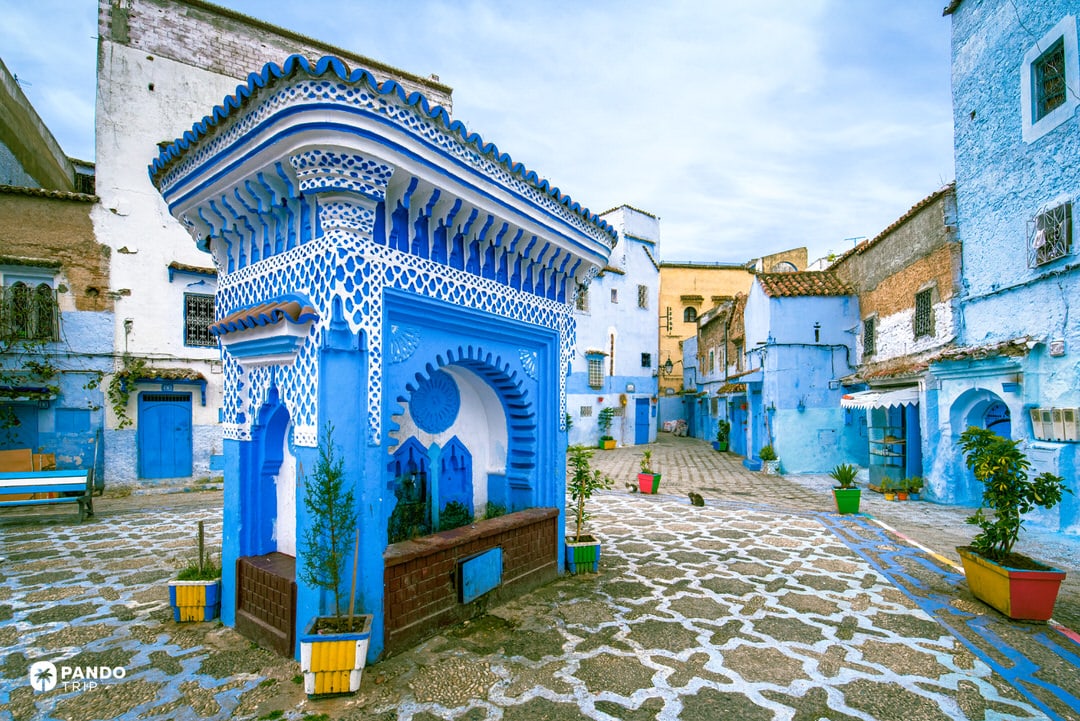
Place El Haouta: This small square features a traditional blue-and-white public fountain away from the main plaza crowds. Late afternoon light works best for photographing the ornate fountain structure. The quieter atmosphere allows for more composed shots without constant foot traffic.
Top Things to Do in Chefchaouen
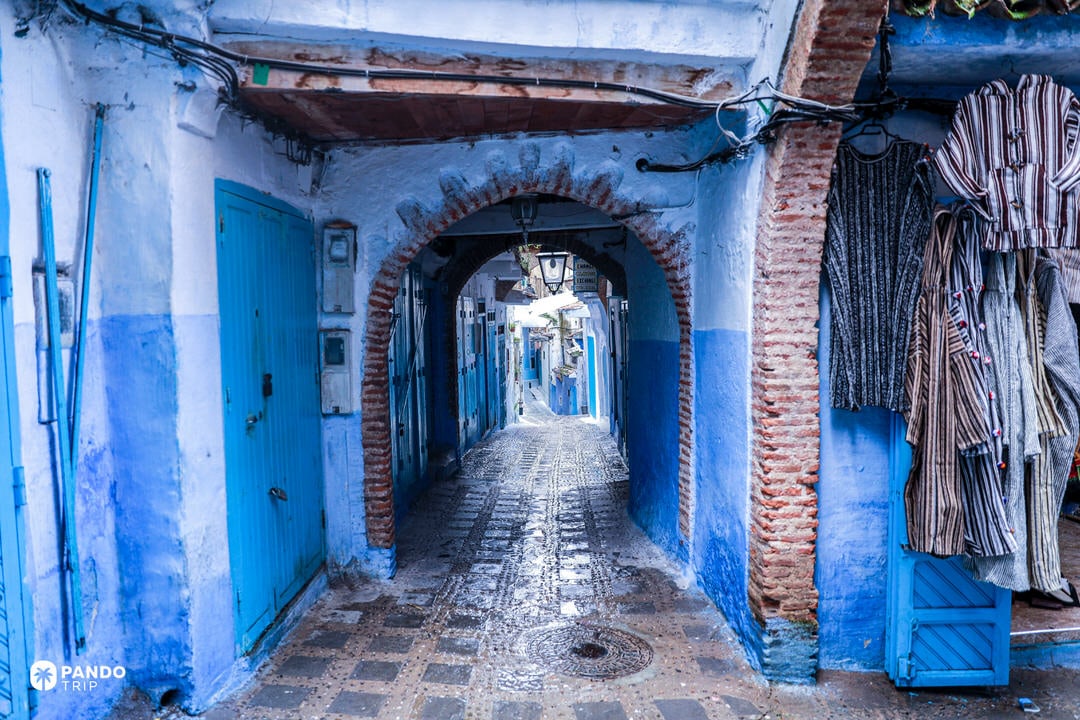
Explore the Blue Medina: The medina itself is Chefchaouen’s main attraction. These narrow lanes and steep stairs painted in every shade of blue reward aimless wandering. Duck into tiny bakeries, browse the souks, and encounter the dozens of cats that have claimed the alleyways as their domain. Unlike the aggressive hawkers in Marrakech or Fez, shopkeepers here generally let you browse in peace.
Plaza Uta el-Hammam: The main square serves as Chefchaouen’s social center, surrounded by café-restaurants and shaded by mulberry trees. The Grand Mosque’s octagonal minaret and the Kasbah walls frame the plaza. Evenings bring out both locals and tourists – grab a table at one of the terraces for mint tea and people-watching.
The Kasbah Museum: This 15th-century fortress sits at Plaza Uta el-Hammam’s edge. Entry costs 60-70 MAD for foreigners. Inside, an Andalusian-style garden courtyard leads to exhibits of traditional clothing, pottery, and historical photographs. The tower climb rewards with 360-degree views over the medina rooftops and surrounding mountains.

Ras El Maa Waterfall: This small waterfall at the medina’s edge has served as the town’s water source for centuries. Local women still wash clothes and blankets here by hand in the traditional way. Nearby cafés serve mint tea, and the cool water offers relief on hot days.

Rif Mountain Hiking: Talassemtane National Park surrounds Chefchaouen with trails for various fitness levels. Full-day hikes to Jebel el-Kelaa or Mount Lakraa challenge experienced hikers with steep climbs and aerial views. Half-day walks upstream from Ras El Maa pass through valleys with streams and small farms. Local guides cost around MAD 400-600 per day – worth it for longer treks into the mountains.

Spanish Mosque Viewpoint: As mentioned in the photography section, this 20-30 minute uphill hike from the medina’s eastern edge delivers the best panoramic views of Chefchaouen. The sunset draws crowds, so arrive 30-45 minutes early. The mosque itself remains closed to visitors.
Akchour Waterfalls Day Trip: Located 30 kilometers from town, this popular excursion offers two options: the Grand Waterfall (two hours one-way) or God’s Bridge natural rock arch (one hour one-way). Turquoise pools dot the trail, with swimming possible in several spots. Shared grand taxis from Chefchaouen cost about MAD 35 per person each way.

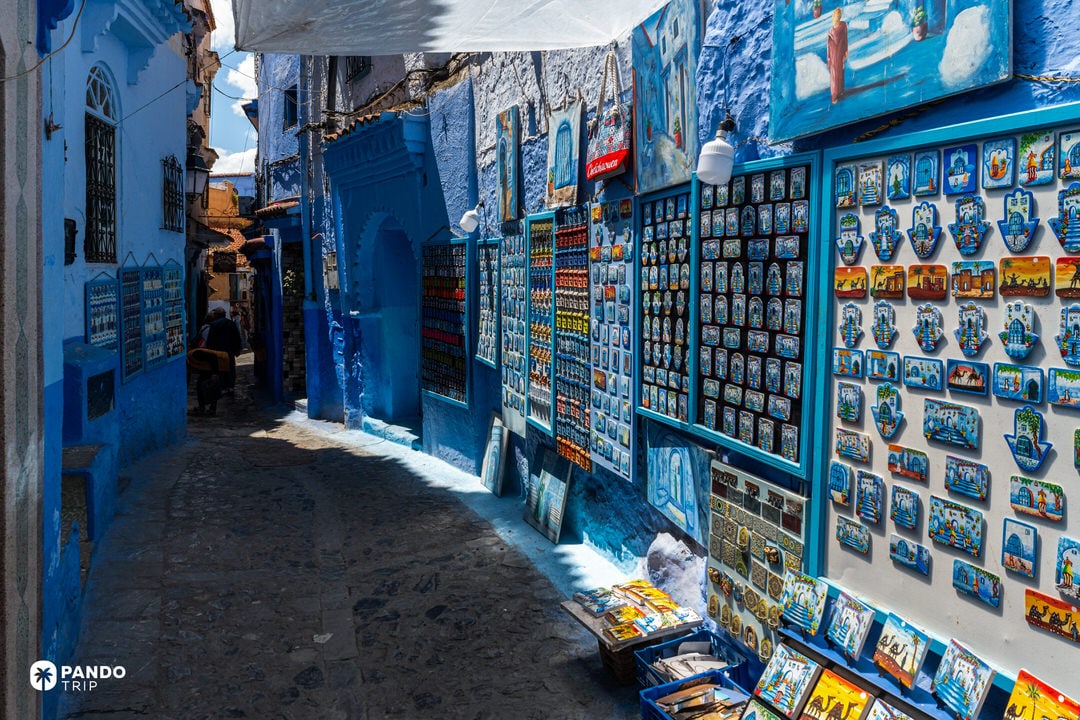
Shopping the Souks: Chefchaouen’s handicrafts center on wool products – particularly blankets woven with blue, white, and red Rif patterns. Leather goods, blue-and-white ceramics, and local goat cheese (jben) fill the shops along the medina’s pedestrian lanes. Haggling here feels relaxed compared to Morocco’s larger cities, with less pressure and friendlier negotiations.
Traditional Hammam Experience: Public bathhouses offer insight into Moroccan daily life. Most hammams separate by gender and operate on specific schedules. Hotels often provide private hammam sessions for those preferring privacy. Public hammams cost around MAD 20-30 plus tip for the attendant.
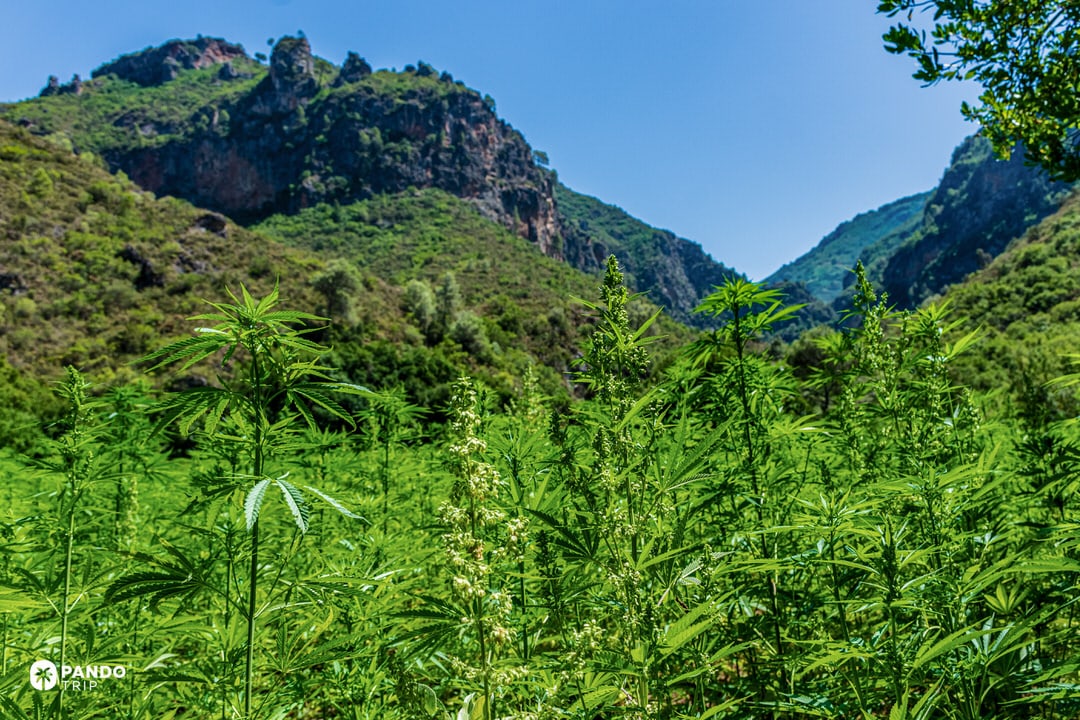
Cannabis Culture (A Note of Caution): The Rif region produces much of Morocco’s cannabis, and some locals offer unofficial “farm tours.” Cannabis remains illegal in Morocco despite its prevalence here. Politely declining drug offers avoids potential legal complications – getting caught means dealing with Moroccan police, which rarely ends well for tourists.
Where to Stay in Blue City: Best Hotels & Riads
Chefchaouen’s accommodation splits into three main categories. Riads are restored traditional houses built around interior courtyards, often featuring tilework and carved plaster details. Guesthouses (dars or maisons d’hôtes) run smaller operations, usually family-owned with fewer rooms and home-cooked meals. Hotels range from basic to luxury, typically located on the medina’s edges with amenities like pools and larger rooms.
Budget Stays ($8-30 per night)

- Hotel Souika draws backpackers with dorm beds from $8 per night. The facilities are basic but the location sits central in the old city, with a common kitchen and rooftop terrace for sunset views.
- AYMANE ROOFTOP in El Kharrazine delivers panoramic views for $15-25 per night, punching above its weight in the budget category with notably good service.
- Hotel Molino Garden offers double rooms with shared bathrooms for $30, or $40 with private facilities. The garden setting adds value at this price point.
Mid-Range Riads & Guesthouses ($40-100 per night)
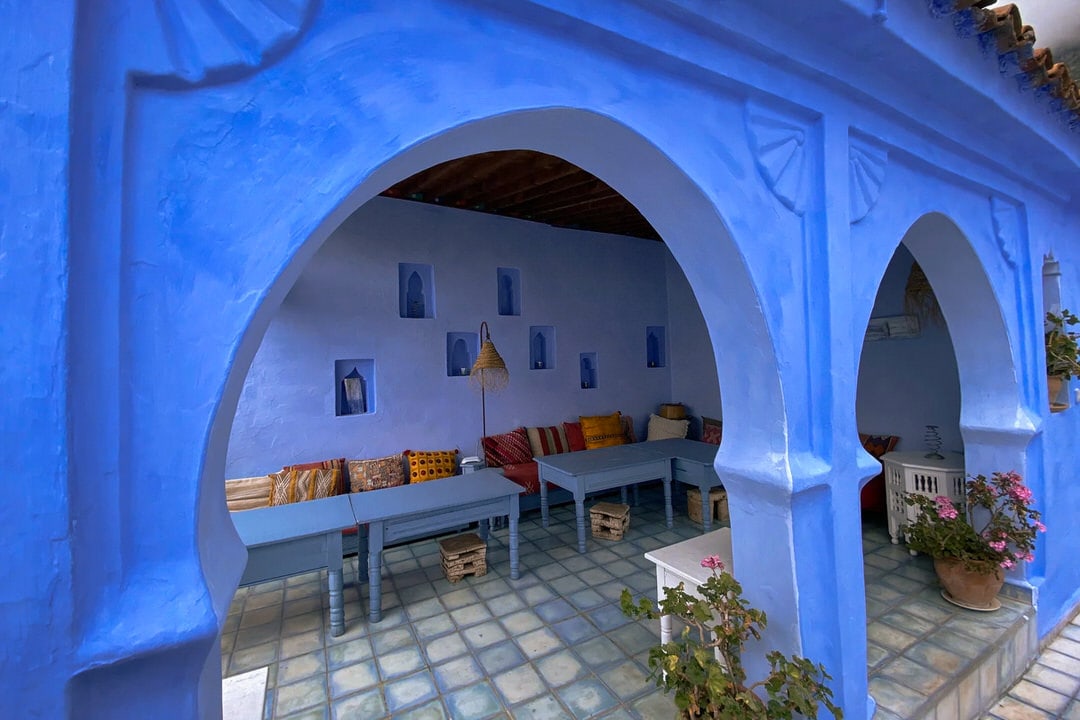
- Dar Sababa (€40-50/night) occupies a quiet medina alley and serves breakfast on its panoramic rooftop. The boutique property balances location, views, and price effectively.
- Casa Perleta ($60-80/night) gets consistent praise for its Andalusian styling and rooftop terrace views. The included breakfast stands out in this price range, as does the staff’s attention to detail.
- Riad Cherifa (around $100/night) justifies its higher price with a small pool and restored architectural details including carved plaster and zellige tilework. Modern amenities blend with traditional Moroccan craftsmanship.
Luxury & Top-End ($120-200+ per night)
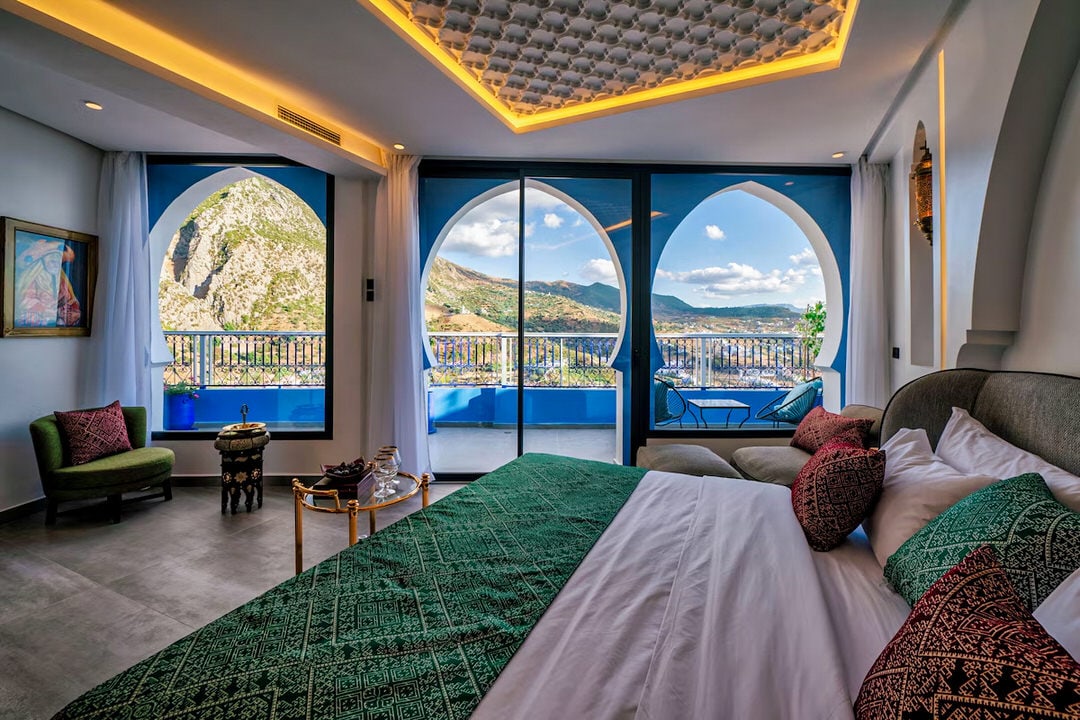
- Dar Echchaouen ($120-140/night) sits on a hillside just outside the old town. The landscaped grounds include an outdoor pool, while rooms feature rustic-chic design with mountain views. The location trades medina access for peace and space.
- Lina Ryad & Spa ($200/night) brings full luxury to the medina with suites, spa facilities including hammam, and a heated indoor pool. The rooftop terrace ranks among Chefchaouen’s best viewpoints.
- TAJ CHEFCHAOUEN ($220/night) in El Kharrazine positions itself as the city’s most luxurious option with full spa services and swimming pool. The location outside the medina means you’ll need transport to reach the blue streets, but the facilities compensate for the distance.
What to Eat in Chefchaouen
Chefchaouen’s cuisine combines standard Moroccan dishes with mountain specialties unique to the Rif region. The isolation that kept the city off tourist maps for decades also preserved local food traditions you won’t find in Marrakech or Casablanca.
Traditional Moroccan Dishes

Tagine arrives in the conical earthenware pot that gives the dish its name. Meat versions feature lamb, chicken, or beef slow-cooked with vegetables, dried fruits (apricots, prunes, preserved lemons), and spices including cumin, coriander, and saffron. Tagine Kefta combines spiced meatballs with eggs in tomato sauce, while Tagine Mrouzia pairs lamb with raisins and almonds. Vegetarian tagines layer root vegetables with chickpeas and preserved lemons. Expect to pay MAD 40-70 per tagine.
Couscous traditionally appears on Friday menus but most restaurants serve it daily. Fine semolina grains come topped with stewed meat (usually lamb or chicken) and vegetables. The seven-vegetable version with caramelized onions and almonds works well for vegetarians. Portions are substantial – one dish easily feeds two people.
Pastilla layers paper-thin warqa pastry with shredded pigeon or chicken, almonds, eggs, cinnamon, and powdered sugar. The sweet-savory combination takes some getting used to, but it represents Moroccan cuisine at its most complex. Seafood versions substitute fish for poultry.
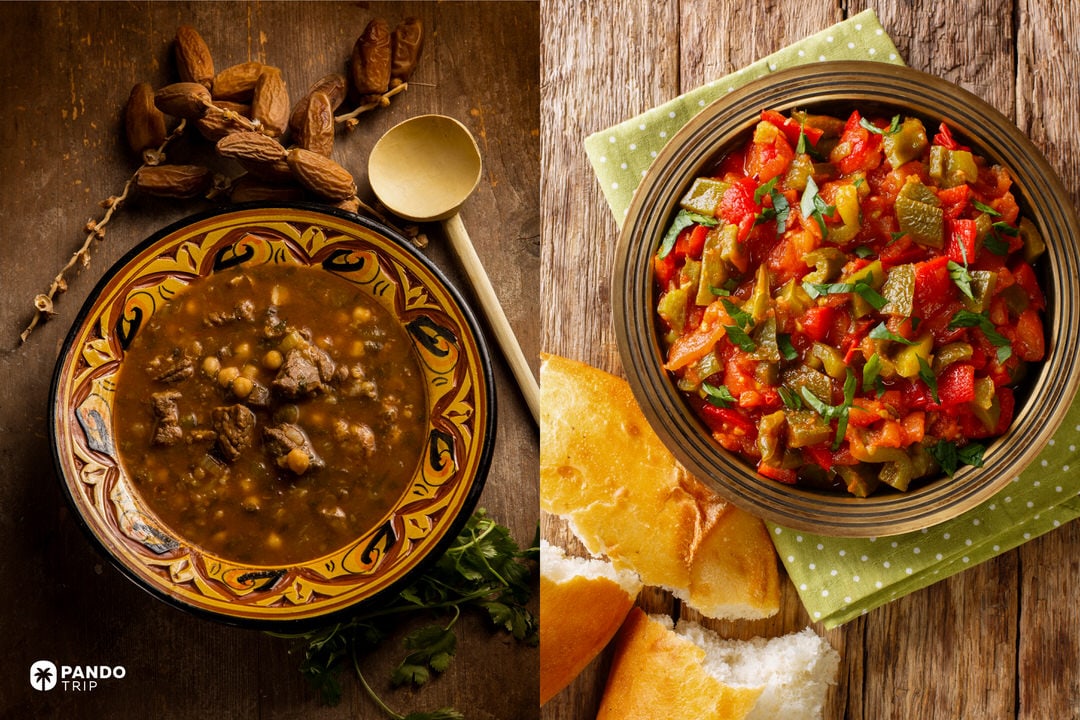
Harira soup combines lentils, chickpeas, tomatoes, and small pieces of lamb in a thick broth, often served with dates. During Ramadan it breaks the daily fast, but restaurants serve it year-round as a starter or light meal.
Moroccan salads arrive as multiple small plates before main courses. Zaalouk (cooked eggplant and tomato) and taktouka (pepper and tomato) appear most frequently, along with fresh cucumber-tomato combinations dressed with olive oil and lemon.
Chefchaouen Specialties
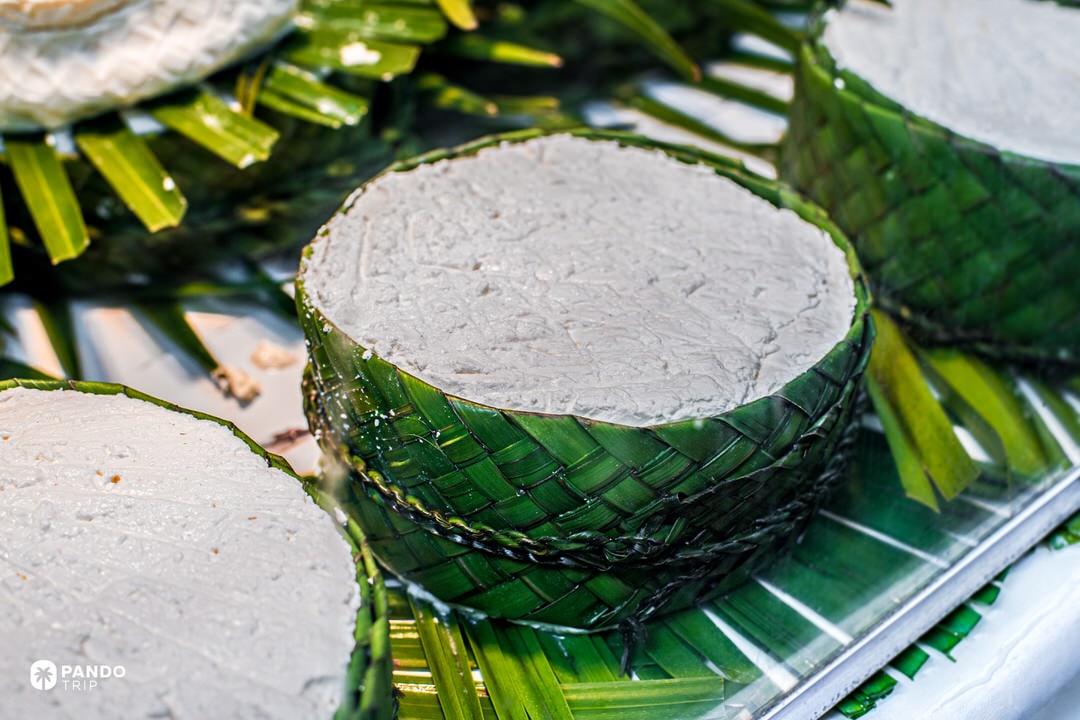
Jben goat cheese defines Chefchaouen’s local food scene. Goats grazing the Rif Mountains produce milk for this mild, creamy white cheese served at breakfast with olive oil and honey, or crumbled into salads. The slightly sweet flavor differs from coastal varieties. Buy it fresh at the market for MAD 20-30 per piece.
Bissara appears on morning menus throughout northern Morocco. This thick fava bean soup, drizzled with olive oil and cumin, costs just MAD 5-10 per bowl and comes with bread. Mountain temperatures make it particularly welcome on cool mornings.
Tagine Akhnif represents the Rif Mountain variation on Morocco’s national dish. The combination of preserved lemons and olives creates a tangier, saltier profile than southern versions. Most restaurants prepare it with chicken or lamb.
Drinks and Sweets
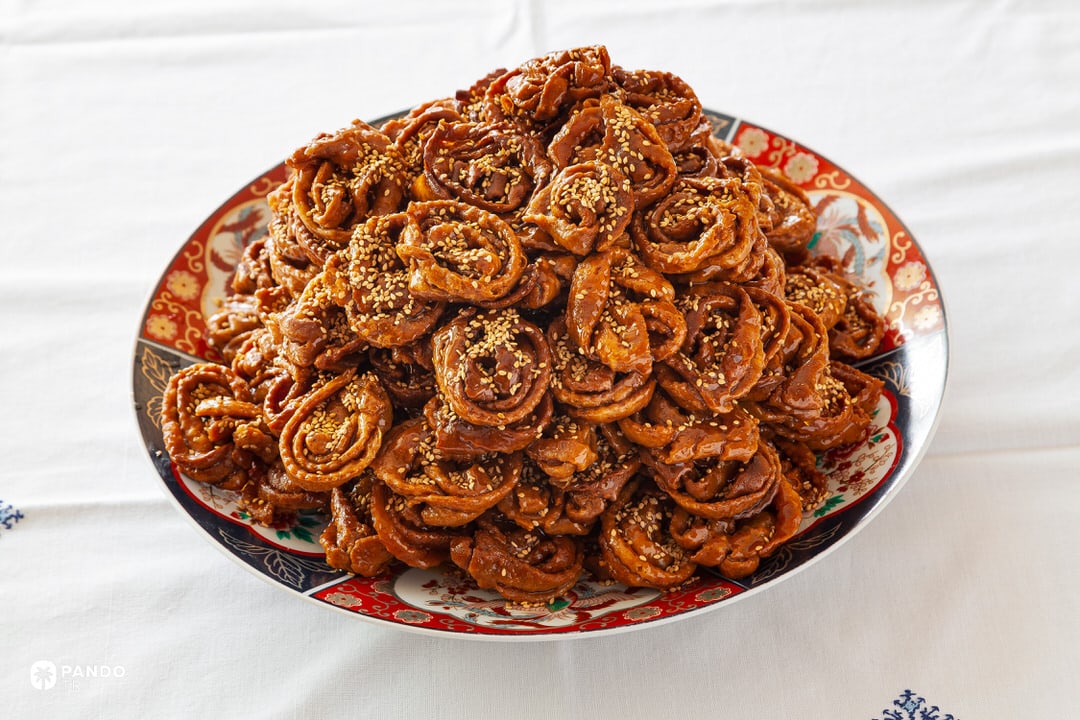
Mint tea arrives automatically at every meal, made with Chinese green tea, fresh mint, and substantial sugar. Refusing it might offend – it’s central to Moroccan hospitality. Accompany afternoon tea with local pastries: kaab el ghzal (gazelle horns filled with almond paste), chebakia (sesame cookies soaked in honey), or fakkas (twice-baked almond cookies). Most cost MAD 2-5 per piece at bakeries.
Frequently Asked Questions
Is Chefchaouen worth visiting?
Yes, particularly if you’re already traveling through northern Morocco. The blue medina delivers on its photogenic promise, creating a genuinely unique visual experience you won’t find elsewhere in the country. Beyond the Instagram appeal, Chefchaouen offers a markedly different pace from Morocco’s larger cities – less aggressive hawking, minimal harassment, and a small-town atmosphere that lets you explore without constant vigilance. The city works well as a base for Rif Mountain hiking and serves as a cultural counterpoint to the intensity of Fez or Marrakech. That said, if you’re only in Morocco for a week, prioritize the imperial cities first.

How many days to spend in Chefchaouen?
Two to three nights allows you to see Chefchaouen properly without rushing. This gives you time to explore the medina at different times of day (morning light and late afternoon are best for photography), hike to the Spanish Mosque for sunset, visit the Kasbah, and take a half-day trip to Akchour Waterfalls. One night works if you’re passing through – you’ll cover the main sights but miss the relaxed rhythm that defines the place. Day trips from Fez or Tangier only give you four to five hours in town, which means fighting crowds at the main photo spots without experiencing much else.

Is Chefchaouen safe?
Chefchaouen ranks among Morocco’s safest destinations, with virtually no violent crime and significantly less harassment than larger cities. Solo female travelers report feeling comfortable walking the medina even after dark, though standard precautions apply – secure valuables, avoid unlit areas late at night, dress modestly. The small-town atmosphere means locals are accustomed to tourists without the aggressive sales tactics found in Marrakech or Fez. Petty theft exists but remains rare. The main safety concern involves the cobblestone streets, which become treacherous when wet.
Can you drink alcohol in Chefchaouen?
Alcohol availability is limited, reflecting Morocco’s Muslim culture. Most restaurants in the medina don’t serve it – expect mint tea or fresh juice instead. You’ll find alcohol at Hotel Parador’s bar near the main square, Restaurant Oum Rabie, and Lina Ryad & Spa. Prices run high (MAD 50+ for a beer). No liquor stores operate in Chefchaouen itself; stock up in Tangier or Fez if you want your own supply. Consume it privately on your riad’s terrace after checking with your host. Public drinking or intoxication is deeply disrespectful and will generate serious negative attention.

How to avoid tourist traps in Chefchaouen?
Chefchaouen has fewer scams than Morocco’s major cities, but basic vigilance helps. Decline offers from self-appointed “guides” who appear to help then demand payment – ask shopkeepers for directions instead. When shopping, start haggling at 30-50% of the asking price and walk away if negotiations stall. For grand taxis, agree on fares before departing. In petit taxis within town, insist on the meter (compteur). Restaurant prices around Plaza Uta el-Hammam run higher than elsewhere – check menus before sitting down. If offered hashish (common given the Rif’s cannabis production), politely decline – it remains illegal despite its prevalence, and police occasionally target tourists for bribes.