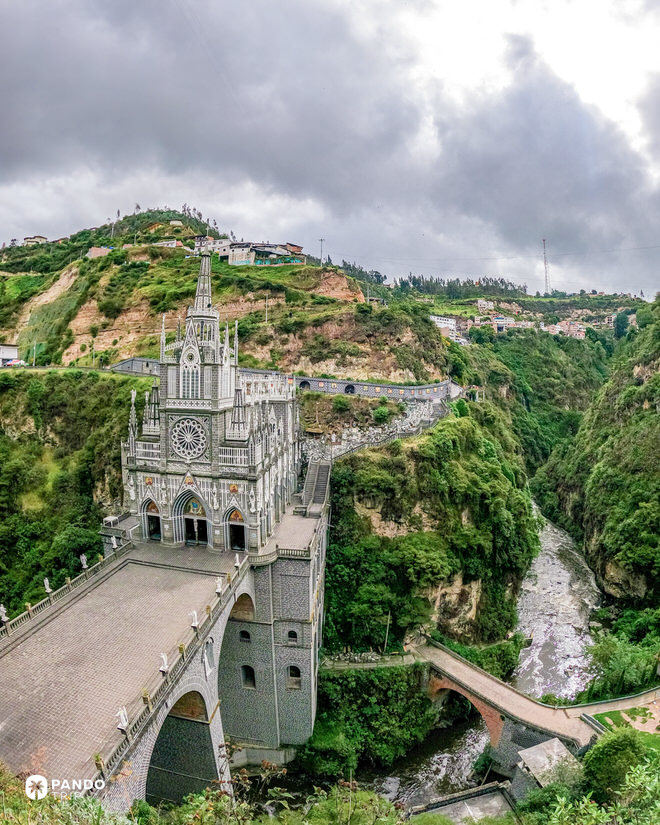
Almost a million people visit this church every year. Nearly all of them are Colombian or Ecuadorian. The rest of the world has barely noticed.
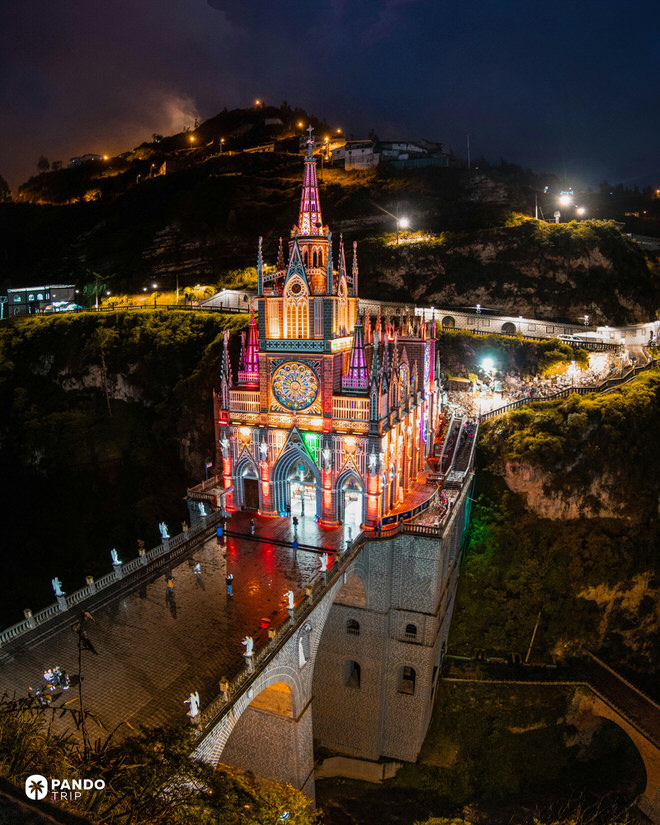
Every evening at six, in a canyon in southern Colombia, a Gothic cathedral lights up in shifting neon: red, then green, then violet, the colour spilling onto the cliff walls and the river fifty metres below. No other Gothic church on Earth does this. In 2017 the Telegraph called Las Lajas the most beautiful church in the world. Almost a million people come each year, and almost none of them are foreign.
The church that is a bridge
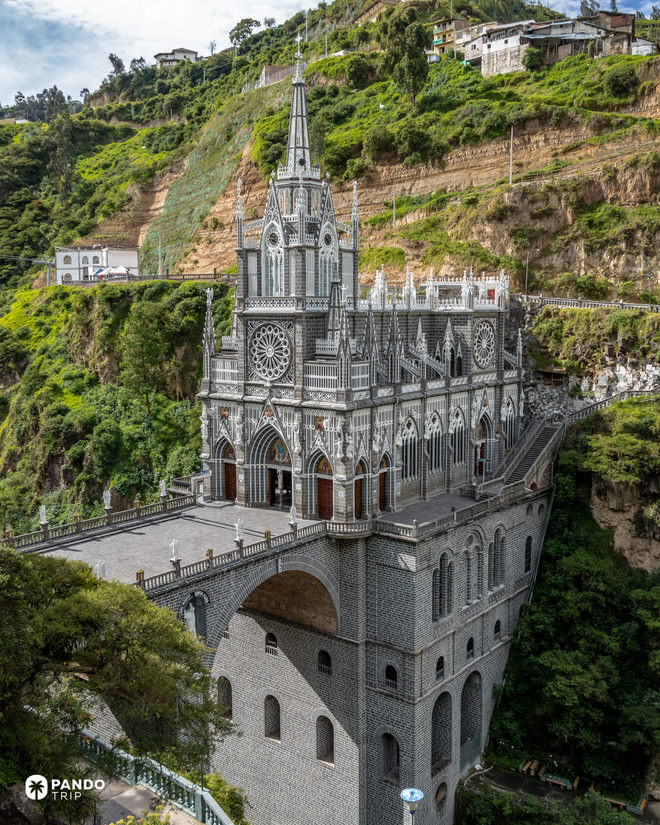
Most cathedrals stand on a square. Las Lajas stands on a bridge.
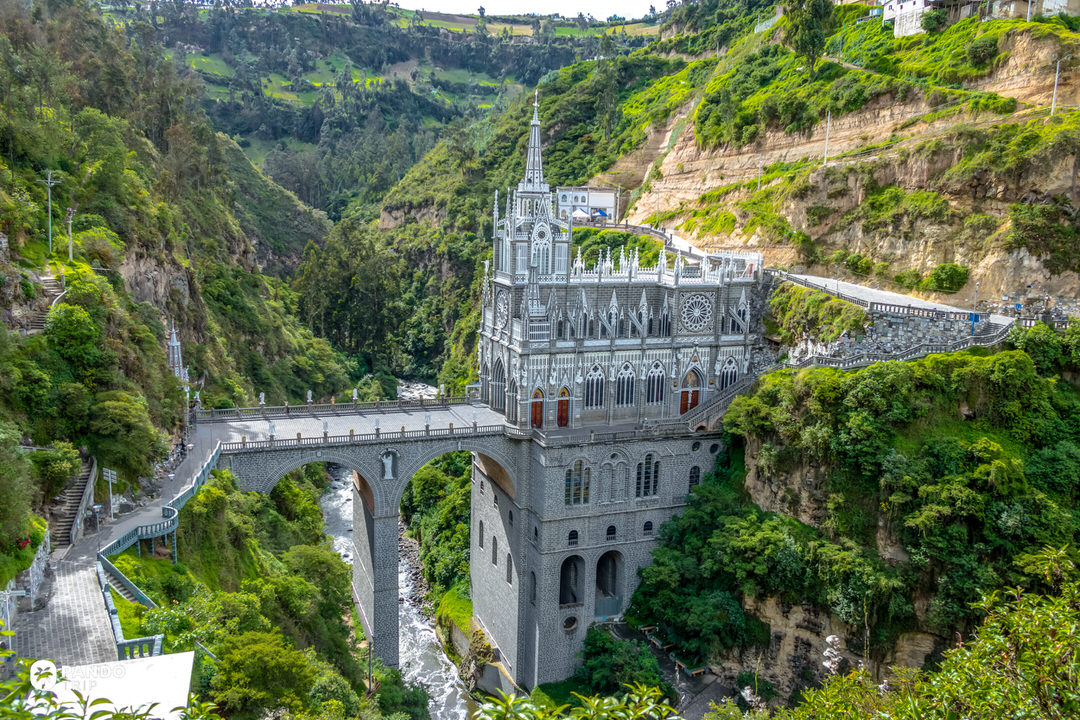
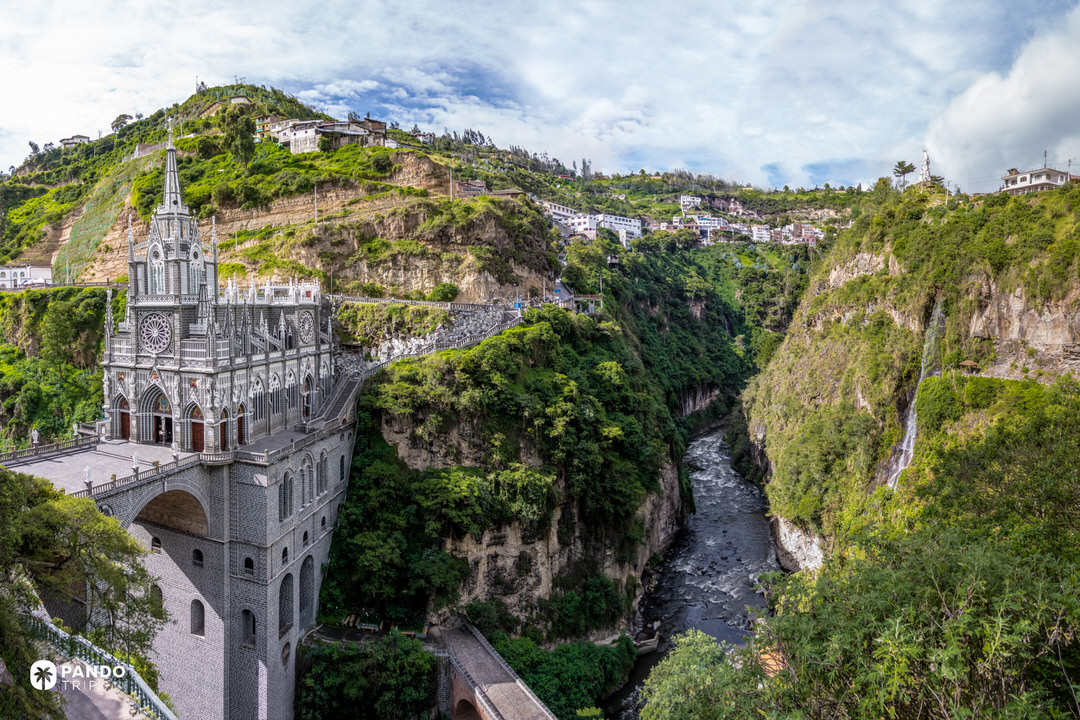
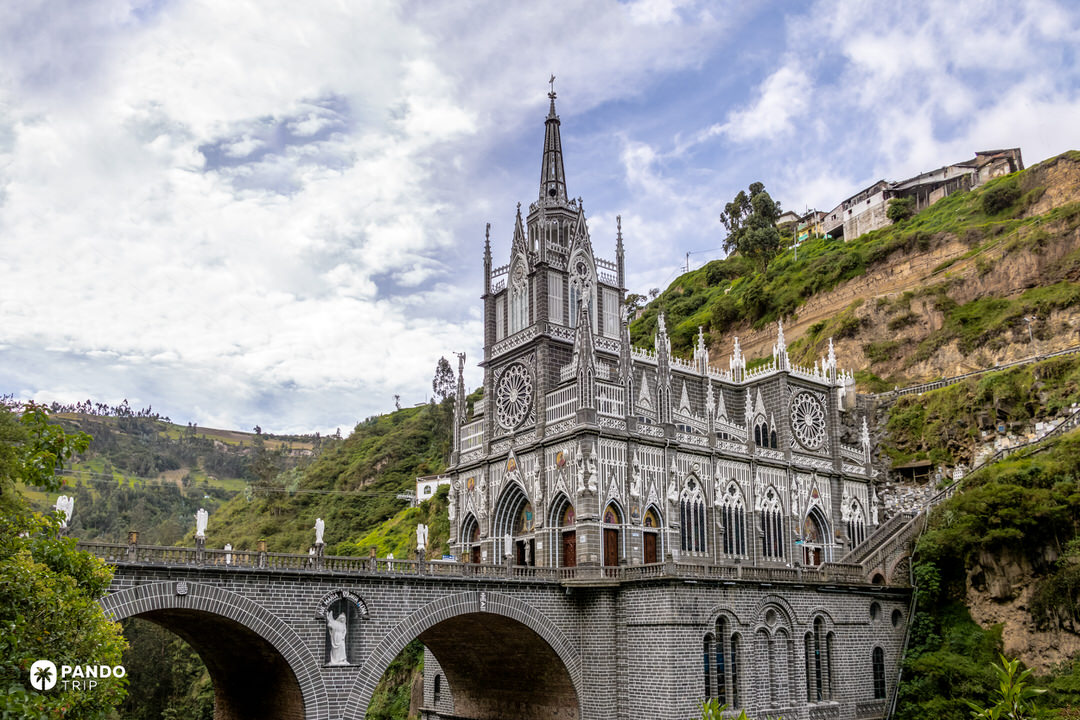
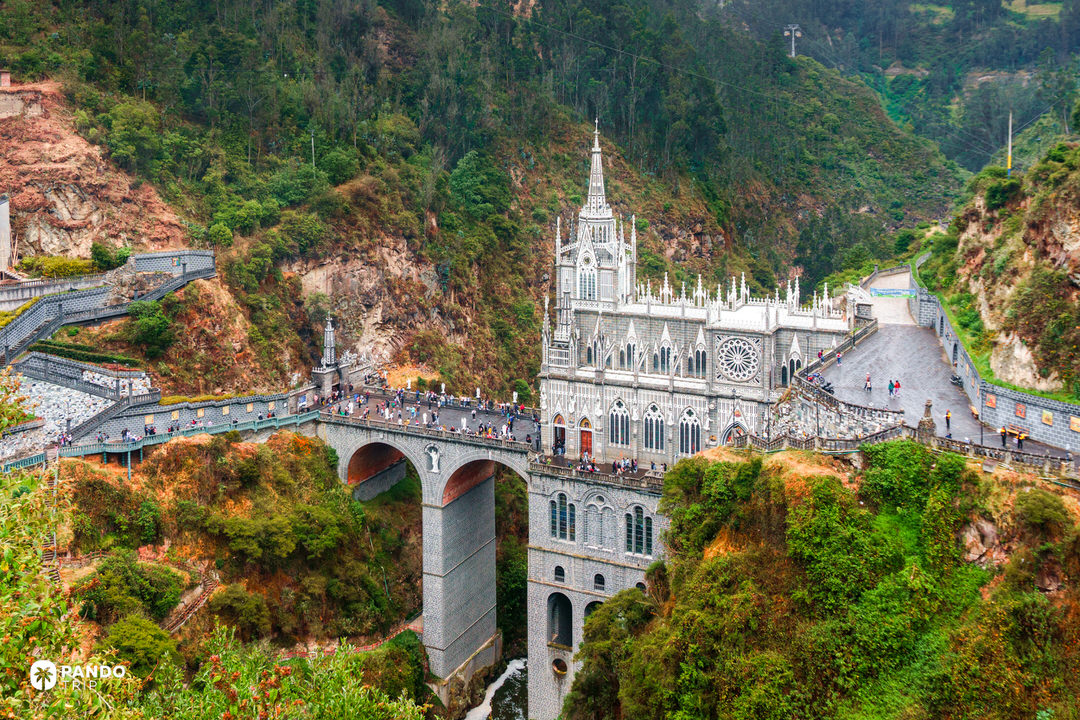
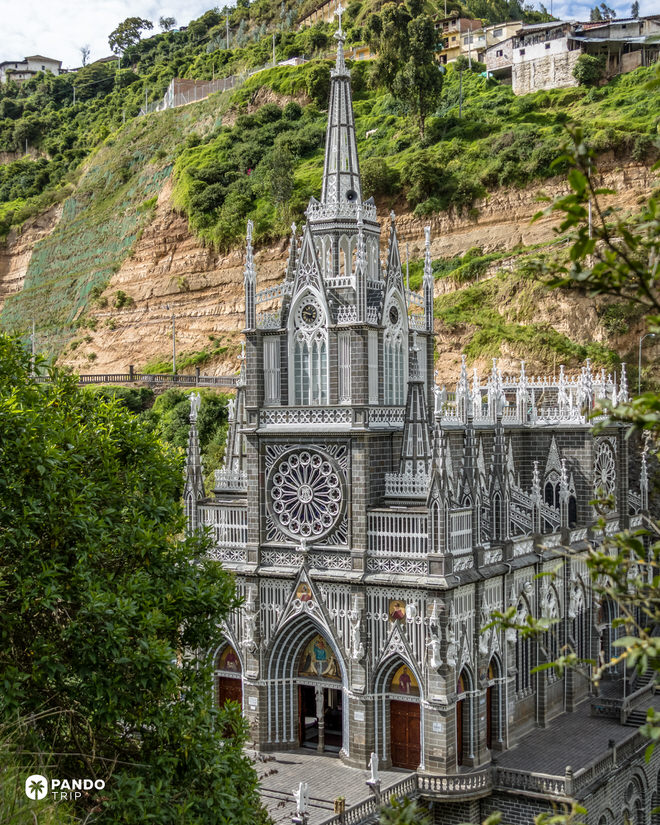
It’s a full Gothic basilica, with pointed arches, flying buttresses and stained glass by the Italian artist Walter Wolf, but its foundation is a stone span thrown across the Guáitara gorge on two great arches. The altar backs onto raw rock. There is no rear wall; the cliff is the church. The grey stonework is cut so close to the colour of the canyon that the basilica looks less built than grown, as if the rock itself had decided to turn Gothic.
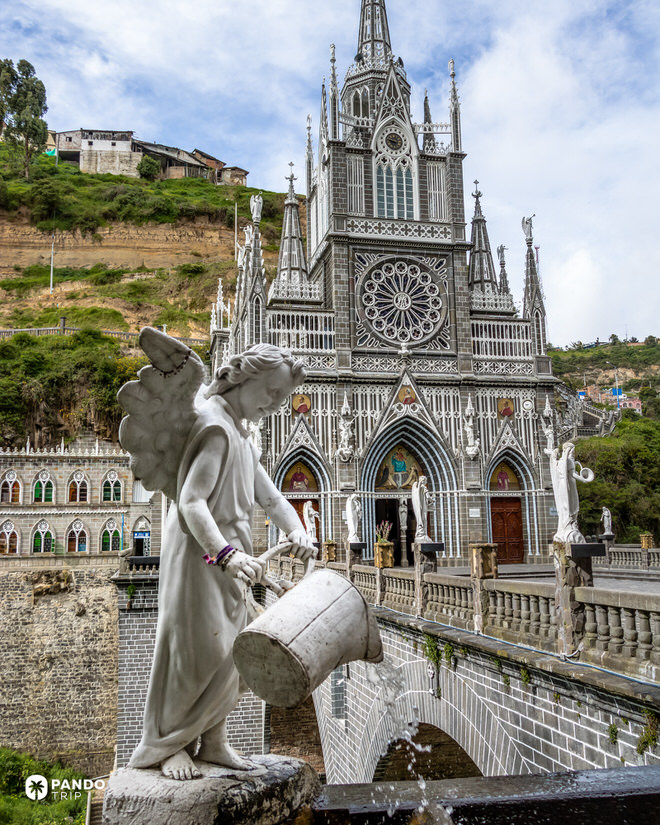
White stone angels line the parapet, each playing a different instrument, and one of them, oddly, pours water instead. A waterfall older than the church falls beside it. The whole structure rises a hundred metres from the canyon floor, and from above the roof forms the shape of a cross. Its arched frame quietly absorbs seismic shock, which matters more than it sounds in a region that shakes.
A deaf girl, and a canyon that turned holy
The locals used to keep away from this stretch of the gorge. They believed the devil lived in its caves; the name Las Lajas means “the flat, slippery rocks.” Not a place you lingered.
Then, in 1754, a woman named María Mueses de Quiñones was walking through the canyon with her daughter Rosa, who had been deaf and mute since birth. A storm broke, and the two took shelter in a cave. And there Rosa spoke her first words: “Mommy, the Mestiza is calling me.”
María was hearing her daughter’s voice for the first time. Rosa was pointing at a glowing figure on the rock wall.
Word travelled. Pilgrims came. First they raised a hut of straw and wood, then a stone chapel, and finally, between 1916 and 1949, the basilica that stands there now.
The image nobody signed
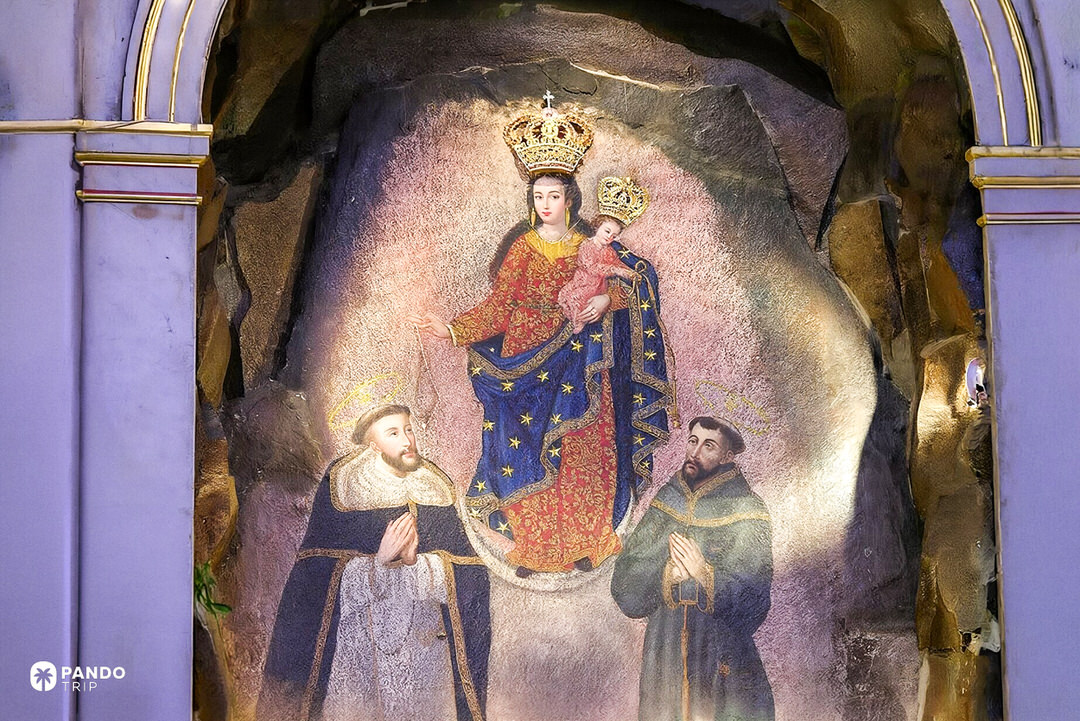
Behind the altar, painted straight onto the rock, is a Madonna and Child, flanked by St Francis and St Dominic. No one knows who made it, or when.
Local legend insists that German geologists once drilled into the stone and found the colour ran several feet deep, with no pigment on the surface at all. Nobody has ever sourced that story, but the pilgrims tell it with total conviction. The Catholic Church declared the image an authentic miracle in 1951.
Whether it’s a miracle or some forgotten act of artistry, one fact is harder to wave away: the colours haven’t faded in over 270 years.
Seven thousand thank-you notes
Walk down toward the church and the canyon walls close in on both sides of the stairway, covered in small plaques, more than 7,000 of them.
Each one is a thank-you note from a pilgrim. Some are centuries old, some went up last month. They describe healings, answered prayers, narrow escapes; beside a few hang the crutches and wheelchairs of people who say they no longer needed them.
New ones appear all the time. One thanks the Virgin for a son’s safe return from the army. Another, for a harvest. You read your way down past three centuries of other people’s emergencies, and by the bottom you’ve half forgotten you came to see a building.
The locals have a name for the place: a miracle of God over the abyss.
Built by farmers, paid for in coins
It took 33 years. The Ecuadorian architect Lucindo Espinosa drew the plans; the labour was mostly local farmers who learned masonry on the scaffold, a hundred metres above the river. Some of them died up there.
There was never an entrance fee, then or now. The whole thing was funded in small change. One of the first to gather it was a blind man, Manuel Rivera, who by local account walked across Colombia and Ecuador for years collecting coins for a chapel on the site, and had his sight restored when the work was done. His statue still stands along the path down.
It looks medieval. It was finished the same year NATO was founded.

What happens at six
Then the light goes. Around six each evening the lamps come on, and the church does something no European cathedral does.
The whole building, arches and buttresses and spires and rose window, cycles slowly through red, green, blue, violet and gold, the colour landing on the canyon walls and the black water below. At nearly 3,000 metres, against an Andean sky with no light behind it, the effect is difficult to believe even while you’re standing in front of it. Most visitors stay two or three hours and leave in daylight. The ones who wait past dark say it’s a different place entirely.
A million visitors, and you’ve still never seen it
Las Lajas is not a secret. Holy Week alone draws some 120,000 pilgrims; on weekends, families from both sides of the border fill the stairway, and candle sellers work the path down. It is one of the most visited religious sites in South America.
But almost none of those visitors come from outside it. The sanctuary sits in the far south of Colombia, eleven kilometres from the Ecuador border, well off the routes most foreigners take: Cartagena, Medellín, the coffee region, the places the travel industry points to. Colombia gets harder to ignore every year, and National Geographic and Condé Nast Traveler both named Medellín a must-visit for 2026. The south stays invisible.
A church voted the most beautiful on Earth, packed with nearly a million people a year, and still barely known beyond its own continent.