From a canal bend that clears the moment the day-trippers leave to a graffiti alley that looks different every week — picking one Flemish city for two days.
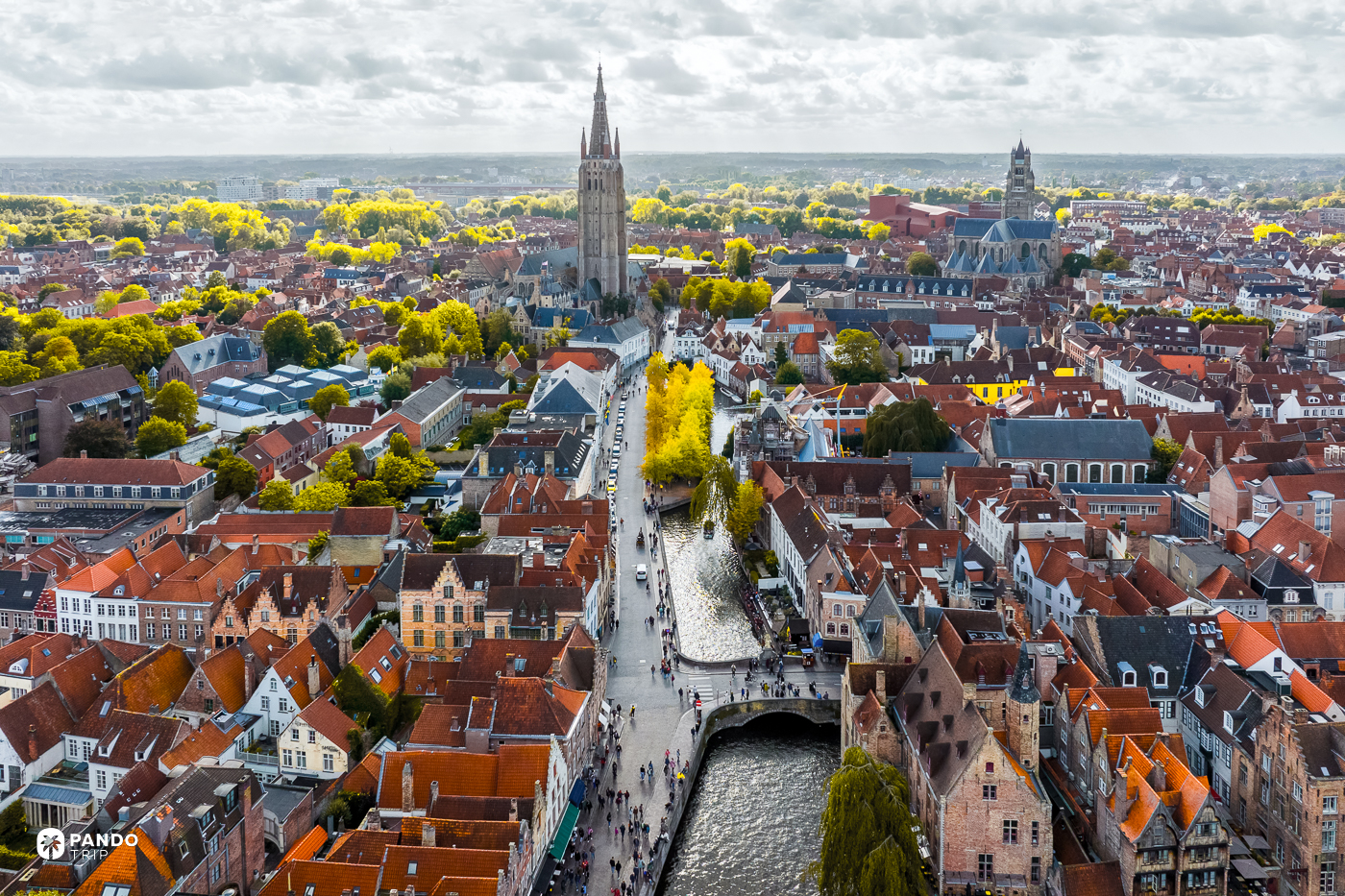
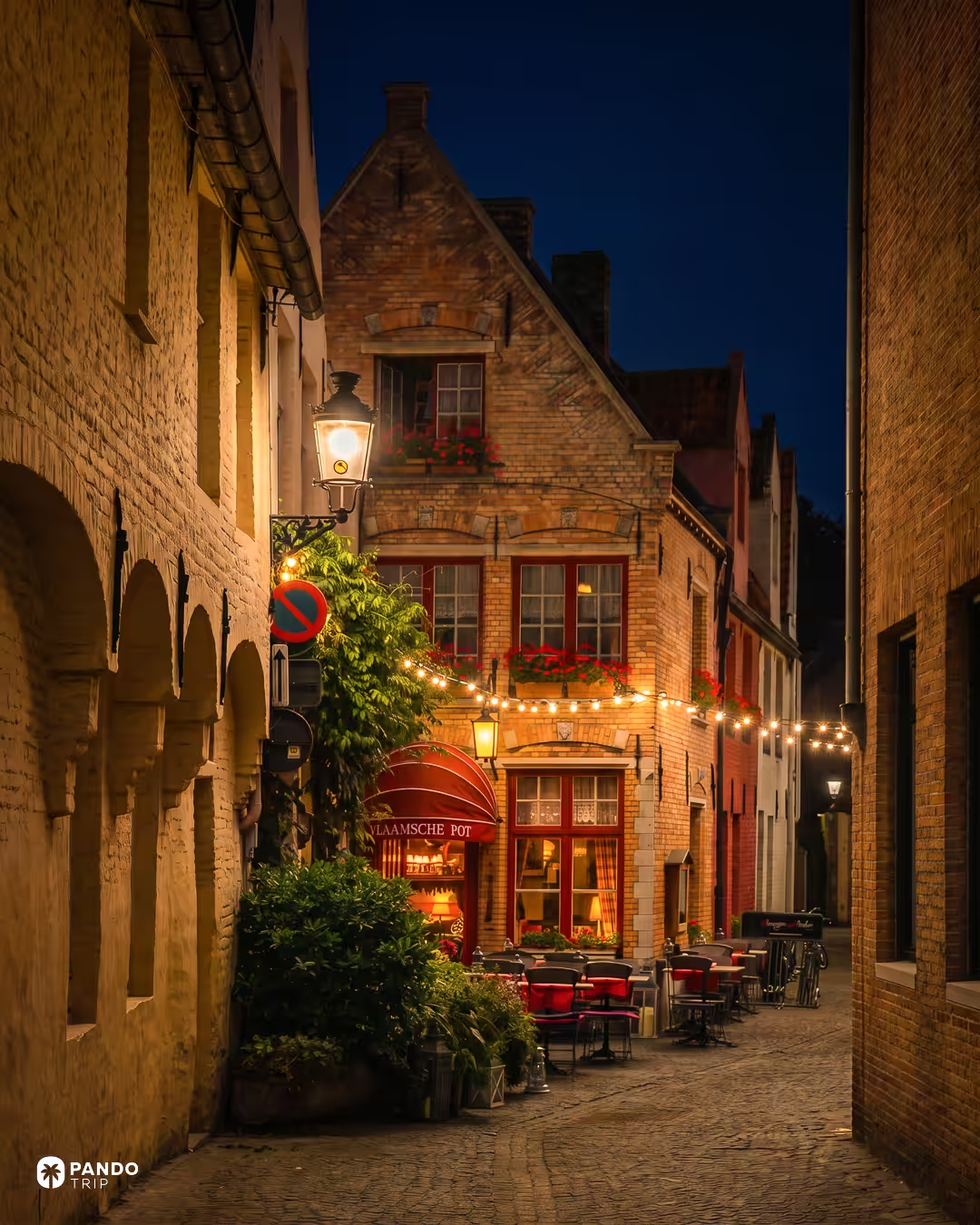
At six in the evening, Bruges performs a small disappearing act. The coaches idling near the ring road fill and pull out, the cruise excursions funnel back toward Zeebrugge, and the bridge at Rozenhoedkaai, elbow to elbow with camera phones since mid-morning, empties until you can hear the water move under it. Roughly eight million visitors pour through this historic center in a year, some twenty-seven thousand on an average day, and four in every ten people you pass in the old streets are, like you, just visiting. Then the light goes amber, most of them leave, and for a few hours the most photographed town in Belgium belongs to whoever booked a bed in it.
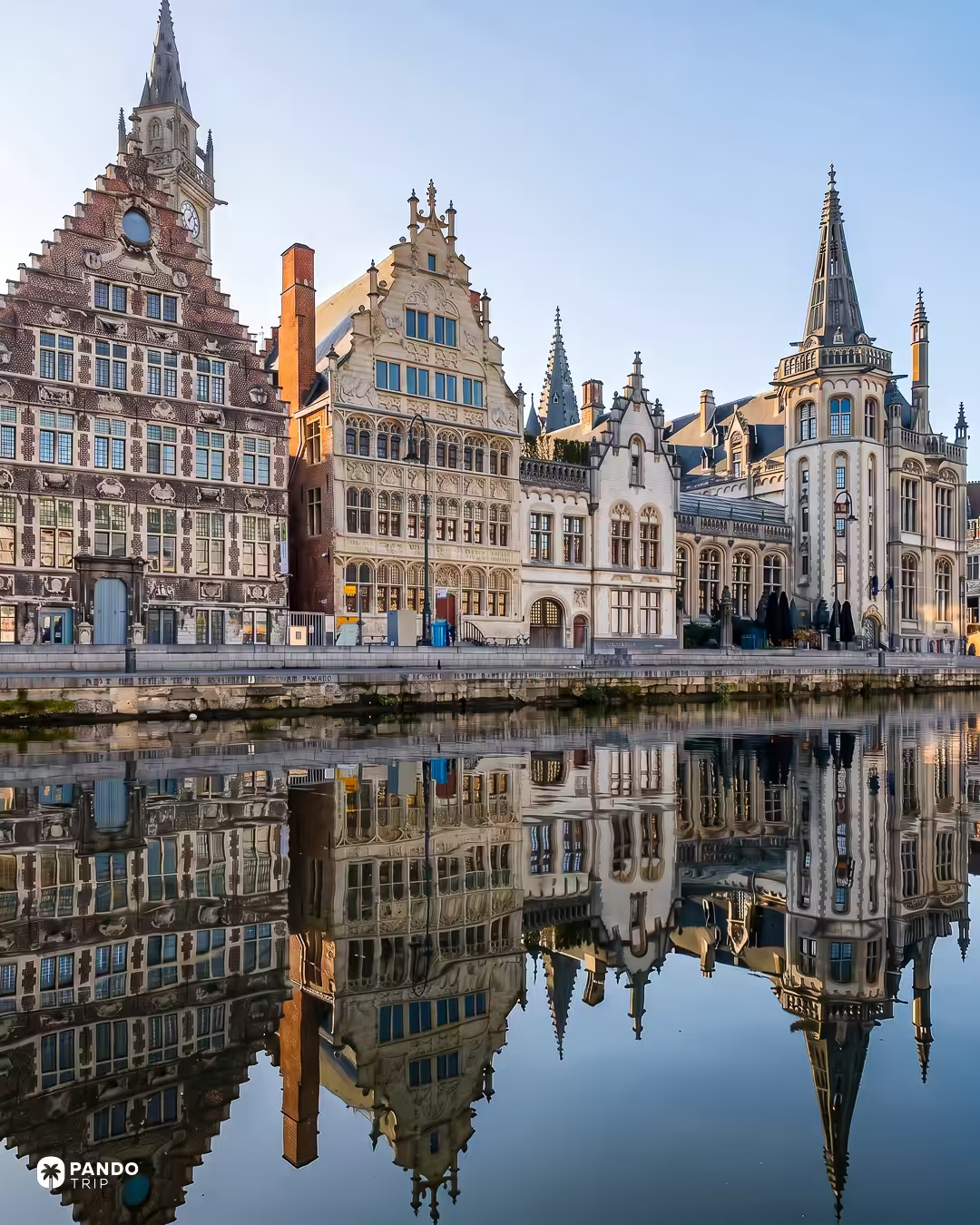
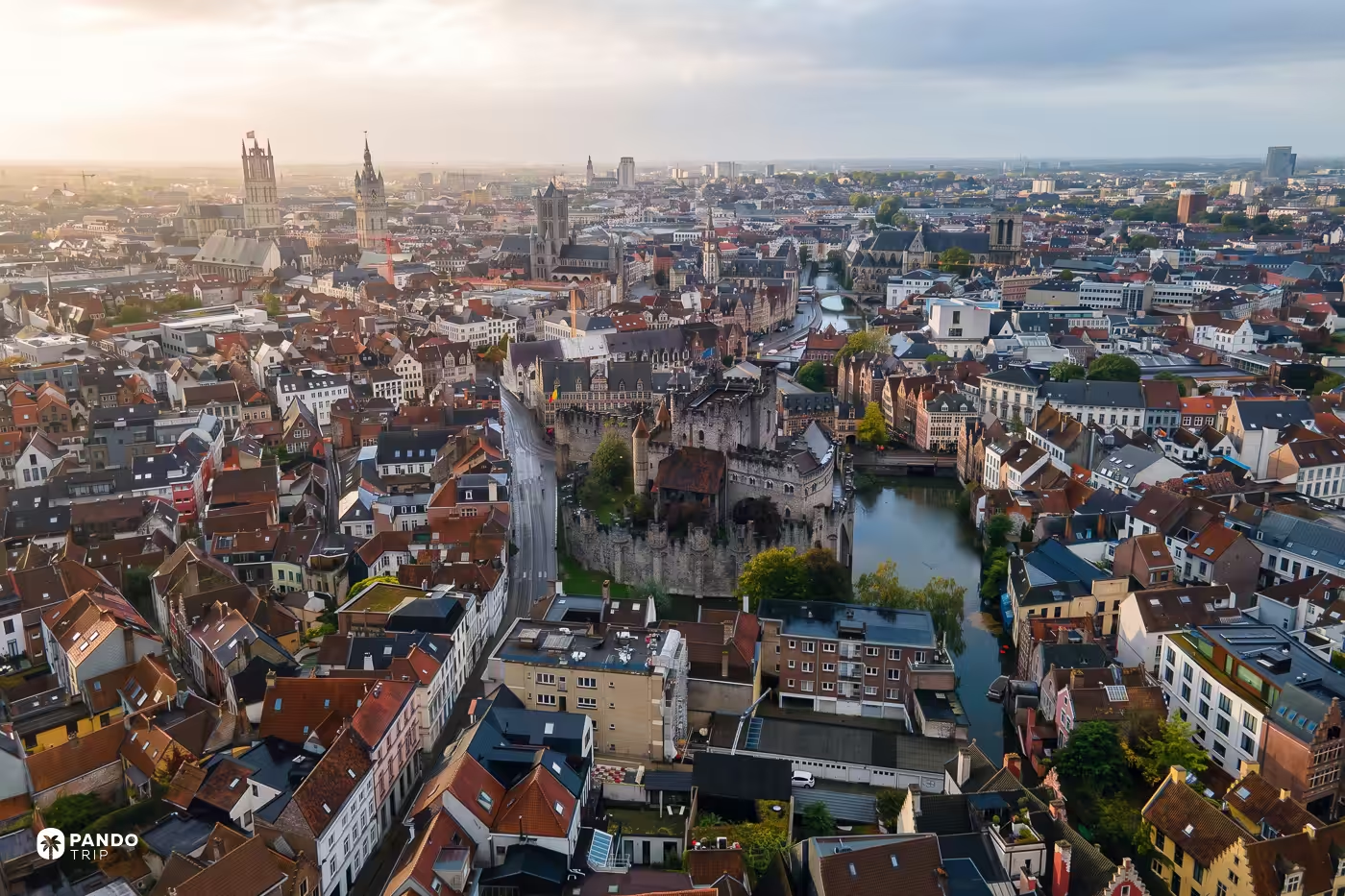
Forty kilometers east, Ghent never empties, because a quarter of a million people actually live there. It has the same medieval bones — a guildhouse waterfront, three great towers, a castle with a moat — but it carries them the way a working university city carries anything: casually, with bikes chained to the balustrades and a legal graffiti alley two minutes from the cathedral. Around 1.6 million came to stay in 2024, a fraction of Bruges’s day-tripper flood, and the city spends real effort courting the ones who stay the night rather than the ones who photograph the Graslei and catch the next train out.
So this is the actual question for a first Flemish weekend, and it isn’t which town is prettier. It’s whether you want the perfect set or a real place that happens to be medieval. Here is how the two of them differ where it counts.
First, the looks — and one nickname they both claim
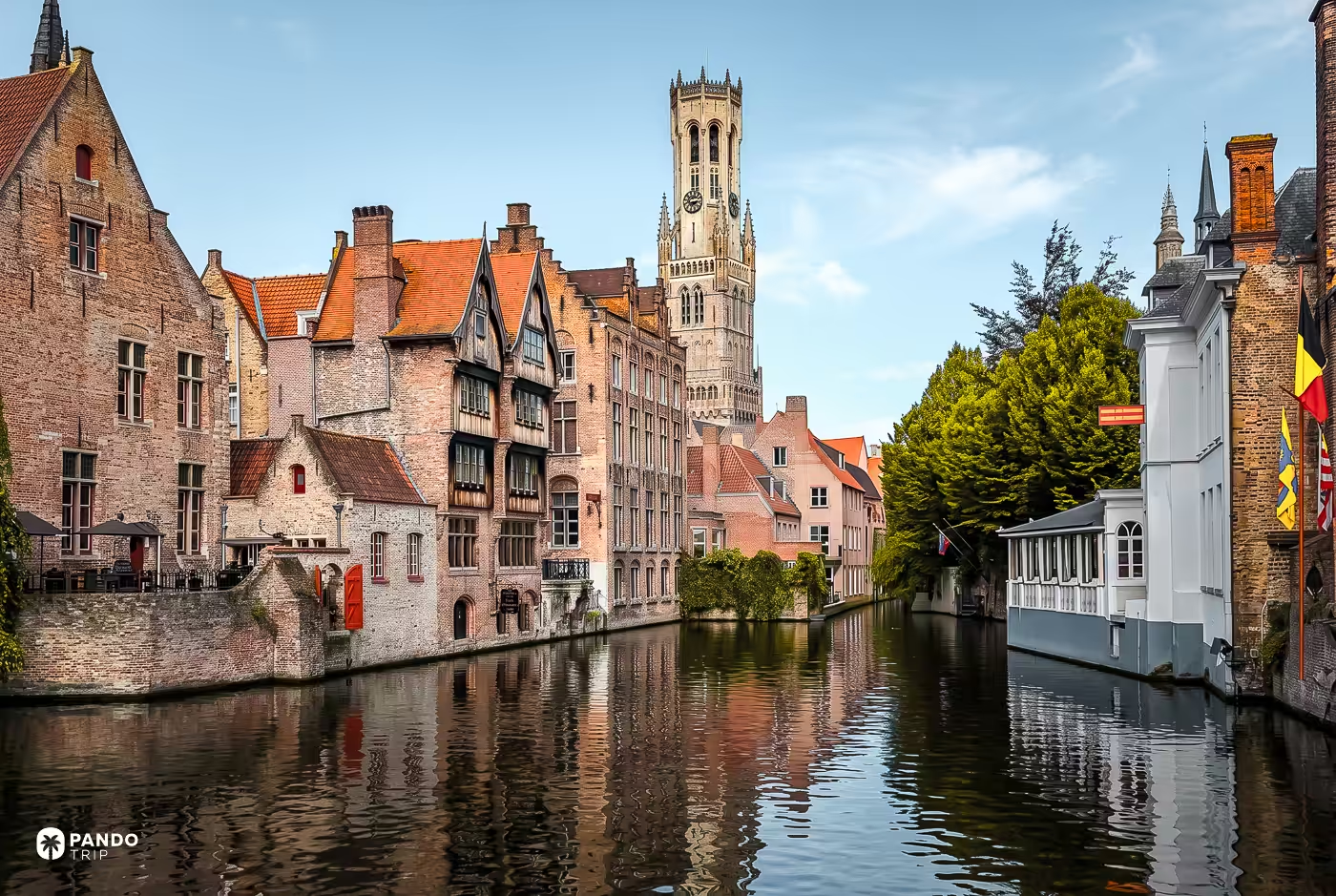
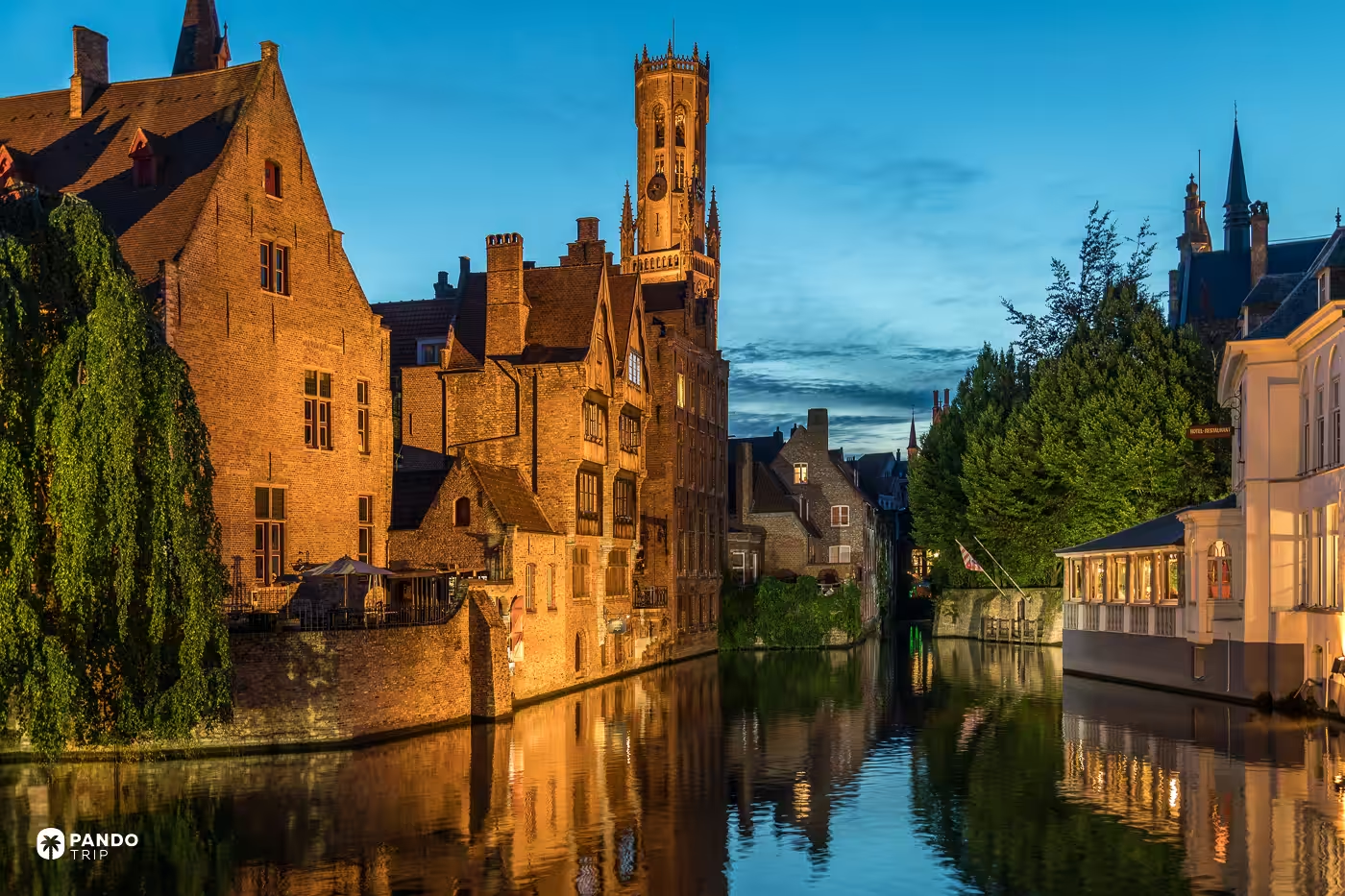
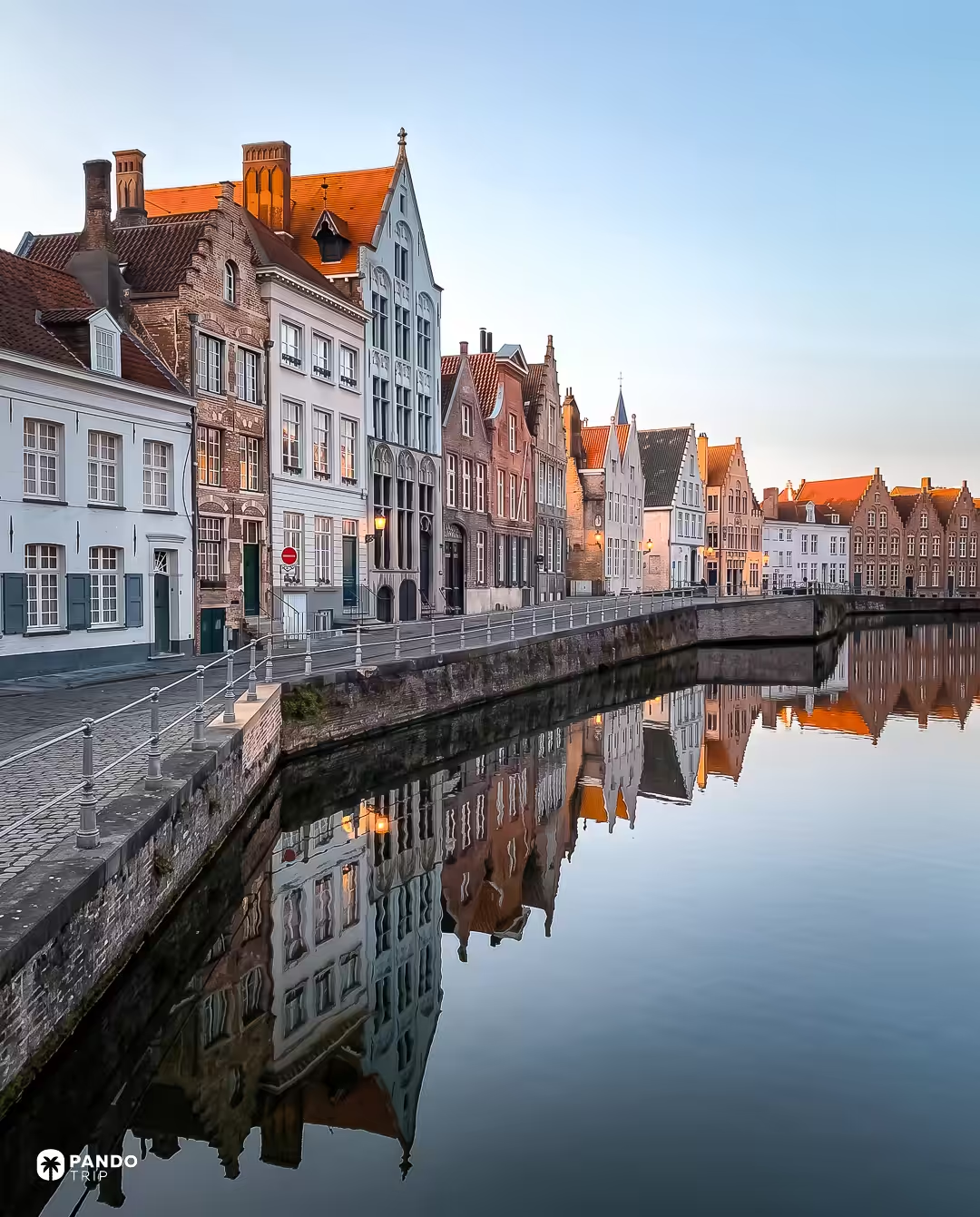
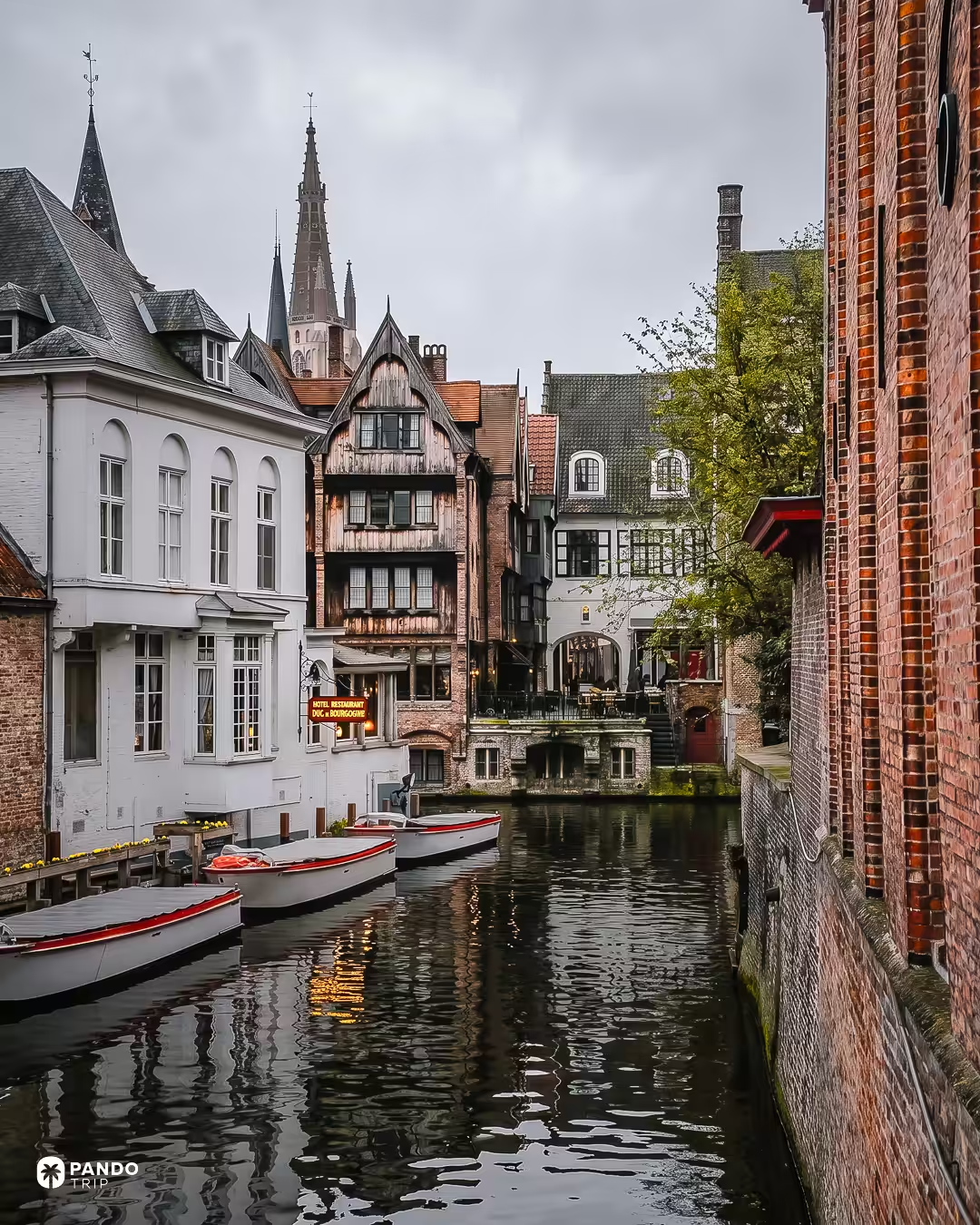
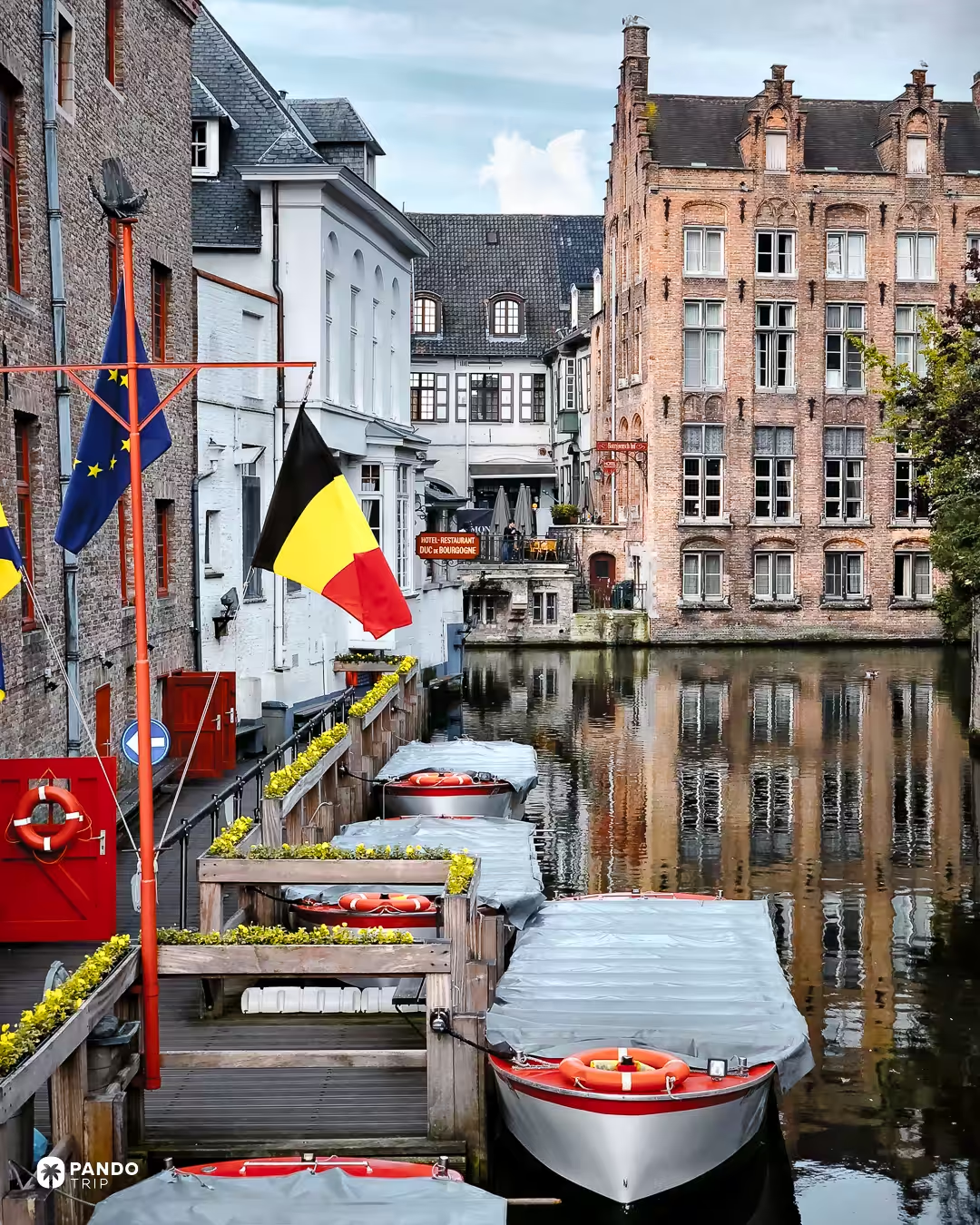
Bruges wins on sheer density of beauty, and it isn’t close. The old core is a compact oval of about 430 hectares where nearly every turn delivers another canal reflection, another line of stepped gables leaning over the water, another swan on the Minnewater. You do not hunt for the picture in Bruges. You trip over it. Rozenhoedkaai at blue hour, the facades doubling in the still canal, is the kind of frame that has launched a hundred thousand engagements, and it earns the reputation.
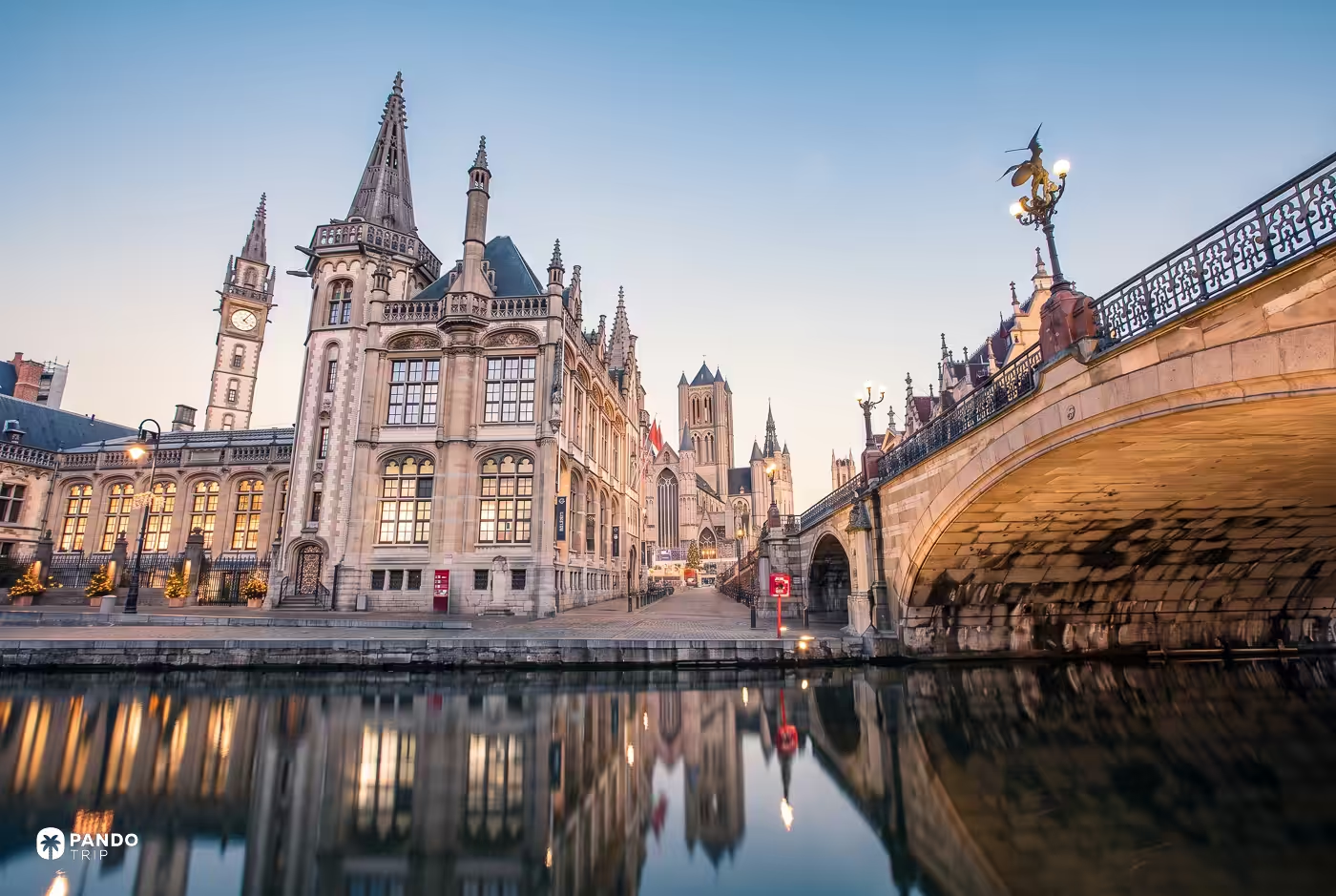
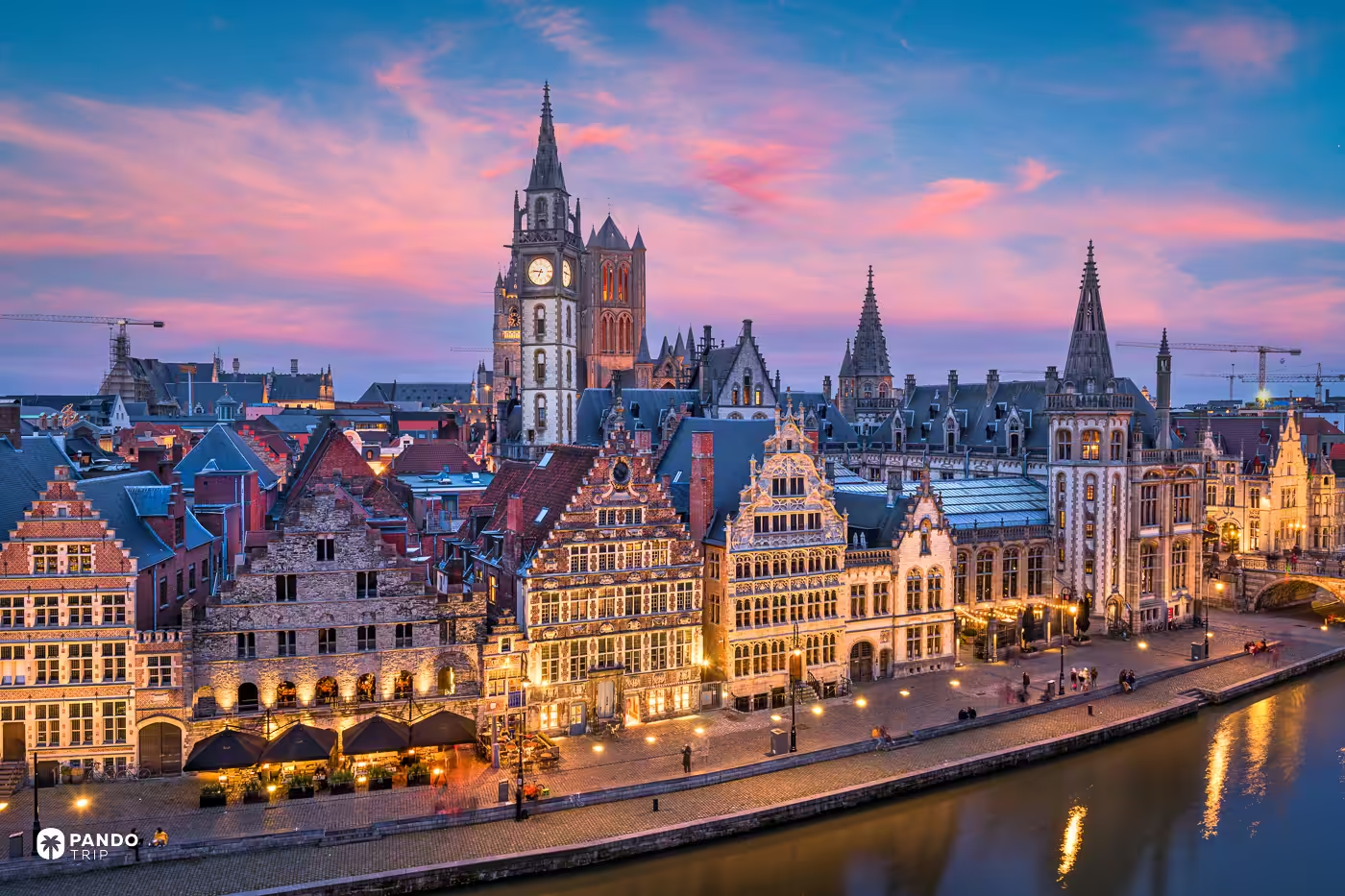
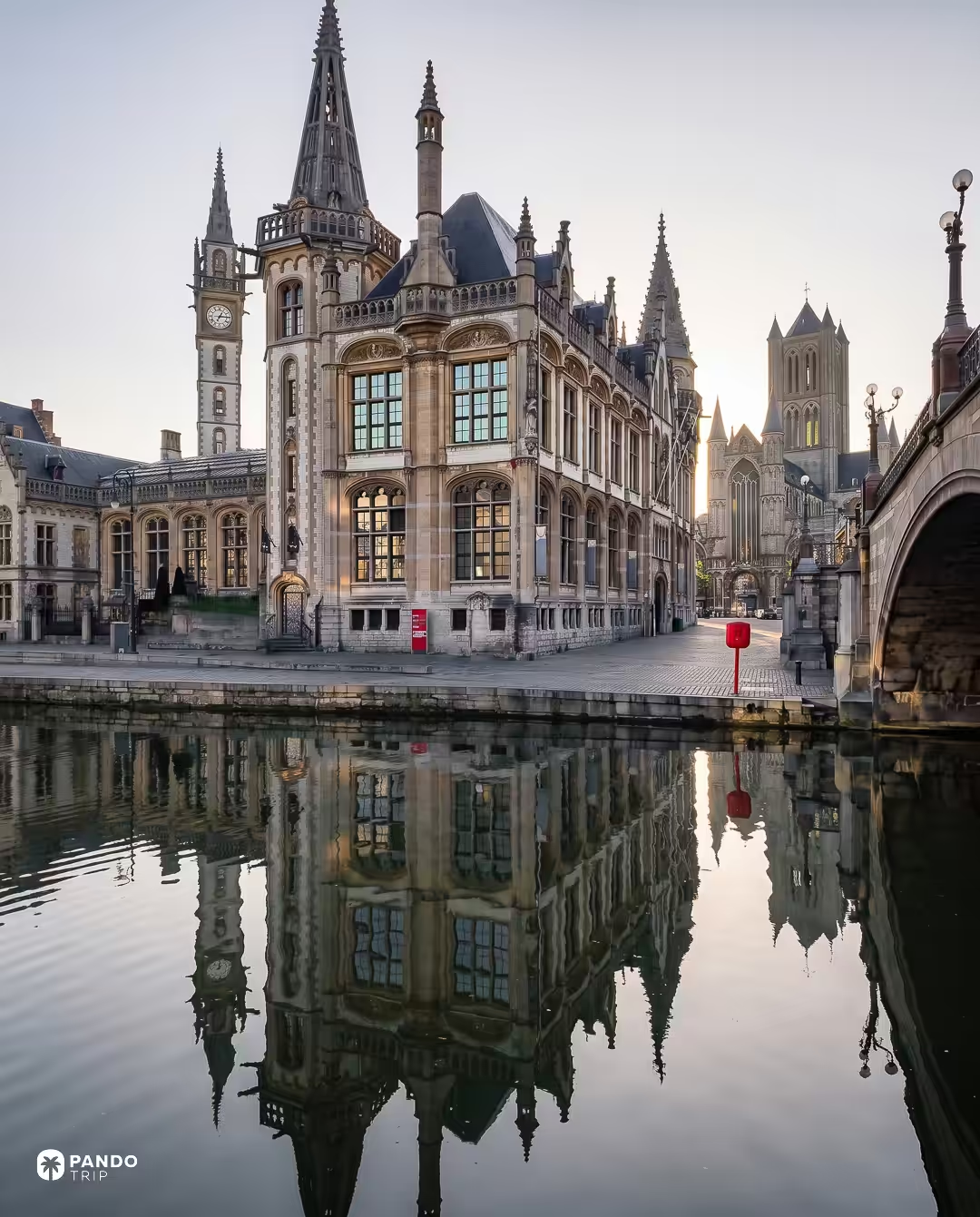
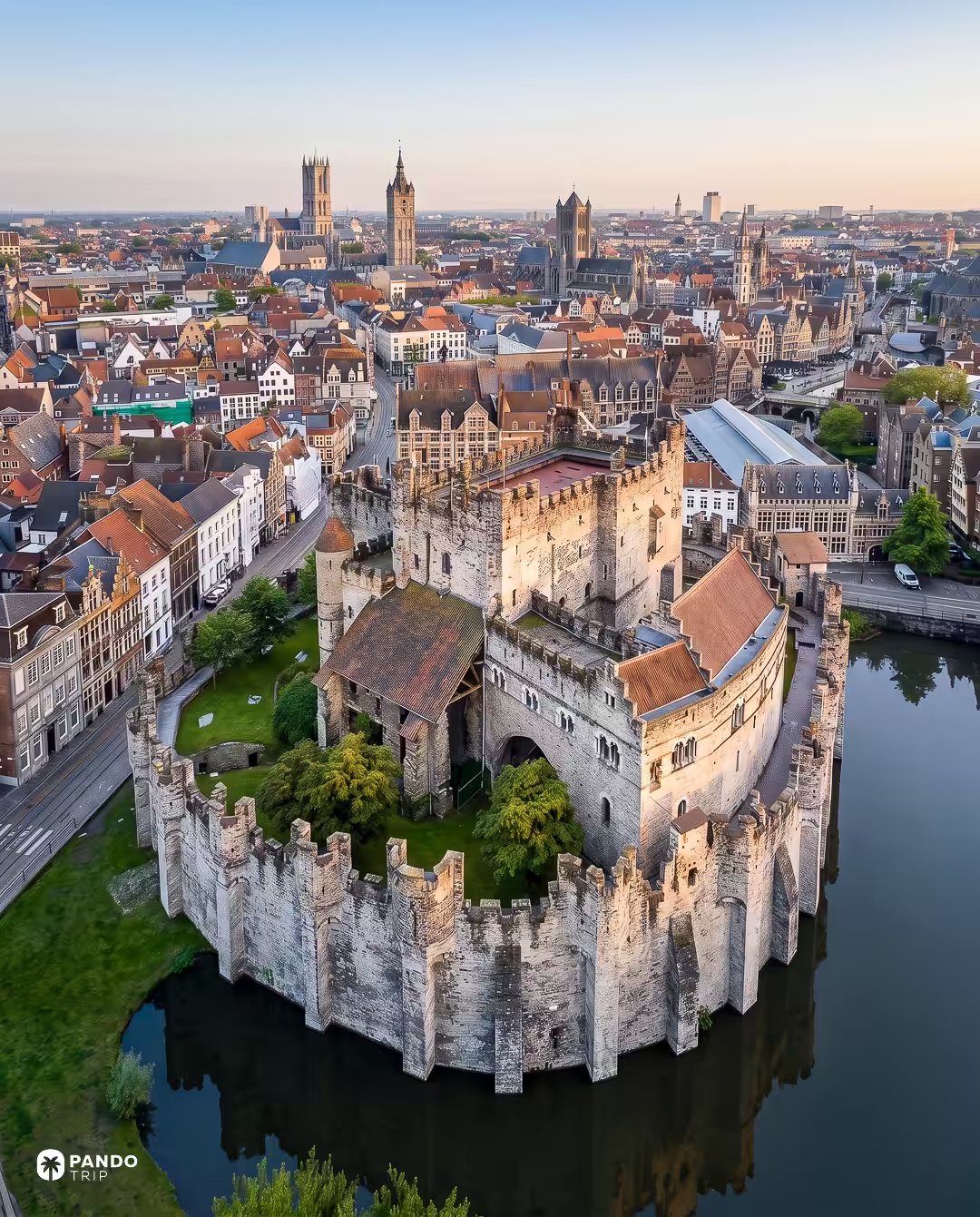
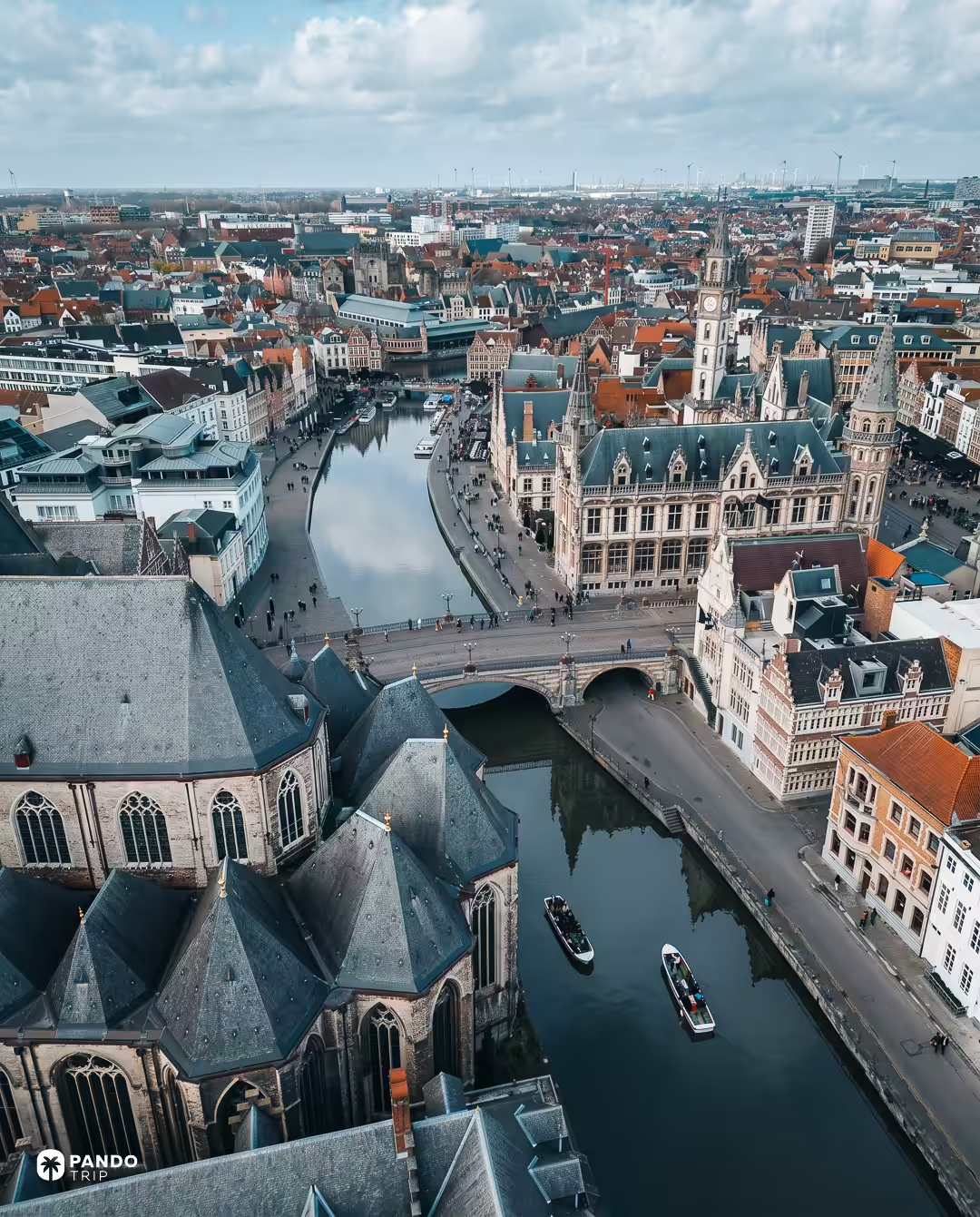
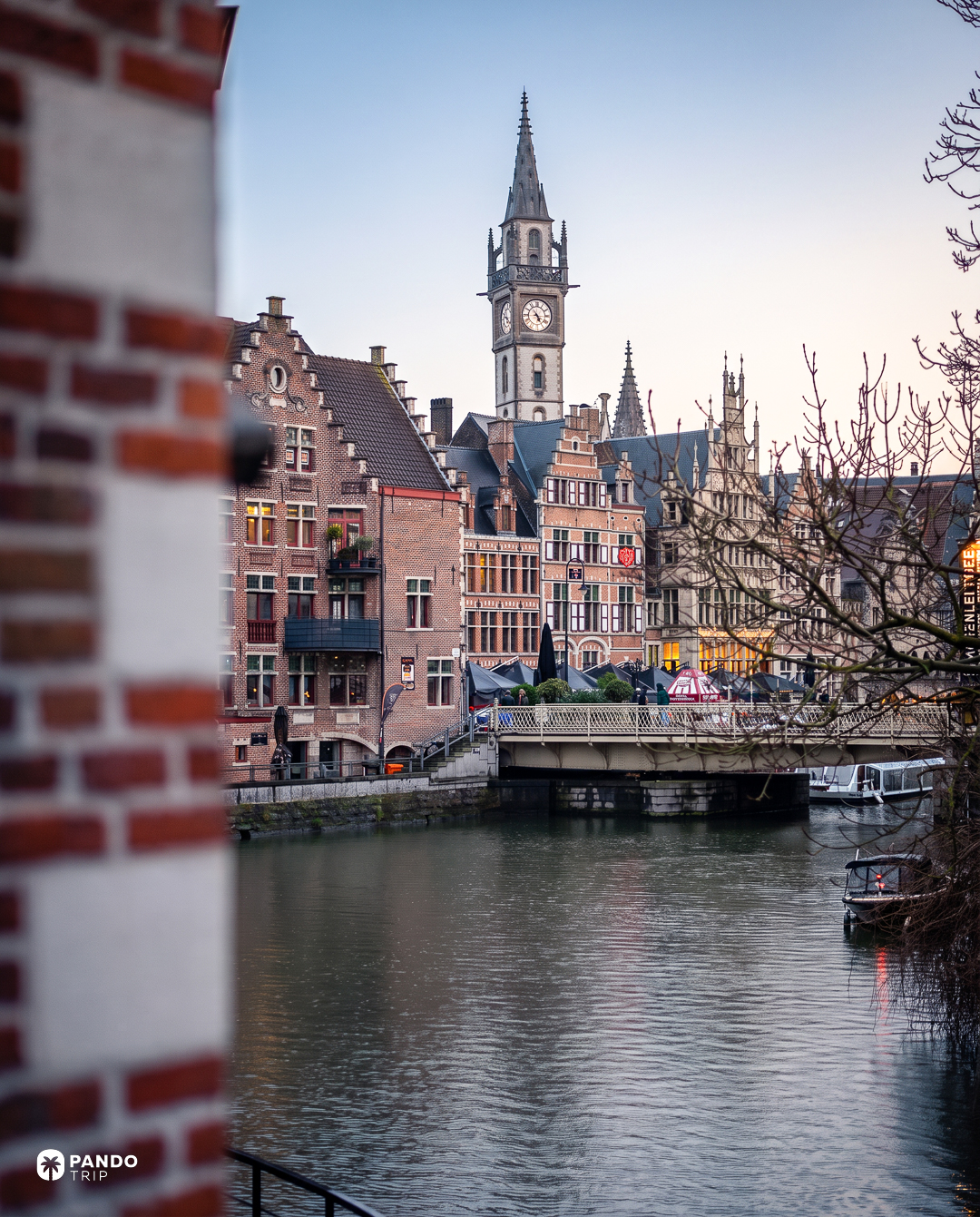
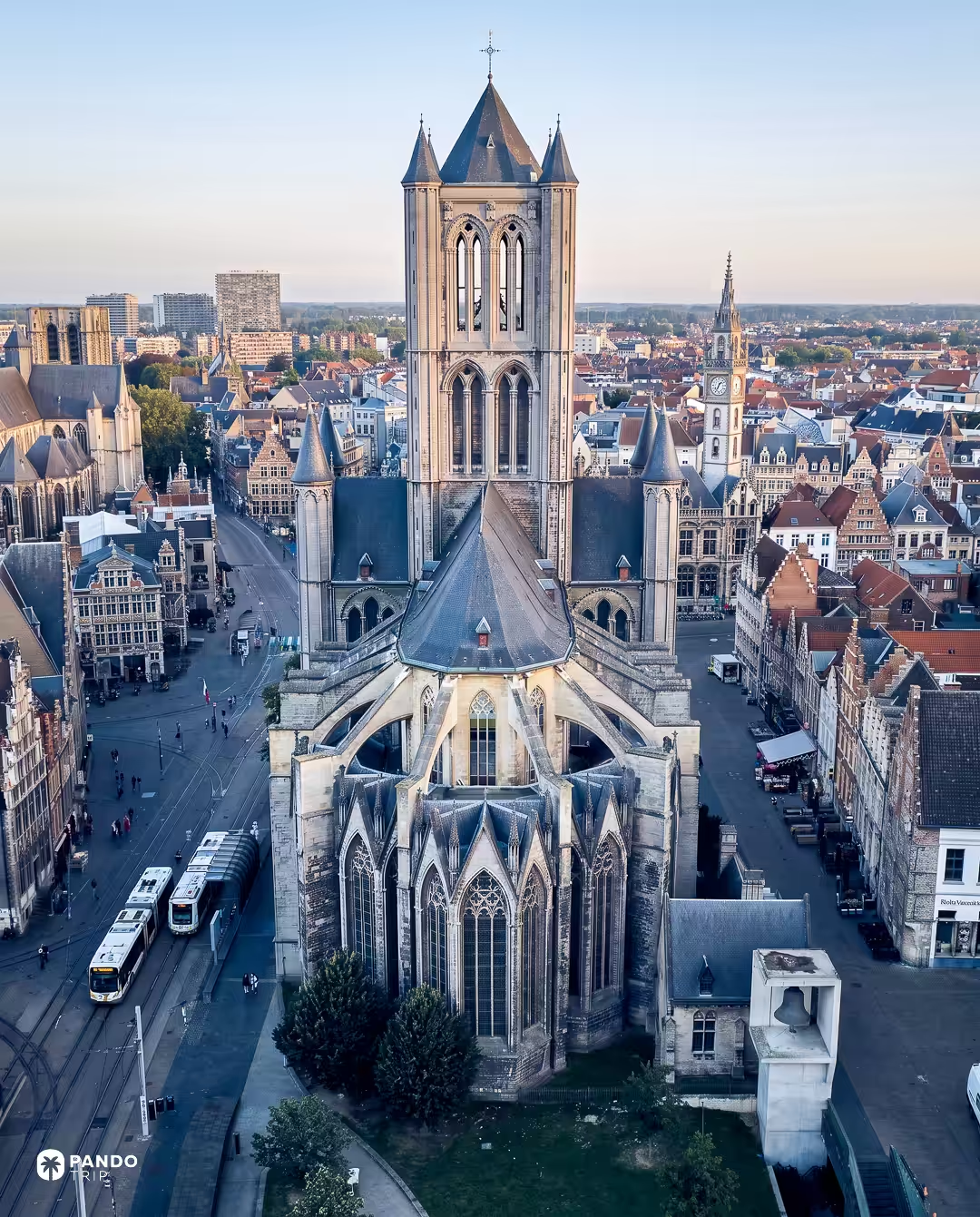
Ghent plays a different hand: one knockout view instead of a whole town of good ones. Stand on St Michael’s Bridge at sunset and the Graslei’s merchant houses stack up along the Leie in a tight medieval skyline — locals half-jokingly call it their Manhattan of the Middle Ages — with the three towers of St Nicholas, the 91-meter Belfort, and St Bavo’s lined up behind, and the dark hulk of the Gravensteen castle off to one side. It is arguably the single best urban view in Belgium. But turn a corner off it and you’re among tram wires and student flats, not more of the same.
Both towns, naturally, market themselves as the “Venice of the North,” a title also worn at various points by Amsterdam, Hamburg, and Stockholm, which tells you how much it’s worth. Bruges has the better claim on paper, all continuous canal and no cars. Neither should be allowed to keep it. Come for the canals if canals are the thing; just know that Amsterdam did it first and bigger.
Then the crowds, and the clock
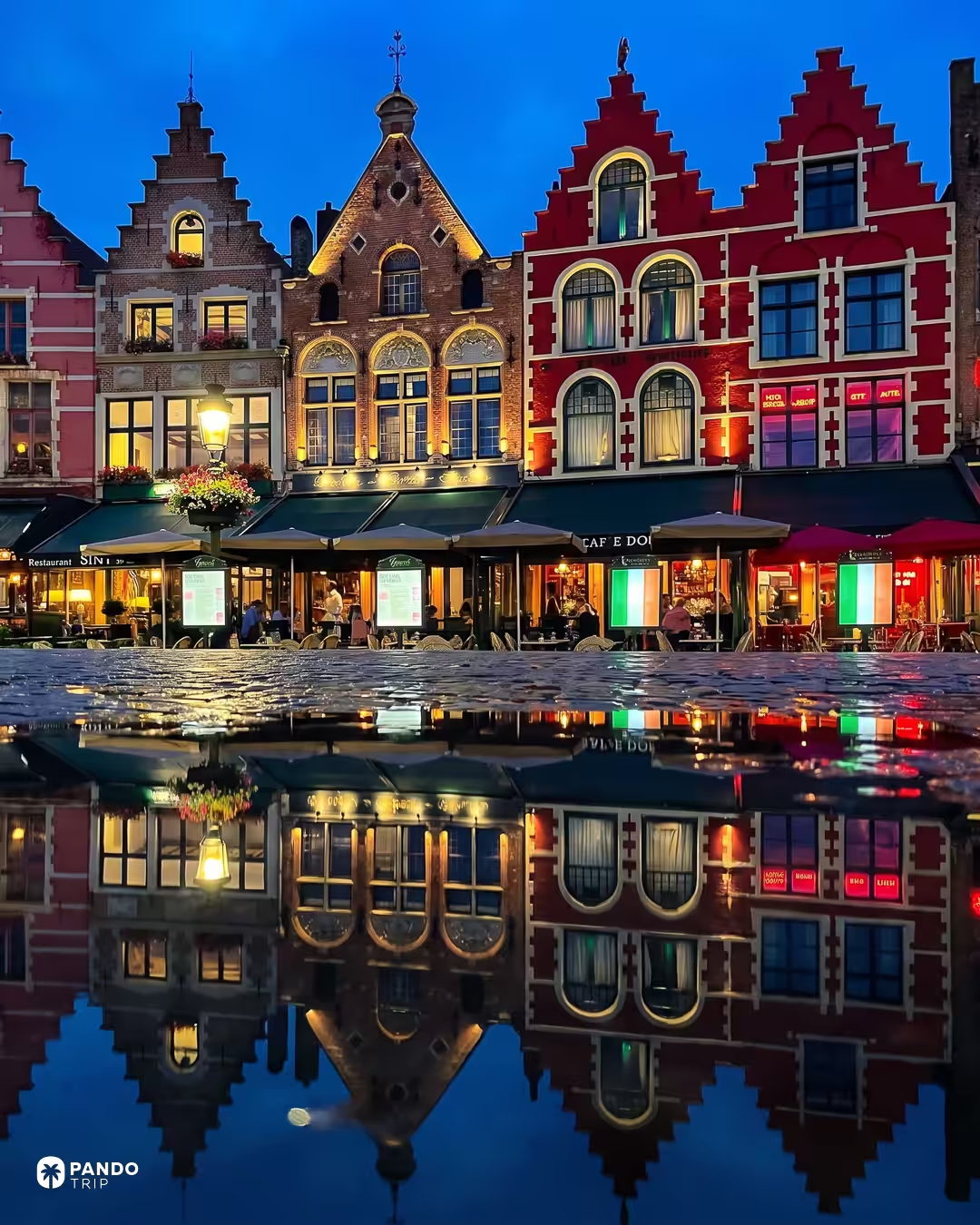
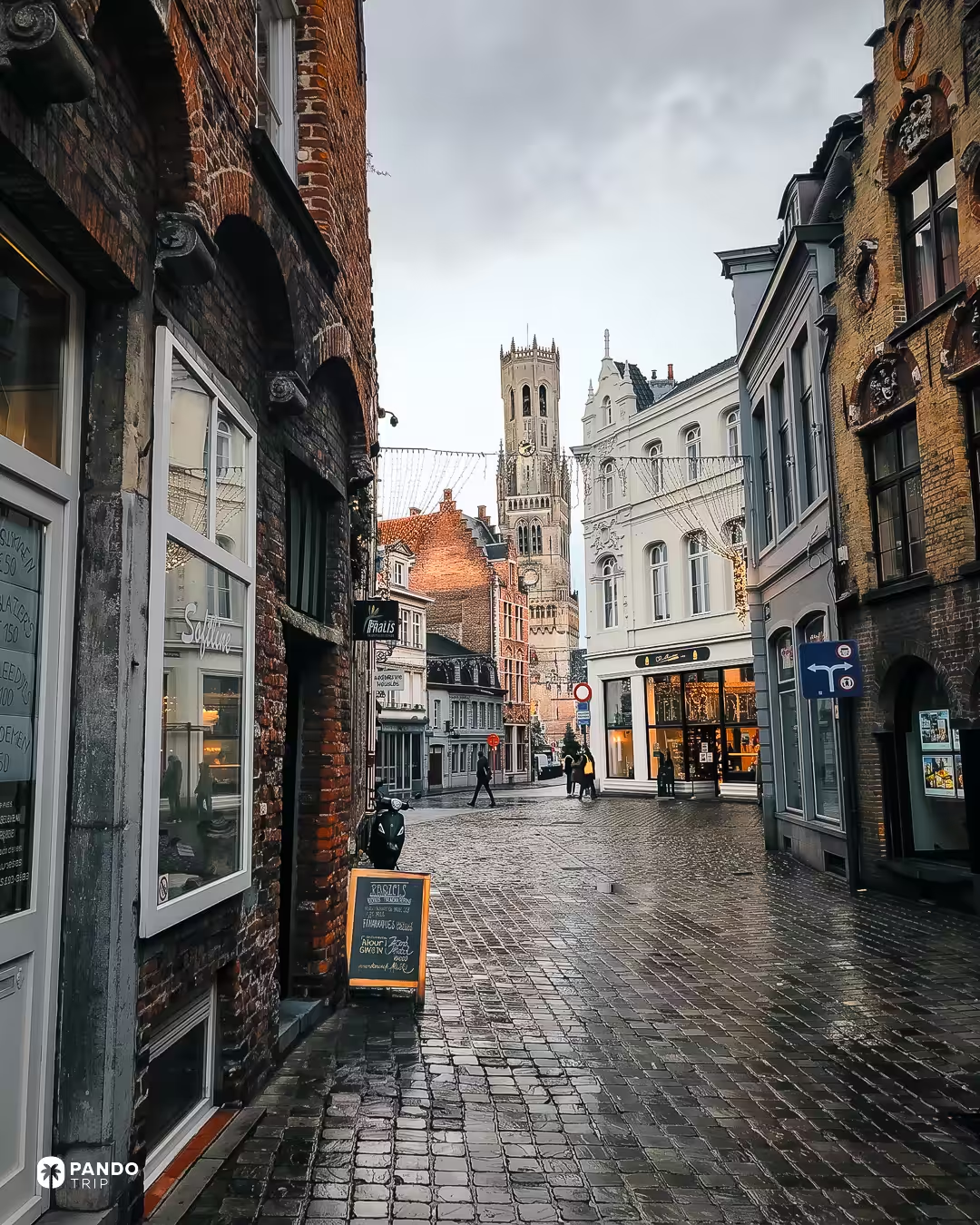
This is where the postcard shows its price. Bruges is engineered, almost perfectly, for the five-hour visit: everything worth seeing sits within a short walk of everything else, so a coach can disgorge four hundred people at ten and reclaim them by three. The consequence is that midday in high summer, the lanes around the Markt move at a shuffle. The 366 steps up the 83-meter Belfry come with a timed-ticket queue. Locals and Dutch guidebooks say the same thing in two languages: come Tuesday to Thursday, come in May, and above all come early. The town is a wholly different, softer place at eight in the morning, mist coming off the Groenerei, than it is at noon.
Ghent’s rhythm runs the other way. Its station sits a good two kilometers from the center, so it never feels like a place you drop into between trains; you arrive, you settle, you stay. The evening is the point here: lit monuments along the water, bars strung down the Korenlei, the long summer dusk that Flanders does so well. The city’s one genuinely mobbed stretch is the Gentse Feesten in July (in 2026, the 17th to the 26th), ten days of street music that end with a costumed procession and a ceremonial “burning of the nooses” at the castle. Time your first weekend for it or dodge it deliberately; there is no accidental version.
The upshot for a first-timer: Bruges rewards you most in the hours the day-trippers can’t be bothered with, which means it rewards sleeping there. Ghent rewards you at the times you’d naturally be out anyway.
The one thing only one of them has
Here the contest stops being about atmosphere. Inside St Bavo’s Cathedral in Ghent hangs the Ghent Altarpiece, the vast van Eyck polyptych finished in 1432 — the painting that, more or less, showed the world what oil paint could do, and the most stolen artwork in history, still missing a lower panel lifted in a 1934 theft nobody ever cracked. It sits now in its own apse chapel above a crypt visitor center, and you can tour it with augmented-reality glasses that peel the panels back to the underdrawing. Tickets run around €12.50 and include the AR experience; they sell out on weekends and holidays, so book ahead. There is no equivalent object in Bruges, or frankly in most of Europe. If you go to Ghent and see one thing, it’s this.
Bruges counters not with a masterpiece but with a mood: the Beguinage behind the Minnewater, thirteenth-century and hushed, where the city keeps its quiet; the almost-hidden Gothic window over the Bonifacius Bridge; a beer cellar called ‘t Poatersgat you reach through a door you’d walk straight past. Its museums are good, not singular. What Bruges sells is the whole town as the artwork, which is a real thing to sell — just not the same thing as standing three feet from the van Eycks.
The table and the bed
Ghent out-eats its neighbor on range, and it isn’t shy about it. This is the city that in 2009 became the first anywhere to declare an official weekly Veggie Day — Thursdays, when something like half the population skips meat and the school canteens go vegetarian — and it has grown a genuinely serious food culture around that, up to and including two-Michelin-star Vrijmoed. The dish to seek is Gentse waterzooi, the creamy chicken stew the city invented back when its rivers still ran thick with fish; eat it under the beams at ’t Klokhuys in the Patershol, the tangle of crooked lanes behind the castle that most day-trippers never find.
Bruges answers with something narrower and older. Eat local here and you’re eating stoverij, dark beef stew braised in brown ale and served with a paper cone of properly double-fried frites — the honest place to do it is a frituur like Chez Vincent, near St Salvator’s, not a linen tablecloth. The other thing to drink is context: De Halve Maan has brewed on the same spot for around five centuries and pipes its Brugse Zot to a bottling plant across town through a 3.3-kilometer underground pipe, laid in 2016 so no tanker truck ever has to rumble over the old town’s cobbles. Do the tour, take the rooftop view over the red-tiled roofs with a glass in hand.
Beds split cleanly by mood. In Bruges, Die Swaene sits right on the Groenerei canal, three minutes from the Markt, the kind of spa-and-four-poster hotel a couple books to be indulged; for a fraction of the price, Hotel Marcel puts you a 150-meter walk from the Belfry with nothing lost but the frills. In Ghent, Hotel Gravensteen is an 1865 townhouse staring straight at the castle you’ll climb the next morning, central and well under the city’s boutique average; if you want the design splurge, 1898 The Post fills the old central post office on the Korenmarkt and hides a good cocktail bar downstairs.
What about doing both?
They’re 25 minutes apart on the same rail line, so of course you can. But a weekend split in half is two arrivals, two half-days, and no evening anywhere, which is the worst way to meet either. If you insist, base yourself in Ghent, where the nights are worth having, and take Bruges as an early train the next morning: you’ll be walking an empty Rozenhoedkaai while the coaches are still on the motorway, and back in Ghent for dinner. Do not do it the other way around. And if two towns only sharpen the appetite, the rest of the country runs deeper than these two — see our guide to the most beautiful towns in Belgium.
The verdict
If you want the fairytale — a romantic first hit of medieval Europe — go to Bruges, and sleep inside the old town so you get the version the day-trippers never see. Nowhere does the storybook denser, and after dark it’s almost entirely yours.
If you’re chasing the photograph, Bruges again, narrowly: Rozenhoedkaai at first light is a shot Ghent can’t quite match, though St Michael’s Bridge at sunset comes closer than anywhere else in the country.
If you’re an art pilgrim, it’s Ghent and it isn’t a discussion. The van Eyck altarpiece is a reason to cross a continent, and Bruges has nothing on that scale.
If you’re an eater or a beer drinker, Ghent, for the range — the veggie culture, the waterzooi in the Patershol, the Michelin depth — while conceding that Bruges owns the single best brewery afternoon of the two.
And the final call, for a first weekend in Flanders with only two days to spend: Ghent. Bruges is the more beautiful town, and I’d never tell a first-timer to skip it. But a first weekend shouldn’t be spent racing an afternoon crowd through a place you’ll have exhausted by dinner. Ghent gives you a city you can actually live in for forty-eight hours, evenings and all, and it keeps Bruges a 25-minute train away for the morning you want the fairytale. Base in the living city. Visit the perfect one.