You can sail over it, cycle under it, or drive through it in ten seconds without noticing a thing.
North of Harderwijk, the N302 does something no road should get away with. It drops. Four lanes tip down into a trench, and for roughly twenty-four meters the sky above the windshield turns into three meters of lake: a shallow, buoy-marked slab of the Veluwemeer laid across a concrete tray, with somebody’s sailing boat working its way over the top. More than 43,000 vehicles a day pass underneath. Almost none of them look up, and honestly, why would they — at road level this is an underpass in a country full of underpasses.
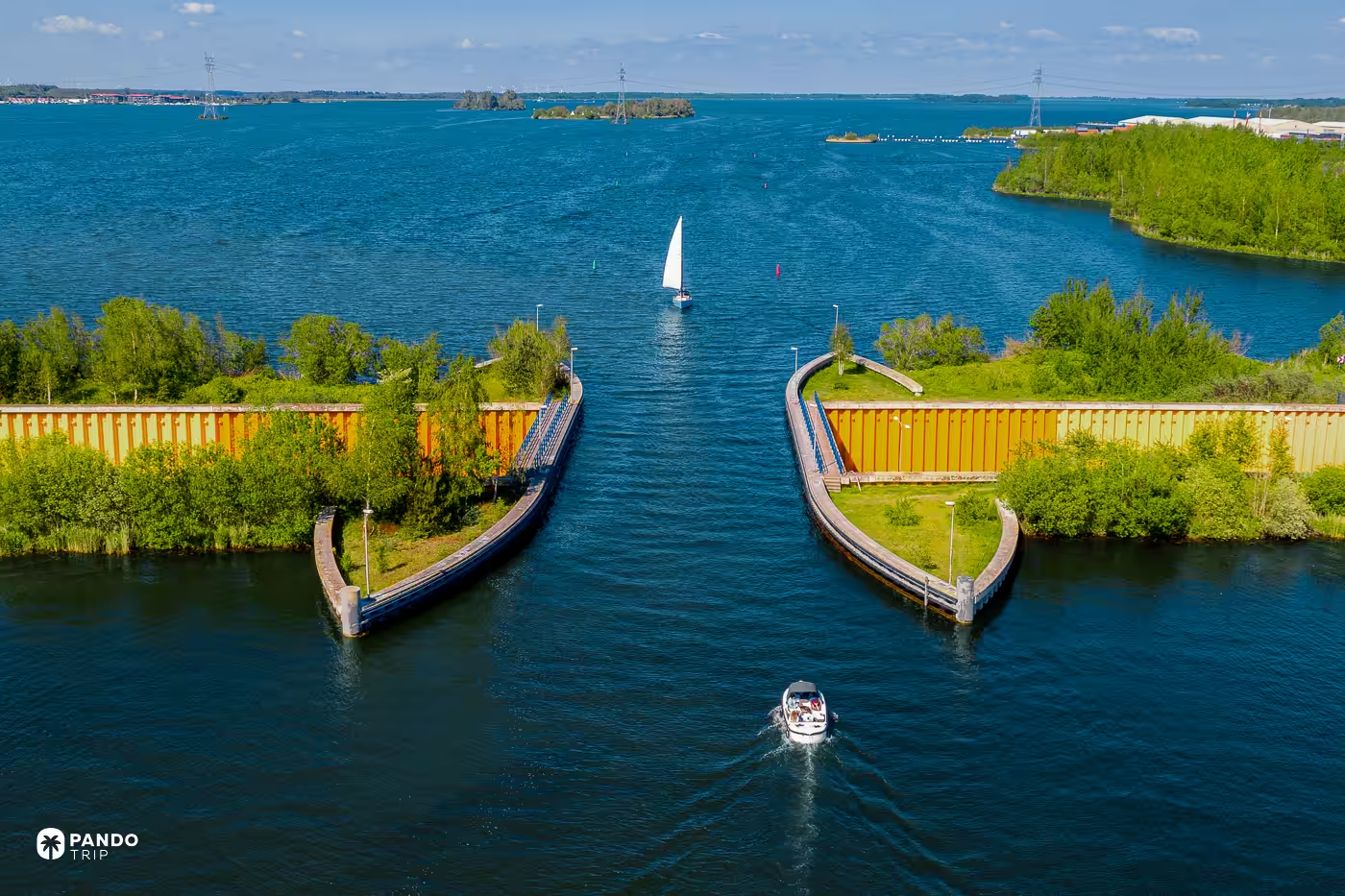
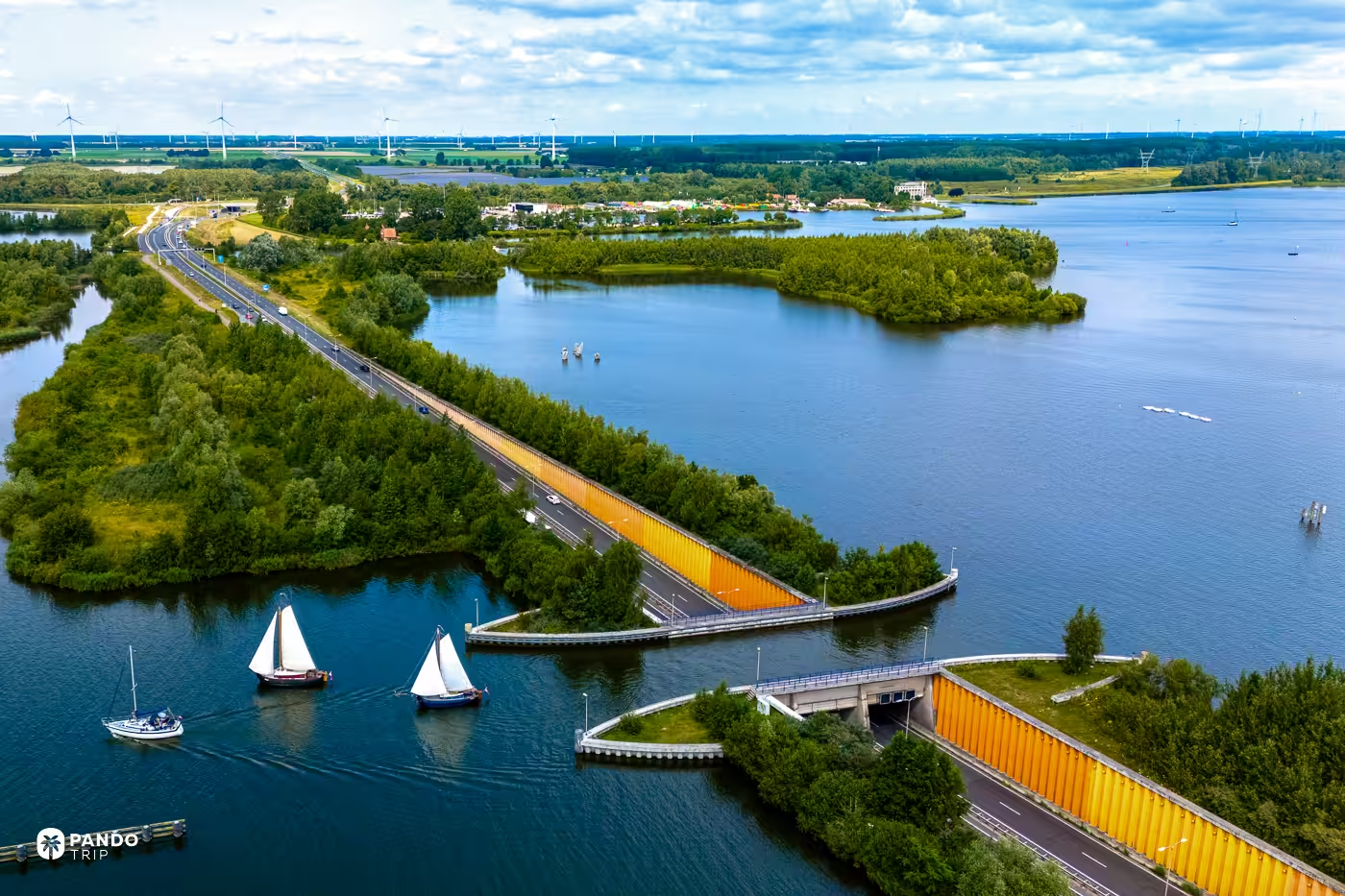
Seen from the air it looks like a rendering error. A lake, a road, and a yacht apparently crossing four lanes of traffic at ground level, which is exactly why the Aquaduct Veluwemeer has spent two decades circulating as a photograph, usually with a caption insisting it is the only thing of its kind on earth. It isn’t. What the caption should say is that somebody here solved a problem about masts.
The whole trick is that it wants to float
An aqueduct is a bridge that carries water. That much the photograph tells you. What it hides is that a structure like this is not held up — it is held down.
Sink a hollow concrete box into wet polder ground and it behaves like a hull. Dutch engineers have a plain word for what happens next: opdrijven, floating up, when the weight of the box comes in under the weight of the water it displaces. So the aqueducts in this country are pinned to the ground, hundreds of tension piles apiece, doing the exact opposite job of the piles under a house. Nor do you build the thing in the lake. You dig a dry pit, ring it with heavy steel sheet piling, run a wellpoint system to hold the groundwater pressure at bay, cast and prestress the box in the open air, and let the water in last.
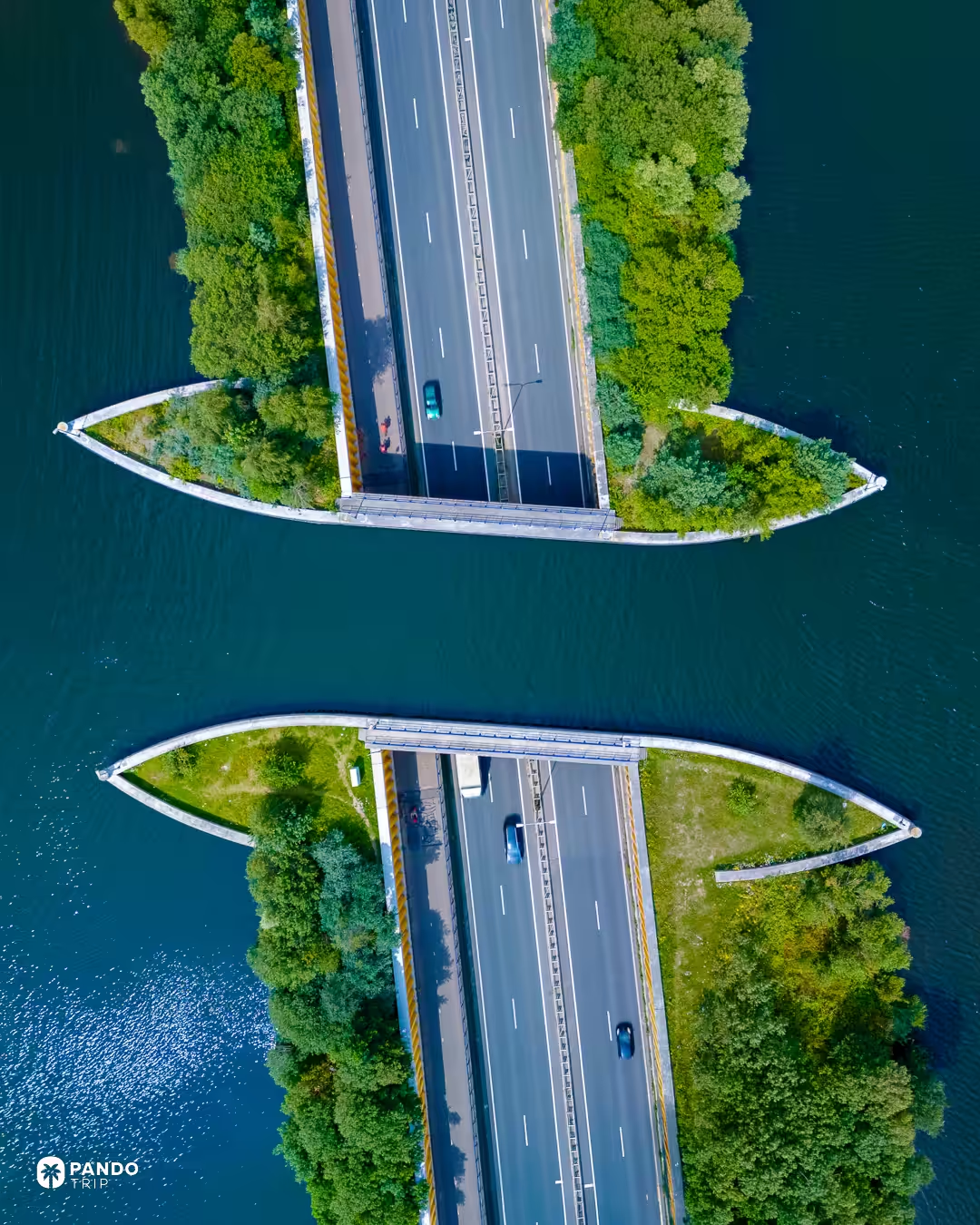
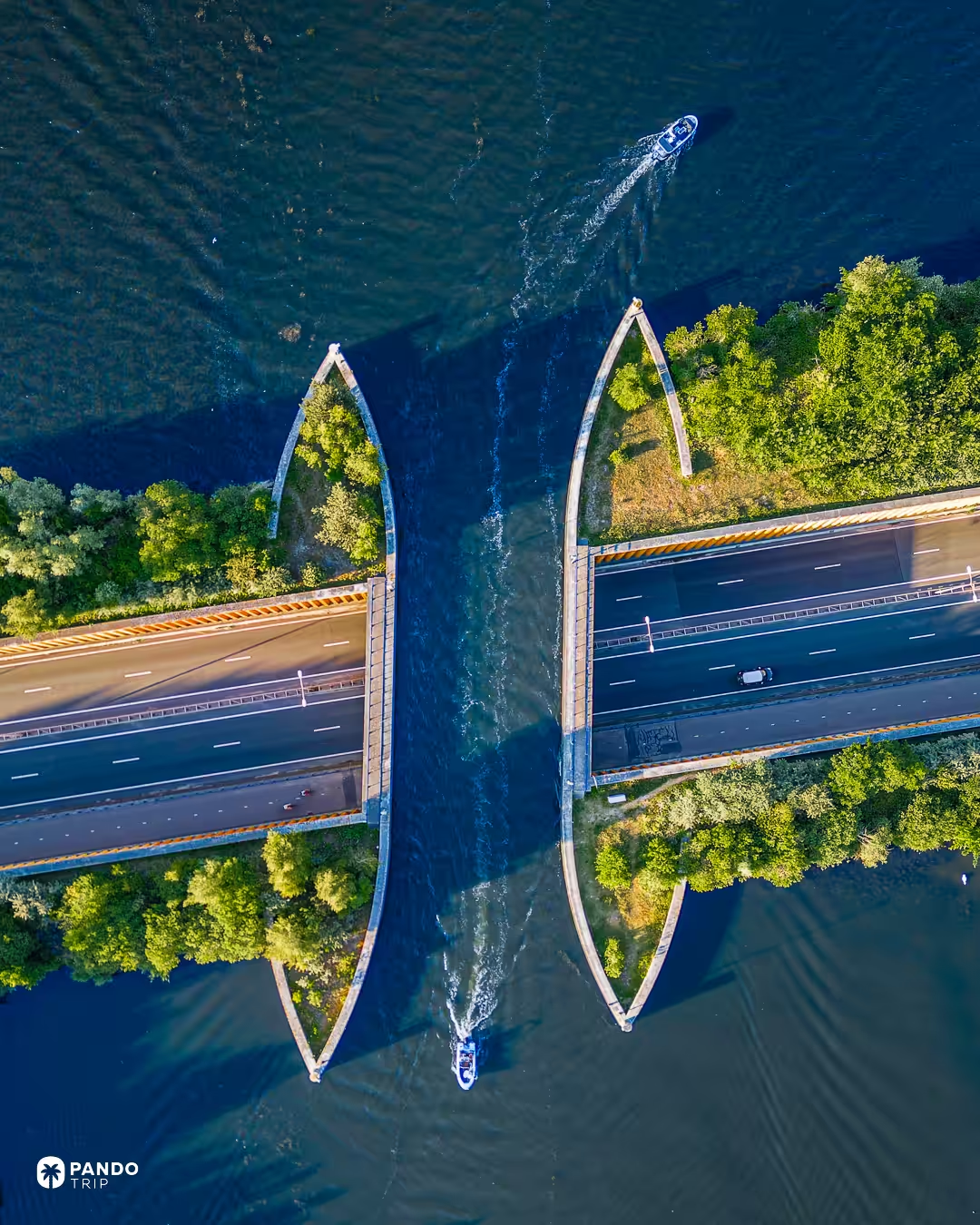
Then there is the fact that makes the whole category delightful. A boat crossing overhead adds nothing. A floating hull displaces precisely its own weight in water, and here, where the aqueduct is an open connection between two open lakes rather than a canal held level by locks, the displaced water simply runs off the ends into the Veluwemeer. The structure carries the same load with a yacht on it as with an empty channel: about 1,425 metric tons of water, sitting on the roof of a provincial road, unchanging.
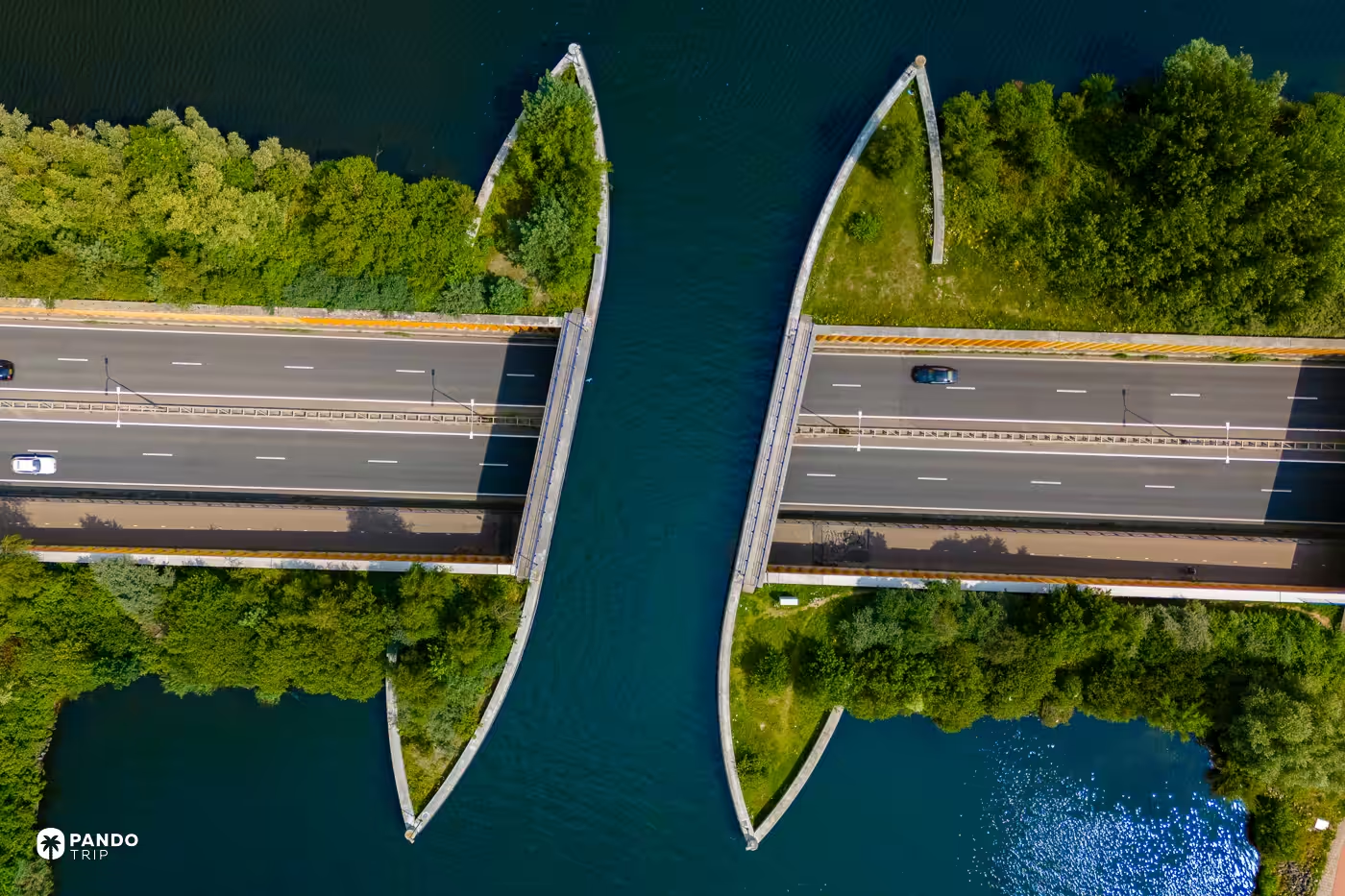
Which leaves the seams to worry about. Watertightness is the entire discipline of an aqueduct, because a leak in the tray corrodes the reinforcement and drops lake water onto the traffic underneath, and the expansion joints are where a tray of this kind gives first.
Then, last May, a joint gave
Gelderland province closed the N302 completely from May 9 to 13, 2025, to repair the aqueduct’s joints. During the work they found a leak in one of them, patched it temporarily, and shut the road again from May 16 to 18 to do the job properly. Cyclists and buses kept going through. Everyone else drove around by Elburg and Nijkerk.
It is not the only one. It isn’t even the best one.
The Netherlands has roughly forty aqueducts. Friesland alone has fourteen and a signposted tourist route linking five of them — Jeltesleat, Ie, Galamadammen, Houkesloot, De Geeuw — which tells you how ordinary the form is here. The widest aqueduct in Europe is Dutch too: Vechtzicht, sixty-five meters wide, carrying twelve lanes of the A1 under the small river Vecht at Muiden since 2016, and nobody photographs it. The cleverest is at Enkhuizen, where the Krabbersgat naviduct puts a working lock inside an aqueduct; Rijkswaterstaat calls it the first and only one in the world, and it opened in 2003, the same year as this one. Abroad, Magdeburg’s water bridge runs 918 meters over the Elbe, and Thomas Telford was floating narrowboats 38 meters above a Welsh valley at Pontcysyllte in 1805.
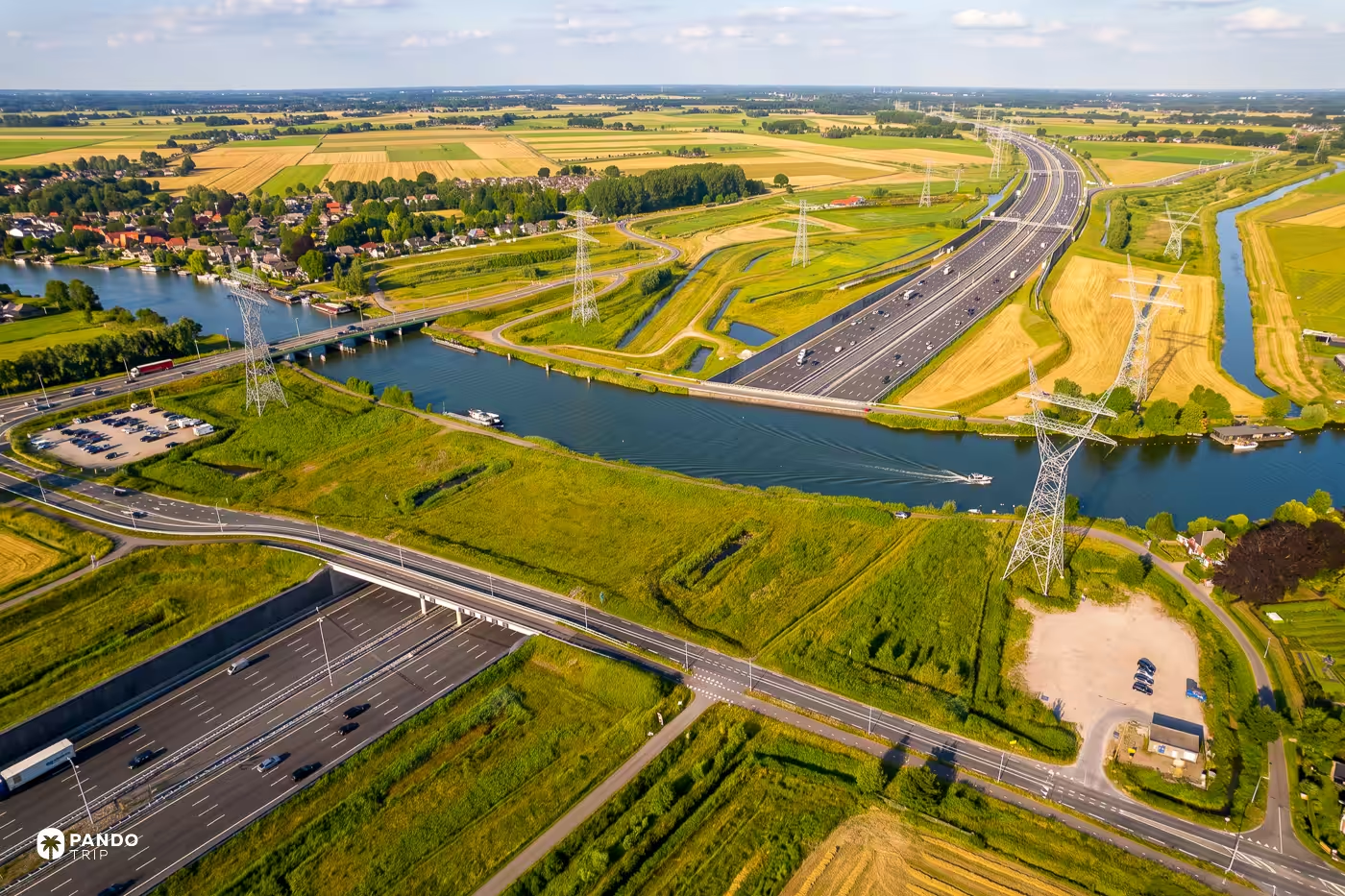
So why did this unassuming one become the famous one? Geometry, mostly. Its enclosed section is short, about twenty-four meters against Jeltesleat’s forty-five, so a single frame from above holds the whole joke at once: boat, water, road, cars. Longer aqueducts photograph as a tunnel mouth. And crucially, this one carries a lake, not a canal. No towpath, no trough walls marching to the horizon, no visible channel at all, just open water with buoys in it, three meters deep, so that from above a yacht seems to be sailing across a highway at grade.
It also has the distinction of being an internet landmark whose own custodians can’t keep its birthday straight. Rijkswaterstaat’s social account puts the opening in 2002, as does English Wikipedia and everything copied from it. The Dutch record is specific: it opened to traffic on January 29, 2003, with transport minister Roelf de Boer doing the honors. The bridge alongside it followed that spring.
Under ten seconds, and you have to take them
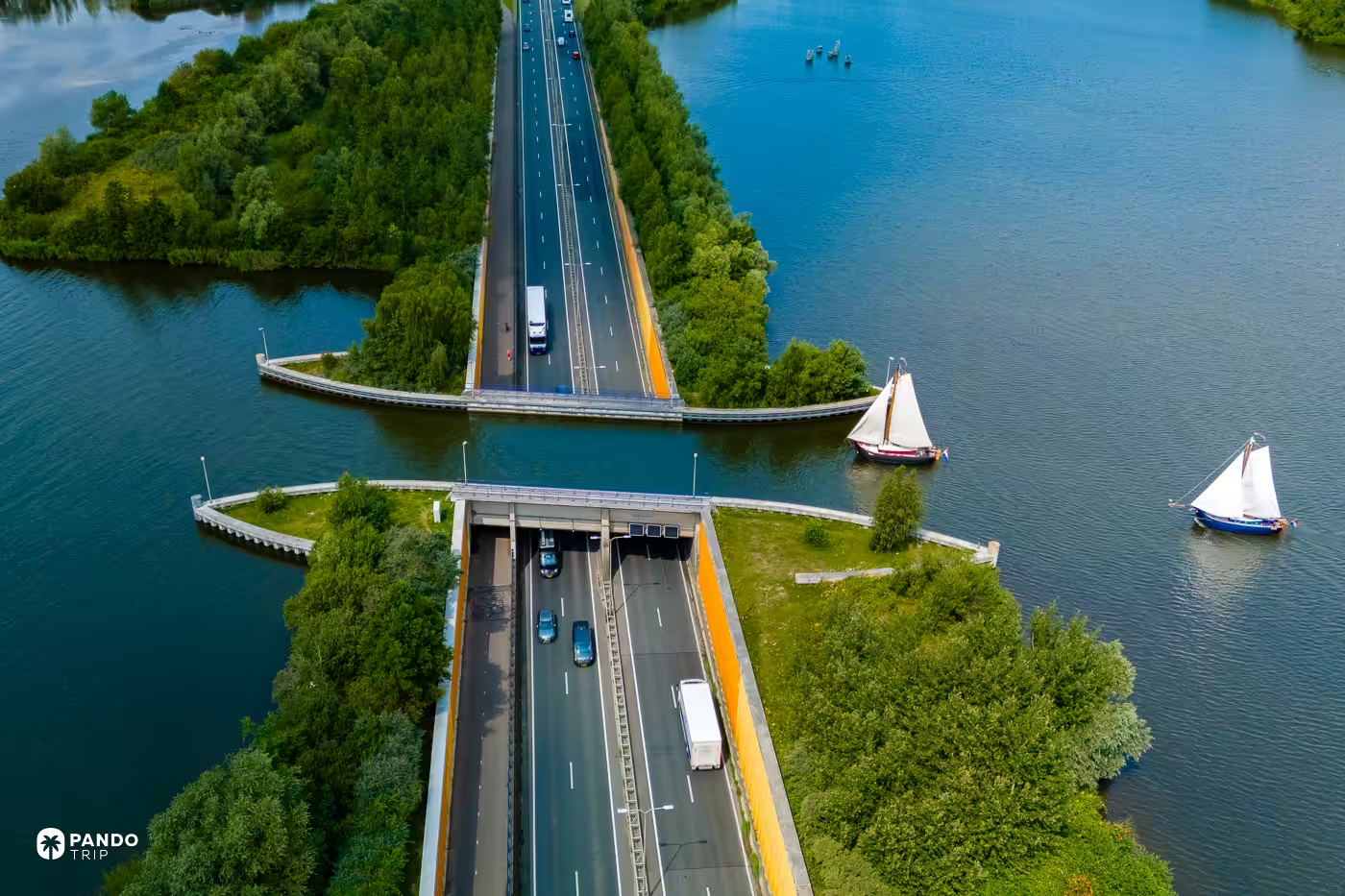
If you are out on the water in a rented boat, going over the cars is not a detour you get to choose. It is your assigned route. The traffic rules send recreational craft and charter boats through the aqueduct, while the fixed bridge a little further along is reserved for commercial shipping. Barges are low and squat and pass under a bridge happily. Masts don’t. The road dives so that nobody has to drop a rig, and that inversion — pleasure craft overhead, freight below the deck, cars below both — is the actual idea, of which the photograph is a byproduct.
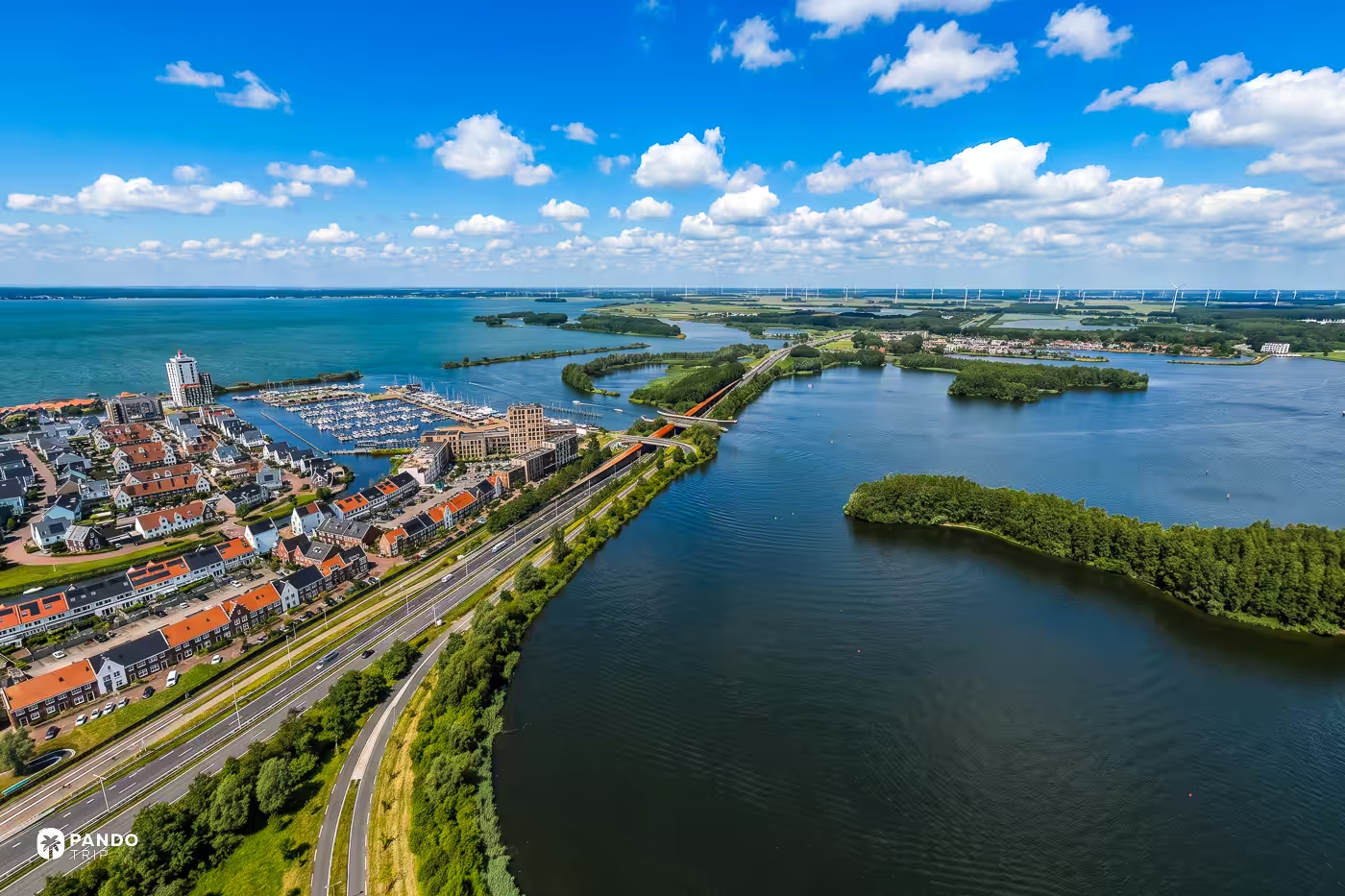
The easiest version is a sloop from De Randmeren at Biddinghuizen, which puts itself five kilometers from Harderwijk. No license needed, fuel and charts in the price, free parking, and a signature run of about an hour: out under the bridge toward Harderwijk, back through the aqueduct. If you’d rather somebody else read the buoys, Veluwemeer Cruises runs 90 to 120 minutes from the ZuiderzeeBoulevard, past the floating houses and the Waterfront development, over the aqueduct, out toward Elburg and back under the Harderbrug. It is a Dutch-speaking operation and nobody minds.
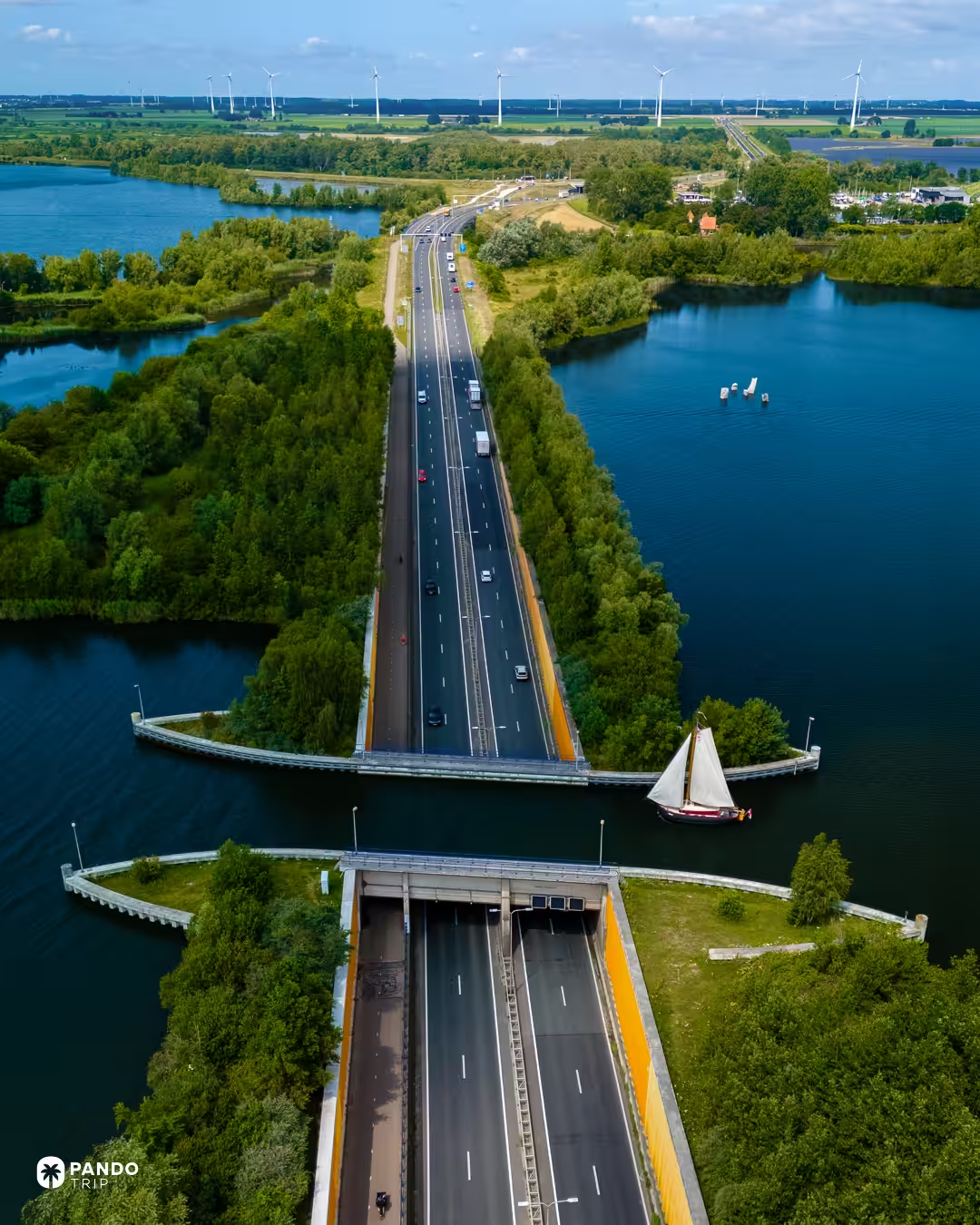
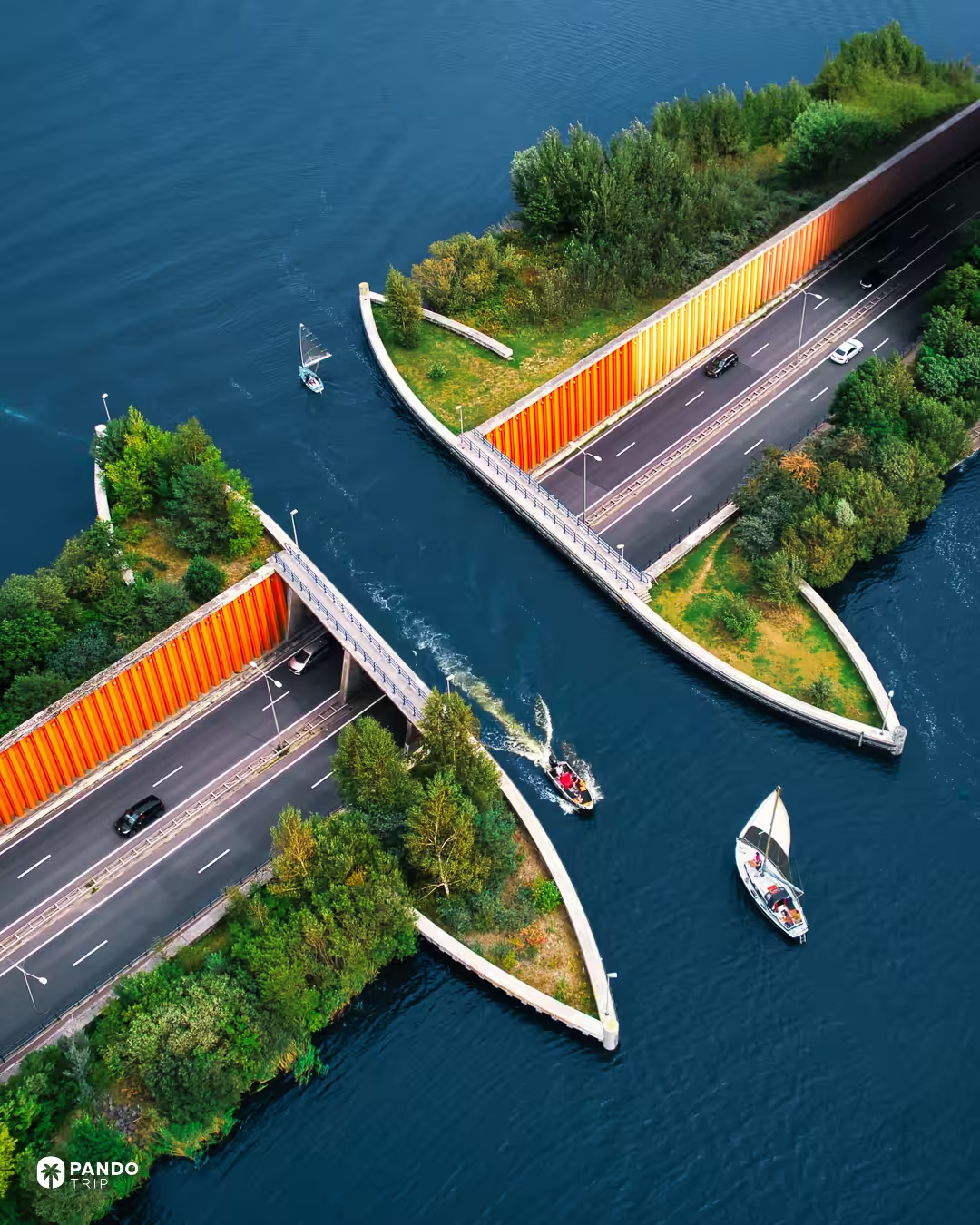
Then do the arithmetic and manage your expectations. Outside the marked channel the limit on these lakes is 12 km/h, the enclosed section is twenty-four meters, and most rented sloops potter along well below the limit. You get somewhere under ten seconds of sailing over four lanes of traffic. They are extremely good seconds, and there is a whole afternoon of shallow, stonewort-green lake on either side of them.
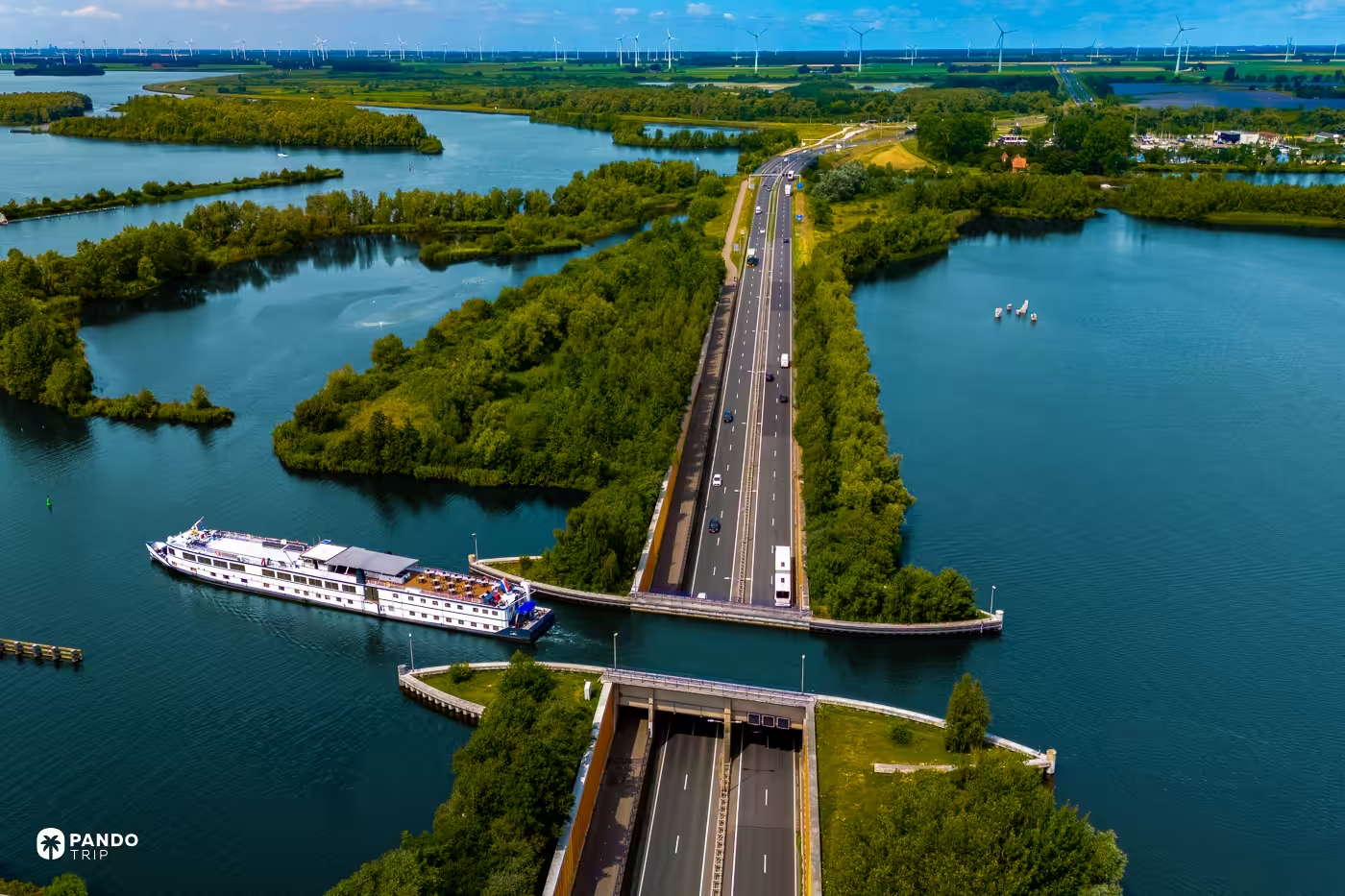
The other three ways to meet it, ranked honestly
Cycling is the best free option, by a distance. The crossing carries a double cycle path in its own bore, so you ride under the lake and then climb over the fixed bridge, roughly a fourteen-and-a-half-meter swing from the low point to the high one, which in this country counts as alpine. Riders on Komoot give it 4.5 out of 5, and a German cyclist leaves the review that says it best: it’s always exciting to ride through here when a boat happens to be crossing above you.
Driving under it is the least of the three. Ten seconds, no view of the boats, no signage worth the name. You have done it before you have registered it.
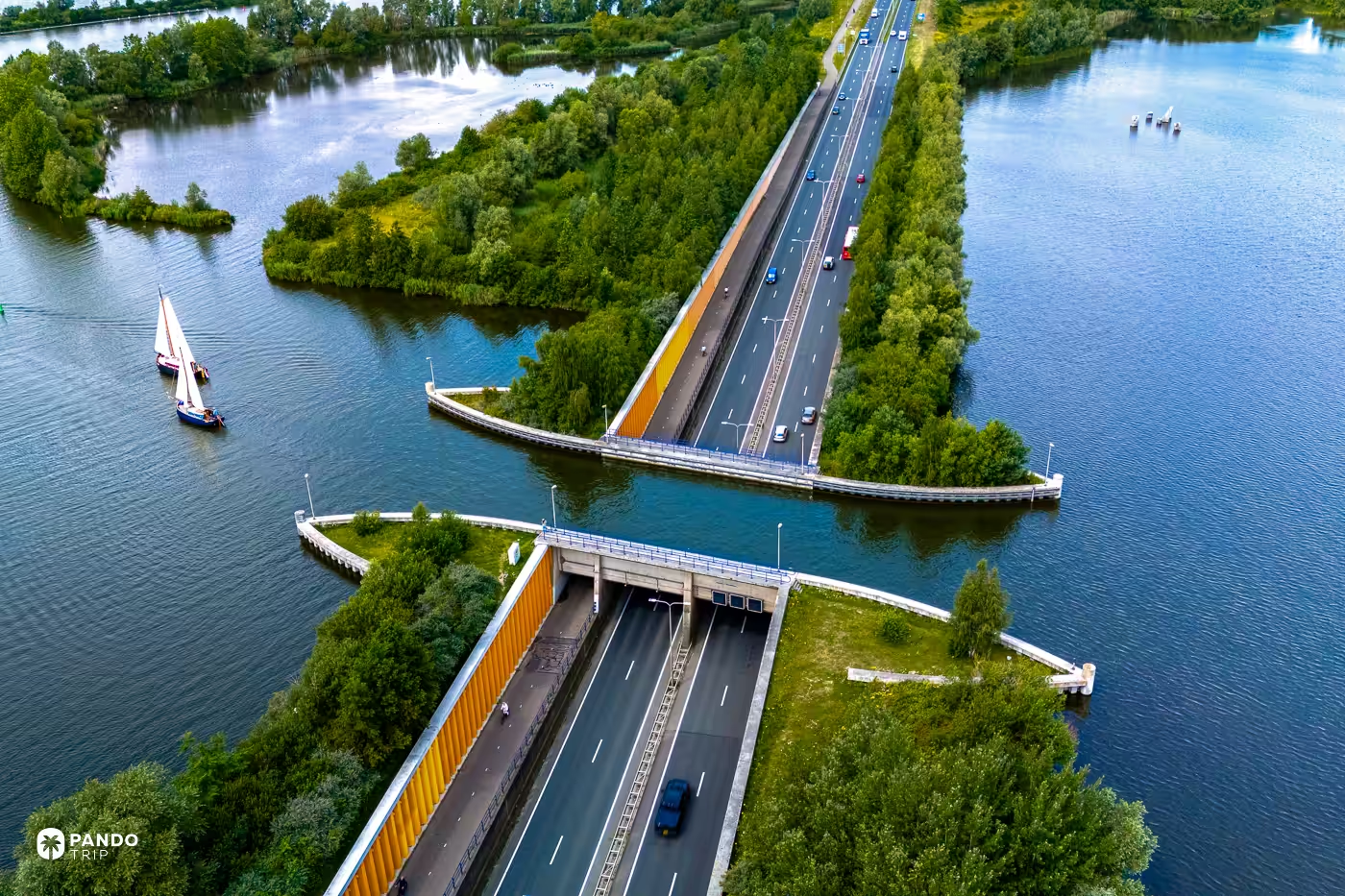
Standing and looking is the one to be honest about. There is no viewing platform, no visitor center, nothing built for you at all; this is a road and a lake, both simply public. The famous image is aerial, and it is not yours to take. The Veluwerandmeren are a Natura 2000 site, protected largely for the underwater stonewort meadows that feed its wintering ducks, so drone flight needs a permit from the province and through the breeding season it is effectively off the table. Check the official drone map before you pack one. What you can do instead is get yourself round to Harderhaven on the Flevoland side — nine houseboats, eight old service houses and a working harbor — and take the wide water view from the terrace at ‘t Huus van Guus, which is the closest table to the whole business.
Harderwijk, once you’re done staring
The town has form when it comes to people passing through fast. Its university, which ran from 1648 to 1811, was where you went if Leiden was too expensive and too slow, and Carl Linnaeus is the case in point: he sailed from Amsterdam on the evening of June 16, 1735, landed at the Vischpoort at three in the morning, and walked out with a medical doctorate on June 23. Six days. The dissection room survives inside the Marius van Dokkum Museum, and two trees from the university’s botanical garden are still standing, a ginkgo and a plane. Three centuries later the town’s best-known structure is, once again, a very efficient way of not stopping here.

For dinner in town rather than at the harbor, ‘t Nonnetje on the old Vischmarkt holds two Michelin stars under Michel van der Kroft. Sleep at the Monopole if you want the boulevard and the water a minute from the door, Best Western Hotel Baars if you want the quiet end of the old center, or the two-bedroom Boothuis Harderwijk if you’d rather have a terrace and a lake view than a lobby.
Skip the Dolfinarium, which sits right beside the cruise jetty and is the reason most families come here at all. In 2025 the Dutch enterprise agency ordered welfare improvements and the park cut show elements, among them dolphins jumping over trainers and waving at the audience, after inspectors logged twenty license breaches. A five-year plan to move eight dolphins to a park on Hainan collapsed the same year. France bans cetacean shows from 2026 and Belgium’s Boudewijn Seapark is closing. This is a business being overtaken, and you are not obliged to buy a ticket to the last act of it.
Go on a summer weekday, when there are boats overhead and the road isn’t carrying its weekend load. And if you want more structures that earn their fame from a single impossible-looking photograph, we’ve been through the spiral ones.
One last number for the drive back. The lake up there is three meters deep, and the design gave the road beneath it 4.6 meters of headroom. There is more air under that water than there is water in it.