A castle on an extinct volcano, stone lanes that vanish down steps, and a sun that sets before four.
Edinburgh has everything a story about a school for wizards could ask for. A castle on its rock above the city. Gothic spires darkened by centuries of smoke. Closes, the narrow passages that slip off the Royal Mile between the tenements and disappear down flights of steps. Crooked cobbled streets of painted shopfronts, bookshops with ladders against the shelves, and the cafés where J.K. Rowling sat writing the first book.
Winter turns all of it up. From late November to early January the sun sets before four in the afternoon, so the castle is floodlit by the time the shops get busy and the lamps in the closes are lit while you are still out walking. The Christmas market fills the gardens below the castle. At the end of December thousands of people carry real flaming torches through the city, and at midnight on the 31st fireworks burst over the battlements.
Christmas turns up in every one of the seven books, and HBO chose Christmas Day 2026 to premiere its new series. You won’t find Hogwarts here: the films were shot elsewhere in Britain, and which building inspired what is a debate for another day. What Edinburgh has is the feeling, and it is strongest in winter.
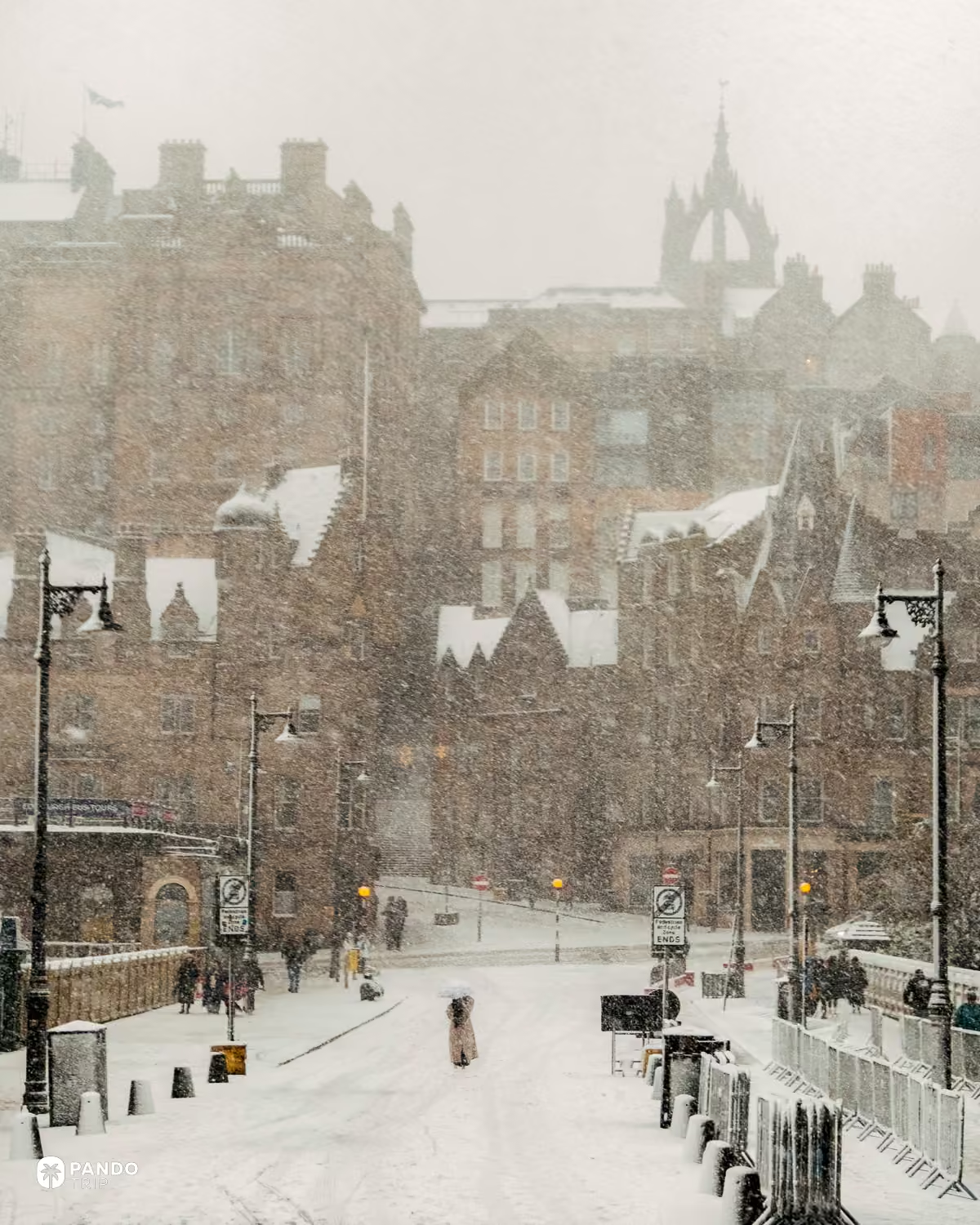
Snow is the bonus, not the promise. Some winters it settles on the gables for a morning or two, and the Old Town looks like the lid of a Christmas biscuit tin. Far more often you get rain, low cloud and wet cobbles that hold the lamplight, and the place suits those just as well.
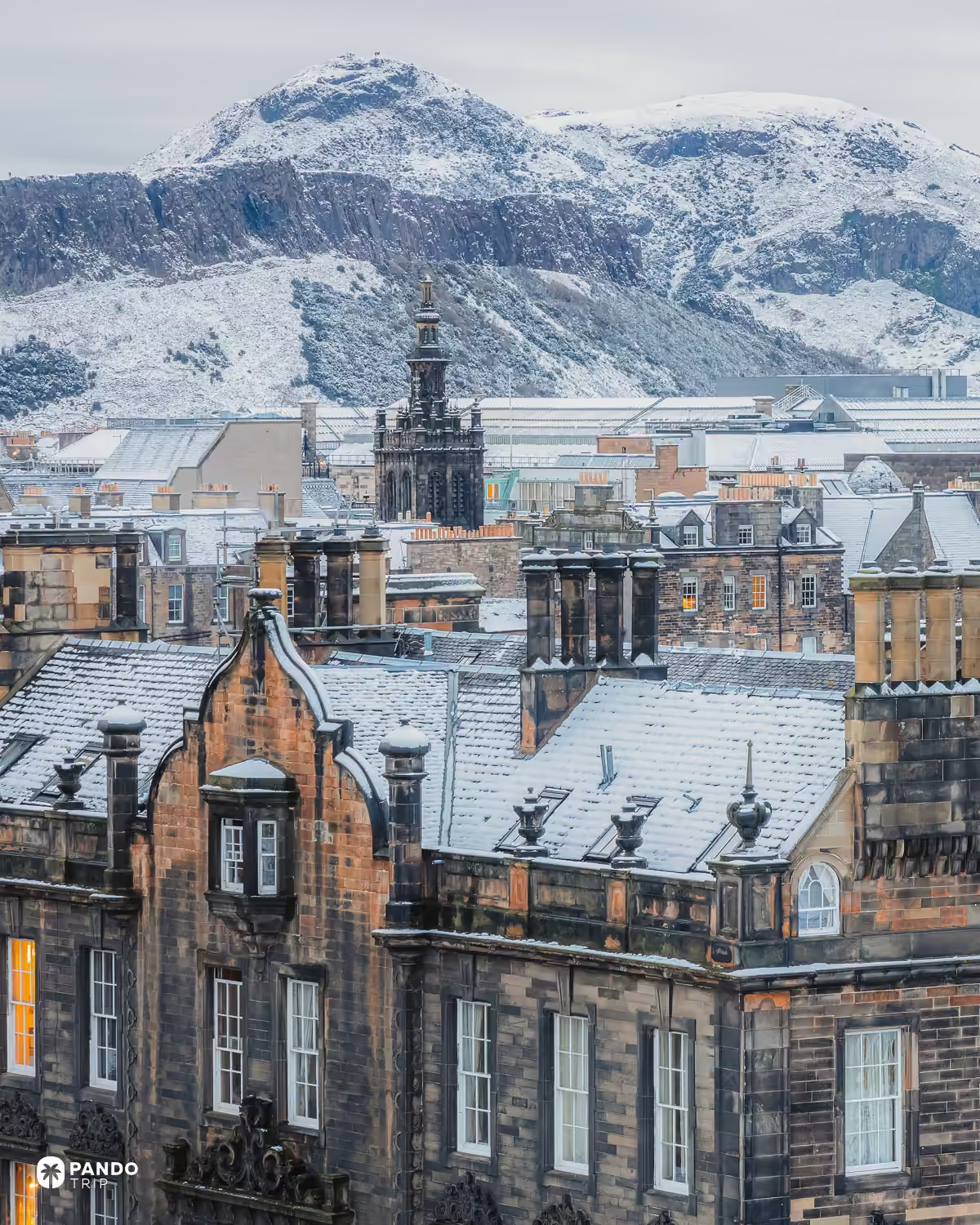
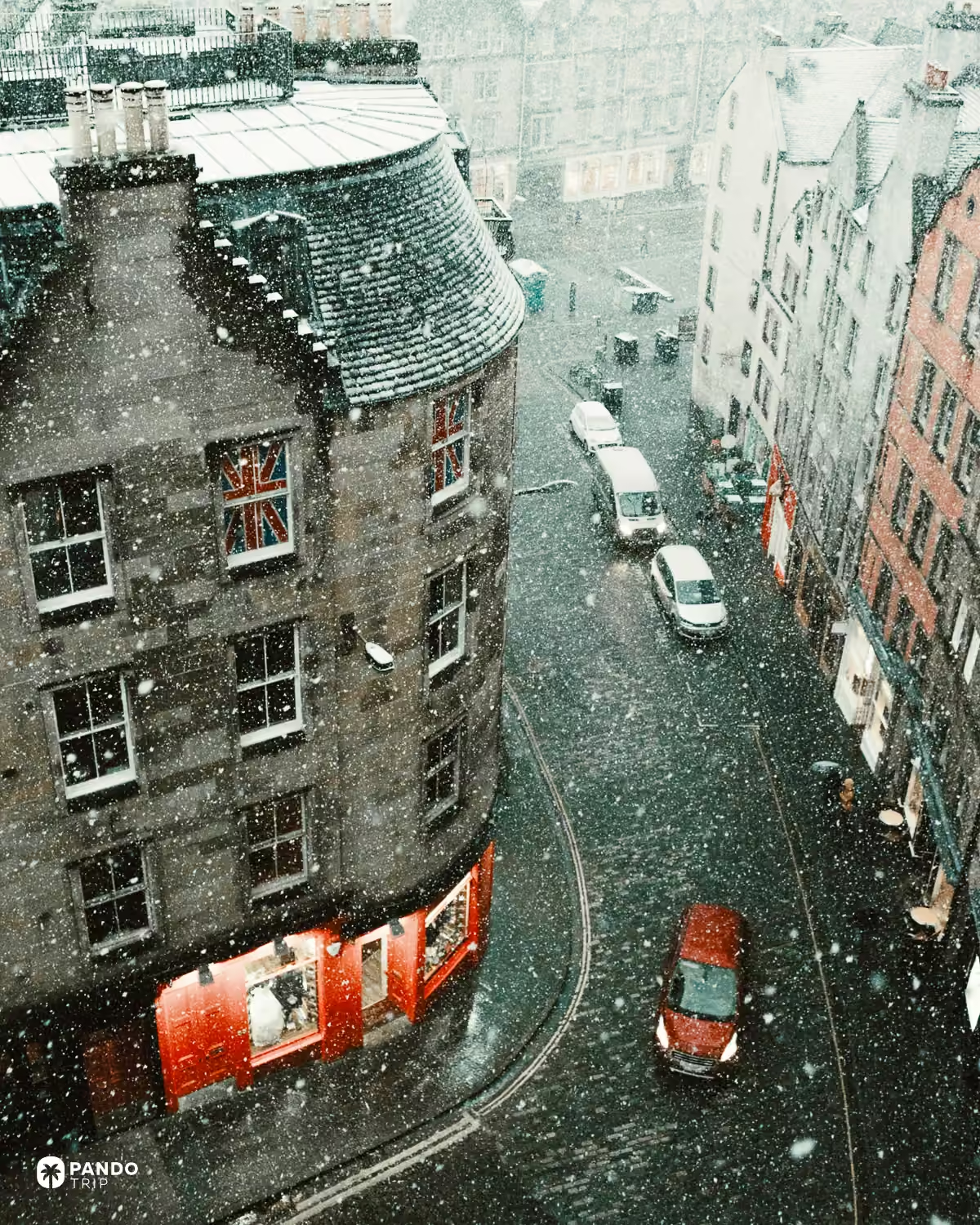
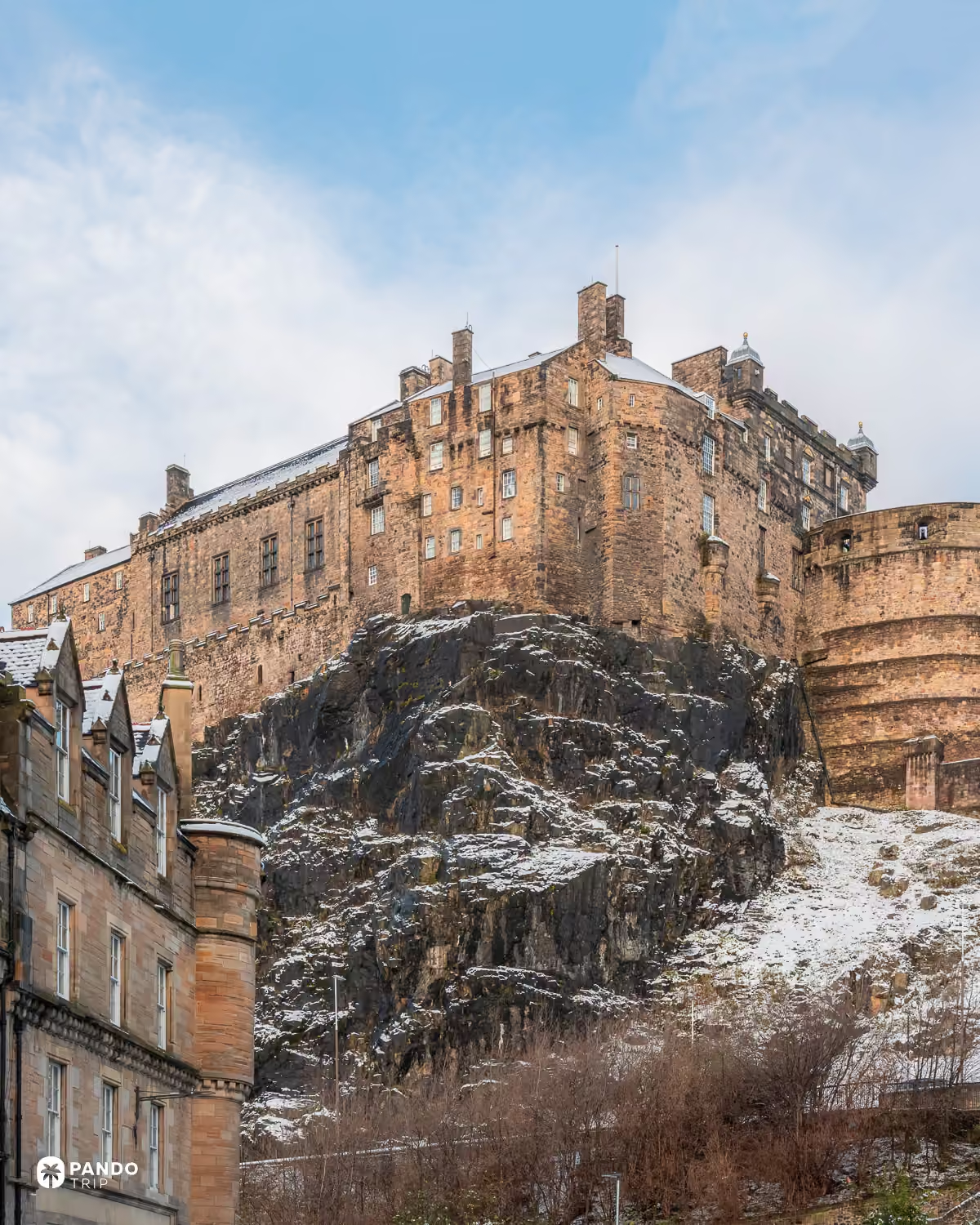
A castle on a volcano
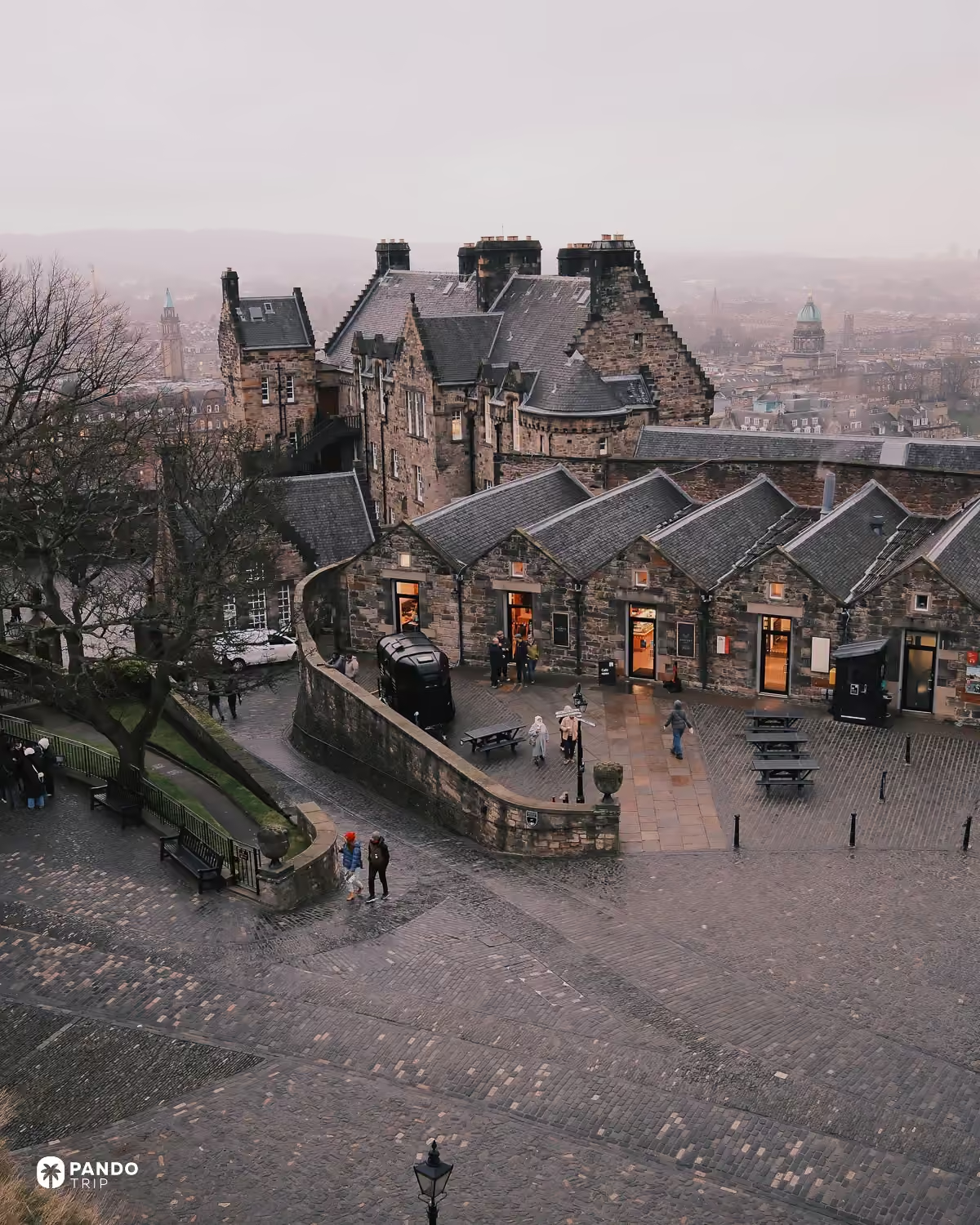
Edinburgh Castle stands on the plug of an extinct volcano, the hard core the ice couldn’t shift, and the Royal Mile runs down the ridge of rock and debris left in its lee. That is why the castle rises from sheer cliffs, and why nearly everything else in the Old Town is on a slope. You can see it from almost everywhere in the centre, which is most of what a castle in a story has to do.
Low cloud suits it. On a grey December afternoon the city below goes soft and the lit windows inside the walls glow against wet stone; after a night of snow, the rock turns black and white. Winter opening is 9:30 to 17:00, with last entry at 16:00 and the castle closed on 25 and 26 December, so you can walk in by daylight and come out under the floodlights. Book tickets online: once the online slots are gone, the gate sells none. The castle also made our list of real-life fairytale castles.
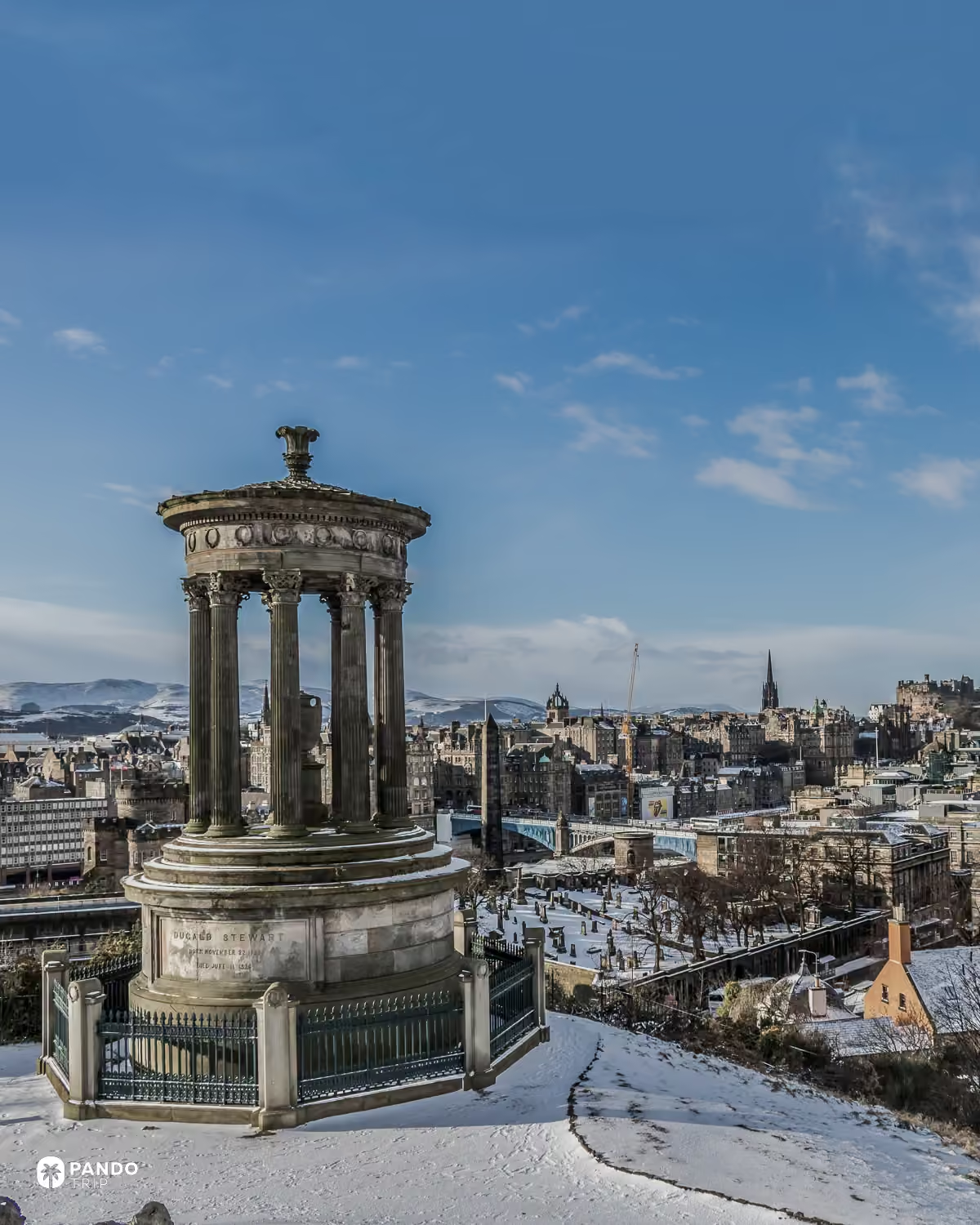
Spires and a little Victorian make-believe
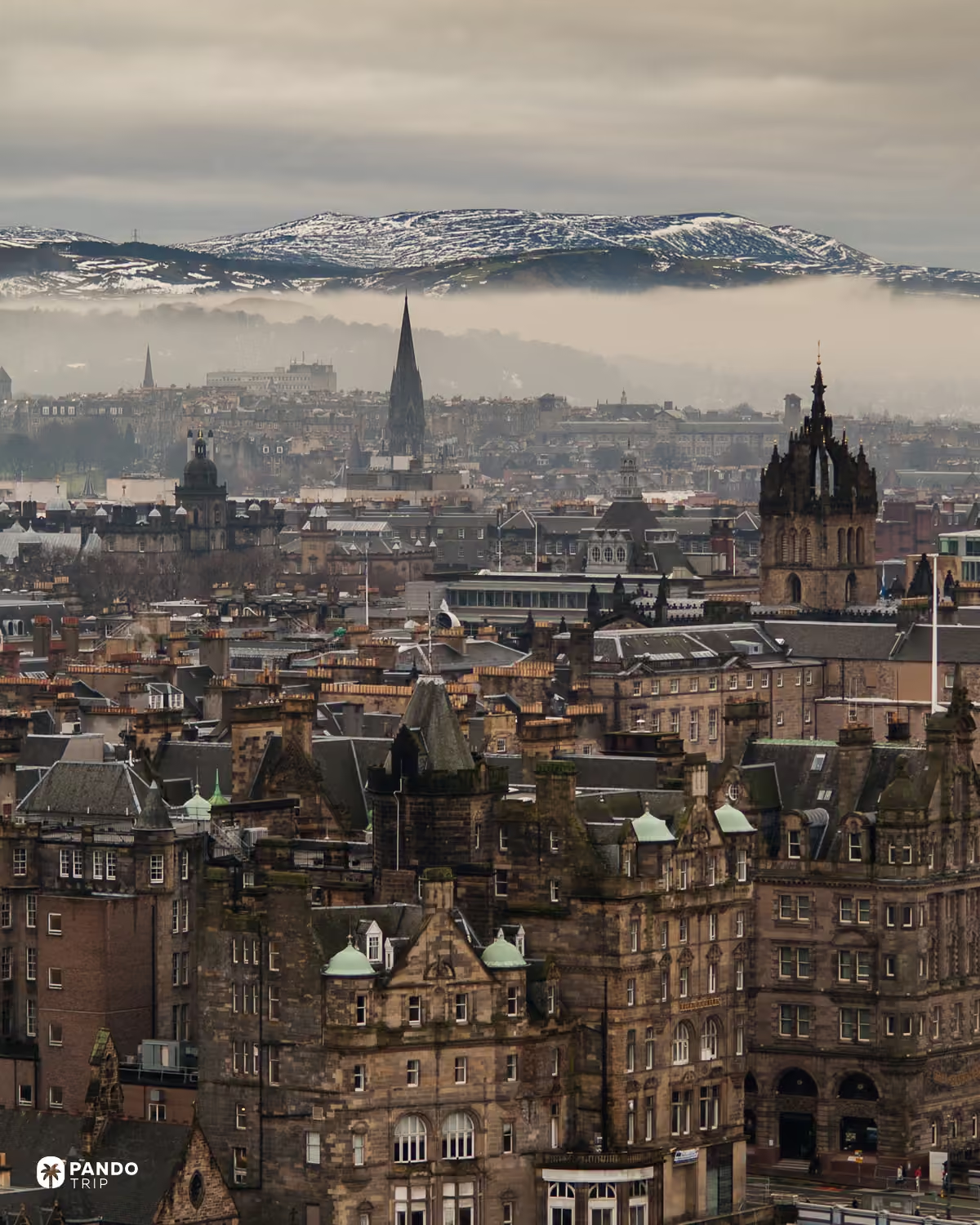
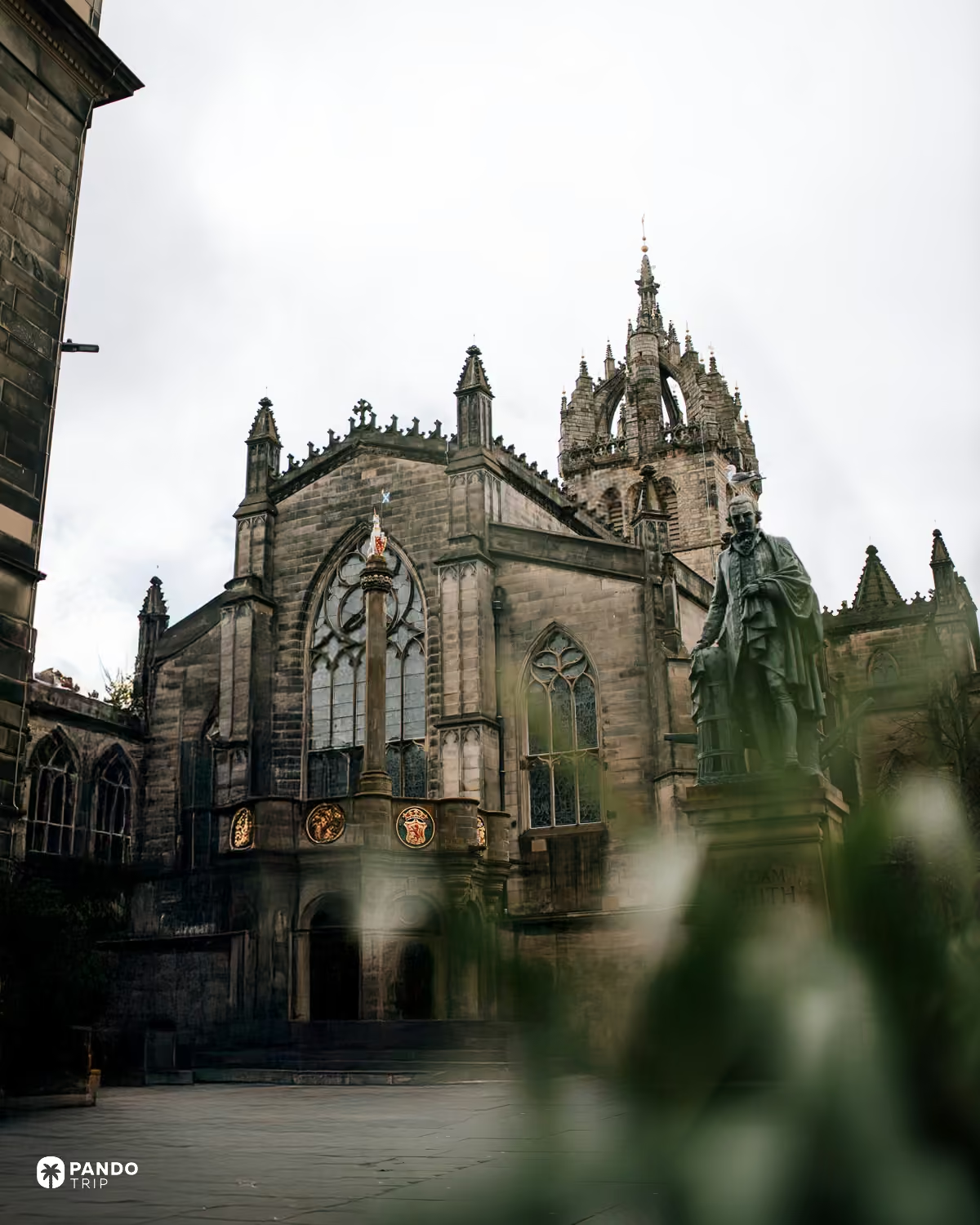
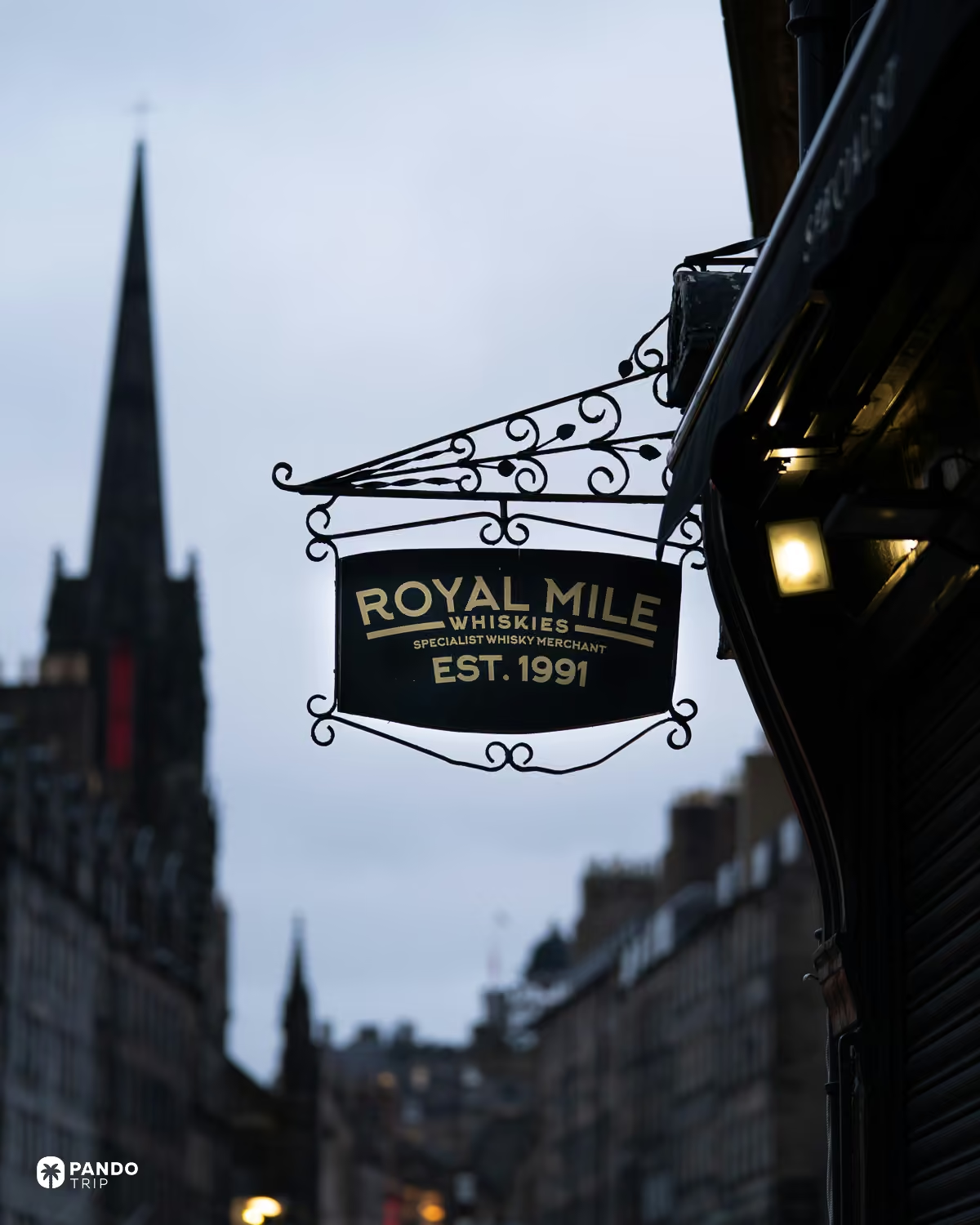
St Giles’ Cathedral has worn its stone crown over the High Street since the 15th century, and behind it rises the needle spire of the Hub, built in the 1840s.
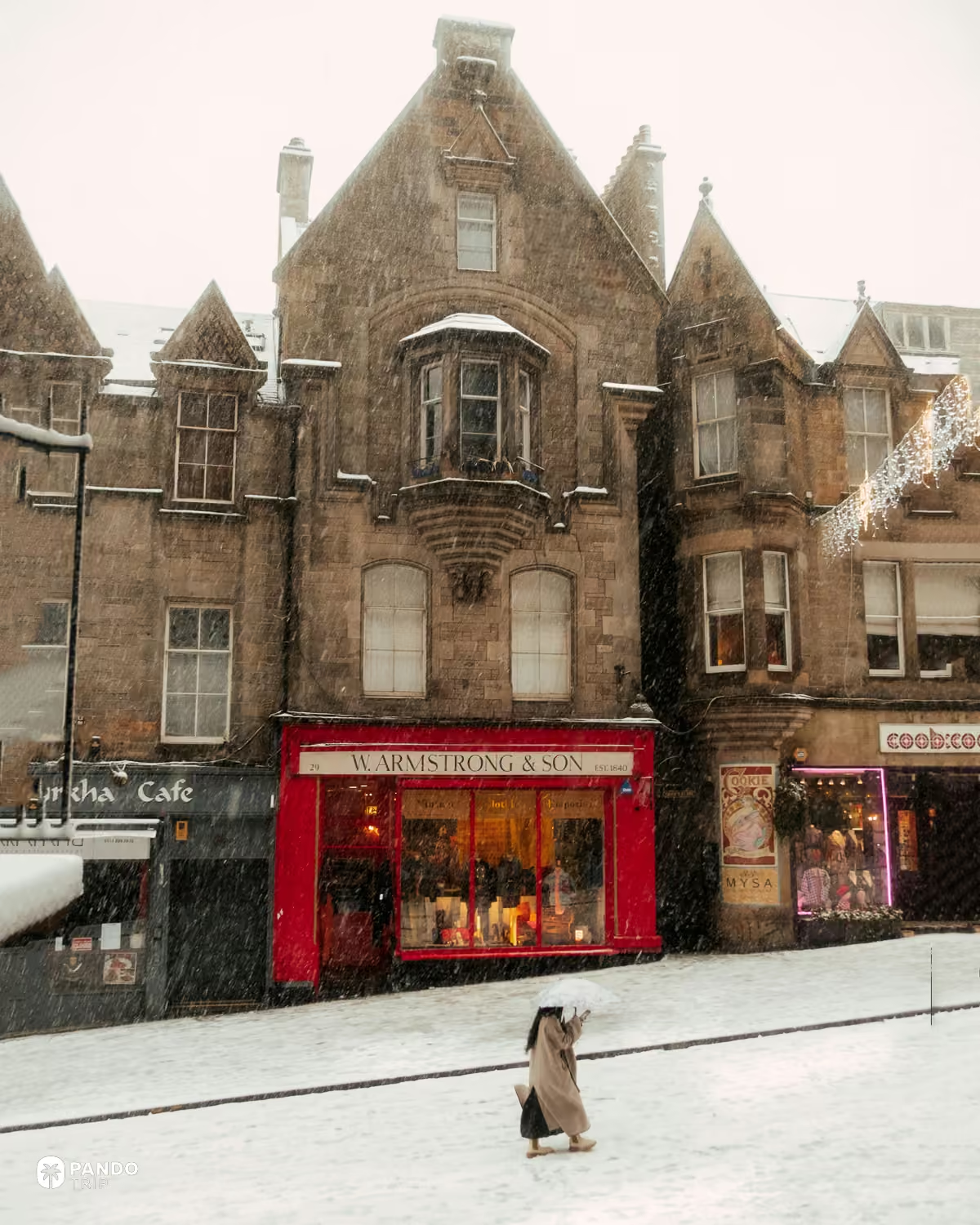
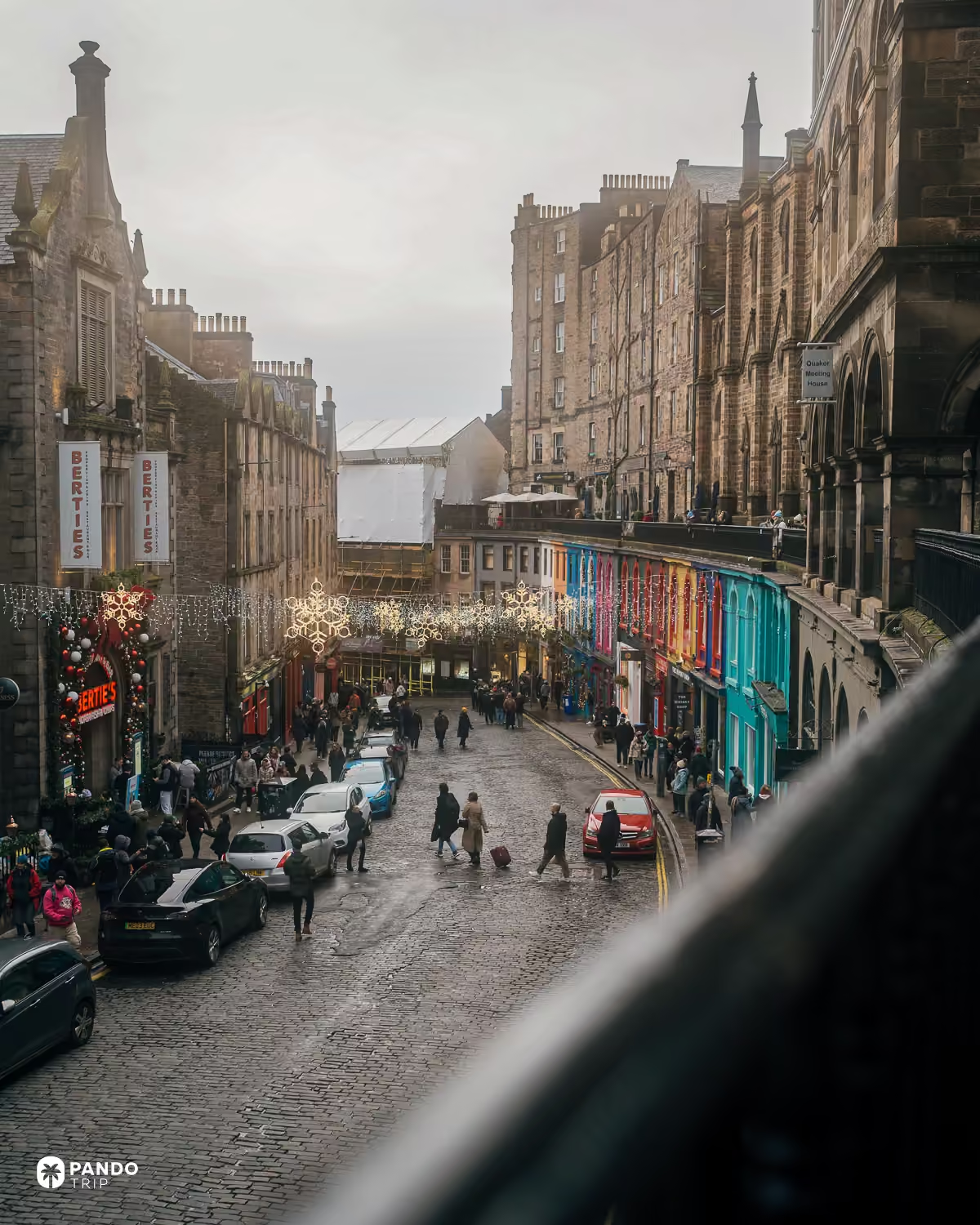
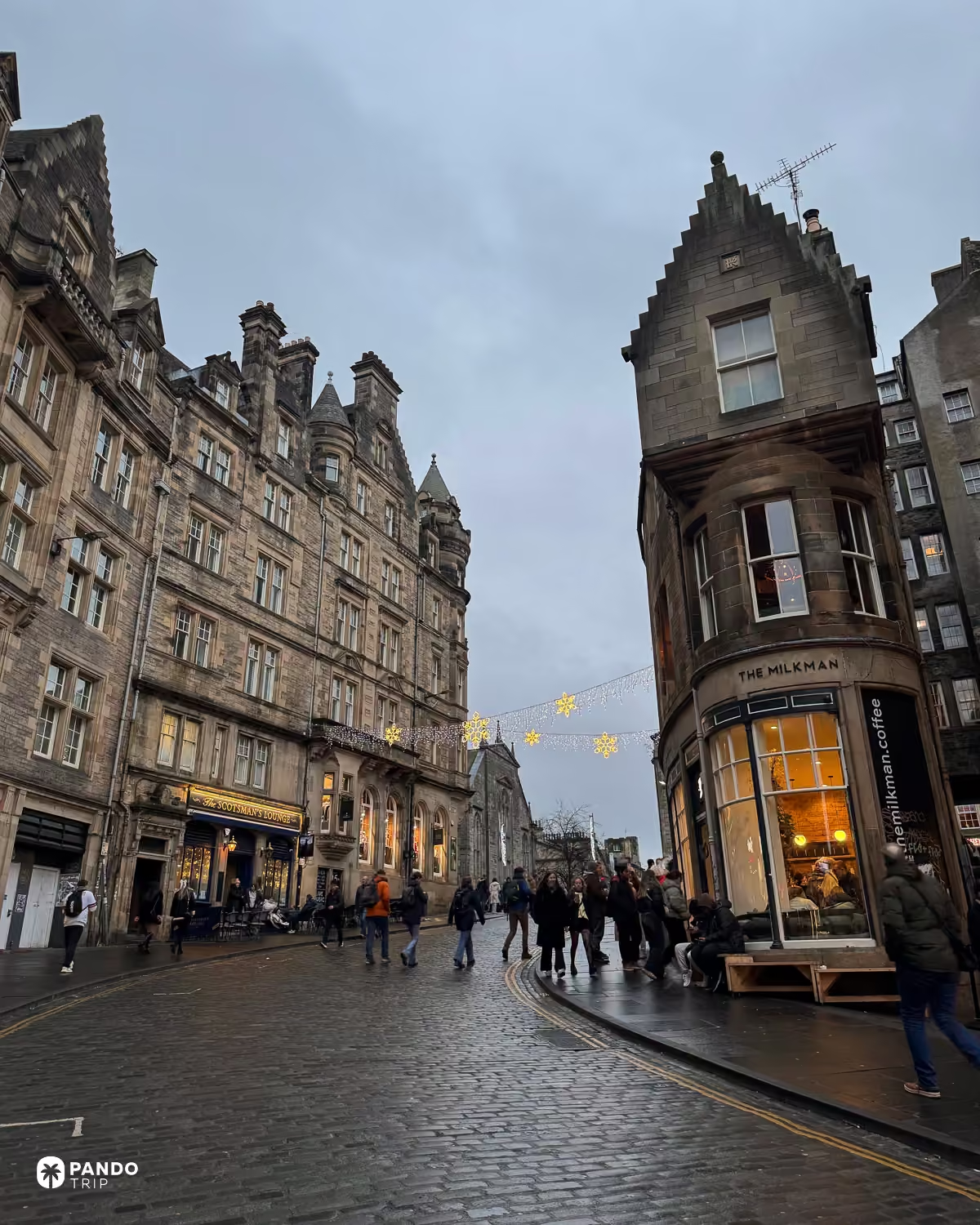
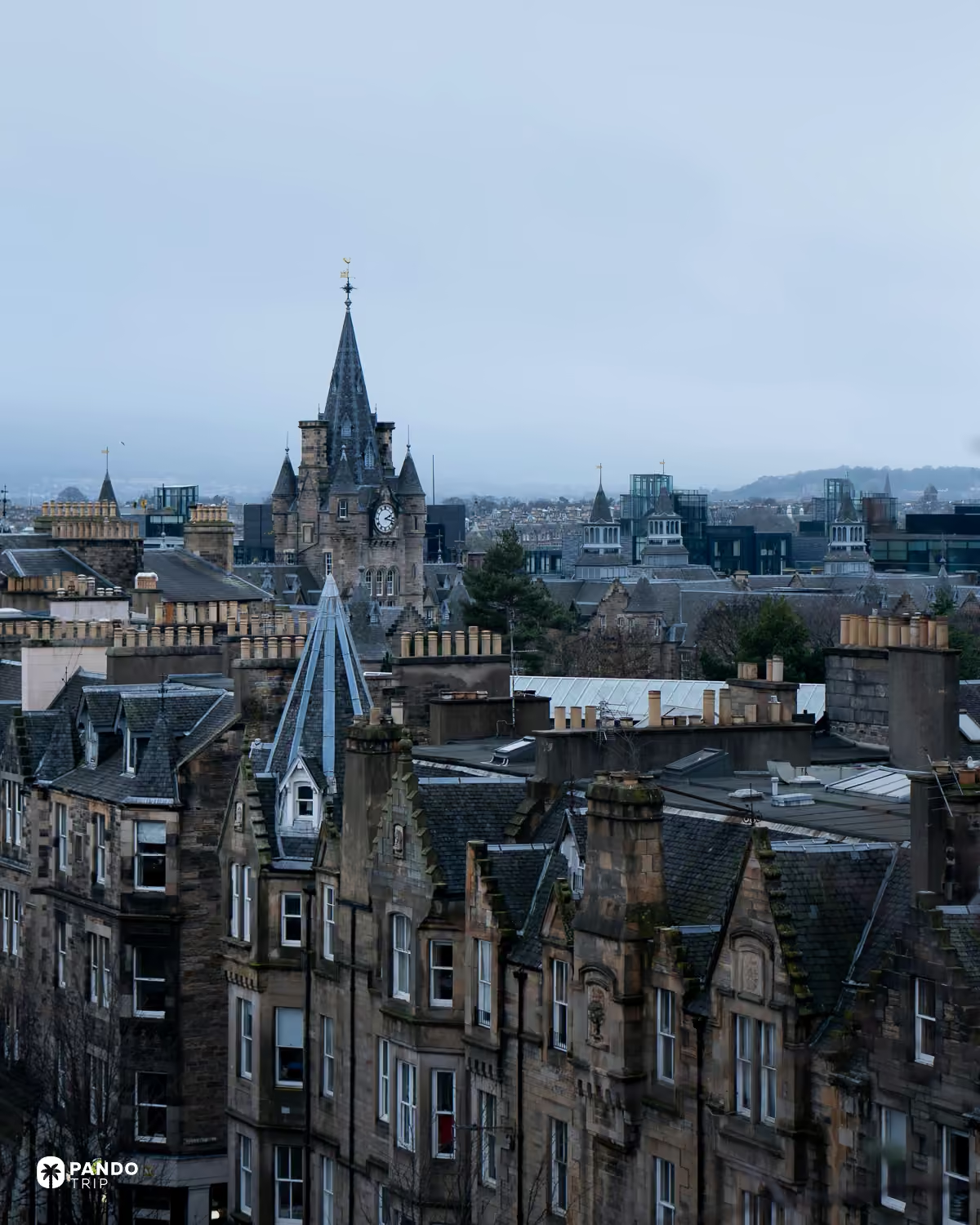
A fair amount of what looks medieval, though, was built in the 19th century to look that way. Walter Scott’s novels had made Scotland’s past romantic, and Edinburgh built to match. Victoria Street went in during the 1830s and 1840s, its frontages required to follow an “Old Flemish” style. Cockburn Street, the snowy curve near the top of this page, was cut in 1859–61 to link the Royal Mile with Waverley station, and dressed in Scots Baronial turrets to keep the area’s antique character. Even a hospital, the old Royal Infirmary on Lauriston Place, got turrets and a clock tower. Edinburgh was dressing itself up as a storybook long before anyone wrote this particular one.
Closes, stairs and lanterns
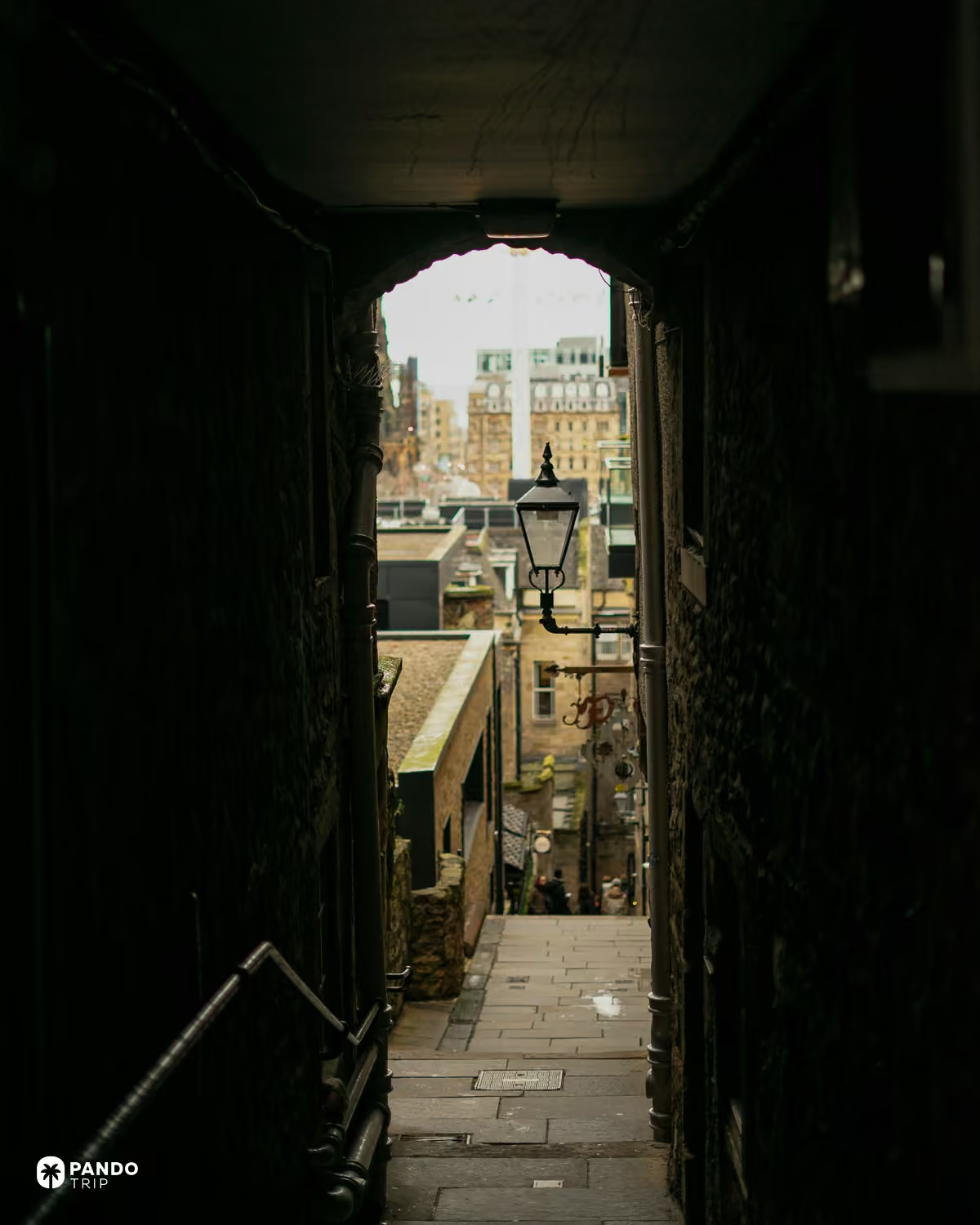
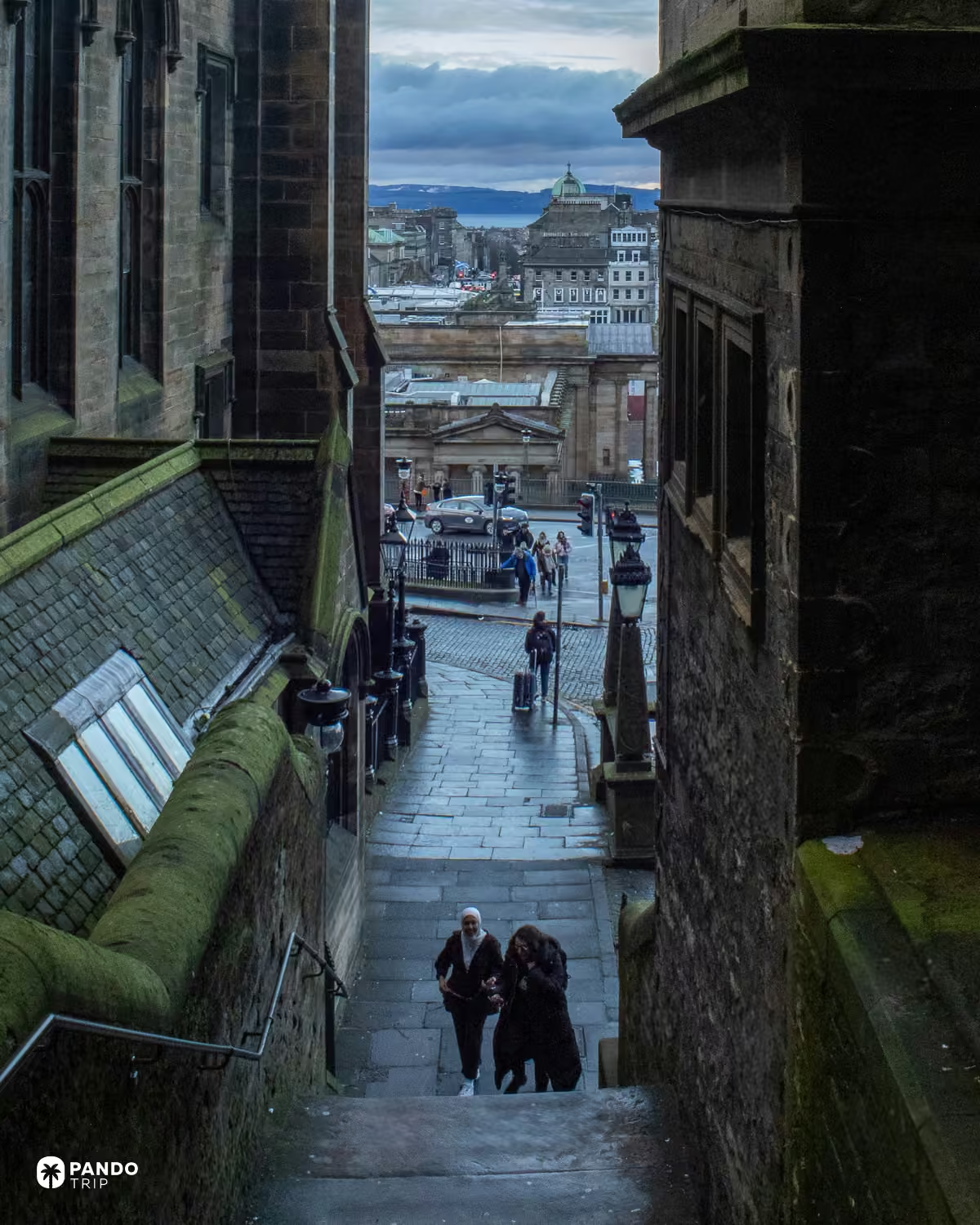
Off both sides of the Royal Mile, dozens of closes squeeze between the tenements. Some begin as roofed tunnels, many turn into stairs because the ridge falls away so steeply, and together they keep the Old Town’s medieval pattern: one spine, with lanes running off it like the bones of a fish. It is the most Hogwarts-looking part of the city.
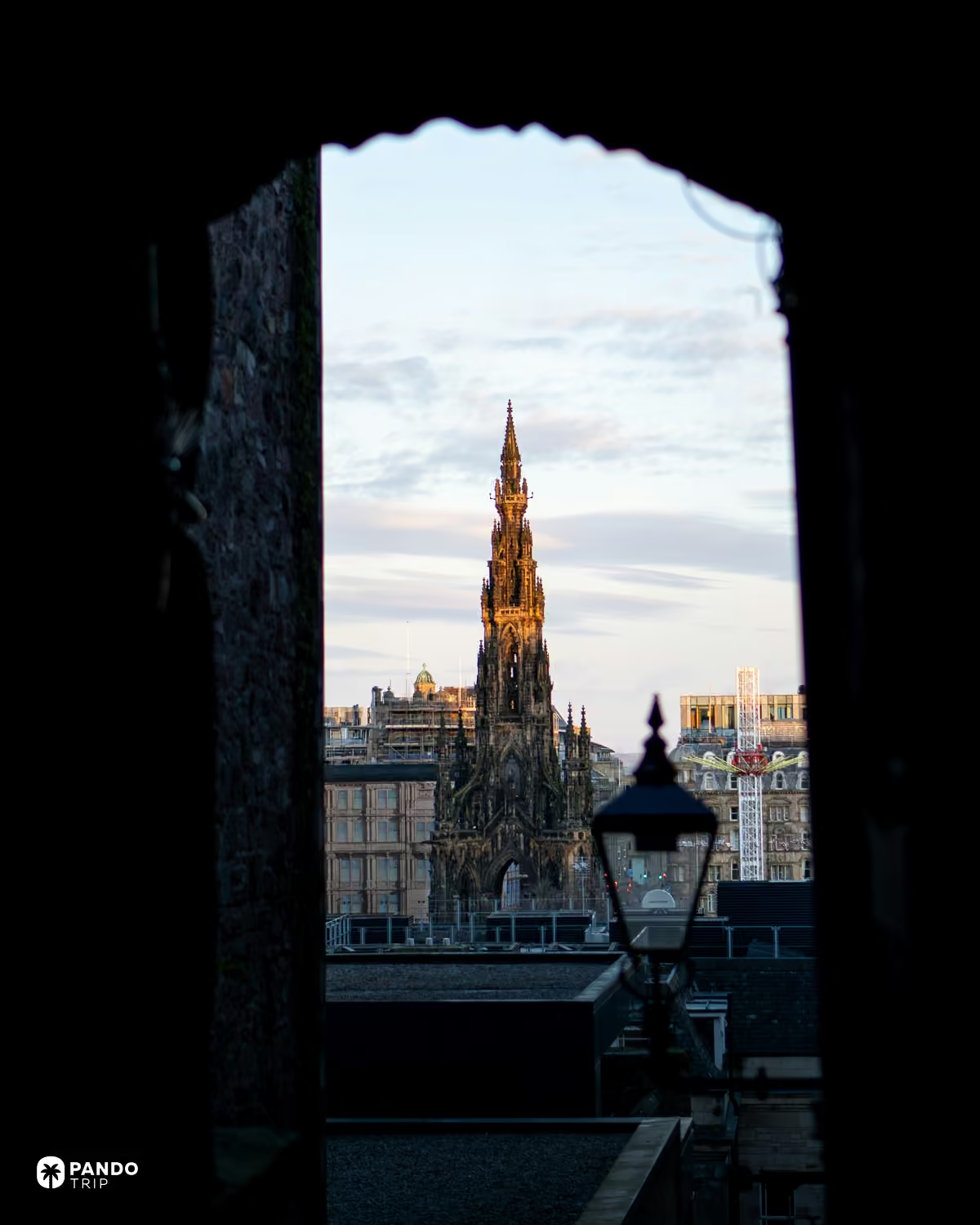
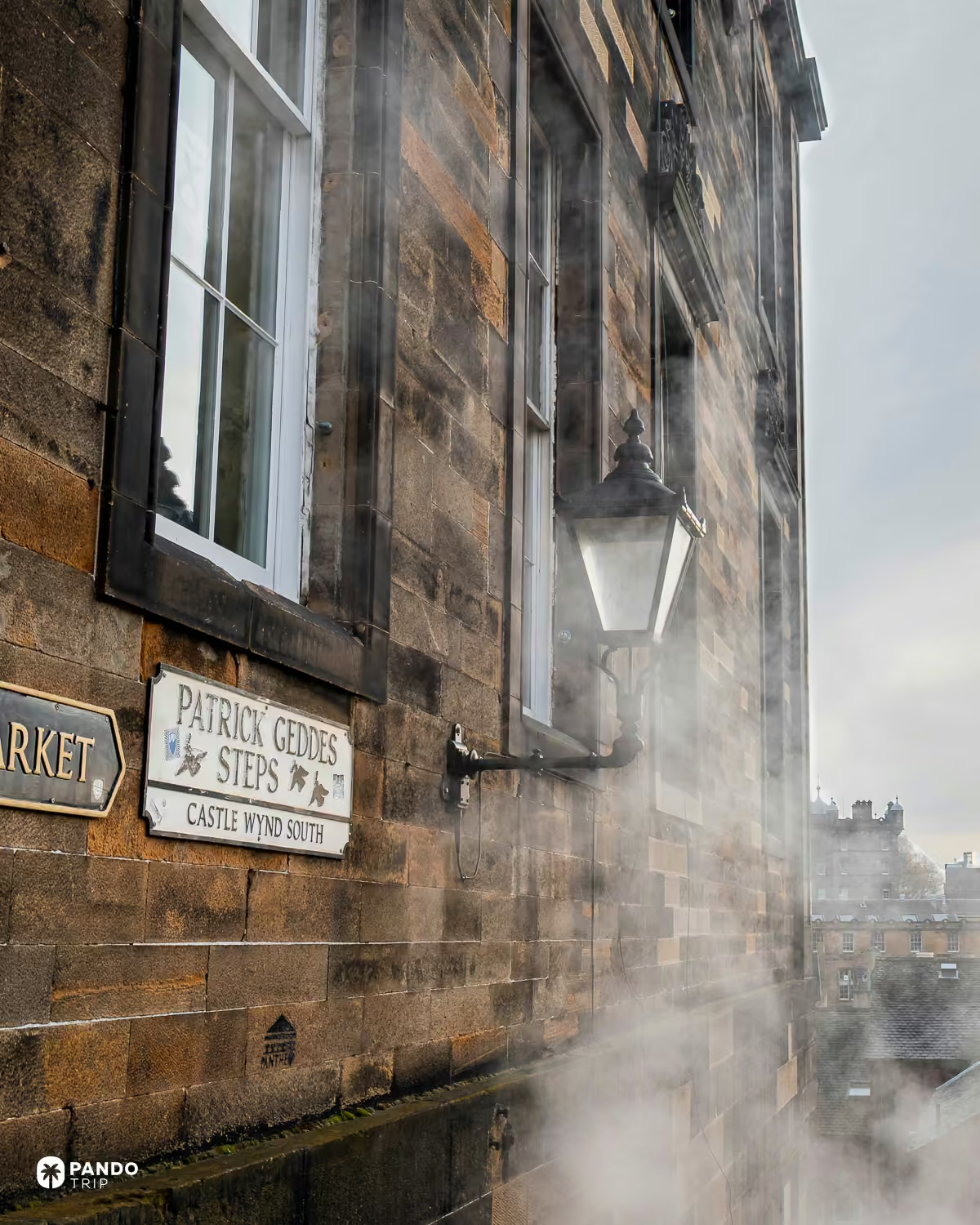
From the steps of Advocate’s Close, an arch frames the Scott Monument like a picture hung at the end of a corridor, its Gothic pinnacles blackened by the city’s old coal smoke and deliberately left that way. Mylne’s Court opens onto steps that look across the New Town to the Firth of Forth. The Patrick Geddes Steps climb from the Grassmarket under an iron lantern. In December the lamps are lit before you have thought about dinner, so you get the dark closes without staying out late, and rain turns every step into a reflection.
Crooked streets and lit windows
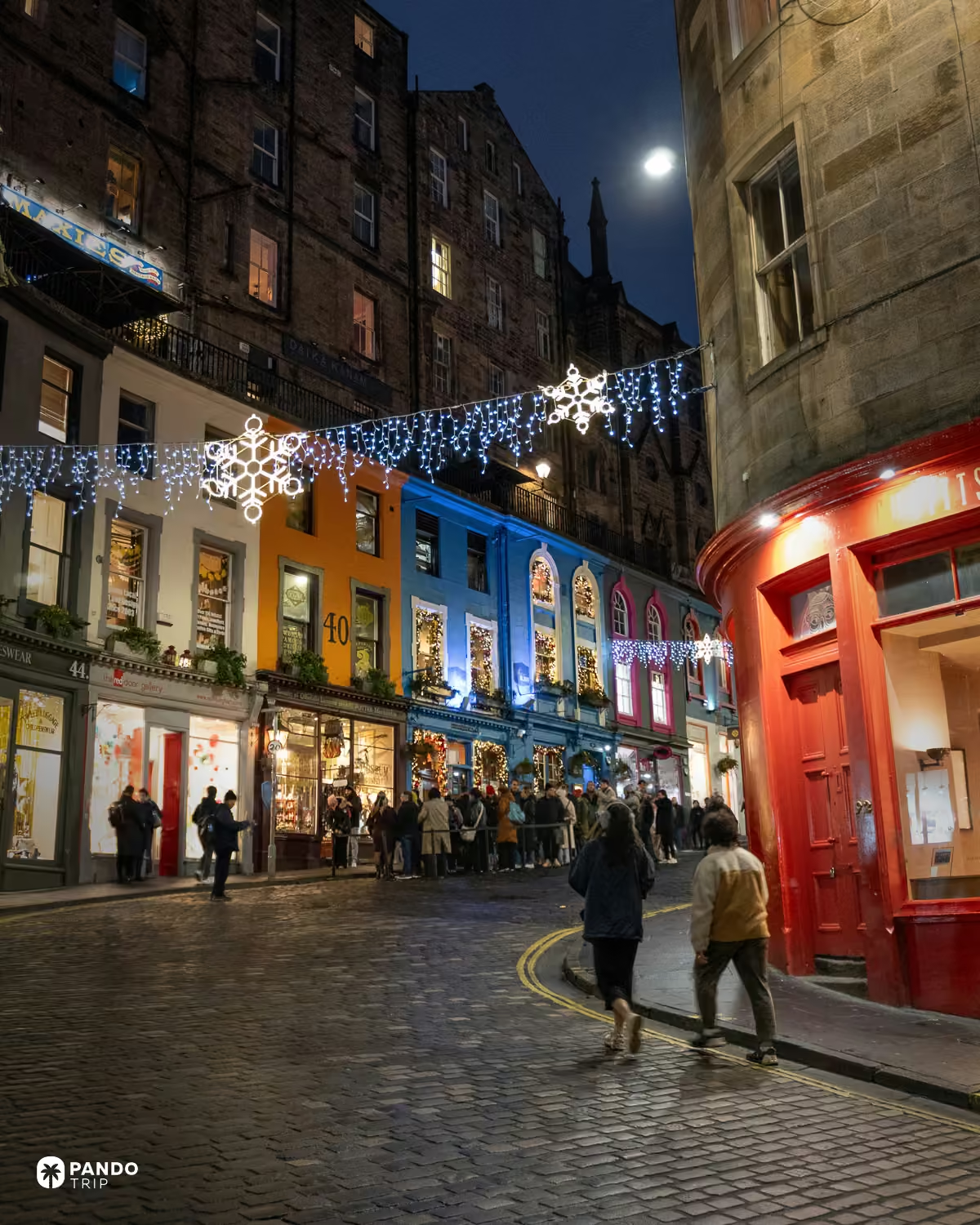
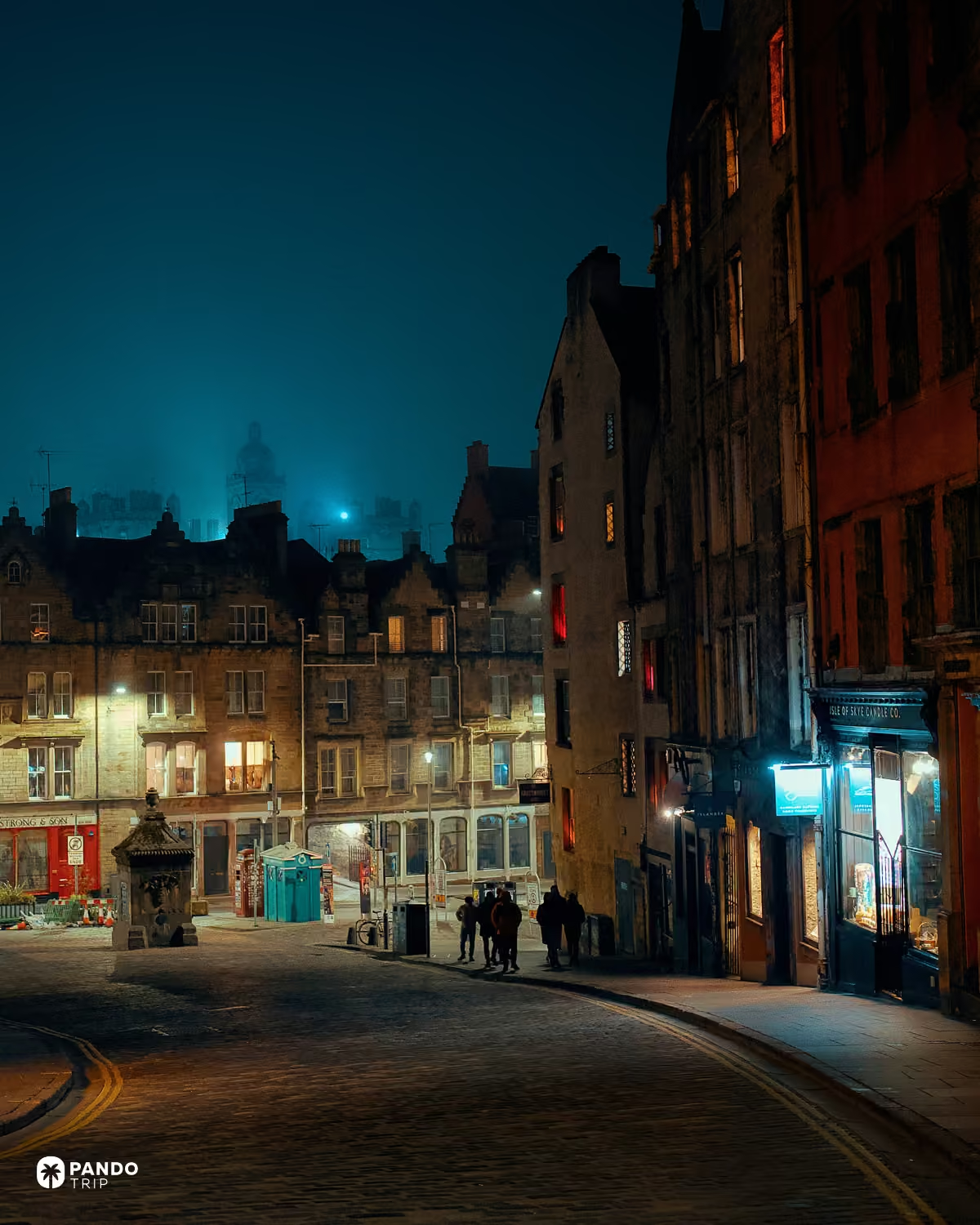
Victoria Street is the one everyone photographs: a cobbled curve dropping from George IV Bridge towards the Grassmarket, its shopfronts painted red, blue, ochre and green beneath a raised terrace walk. It is also where the Harry Potter comparison stops being subtle. Museum Context, a Harry Potter shop spread over two stone vaults, makes no secret of it, and the Diagon Alley comparison comes up so often that you may as well enjoy it. Across the Royal Mile on Cockburn Street, House of MinaLima is the gallery-shop of Miraphora Mina and Eduardo Lima, the graphic designers behind the films’ printed props, and its windows are full of that paper world.
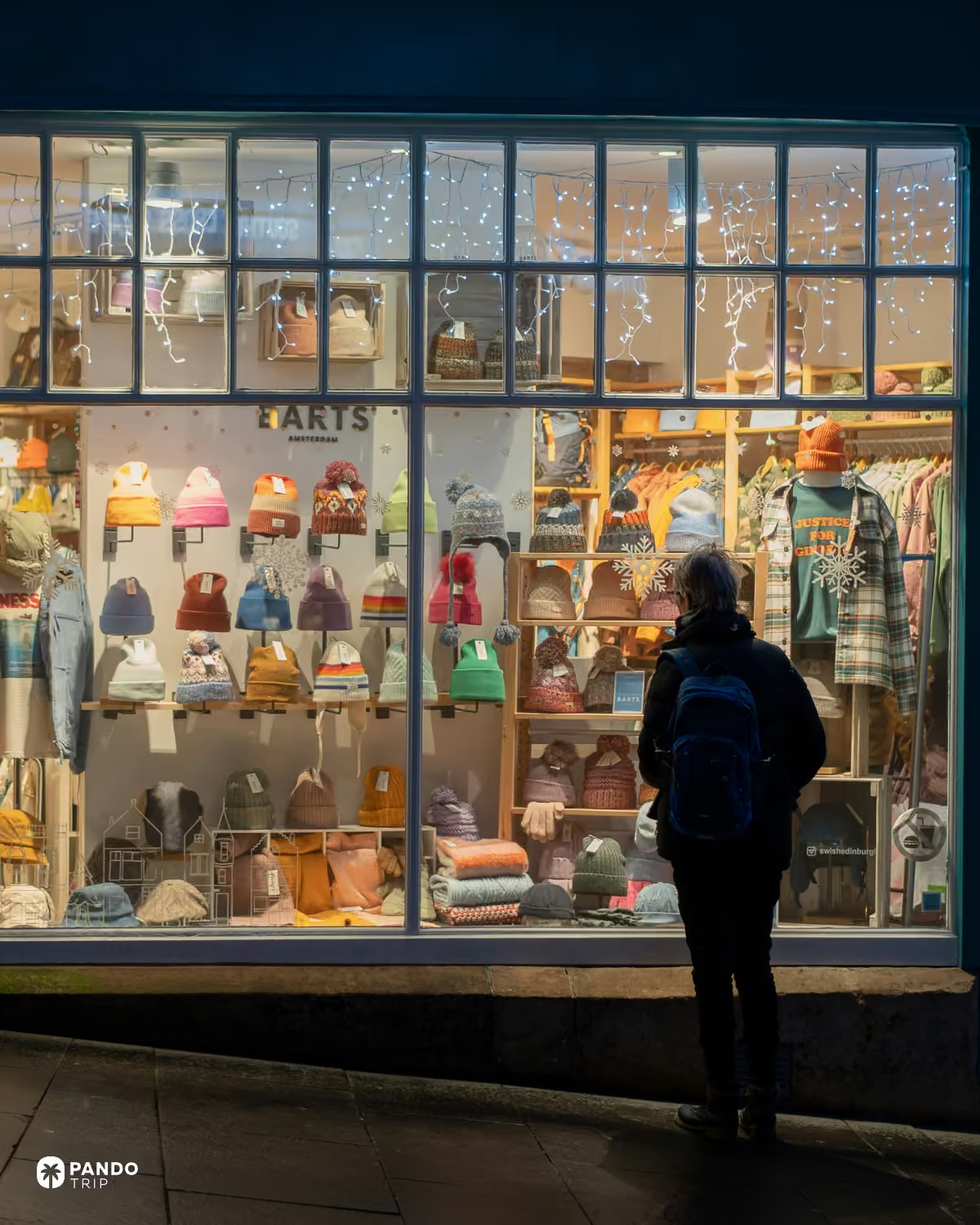
In December, Christmas lights hang across the cobbles of Victoria Street and Cockburn Street, the shop windows glow from mid-afternoon, and a window full of woolly hats becomes the most persuasive argument in town.
Bookshops with ladders
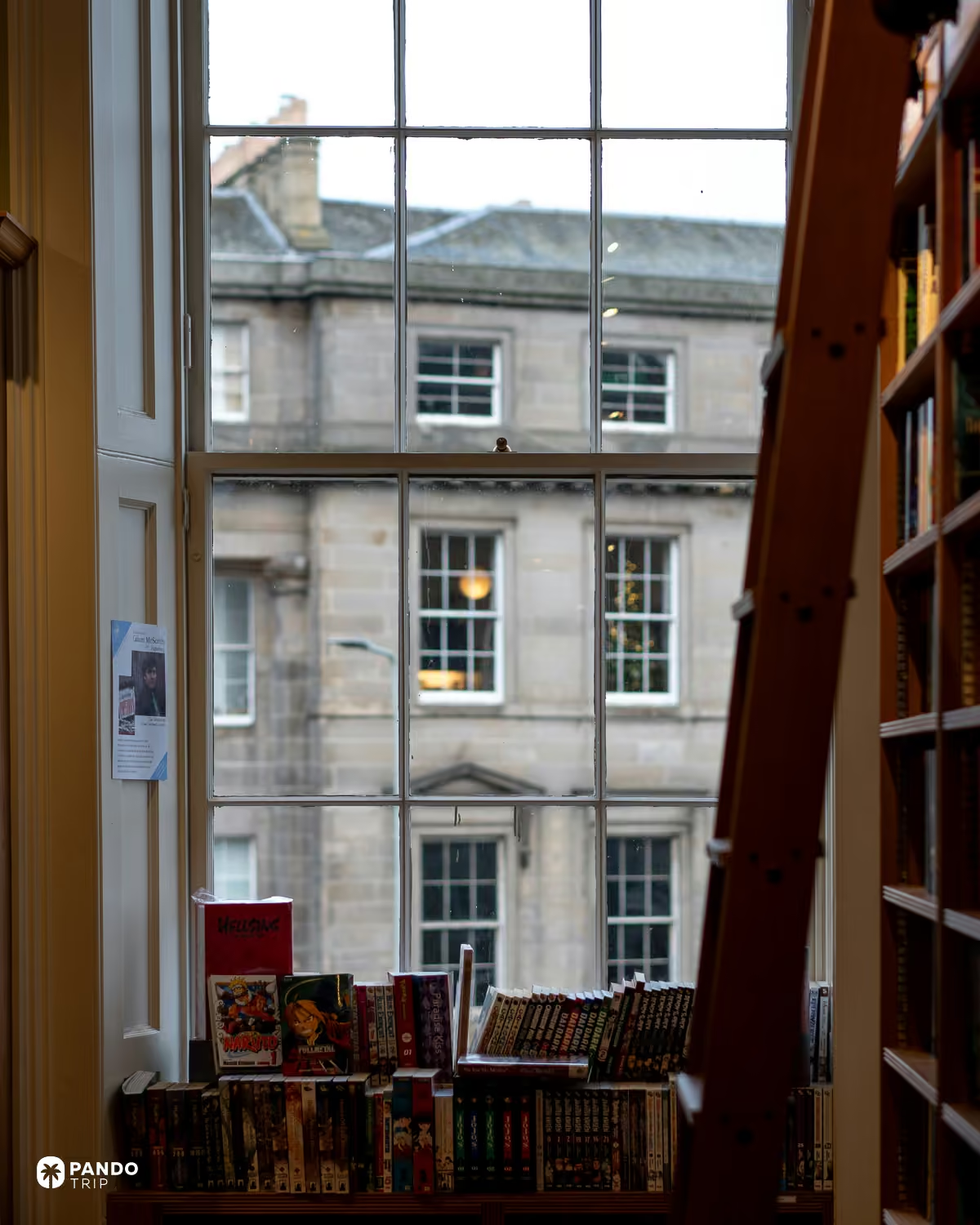
Walter Scott, Robert Louis Stevenson and Arthur Conan Doyle were all born in Edinburgh, and in 2004 it became the world’s first UNESCO City of Literature. You feel that most in its bookshops. Topping & Company on Blenheim Place, at the foot of Calton Hill, runs its shelves up to the ceiling with rolling ladders to reach them, and it stays open until nine every evening, long after the streets outside have gone dark. In winter there is no better shelter.
The cafés where the books were written
Rowling wrote in Edinburgh’s cafés, and the city has never stopped pointing at them. The most honest marker is a plaque on Nicolson Street, outside first-floor rooms that were once Nicolson’s café, saying she “wrote some of the early chapters of Harry Potter” there. The rooms are a Chinese restaurant now.
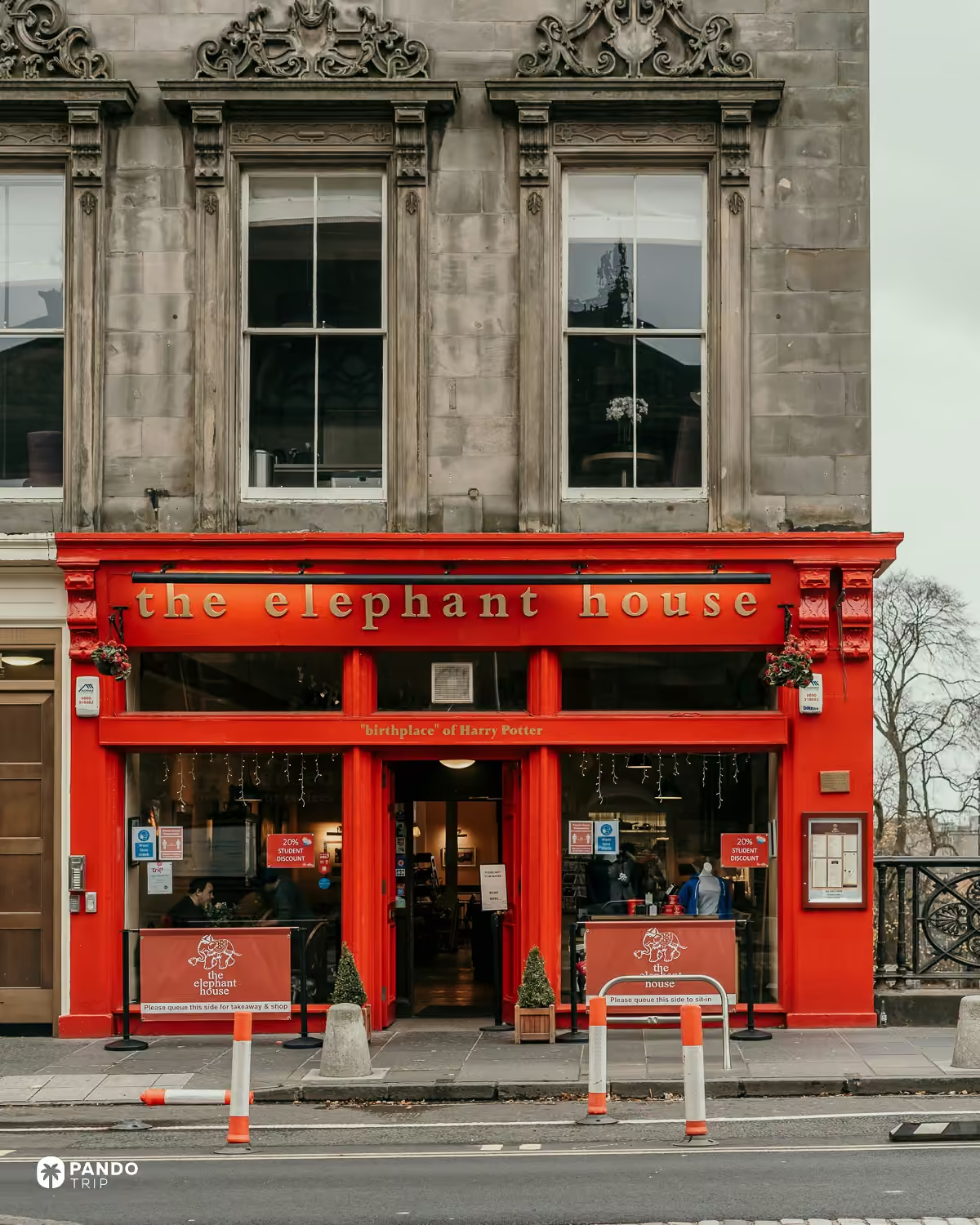
The famous one is The Elephant House on George IV Bridge. Before a fire closed it in August 2021, its red front carried the words “birthplace” of Harry Potter, and the quotation marks were well earned. Rowling put it plainly: “I’d been writing Potter for several years before I ever set foot in this cafe, so it’s not the birthplace, but I did write in there so we’ll let them off!” The café reopened at the end of 2025, more than four years after the fire, with its front restored and repainted.
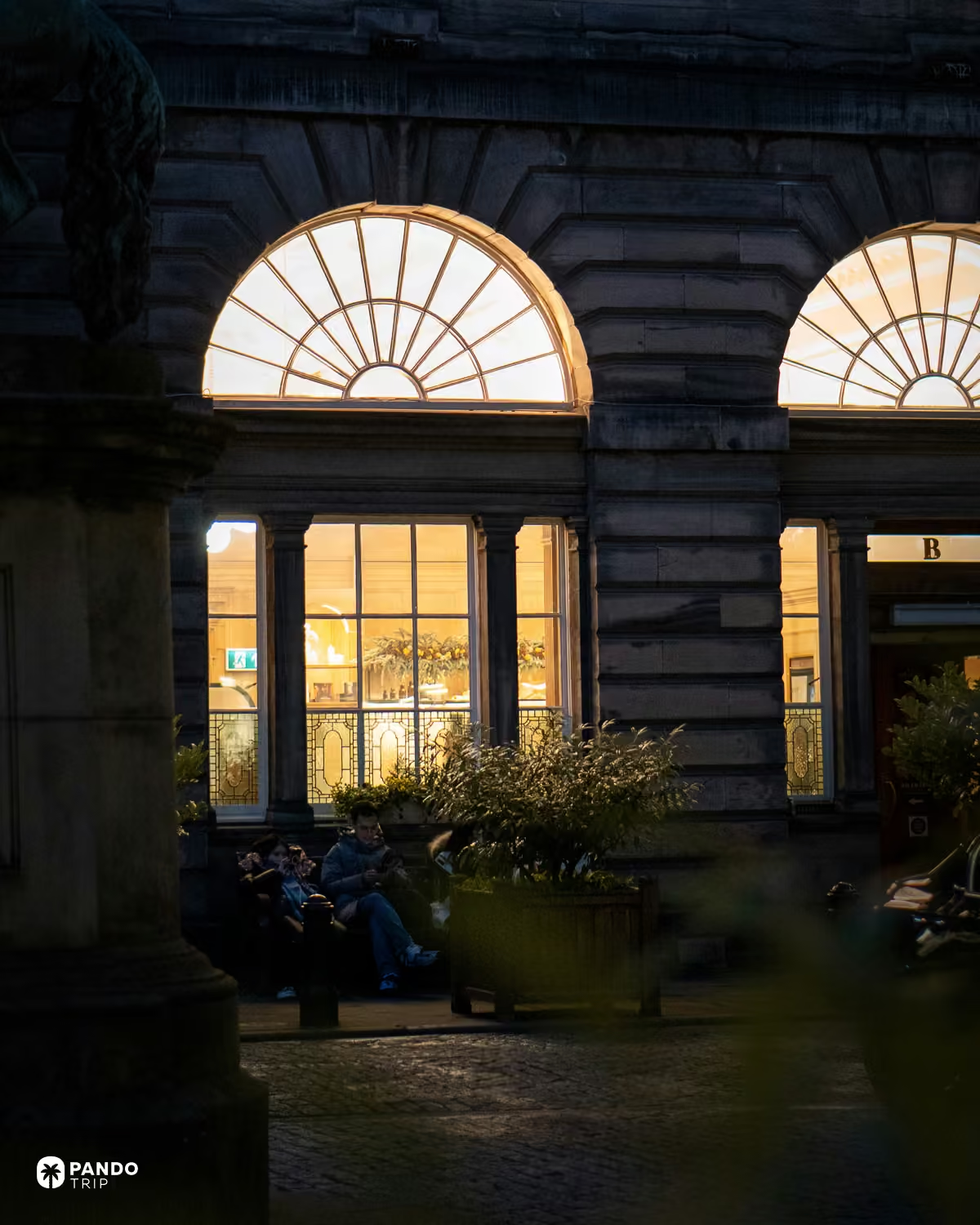
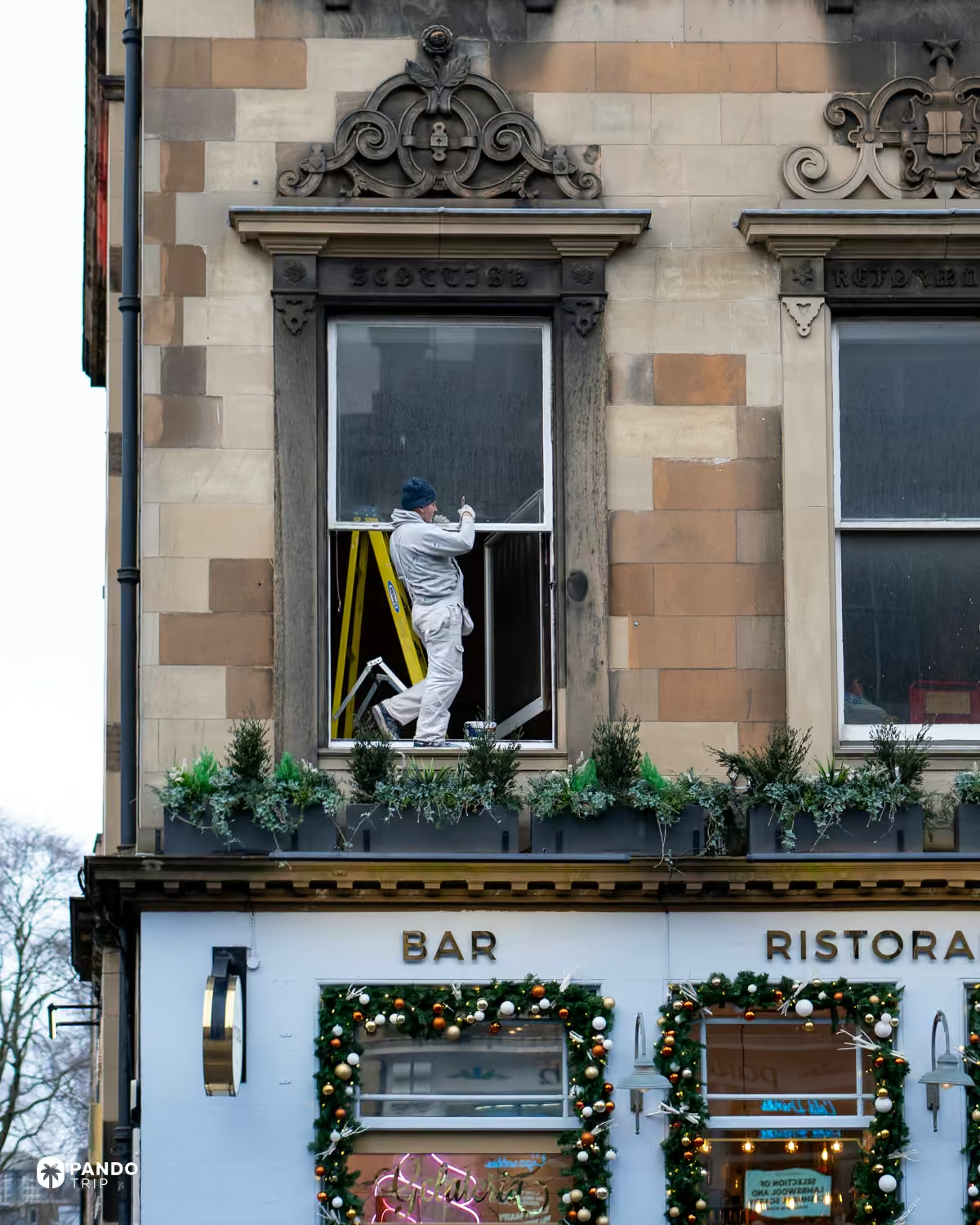
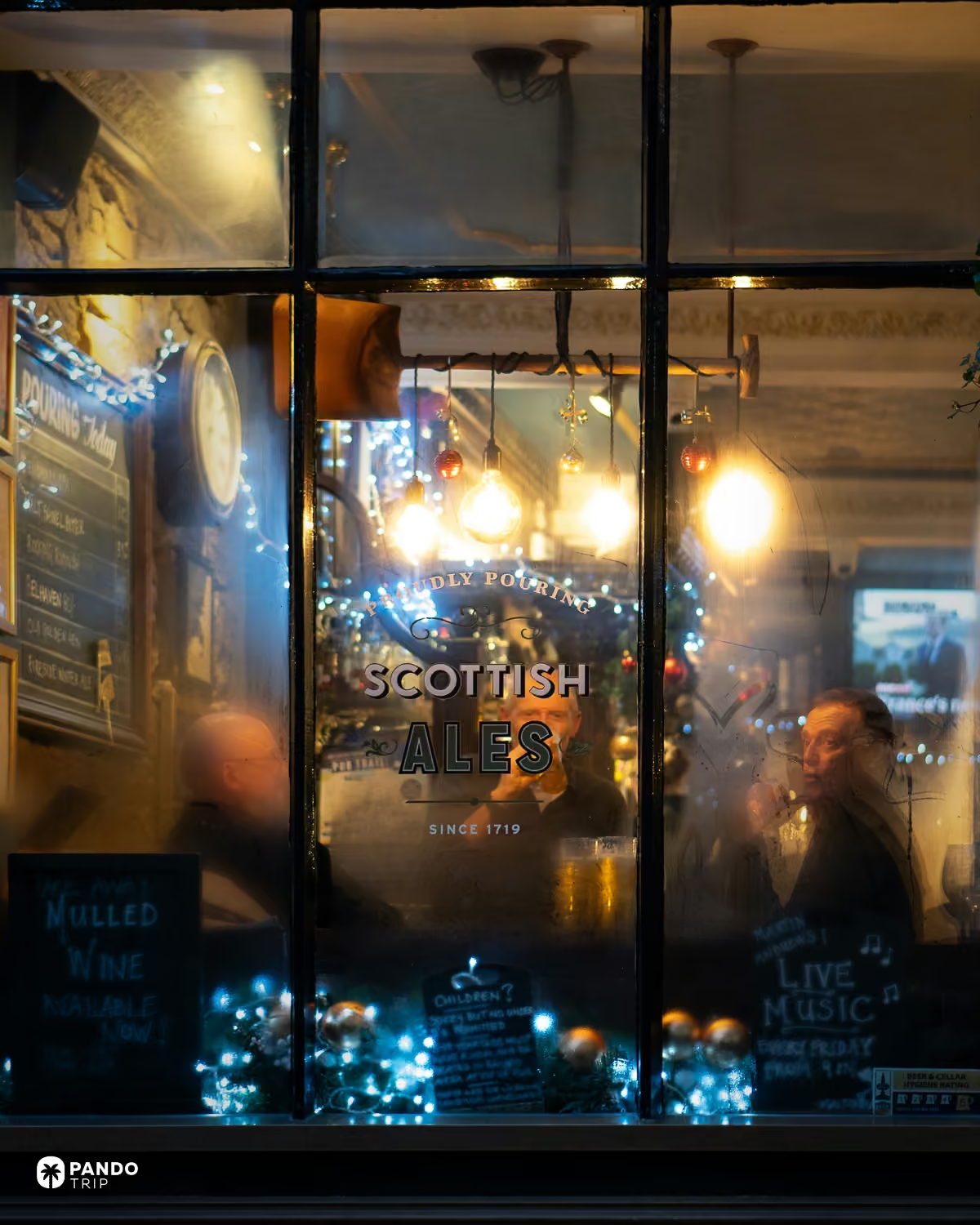
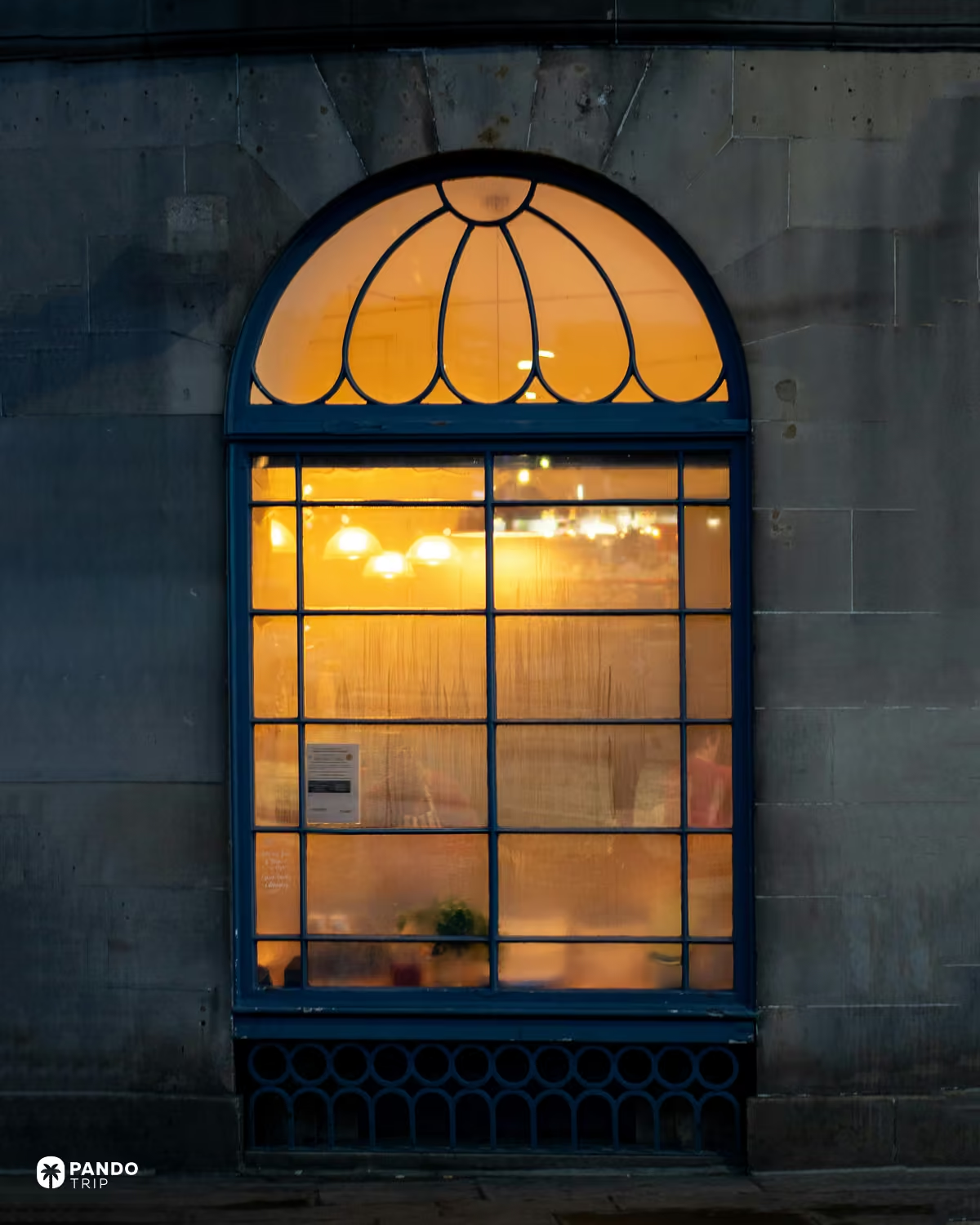
When the light goes, the rest of the city takes over the cosy part: pubs with mulled wine chalked on the board, café windows turning amber against blue-grey stone.
Greyfriars at dusk
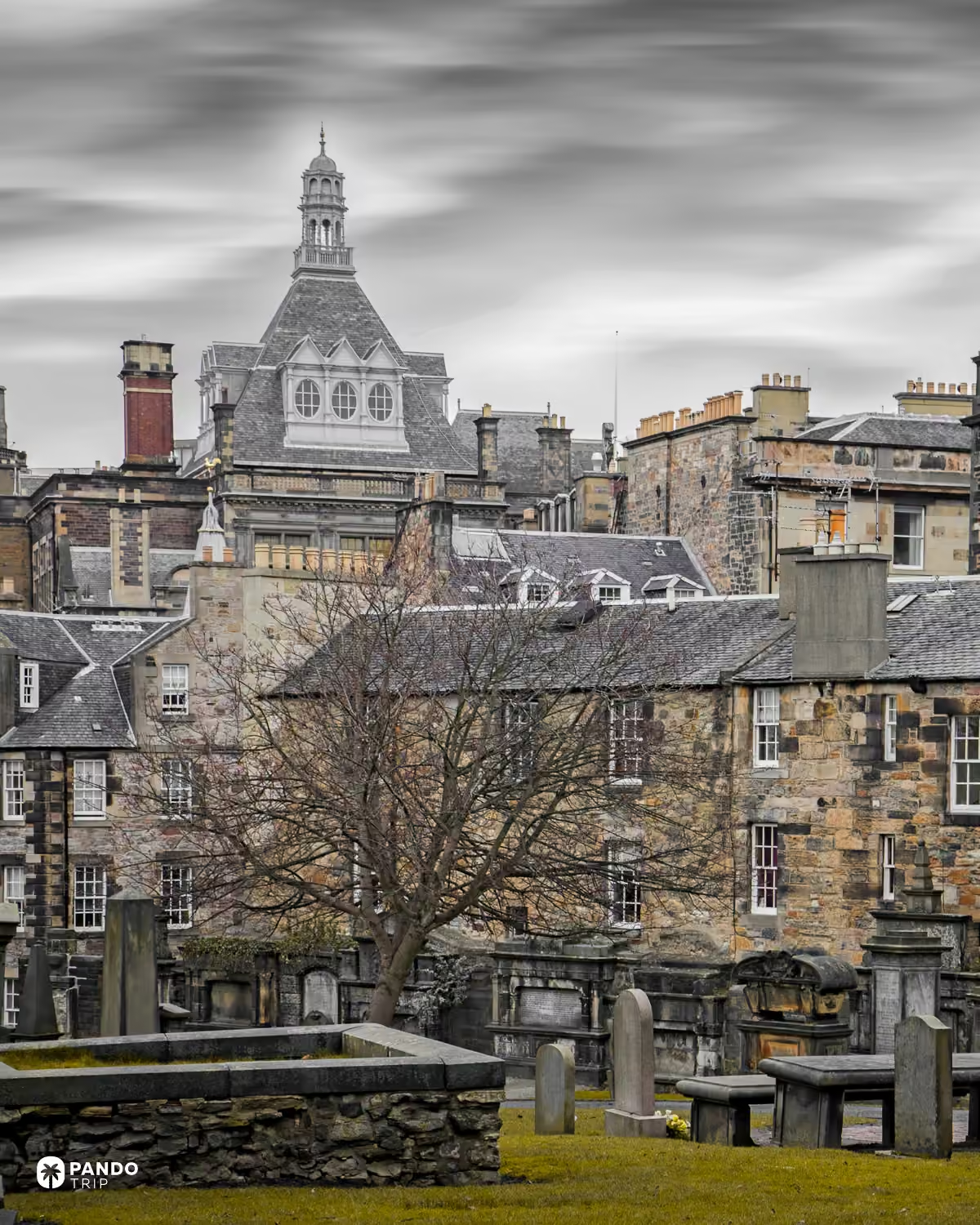
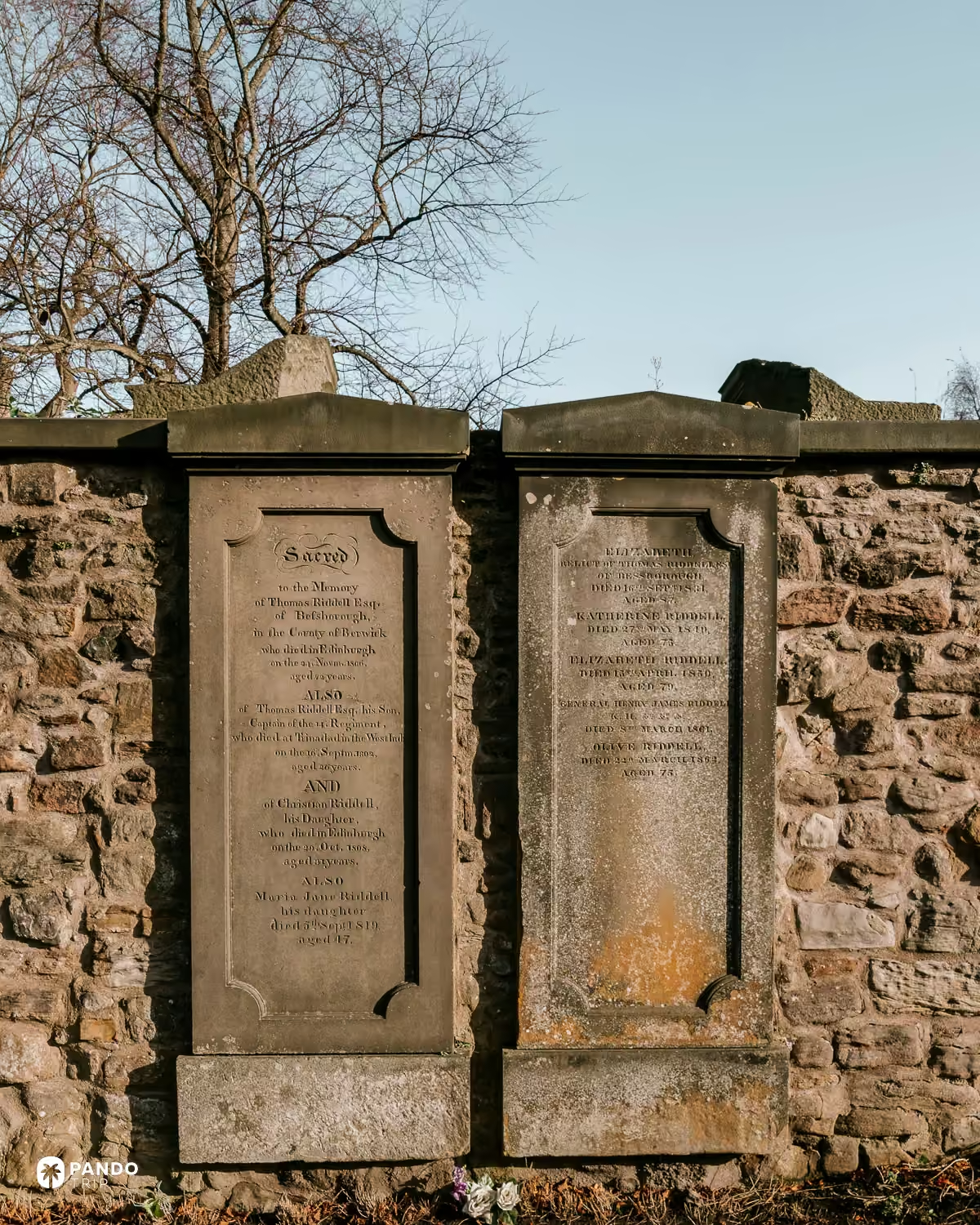
Greyfriars Kirkyard, around the corner from the Elephant House, is where fans come looking for one name. The stone they want is set into a wall and crowded with family: Thomas Riddell Esq., who died in Edinburgh in 1806 aged 72, and beneath him a second Thomas Riddell, his son, a captain who died in Trinidad aged 26. Visitors leave notes for the more famous Tom, and fans long ago decided for themselves whether the name lodged in a writer’s memory here.
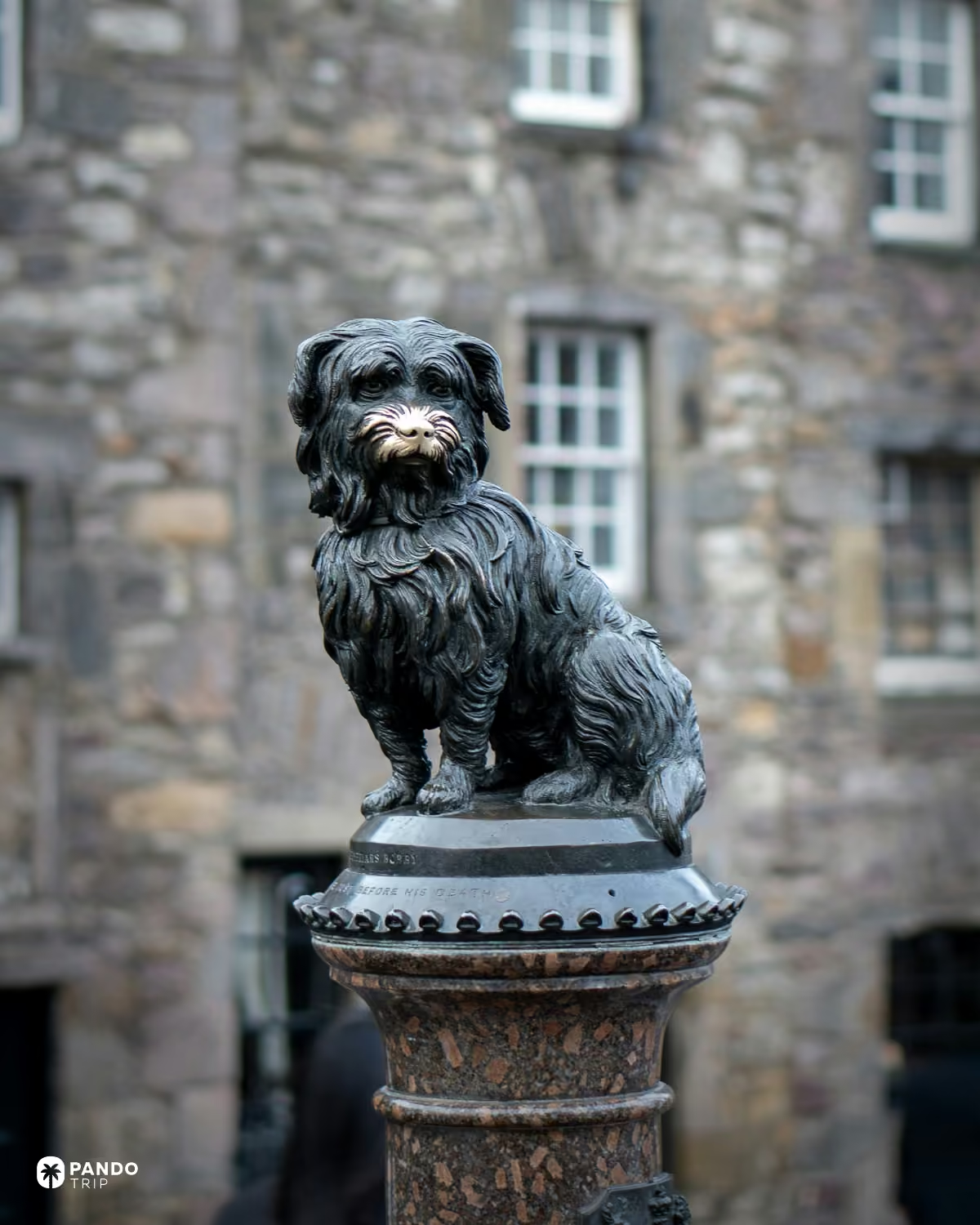
The kirkyard would be worth the walk without him. It is crowded with old table tombs and carved wall monuments, the iron cages of its mortsafes recall the years when body-snatchers worked the city, and the kirkyard stays open around the clock, so you can be here for a December sunset at twenty to four. Outside the gate, Greyfriars Bobby, the terrier who by the well-loved story kept watch over his master’s grave for years, has sat on his granite column since 1873.
Christmas under the castle
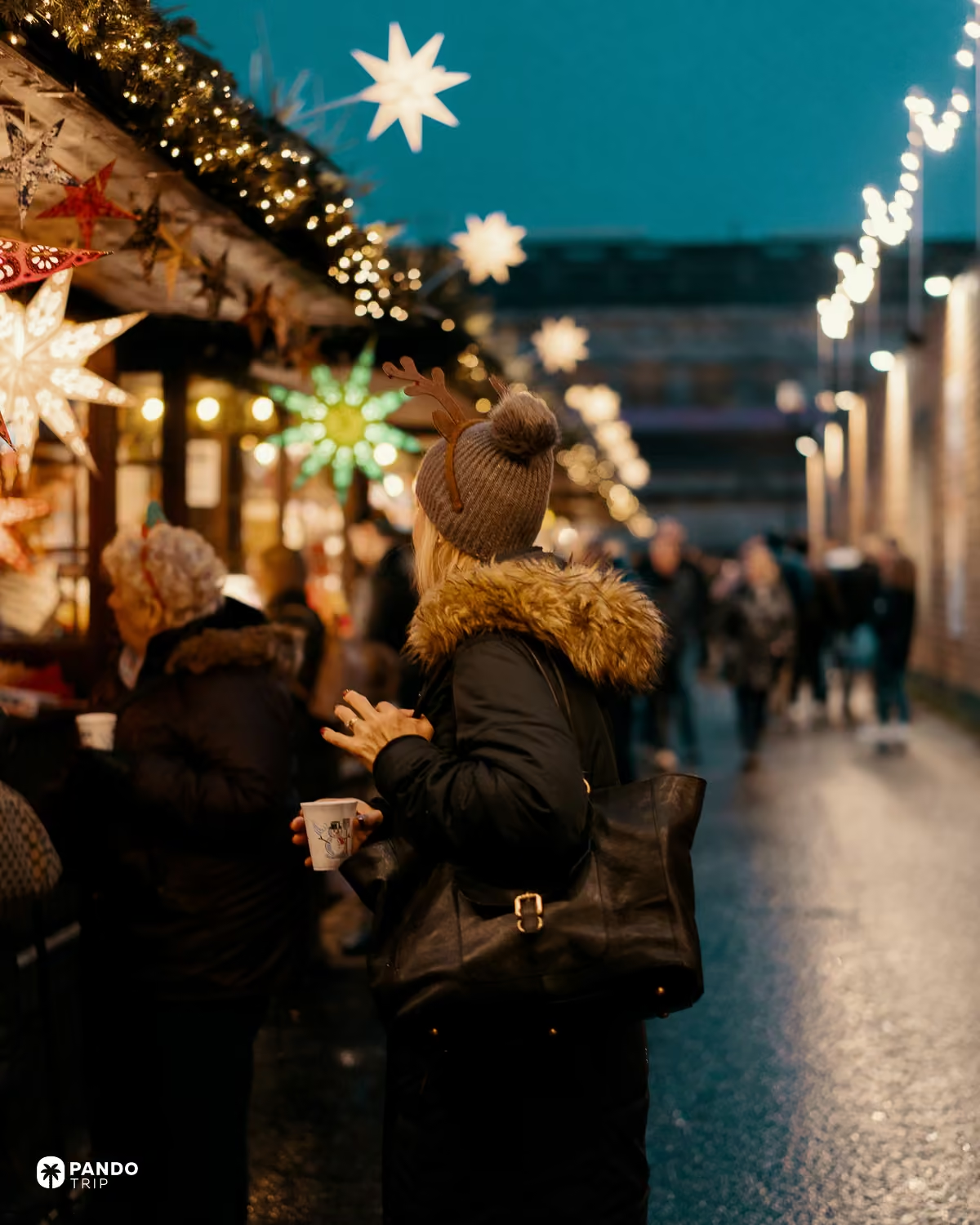
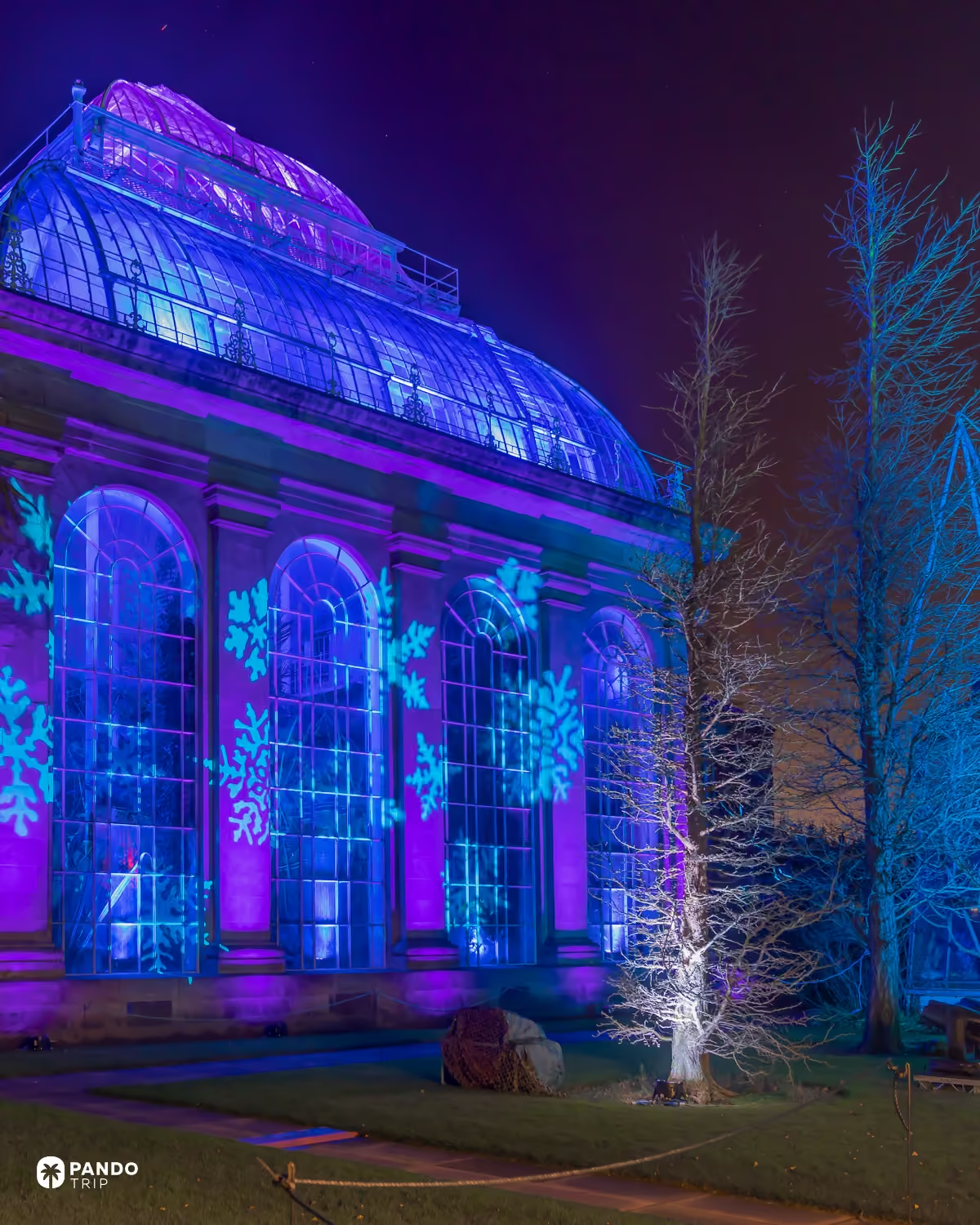
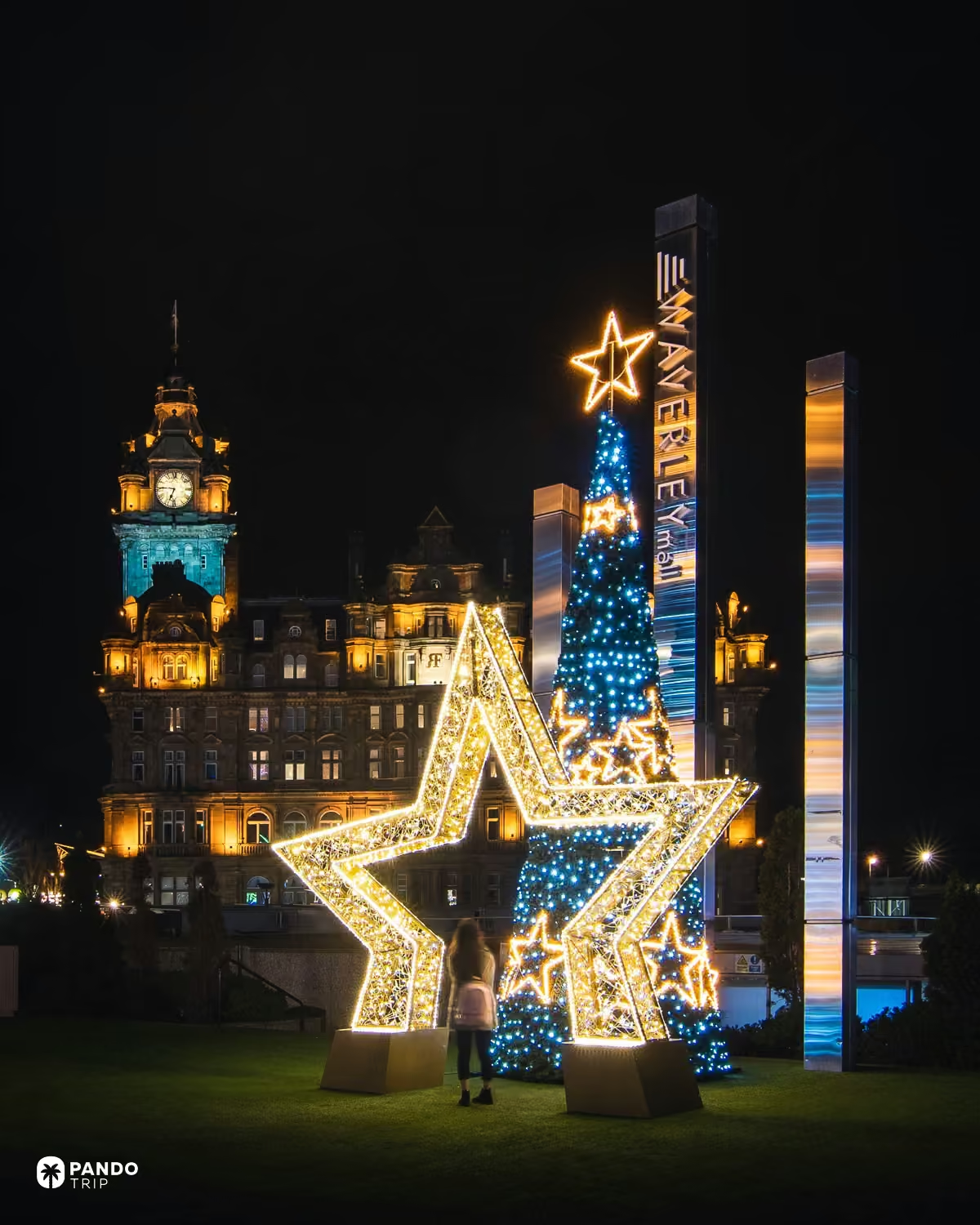
From mid-November into early January, the Christmas market fills East Princes Street Gardens below the Old Town; in 2026–27 Edinburgh’s Christmas runs from 14 November to 3 January and closes on Christmas Day. Across town, Christmas at the Botanics turns the Royal Botanic Garden into an after-dark trail of light (19 November to 30 December in 2026). Tickets are timed, and the garden warns that they sell fast.
Scotland came back to Christmas late. After the Reformation the Kirk frowned on it as a Catholic feast, and most Scots worked on Christmas Day until it became a public holiday in 1958. The usual explanation for why New Year became the big night here is that it filled the gap.
Torches, fireworks and a clock set right
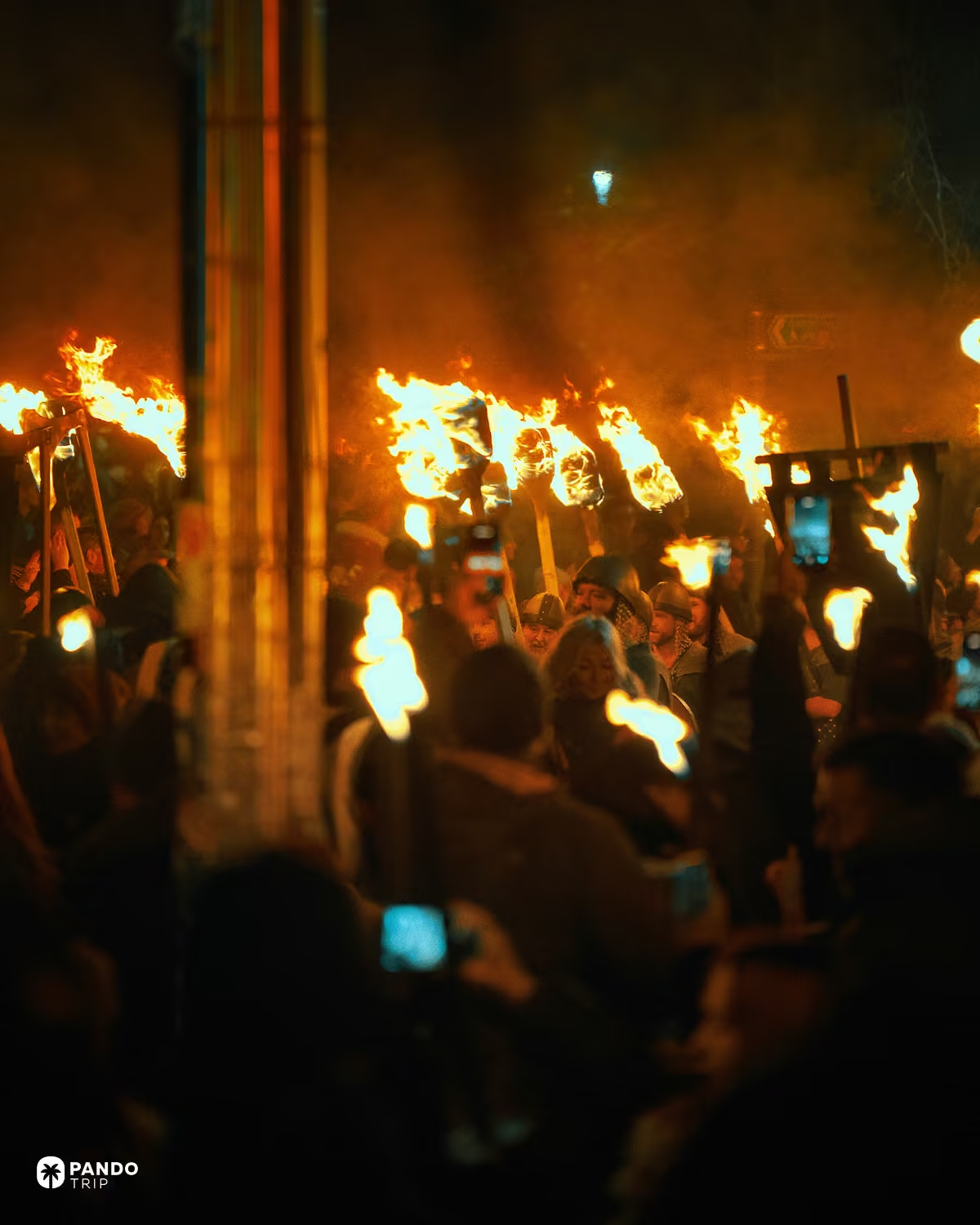
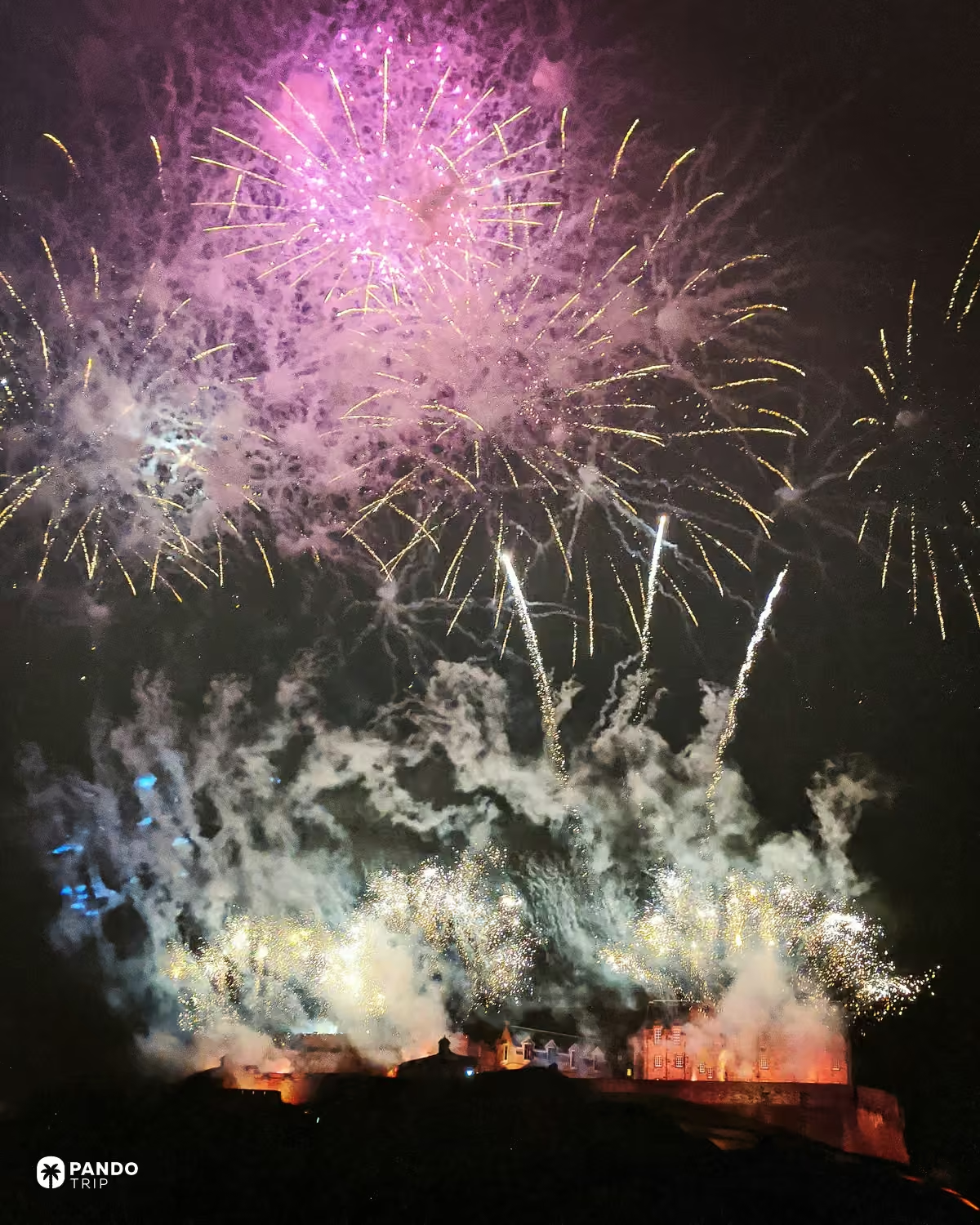
Then comes the night Scotland really celebrates. Edinburgh’s Hogmanay opens with the Torchlight Procession, a river of real fire moving through the dark streets; in 2026 it sets off on 29 December, with 15,000 torchbearers expected. On the 31st the Street Party takes over the city centre, and at midnight the fireworks go up beneath the castle, the show that put Edinburgh on our list of the world’s best New Year’s Eve firework displays. The big events are ticketed, and all of them are at the mercy of the weather: in 2024 high winds cancelled the procession and every outdoor event on the 31st.
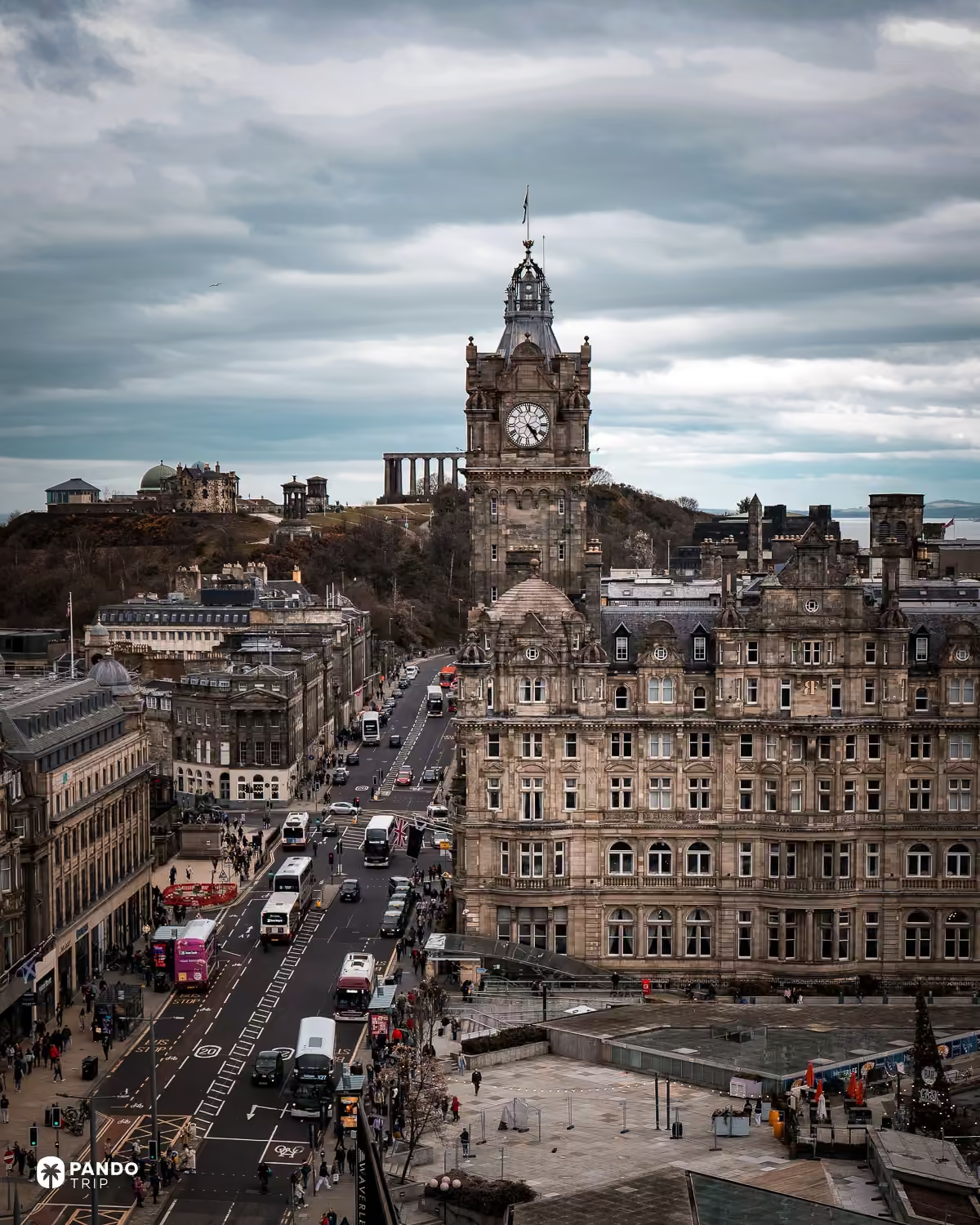
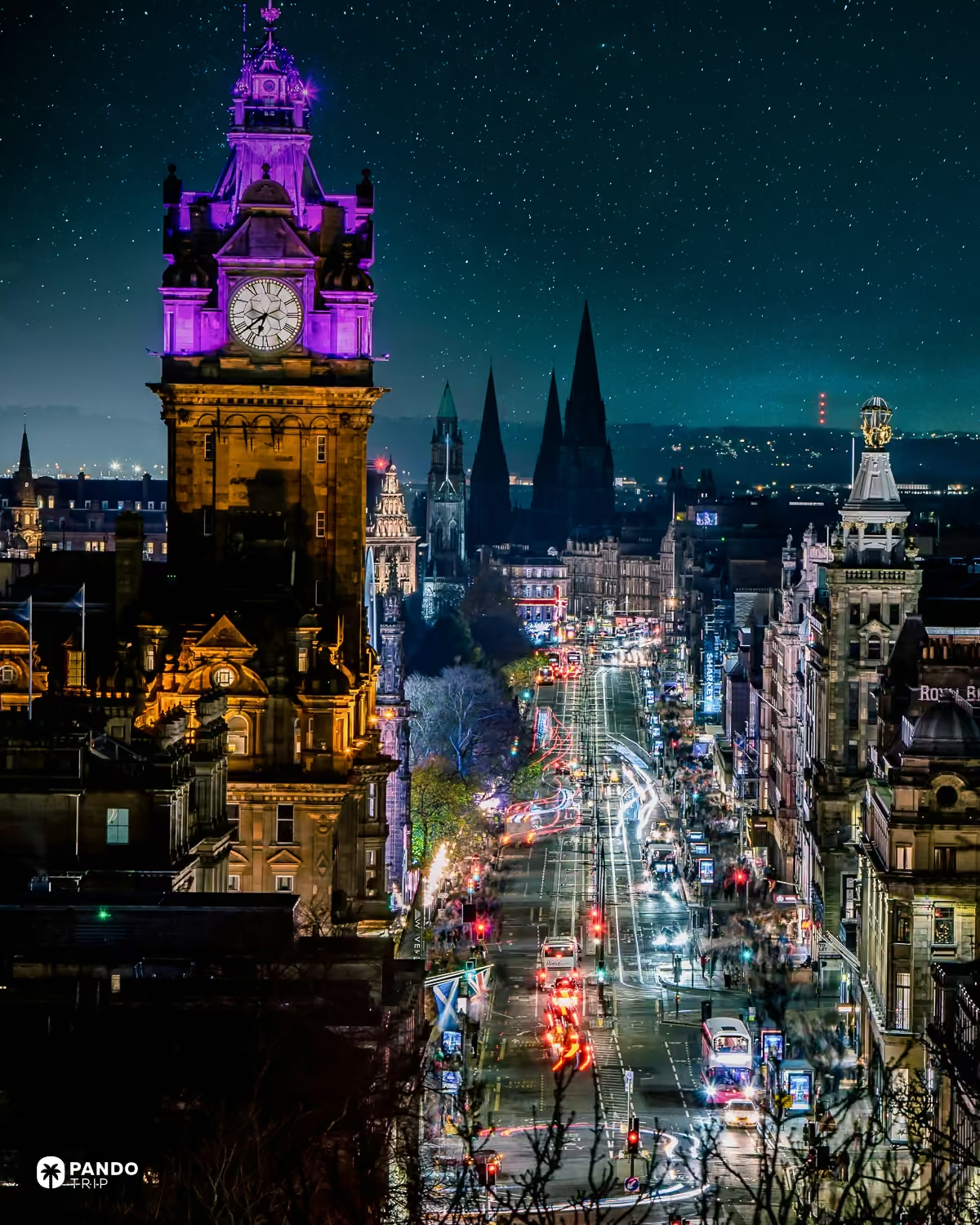
The Balmoral, at the east end of Princes Street, keeps a Hogmanay tradition of its own. Its clock runs three minutes fast all year so that people hurrying to Waverley station catch their trains. On 31 December it is set right, and for one night the Balmoral clock tells the truth.
When to go: December, Hogmanay or January
December is the full fairy tale: the market, the lights, Christmas at the Botanics and the shortest days. Weekends are busy; weekdays are easier.
Hogmanay, roughly 29 December to 1 January, adds the torches and the fireworks, and it is when rooms are hardest to find. Book early, and keep an indoor plan in case the wind wins.
January is the quiet version. The market closes in the first days of the month, and on 25 January Burns Night brings haggis and poetry to dining rooms across Scotland. The days lengthen slowly, and if snow is what you are hoping for, the odds are better after New Year than before it.
| November | December | January | February | |
|---|---|---|---|---|
| Average high | 9.9 °C (50 °F) | 7.3 °C (45 °F) | 7.3 °C (45 °F) | 8.0 °C (46 °F) |
| Average low | 3.8 °C (39 °F) | 1.6 °C (35 °F) | 1.7 °C (35 °F) | 1.7 °C (35 °F) |
| Sunrise | 07:49 | 08:42 | 08:34 | 07:39 |
| Sunset | 16:05 | 15:40 | 16:11 | 17:16 |
| Daylight | 8 h 16 min | 6 h 58 min | 7 h 37 min | 9 h 38 min |
| Days with rain | 12 | 12 | 12 | 10 |
Sunrise and sunset on the 15th of each month (21 December for December). Temperatures and rain days (1 mm or more) are Met Office averages for 1991–2020.
More Potter, or a day in the Highlands
For a guided version of all this, the Harry Potter Magical Guided Walking Tour spends about two hours in the Old Town, Riddell’s grave included. If the city gives you a dry day, the Loch Ness, Glencoe and Highlands tour makes a long one, about 12 hours, into the glen where Hagrid’s hut was filmed. The steam train over the Glenfinnan Viaduct won’t be running, though: the Jacobite’s season ends in October.
Where to stay
Stay in or near the Old Town and the walk back becomes part of the evening.
Budget: Motel One Edinburgh-Royal has modern rooms behind a historic façade on Market Street, between Waverley station and the Old Town, with Cockburn Street around the corner.
Mid-range: at Apex Grassmarket, ask for a Castle View room; some have balconies facing the rock. Virgin Hotels Edinburgh puts you on Victoria Street itself, inside the 1860s India Buildings.
Splurge: for full Gothic, The Witchery by the Castle has suites in buildings dating back to 1595 by the castle gates, all four-posters and tapestries; note that it doesn’t take children under ten.
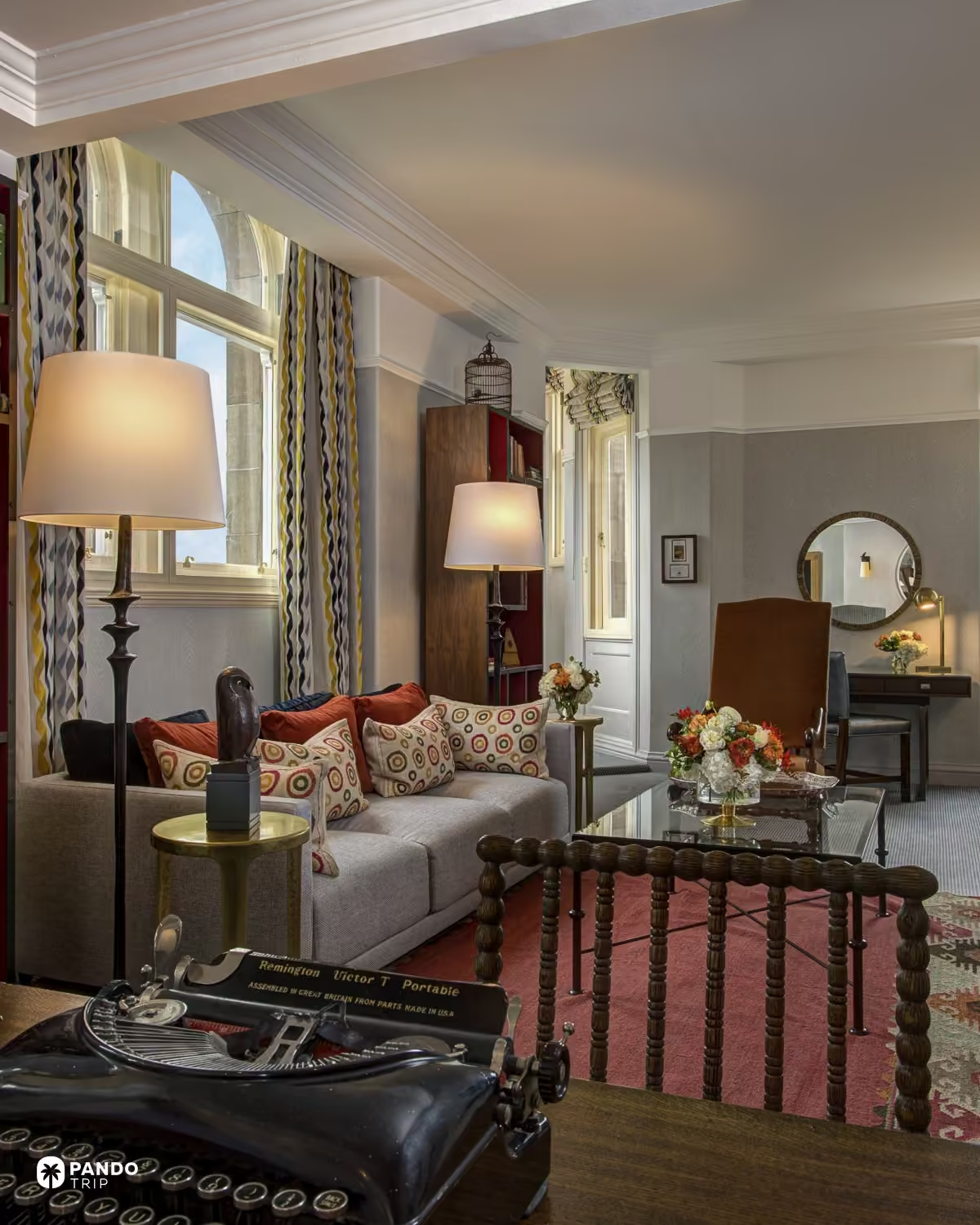
The Balmoral is where the story ends, literally. Rowling finished Harry Potter and the Deathly Hallows in room 552 in January 2007 and marked the moment by writing on a marble bust of Hermes, now kept in a glass case. The room is now the J.K. Rowling Suite, behind a door with an owl knocker.