
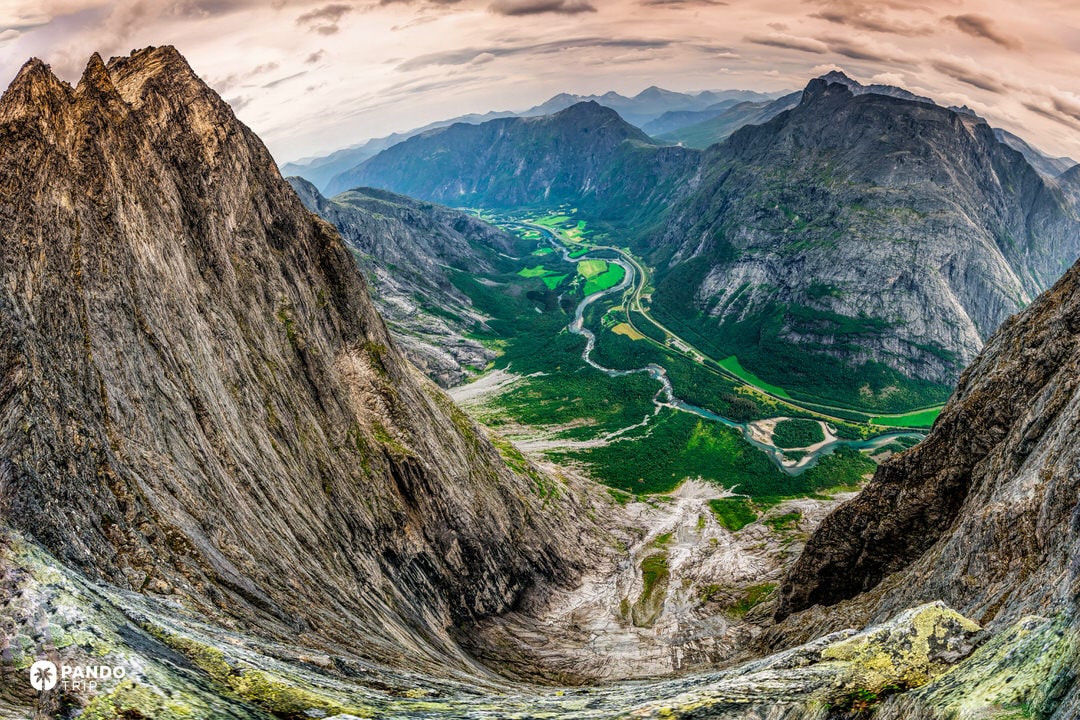
For decades, Norway’s Troll Wall stood as mountaineering’s ultimate taunt. Leading climbers of the 1950s eyed it with profound skepticism, declaring “Europe’s Vertical Mile” – a 1,100-meter rock face so smooth and holdless – seemingly designed by nature to repel human ambition. The wall’s upper rim overhangs the base by nearly 50 meters, creating the largest overhang in Europe, while violent storms and subarctic conditions akin to Alaska’s Denali turned every expedition into a survival test.
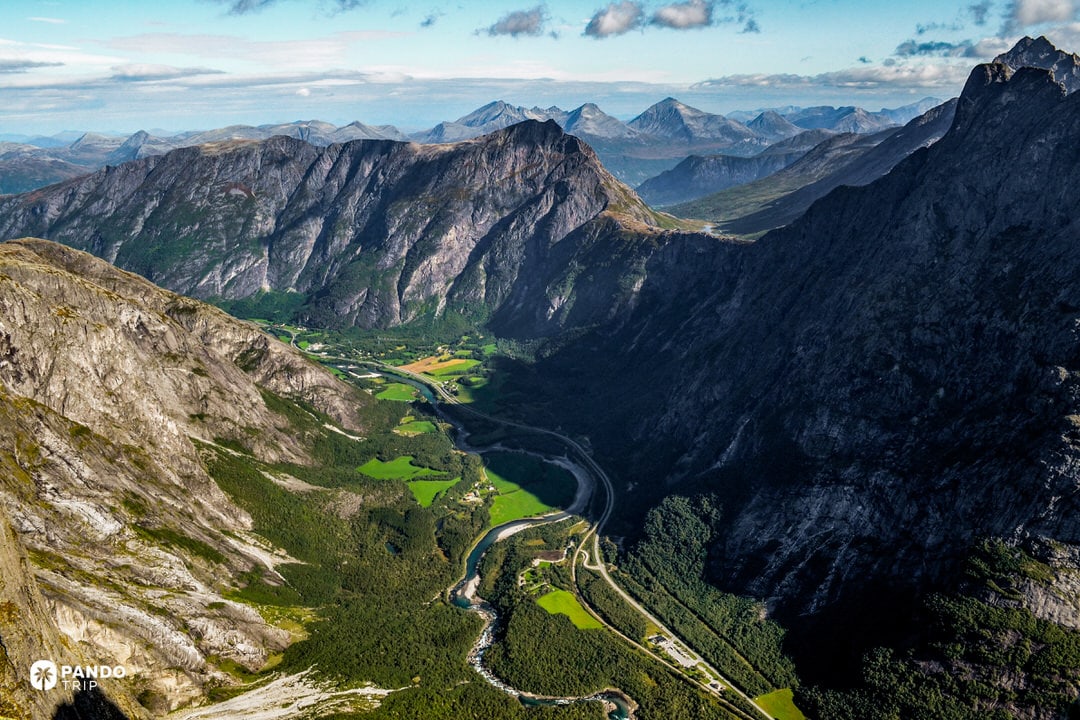
The Troll Wall, or Trollveggen as locals call it, rises from the Romsdalen Valley in Rauma Municipality, Møre og Romsdal. Since the early 20th century, climbers have known it as the continent’s tallest vertical rock face, though “vertical” hardly captures the reality of a wall that actually leans out over your head as you stand at its base.
I wouldn’t dare climb it myself. But I’ve trekked through Romsdalen valley multiple times over the past five years, watching how Troll Wall transforms with the seasons and weather – sometimes disappearing entirely behind curtains of mist, other times catching the midnight sun like a granite mirror. These encounters prompted me to dig deeper into the wall’s history and geology. What follows combines my observations from the valley floor with the stories and insights I’ve uncovered about Europe’s most formidable rock face.
Geological Composition and Challenges
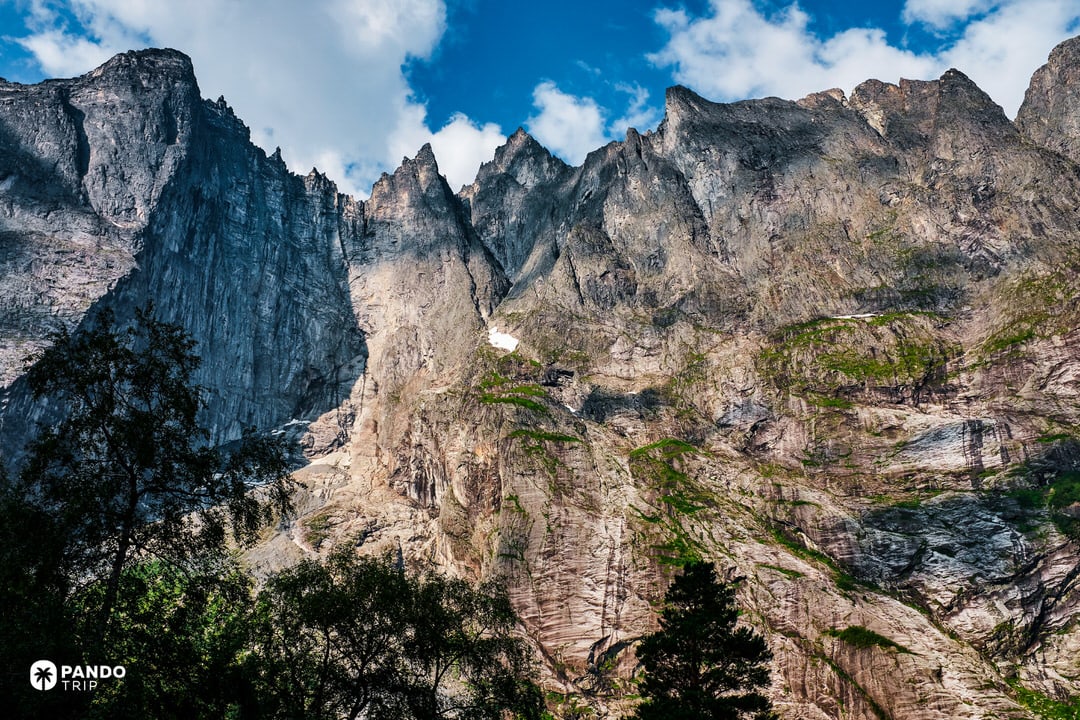
The wall’s geology explains why climbers spent decades declaring it impossible. Troll Wall consists primarily of gneiss, creating a cliff face riddled with huge corners, intricate crack systems, overhangs, and pinnacles. But this isn’t stable granite like Yosemite’s El Capitan. The rock here is heavily fractured, constantly reshaped by freeze-thaw cycles that pry apart the stone each winter.
A major rockslide in 1998 fundamentally altered the wall’s structure, destroying several classic climbing routes. The famous Rimmon Route, once considered the prize line up the center, remains unclimbable today. Being north-facing, the wall receives minimal sunlight even in summer, creating a microclimate of cold, damp conditions where ice can persist in cracks well into July.
The First Ascents
The “unclimbable” wall finally fell in July 1965, when two teams – one Norwegian, one British – raced for the summit just days apart.
The Norwegian team of Ole Daniel Enersen, Leif Norman Patterson, Odd Eliassen, and Jon Teigland chose an obvious corner and gully system on the left side of the wall. Over 11 days, they battled loose rock and frequent storms with rudimentary gear – soft iron pitons that bent under load, no modern harnesses or ascenders. They reached the summit first.
Meanwhile, a British team attempted a more direct line up the center. Tony Howard, John Amatt, and Bill Tweedale’s first attempt failed in atrocious weather, but they returned immediately. Five and a half days later, just before another storm system arrived, they topped out – one day after the Norwegians. Joe Brown, Britain’s most respected climber, called their Rimmon Route “one of the greatest ever achievements by British rock climbers.”
Both ascents marked a turning point in alpine climbing. Without modern equipment, these teams had solved complex route-finding problems while surviving extreme conditions. The French Route saw its first winter ascent in 1974 by Polish climber Wojciech Kurtyka. In 1979, Hans Christian Doseth and Ragnhild Amundsen achieved the first free ascent – climbing without aid from gear – a major technical milestone.
BASE Jumping History and Ban
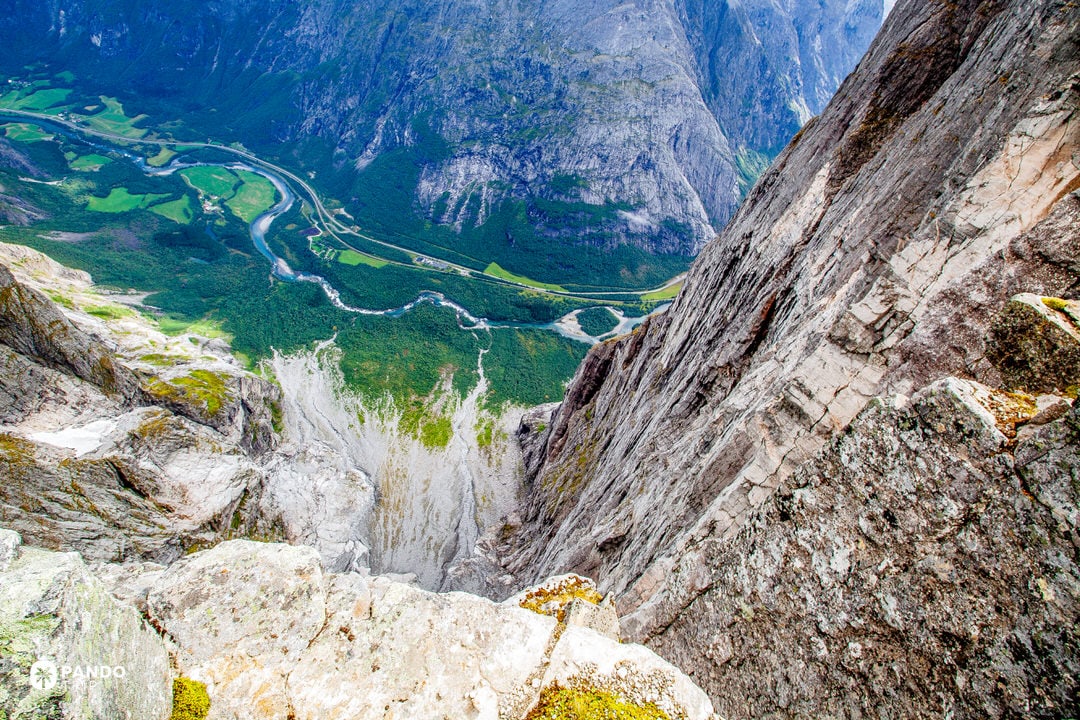
Troll Wall earned another reputation in 1984 when Carl Boenish, considered the father of BASE jumping, set a world record leap from its summit. He died during a subsequent jump the same week. After a string of fatalities through the early 1980s, Norwegian authorities banned BASE jumping from the wall in 1986.
The prohibition hasn’t stopped jumpers. Each summer, a handful still make the leap, often completing their jump before police or rangers can reach the remote location. Despite the ban and the obvious dangers – unstable rock, unpredictable winds, difficult rescue access – Troll Wall remains one of the world’s most coveted BASE jumping sites. Its sheer height and 50-meter overhang create the kind of freefall that draws those willing to accept both legal and mortal consequences.
Why Visit Troll Wall in Norway
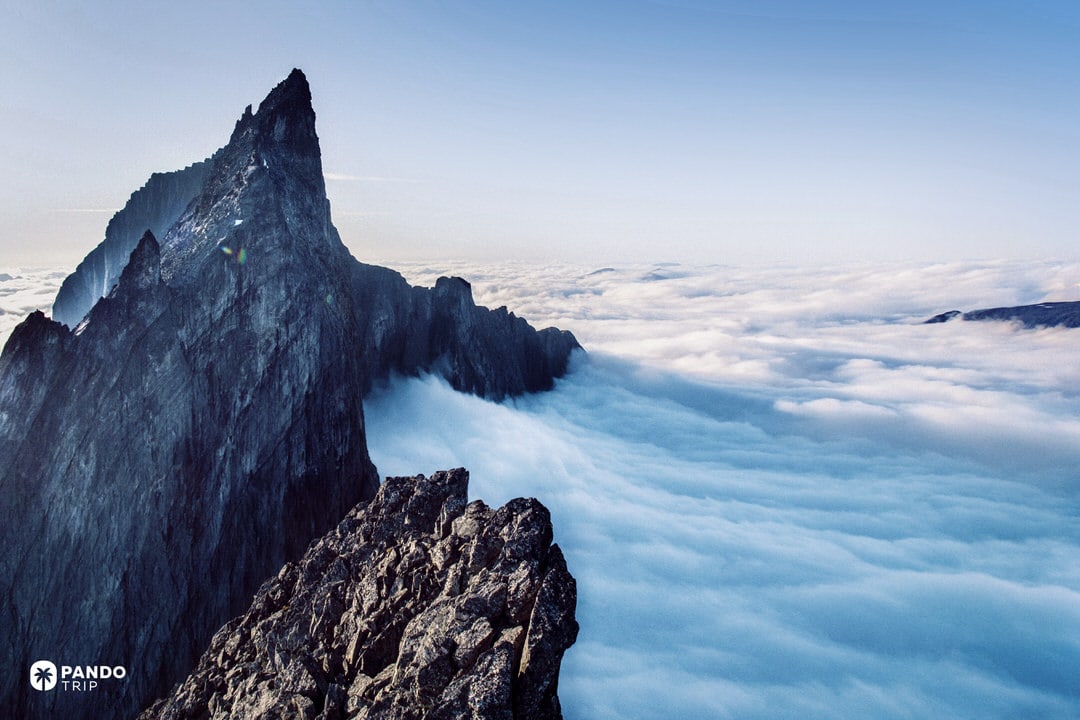
For climbers, Troll Wall remains a career-defining objective despite recent rockfall that has limited safe routes. The heavily fractured gneiss demands not just physical ability but constant route-finding as holds break and cracks shift with each season.
But you don’t need to be a climber to appreciate Europe’s most dramatic cliff. From the valley floor, you can stand directly beneath the overhang or view it from several vantage points along the E136 highway. The nearby town of Åndalsnes serves as Norway’s mountaineering capital and the starting point for world-class hikes including the Romsdalseggen ridge traverse, the Rampestreken sky walk, and numerous day walks that provide front-row seats to Trollveggen’s ever-changing face.
How to get to Troll Wall
Troll Wall sits in the Romsdalen Valley within Reinheimen National Park, and despite its dramatic appearance, it’s surprisingly accessible.
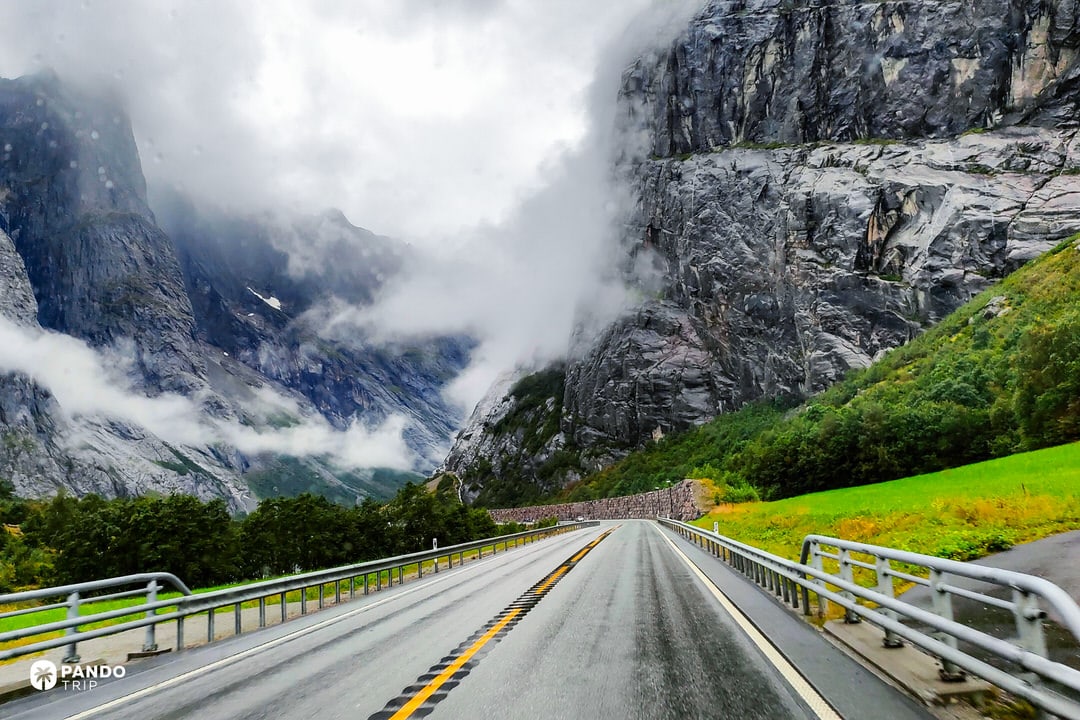
By Car: The cliff stands directly beside the E136 highway near Road 63 (Trollstigen). Large, free car parks at the Trollveggen Visitor Center and the base of the Trollstigen hairpin road provide easy access. From Oslo, take the E136 via Dombås to Åndalsnes, then follow signs to Trollveggen. From Bergen, head north on the E39 before joining local routes. The E136 from either Dombås or Ålesund follows the Rauma river directly past the wall.
By Train: The Rauma Railway, rated among Europe’s most scenic rail journeys, runs from Oslo to Åndalsnes in about five hours. The track passes directly beneath Trollveggen – sit on the right side when traveling north for optimal views.
By Air: Molde Airport (MOL) is nearest, with onward travel by car or public transport to Åndalsnes and Troll Wall.
Best Time to Visit
Late June through early September offers the most stable weather and easiest access. Summer brings nearly 20 hours of daylight, warmer temperatures, and snow-free trails for hiking and sightseeing.
The prime window runs from mid-July to late August, when conditions are warmest and driest. For climbers, most cracks are clear of ice, though afternoon thunderstorms remain a risk. This period suits hiking, rafting, and photography.
June sees lingering snow on high routes and waterfalls that can drench climbing lines. The famous Trollstigen road typically opens between mid-June and early July. September and October bring cooler temperatures but more stable rock conditions, attracting climbers attempting hard free ascents. Golden birch and larch trees compensate for shorter days, though cafés and transport shift to low-season schedules.
From November through April, only serious winter alpinists should consider the wall. The valley remains accessible for ski touring on nearby peaks, but the wall itself becomes a realm of ice, spindrift, and near-constant darkness.

Hiking and Viewpoints
Multiple trails offer different perspectives on Troll Wall, from family-friendly strolls to demanding ridge traverses.
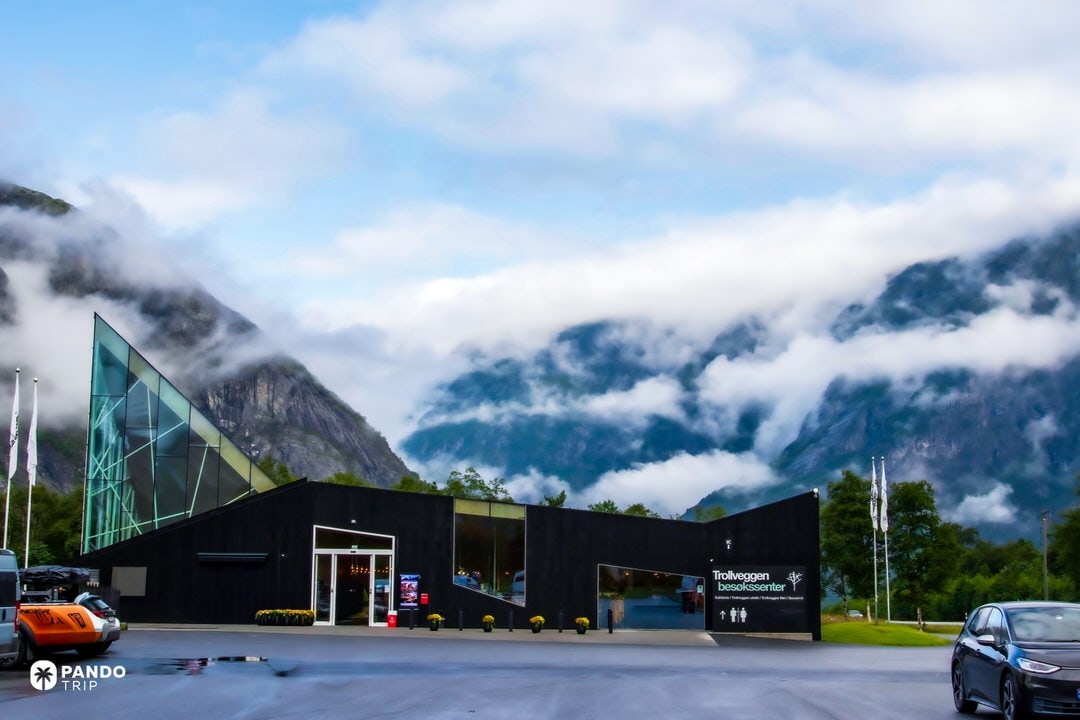
Trollveggen Visitor Center: The easiest option starts here, with panoramic indoor viewing and a 30-minute trail to the talus field. Standing beneath the 50-meter overhang while listening to the occasional crack of falling rock drives home the wall’s scale.
Stabbeskaret: This moderate four to six hour round trip provides elevated views of both Troll Wall and Romsdalen valley. The well-marked trail includes steep, rocky sections requiring basic fitness.
Bruarskaret: Reserved for experienced hikers, this difficult route delivers one of the highest natural viewpoints, looking directly across at Troll Wall. Proper gear and navigation skills are essential as weather can deteriorate rapidly.
Romsdalseggen Ridge: Often called Norway’s most scenic hike, this full-day traverse (7 to 10 hours) offers panoramas of Troll Wall, the Rauma river, and surrounding peaks. Summer buses from Åndalsnes to the Vengedalen trailhead create a convenient loop.
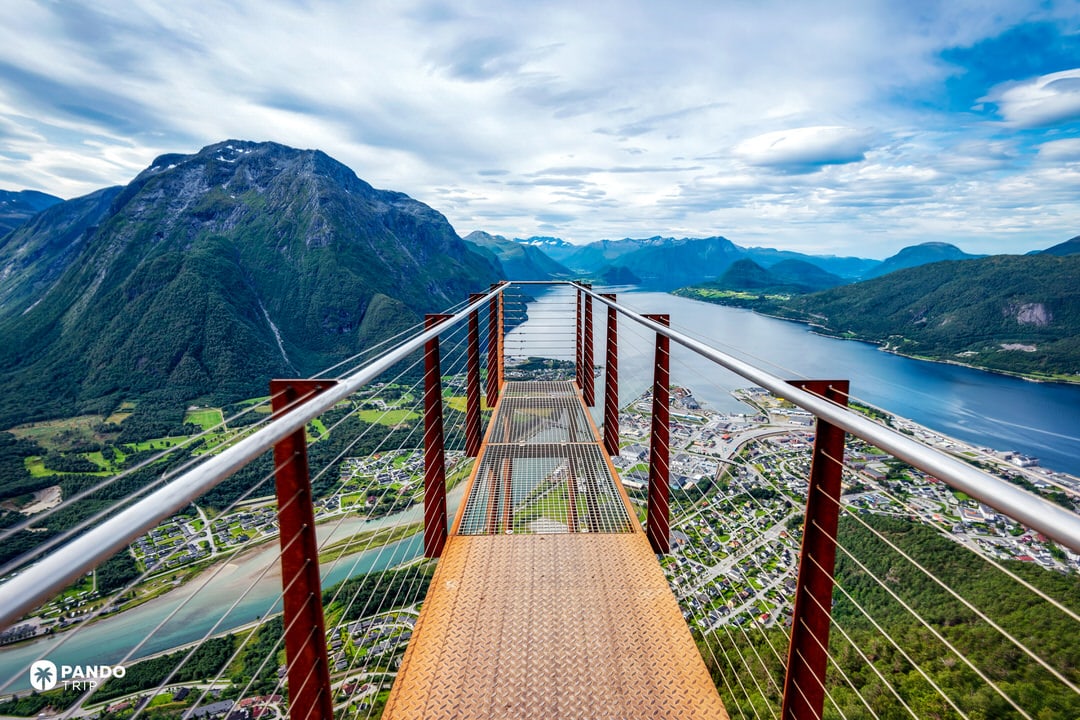
Romsdal Gondola and Rampestreken: A modern cable car whisks visitors from Åndalsnes town center to Mount Nesaksla (1,679 meters) in five minutes. From the panoramic restaurant at the top, a 15 to 20 minute walk along stone steps leads to Rampestreken sky-walk – a platform suspended 550 meters above town. Without the gondola, reaching the platform requires a one to 1.5 hour hike.
Where to Stay
Åndalsnes serves as the main base, offering hotels, guesthouses, and vacation rentals within walking distance of the train station, supermarkets, bakery, and outdoor shops.
Hotels start around 1,400 NOK for mid-range options with mountain or fjord views. Budget travelers find hostel dorms for 450 to 650 NOK. Guesthouses and vacation rentals suit groups or longer stays.
For those wanting to sleep in Troll Wall’s shadow, Trollveggen Camping sits directly at the cliff’s base. Tent and car pitches cost around 320 NOK (approximately €30), while heated four-person cabins start at 1,580 NOK. Showers cost an additional 20 NOK.
Planning Your Visit
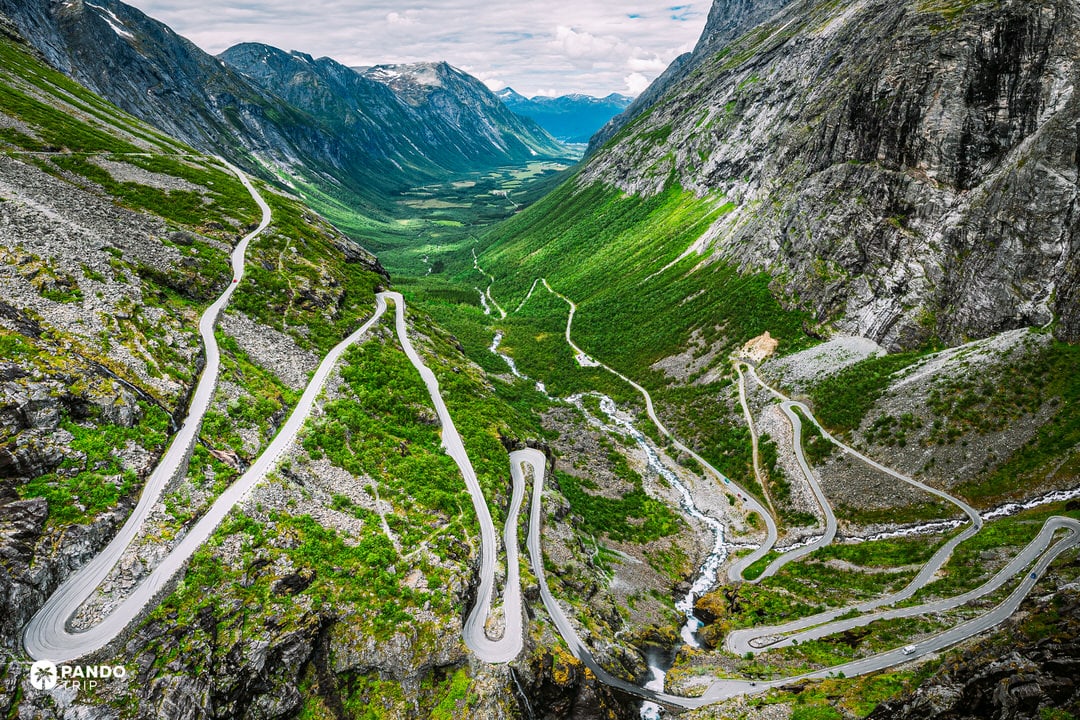
Two or three days allows time to properly explore the area. Beyond gazing at the wall itself, you can hike the Romsdalseggen ridge, visit Rampestreken sky-walk, drive the spectacular Trollstigen road with its 11 hairpin bends, or kayak Åndalsnes fjord. Each activity provides a different perspective on why this corner of Norway has captivated adventurers for over a century.
Standing beneath Troll Wall today, watching clouds swirl around its summit while chunks of ice occasionally cascade down its face, you understand why those 1950s climbers declared it impossible. That it was eventually climbed seems almost beside the point. The wall remains what it has always been: nature’s monument to the improbable, a 1,100-meter question mark carved in stone.