You’ve seen white sand beaches. Black sand beaches. Maybe even pink sand beaches in the Bahamas.
But a beach covered in what looks like just-popped popcorn?
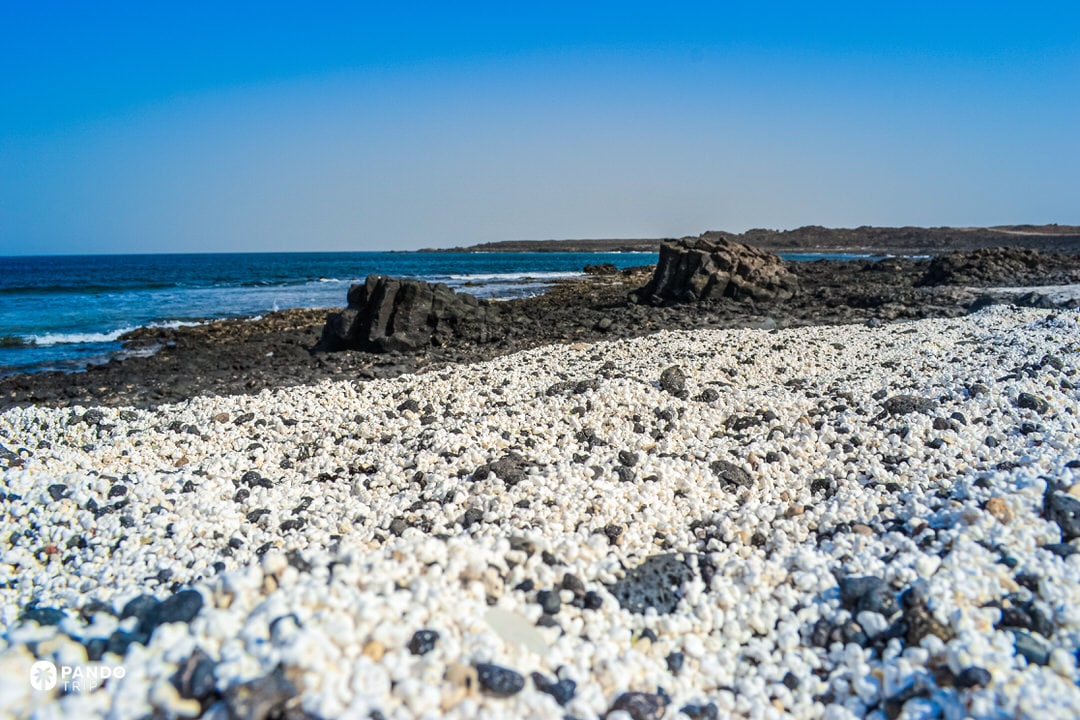
That’s Playa del Bajo de la Burra in Fuerteventura. Also known as Play de Las Cotufas, since popcorn in the Canary Islands is called “cotufa.”
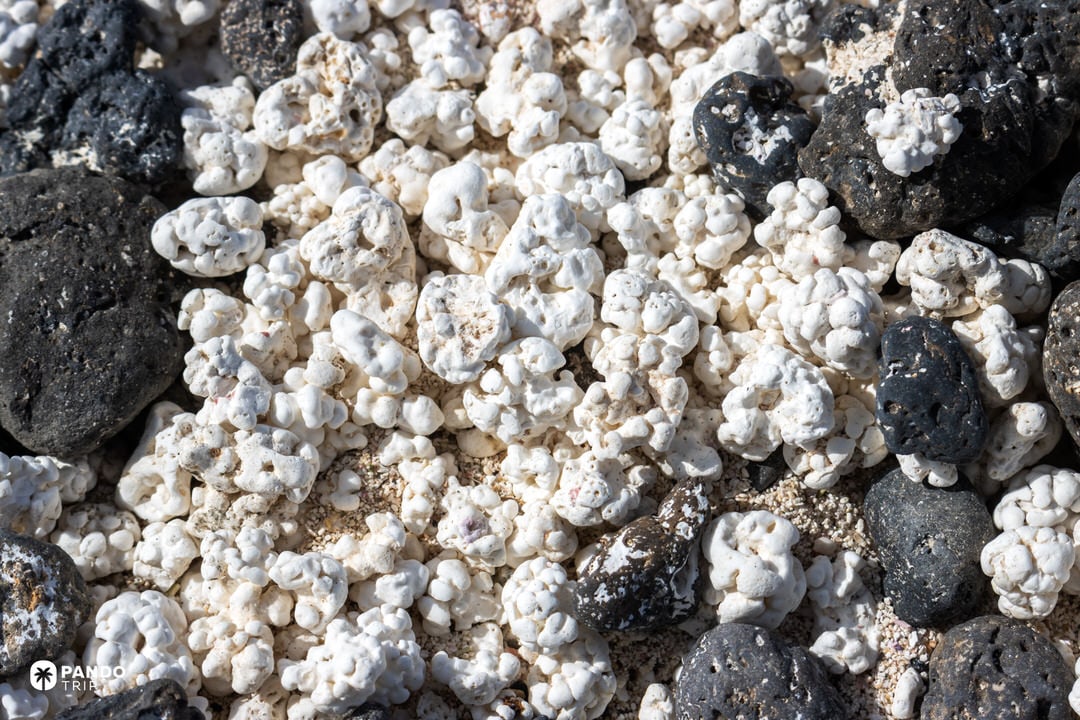
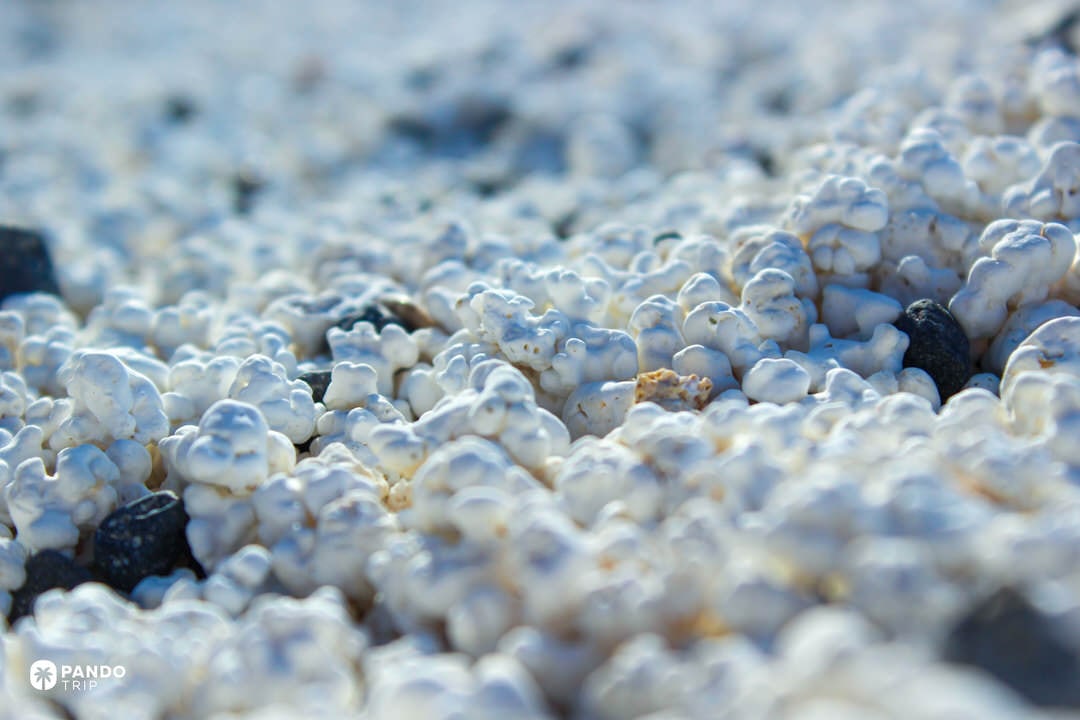
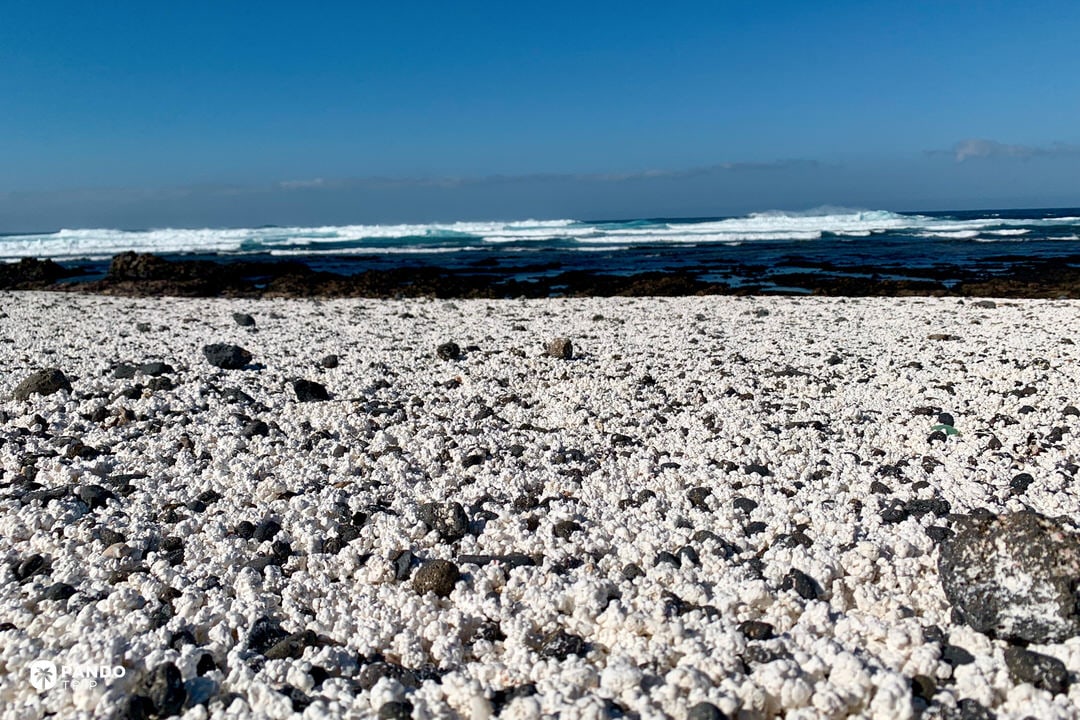
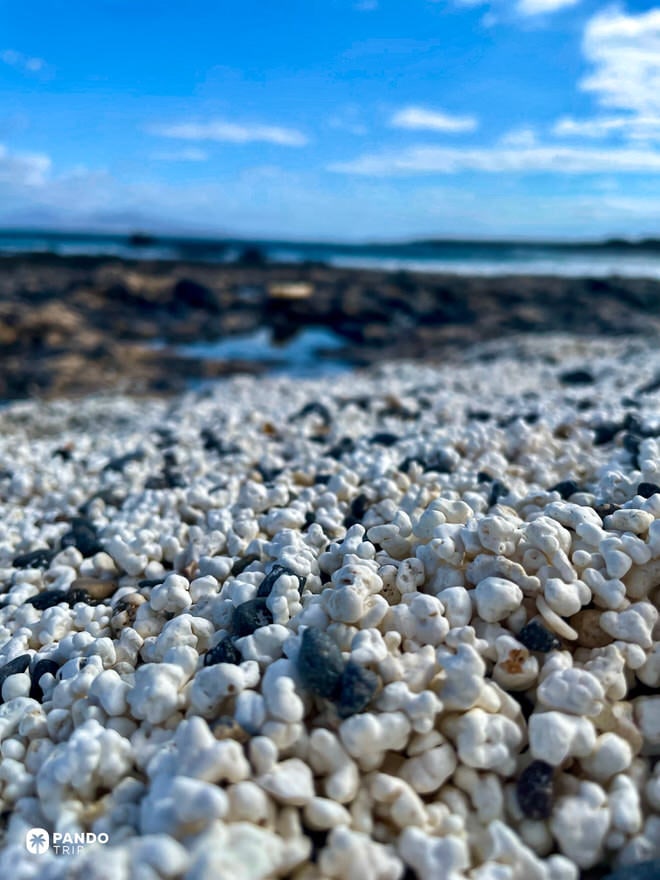
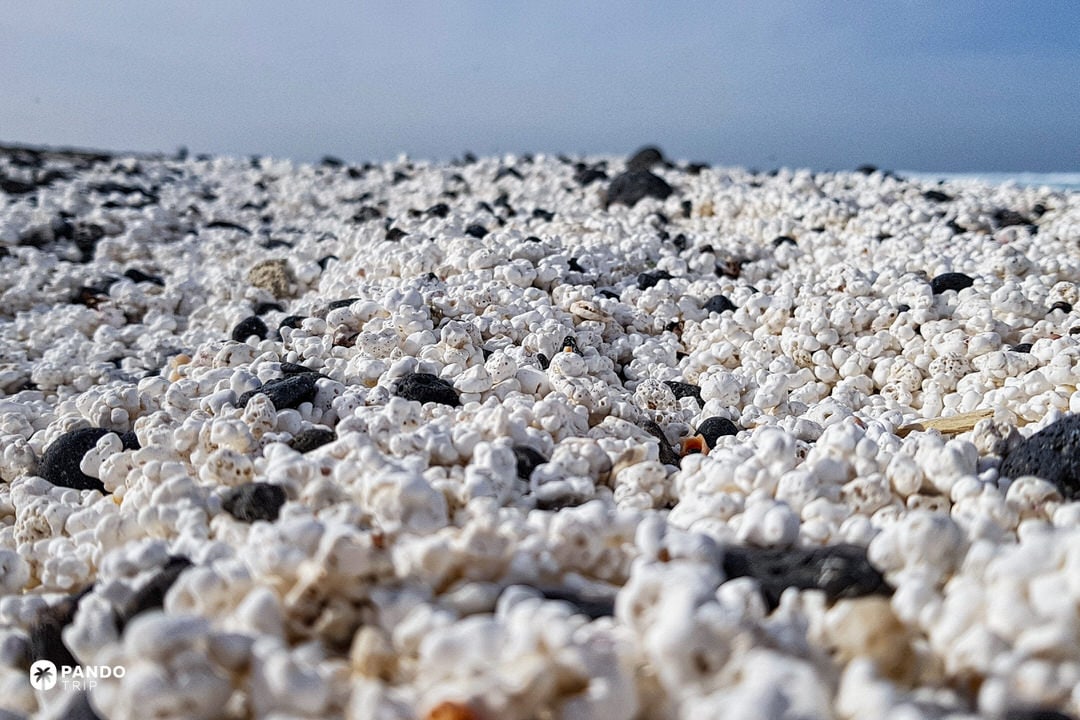
Once you see pictures, you’ll understand why it went viral. The illusion is perfect – thousands of tiny white formations that could have just dropped out of a cinema bucket.
Except they didn’t.
They took 4,000 years to get there. And tourists are taking them home at a rate of 10 kilograms per month.
What You’re Actually Looking At
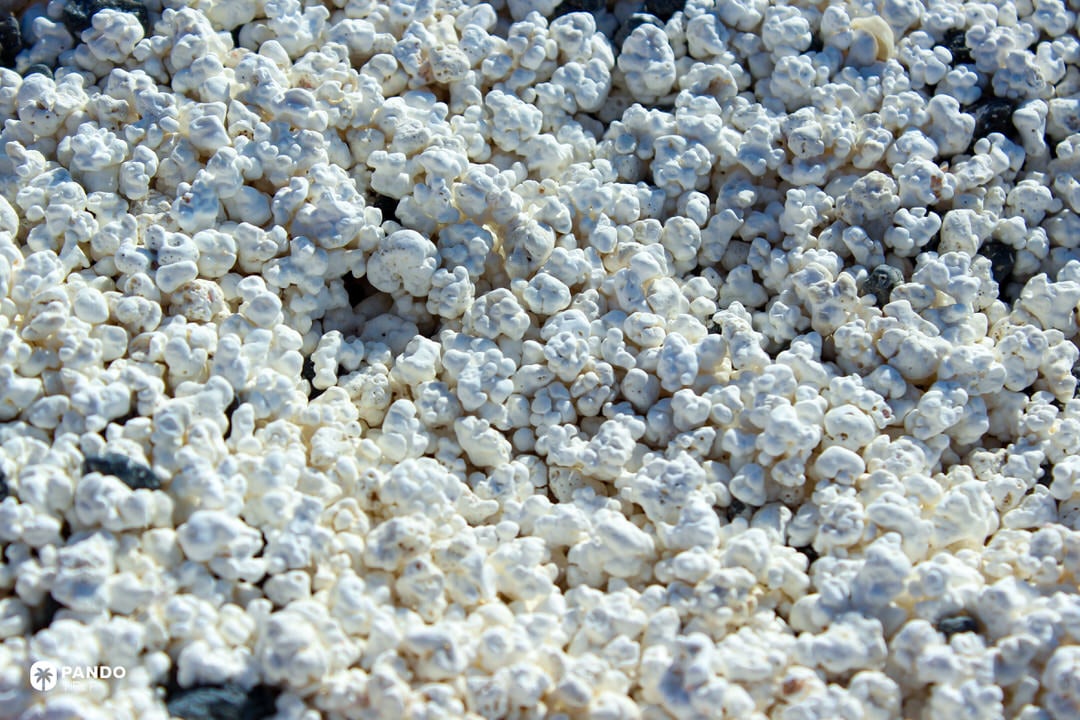
First, I must ruin the magic immediately. It’s not popcorn (obviously). It’s not a rock formation either.
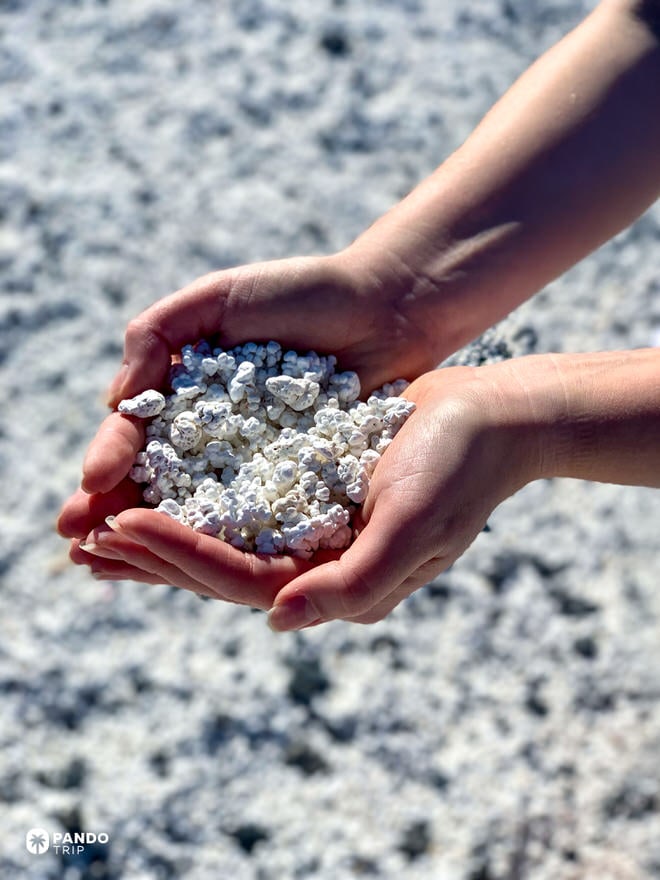
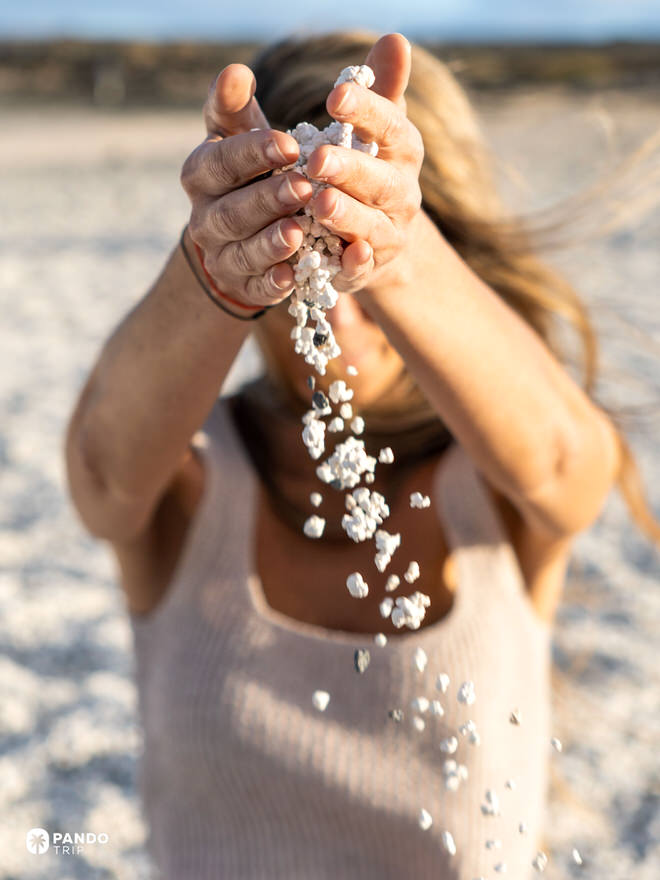
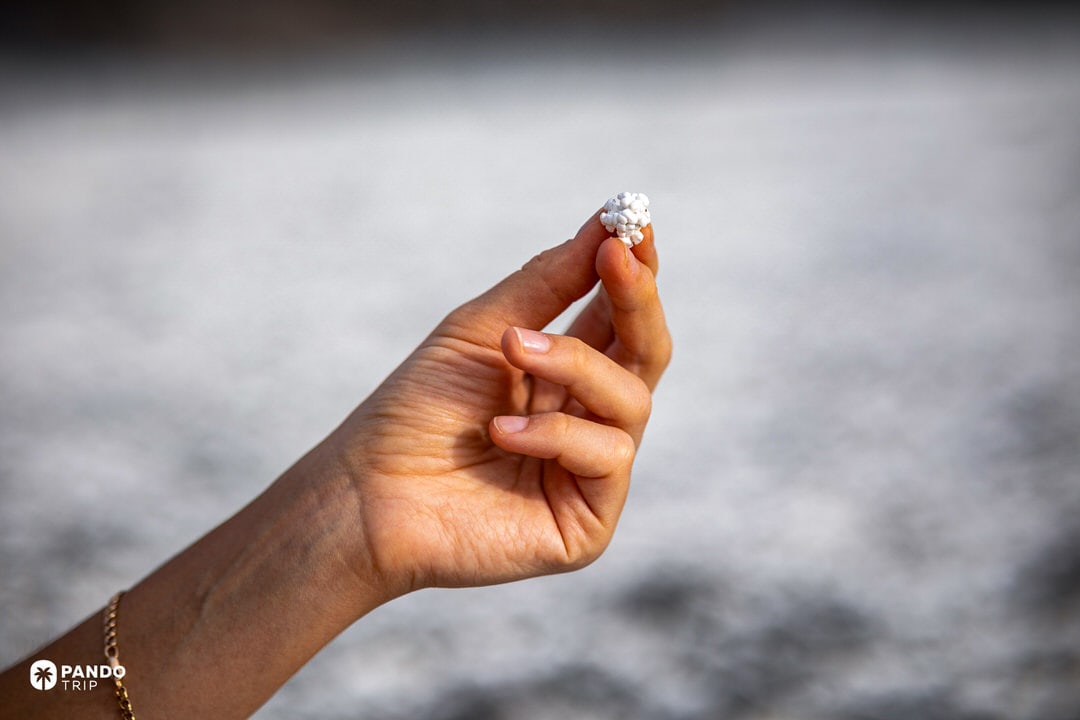
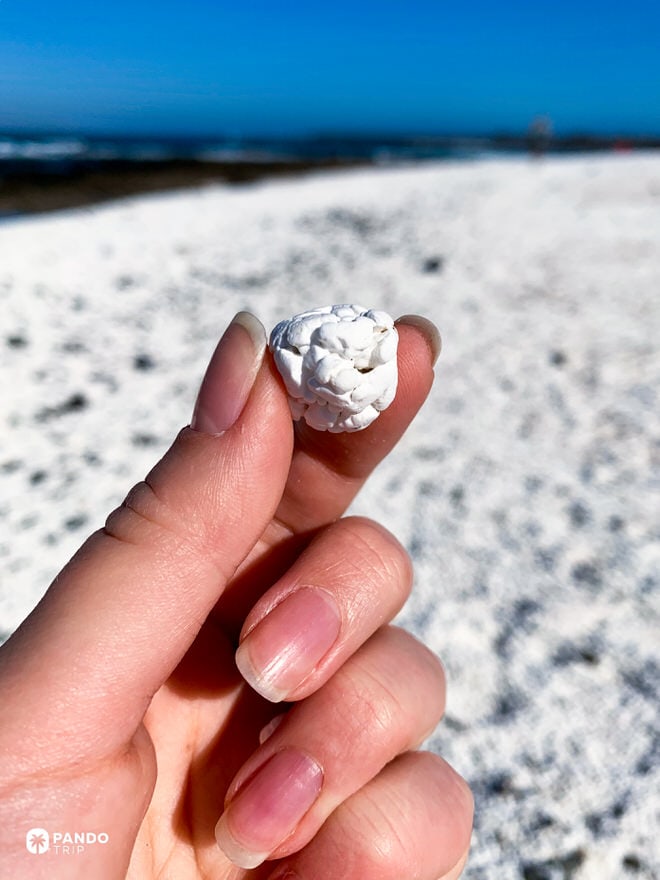
The white covering is rhodoliths – fossilized nodules of coralline red algae that grow on the seabed. They grow at exactly one millimeter per year. That piece in your hand that looks like it belongs in a bowl with butter? It took 250 years to form.
Some of the larger rhodoliths here are older than the Great Pyramids.
When they are alive in the water, the algae are red. When they are dead, the sun bleaches them to resplendent white before Atlantic waves wash them onto the beach at this specific spot on the northern coast of Fuerteventura. That is when they turn most Instagram-famous and conservation-doomed beach in the Canary Islands.
Getting to the Popcorn Beach
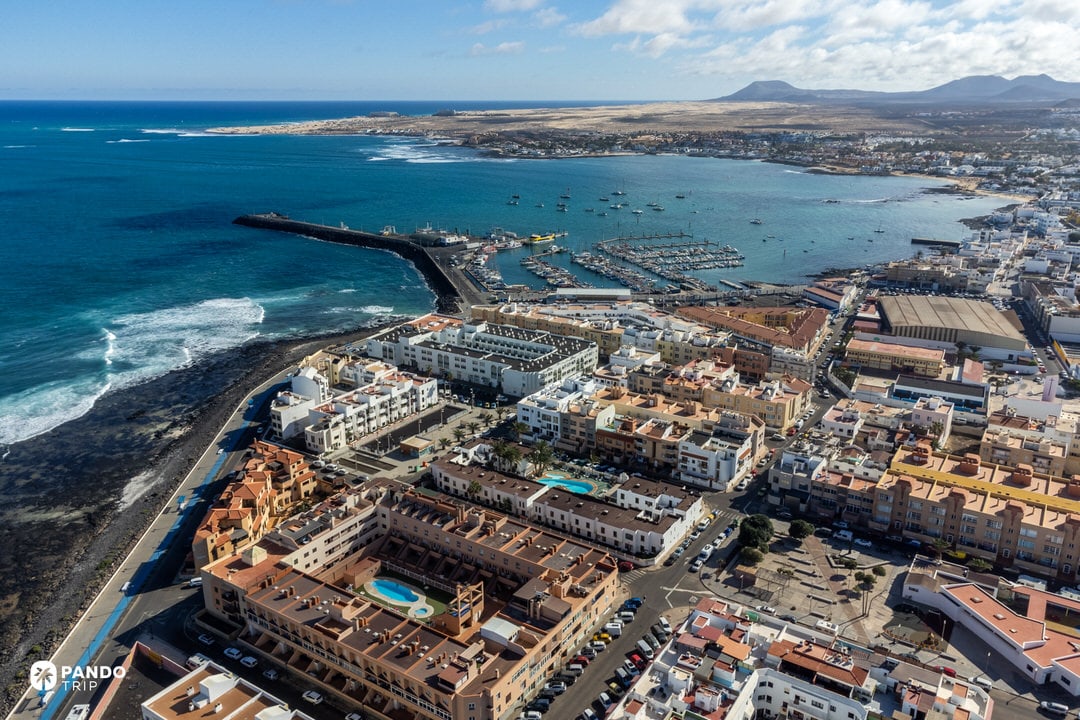
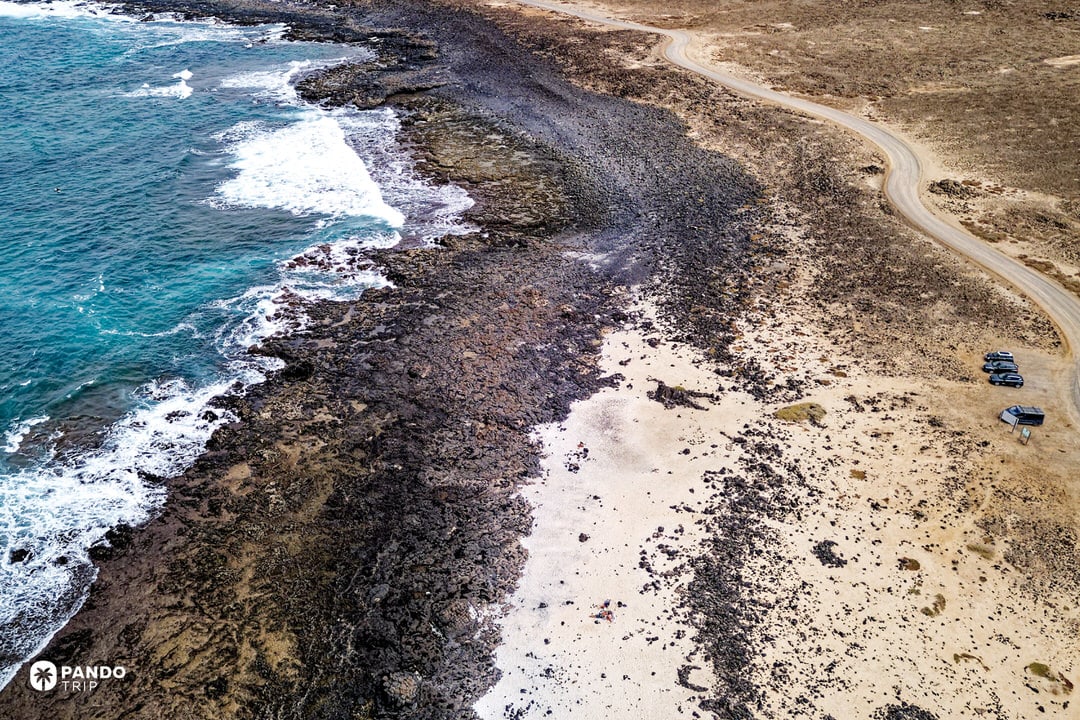
The drive to the Popcorn Beach takes 15 minutes by car from Corralejo. You go west to El Cotillo, turn off at tiny village of Majanicho, and carry on on a track over prehistoric basaltic lava flows.
There’s a small parking area. But no facilities. No beach bar.
The ocean is rough. Swimming isn’t advised.
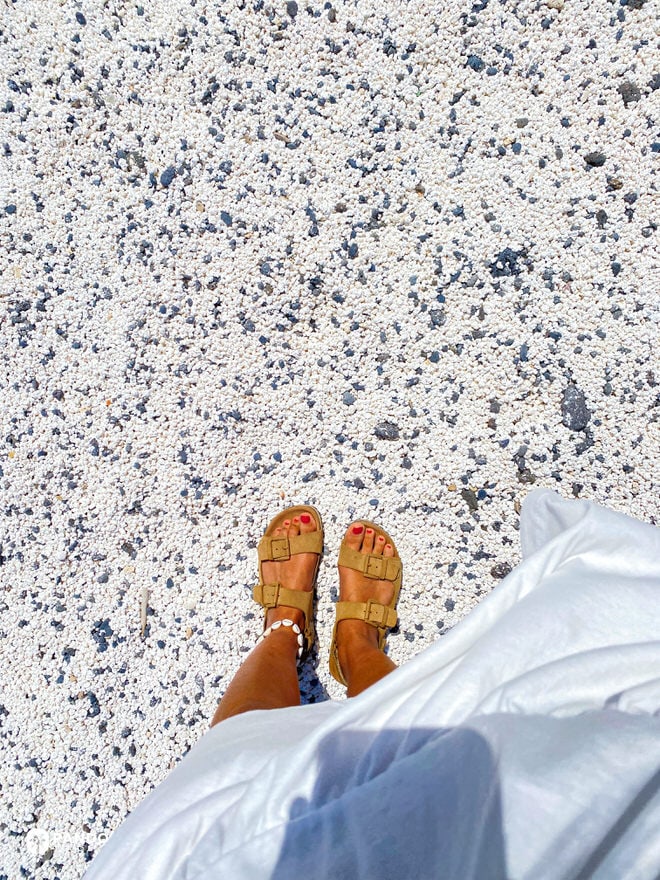
The rhodoliths are sharp. Sitting directly on them is uncomfortable.
This is possibly the least typical beach experience in Spain. You can’t do any of the normal beach things here. Can’t swim, can’t sunbathe comfortably, can’t grab lunch around here.
And yet people still come. Thousands of them.
Because it looks like popcorn. Because it’s quirky. Because the photos are incredible.
The Geological Walk
I walked west along the coast for 30 minutes.
At Caleta del Bajo de Mejillones (where most tourists stop) the rhodoliths are mainly whole and perfect. The popcorn illusion is almost flawless.
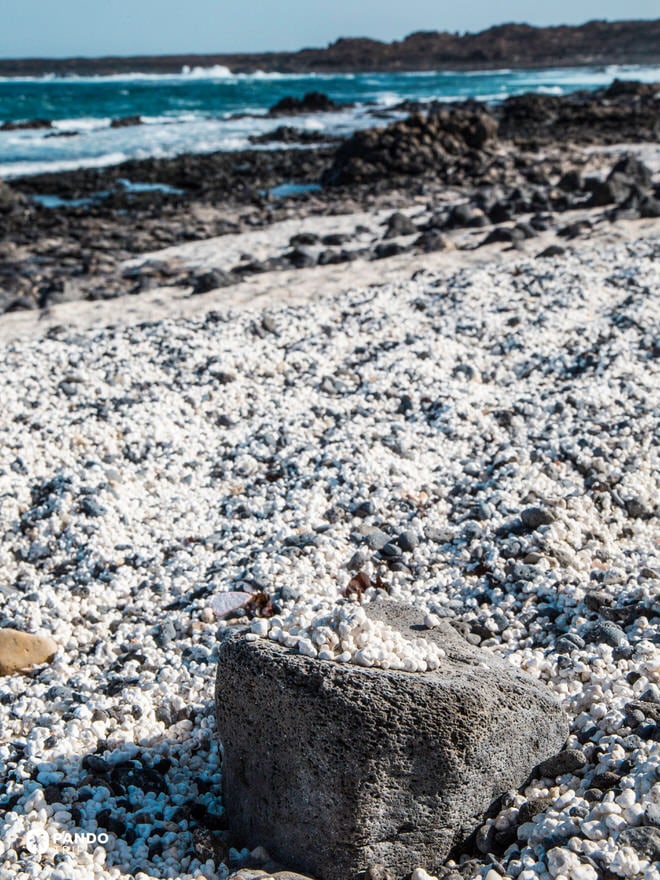
Keep walking to Playa El Hierro and something changes. The rhodoliths are broken into coarse fragments. The popcorn becomes gravel.
Continue toward El Cotillo and those same fragments have been ground into fine white sand. The famous dunes that make this coastline beautiful? They started as popcorn.
This isn’t a static beach. It’s one stop on a geological conveyor belt powered by storm waves and trade winds. The rhodoliths move from east to west, getting smaller and smaller, eventually becoming the white sand that tourists actually want to sit on.
When you take a piece from Popcorn Beach, you’re not just removing a curiosity.
You’re interrupting a process that’s been running for millennia.
The Family I Couldn’t Stop Watching
A mother, father, and two kids were crouched near the waterline, carefully selecting the best pieces.
Not grabbing handfuls. Selecting. Showing each other. Discussing which ones looked most like popcorn. Slipping them into a plastic bag.
They were being thoughtful about it.
I stood there for three minutes, debating whether to say something. What could I say that wouldn’t sound preachy? What right did I have to lecture strangers?
While I debated, they filled the bag.
That’s when I understood why the beach loses 10 kilograms every month. It’s not a few bad actors taking shopping bags full. It’s hundreds of well-meaning families taking just a few pieces. It’s every single person deciding their small handful doesn’t matter.
But when something grows at one millimeter per year, every handful matters.
What Rhodoliths Actually Do
Rhodoliths aren’t decorations. They’re ecosystem engineers.
Underwater, they create three-dimensional habitats where marine species shelter and breed. Their cavities and crevices are safe spaces for animals to store eggs. Remove one rhodolith and you’re removing an apartment building for dozens of small creatures.
While alive, they absorb carbon dioxide from the sea. They’re part of the ocean’s climate change defense system.
And when they die and wash ashore? Their debris literally forms the beach. Not covers it. Forms it. The beach exists because of rhodolith breakdown. Remove them and you’re dismantling the beach itself.
The local conservation campaign in La Oliva uses the hashtag #pasasinhuellaporlaoliva: “Visit without leaving a trace.”
The Uncomfortable Truth
I’ve written about beaches for years. Most can absorb tourism. Most regenerate faster than we damage them. Most are resilient enough to survive our attention.
This one isn’t.
Popcorn Beach is finite in a way most beaches aren’t. When something grows one millimeter per year, human timescales and geological timescales clash catastrophically. What nature spent 250 years creating disappears into a suitcase in seconds.
The viral photos brought the crowds. The crowds are dismantling what made it worth photographing in the first place.
And here I am, writing about it anyway.
My justification? The beach is already famous. The damage is already happening. Silence won’t save it. But maybe honesty will change how some people visit.
Maybe you’ll be one of them.
If You’re Planning to Go
Arrive at sunrise or stay until sunset. The low light makes the white rhodoliths glow against the black volcanic rock. It’s also when fewer people are pocketing pieces while you watch helplessly.
Wear hiking shoes or sturdy sneakers. The surface is sharp and uneven. Flip-flops will make you miserable.
Bring everything you need. Water, snacks, sunscreen, a thick blanket if you want to attempt sitting. The nearest facilities are back in Majanicho, which barely counts as having facilities.
Plan for 90 minutes total. You’ll see it, understand it, photograph it, and be ready to leave. This isn’t a half-day destination.
Walk the coastline west. Follow the rhodoliths on their journey. Watch them transform from popcorn to gravel to sand. It’s the difference between seeing a curiosity and understanding a system.
Leave every single piece exactly where you found it. Not most pieces. Every piece. Not because one won’t matter. Because if everyone takes one, the beach ceases to exist.
The Details You Need
- Location: Northern Fuerteventura, 7 kilometers from Corralejo on the coast near Majanicho.
- GPS cordinates: 28.752866178407313, -13.899668693226426
- Google Maps link: Playa del Bajo de la Burra
- Access: Drive toward El Cotillo, turn off at Majanicho, follow dirt track across lava fields. No public buses. Taxi from Corralejo works. One-hour coastal walk from Corralejo also possible.
- Cost: Free (bring all supplies)
- Time needed: 90 minutes maximum
- Best for: Photography, understanding geological processes, contemplating human impact on nature
- Not good for: Swimming, sunbathing, typical beach activities
- Most important thing to bring: The commitment to take nothing but photos