
The road to Luskentyre unfolds like a well-kept secret. Three miles (5km) of single-track tarmac wind through the Harris moorland, past weathered crofts and grazing sheep, before the Atlantic suddenly fills your windscreen. What happens next tends to leave visitors momentarily speechless.
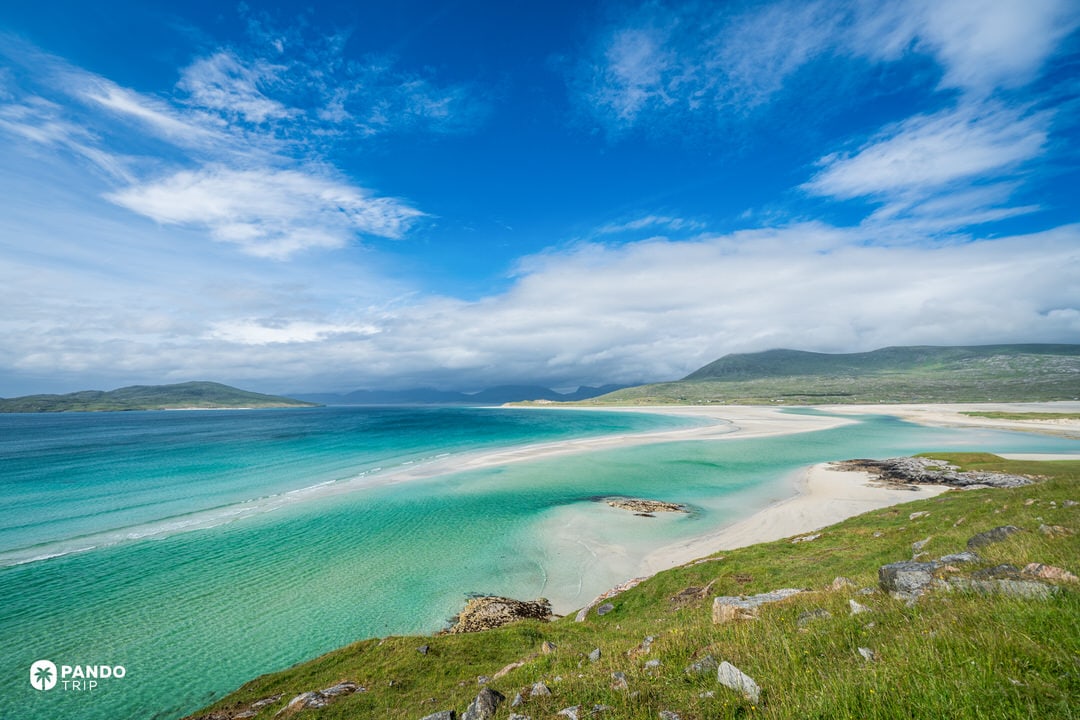
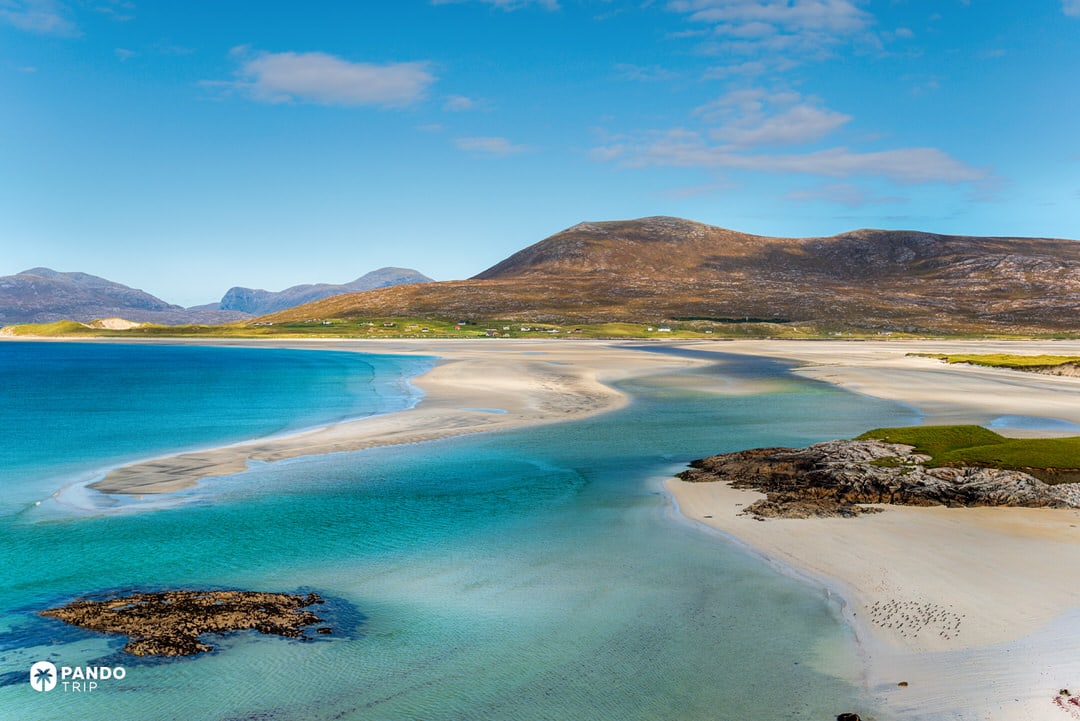
Stretching across the western edge of South Harris in the Outer Hebrides, Luskentyre Beach (Tràigh Losgaintir in Gaelic) presents a scene so improbable for Scotland that locals have developed a standard response to slack-jawed newcomers: “Caribbean… kind of.”
Luskentyre at a Glance
- Location: West coast of South Harris, Outer Hebrides
- Best time: June-August, 2-3 hours either side of low tide
- Getting there: Ferry to Harris via Skye or Ullapool, then 15-minute drive from Tarbert
- Parking: Two small car parks (free with donation box), arrive before 9am in summer
- Water temperature: Max 14°C/57°F in summer (wetsuit recommended)
- Must-see: White ponies on the beach, turquoise waters at mid-tide
- Time needed: Half-day minimum, full day recommended
- Facilities: Seasonal snack hut, basic toilets, no showers
- Don’t miss: The view from Seilebost viewpoint
- Wild camping: Allowed on dunes (not in car park)
The “Caribbean of Scotland?”
Billy Connolly, never one to mince words, captured the Luskentyre experience perfectly: “You soon realise it’s not the Caribbean when that water touches your scrotum.”
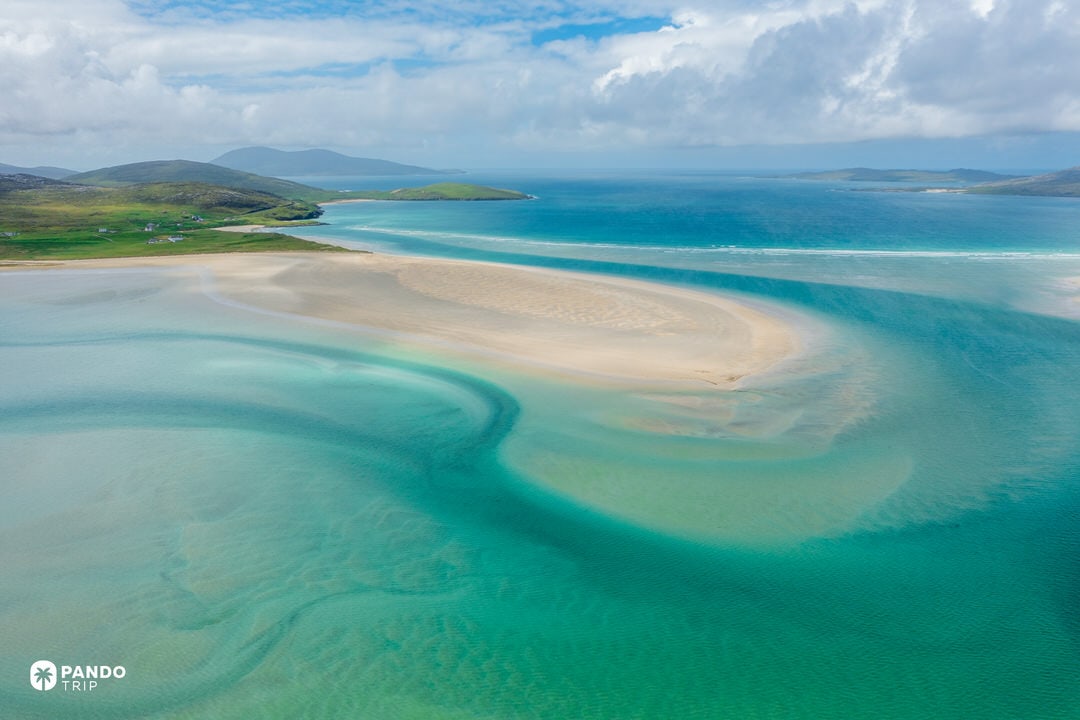
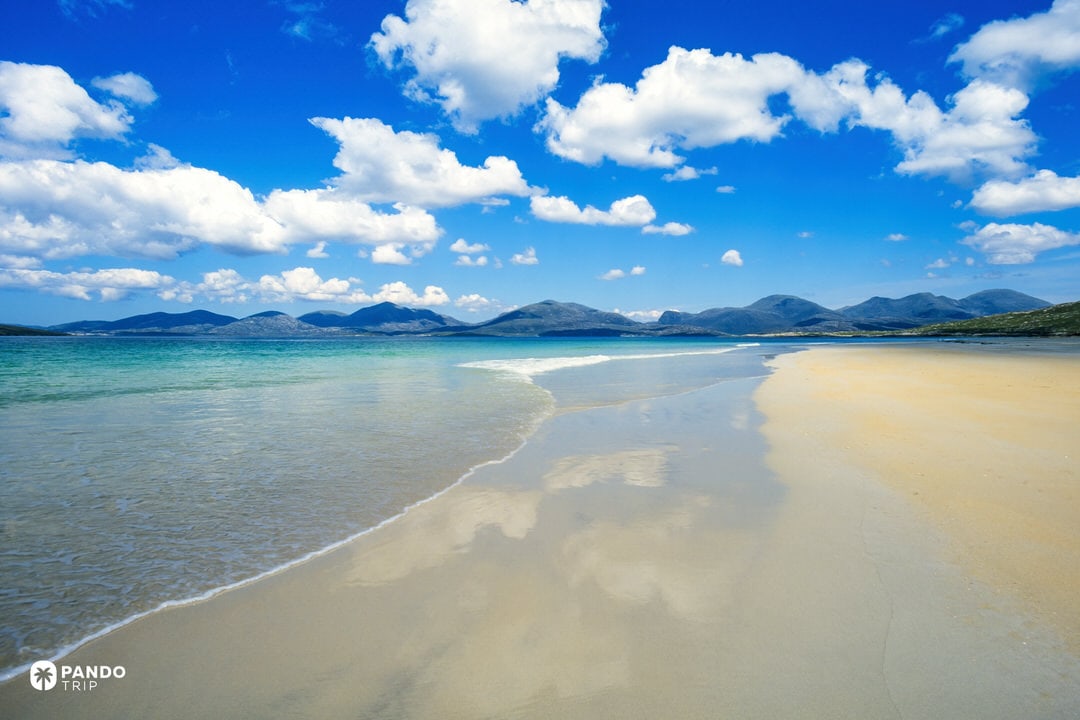
The visual parallels with tropical destinations are uncanny. That same palette of brilliant white sand meeting impossibly turquoise water that draws millions to the Maldives or Australia’s Whitsundays appears here, 57 degrees north of the equator. Travel writers have exhausted themselves trying to capture this cognitive dissonance – Scotland’s most photographed beach looks like it was airlifted from the tropics and dropped into the Hebrides.
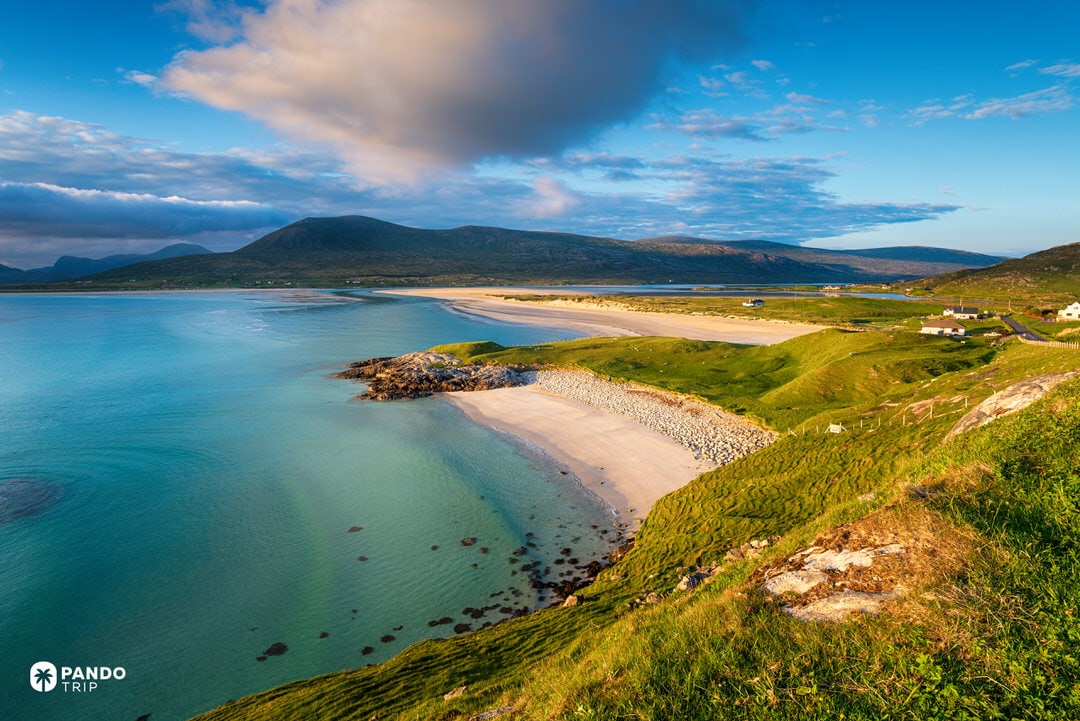
But the comparison ends at appearances. Where Caribbean waters hover around a balmy 26-29°C (79-84°F), Luskentyre’s Atlantic rarely climbs above 14°C (57°F) even in August. Palm trees? Try wind-bent marram grass and purple heather. Beach bars serving rum punches? More like a seasonal snack hut with honesty-box cakes.
This isn’t a lesser version of somewhere else – it’s something entirely its own. The backdrop of the North Harris hills, often capped with cloud, creates drama no tropical island can match. The quality of light here, filtered through fast-moving Atlantic weather systems, shifts from pewter to gold to electric blue within minutes.
What Makes the Luskentyre Sand So White?
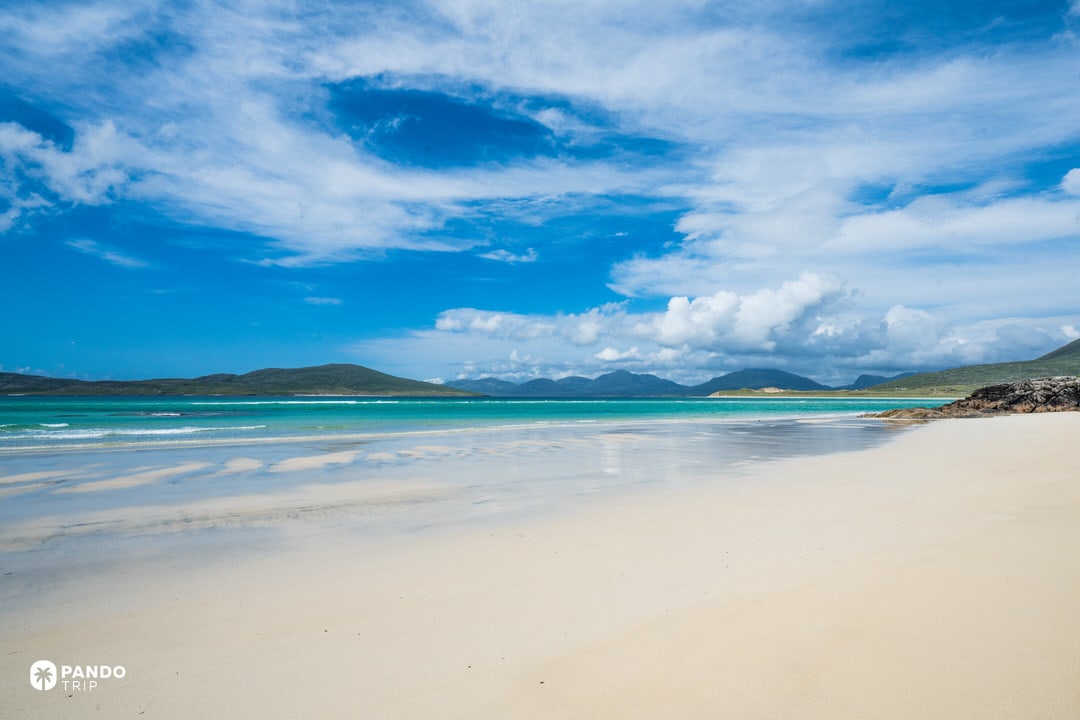
The secret lies underfoot. Unlike the mineral sands that darken most British beaches, Luskentyre’s sand is almost entirely organic – crushed shells and coral fragments from countless generations of marine life. Mussels, limpets, cockles, scallops, even ancient coral – all pulverized by Atlantic storms into powder-fine particles of calcium carbonate.
Pick up a handful and examine it closely. You’re holding the remains of creatures that lived when Vikings sailed these waters, when Bonnie Prince Charlie fled through the Hebrides, when the Highland Clearances emptied these islands. This shell sand reflects light with an intensity that mineral sand cannot match, creating that dazzling white that makes photographers weep with joy.
The science is straightforward: calcium carbonate reflects more light wavelengths than quartz or feldspar. But standing barefoot on this ancient seabed, watching the light bounce between sand and sky, science feels inadequate. This is alchemy.
The Turquoise Water Phenomenon
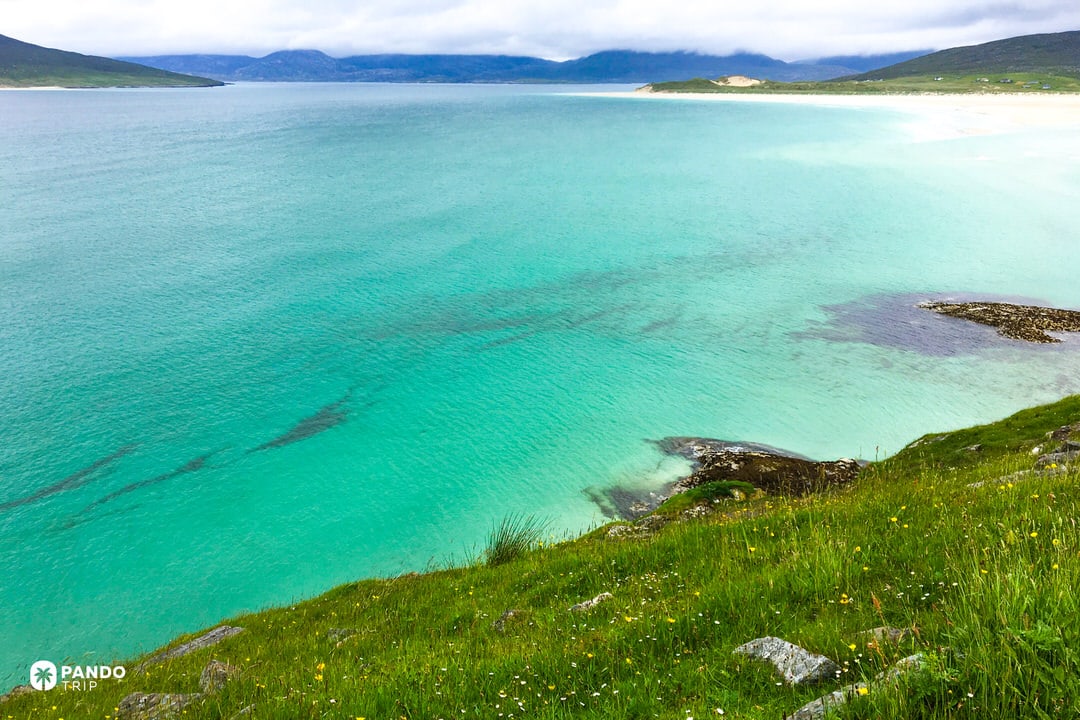
The famous aquamarine color that stops visitors mid-stride isn’t an illusion – it’s physics in action. When sunlight penetrates the shallow, crystal-clear Atlantic water, it hits that brilliant white sand below. The water scatters the light, but not evenly. Shorter blue and green wavelengths bounce back more readily than reds, creating those tropical turquoise hues.
This same phenomenon occurs wherever white sand meets clear, shallow water – from Greek islands to Caribbean cays. But at Luskentyre, the effect seems heightened. Perhaps it’s the purity of the Atlantic water, unmuddied by river sediment. Perhaps it’s the particular quality of Hebridean light.
The spectacle peaks at mid-to-low tide, when just enough water covers the vast sandbar to create sheets of luminous blue. Time your visit within three hours either side of low tide for maximum impact. At the lowest tides, Luskentyre merges with neighboring Seilebost Beach, creating an immense playground of sand and shallow channels.

Luskentyre Beach Location and Parking
Finding Luskentyre requires commitment. Turn west off the A859 (the main Lewis-Harris road) onto the signposted Losgaintir Road, about 10 minutes south of Tarbert. This single-track road, complete with passing places for oncoming traffic, threads through a landscape that hasn’t changed much since the Bronze Age.
Two parking areas await at road’s end, both free but requesting donations (around £10/night for overnight stays) via honesty boxes to maintain facilities.
Main Car Park (GPS: 57.891791, -6.951308; Google Maps)
- Holds about 20 vehicles
- Basic toilets (no showers except one token-operated)
- Drinking water tap
- Overnight parking permitted in designated area (maximum 6m length, 3 units only)
- No camping within car park boundaries – pitch tents on dunes instead
Secondary Parking (GPS: 57.884863, -6.946103; Google Maps)
- Day visitors only
- No overnight parking or camping
During peak season (June-August), both fill by 9am. Early birds catch more than worms here – they catch parking spaces and solitude.

How to Get to Luskentyre Beach
Reaching Luskentyre from mainland Scotland requires either ferry or flight, followed by an island drive. This isn’t somewhere you stumble upon – it’s a destination that demands planning.
By Ferry from Mainland Scotland
Caledonian MacBrayne (CalMac) operates the lifeline ferry services. Book well ahead, especially with vehicles – Saturday sailings can sell out within days of release.
Via Skye (Most Popular Route):
- Drive to Uig on Skye (cross from mainland via Skye Bridge)
- Ferry from Uig to Tarbert, Harris (1 hour 40 minutes)
- Drive 15 minutes south to Luskentyre
Via Ullapool:
- Drive north from Inverness through Dingwall to Ullapool
- Ferry to Stornoway, Lewis (2 hours 45 minutes)
- Drive south through Lewis to Harris (1 hour 15 minutes to Luskentyre)
Island Hopping:
- Ferry from Berneray (North Uist) to Leverburgh, Harris (1 hour)
- Drive north 30 minutes to Luskentyre
By Air from Mainland Scotland
Loganair flies to Stornoway from Edinburgh, Glasgow, and Inverness. From Stornoway Airport, it’s a scenic 50-mile (80km) drive south – about 1 hour 15 minutes through some of Scotland’s most dramatic landscapes.
Getting Around on Harris
By Car: Essential for flexibility. The A859 is the main artery, but expect single-track roads with passing places once you leave it.
By Bus: The W10/W10A service connects Stornoway, Tarbert, and Leverburgh. Ask drivers to stop at “Luskentyre Turn” – they’re used to the request. From there, it’s a 3-mile walk or hope for the occasional “hail and ride” service. Buses run Monday-Saturday, timed around ferry arrivals.
By Taxi: Available from Tarbert, though not cheap for the 10-mile journey.

Best Time to Visit Luskentyre
The most visually stunning experience with long daylight hours and the best chances to explore the vast sands comes in late spring and summer (June-August), with particular attention paid to low to mid-tide times.
Weather Reality Check
Forget Mediterranean expectations. Harris delivers authentic Hebridean weather – which means layers, waterproofs, and accepting that horizontal rain is a possibility even in August.
- Summer (June-August): Peak season brings 15-16°C (59-61°F) highs, though wind chill often makes it feel cooler. July is warmest and busiest.
- Spring/Autumn: Quieter, often spectacular, but pack for 10-12°C (50-54°F) and changeable conditions
- Winter: For the hardy only. Temperatures hover between 0-6°C (32-43°F) with frequent storms. But oh, the solitude…

The Tide Factor
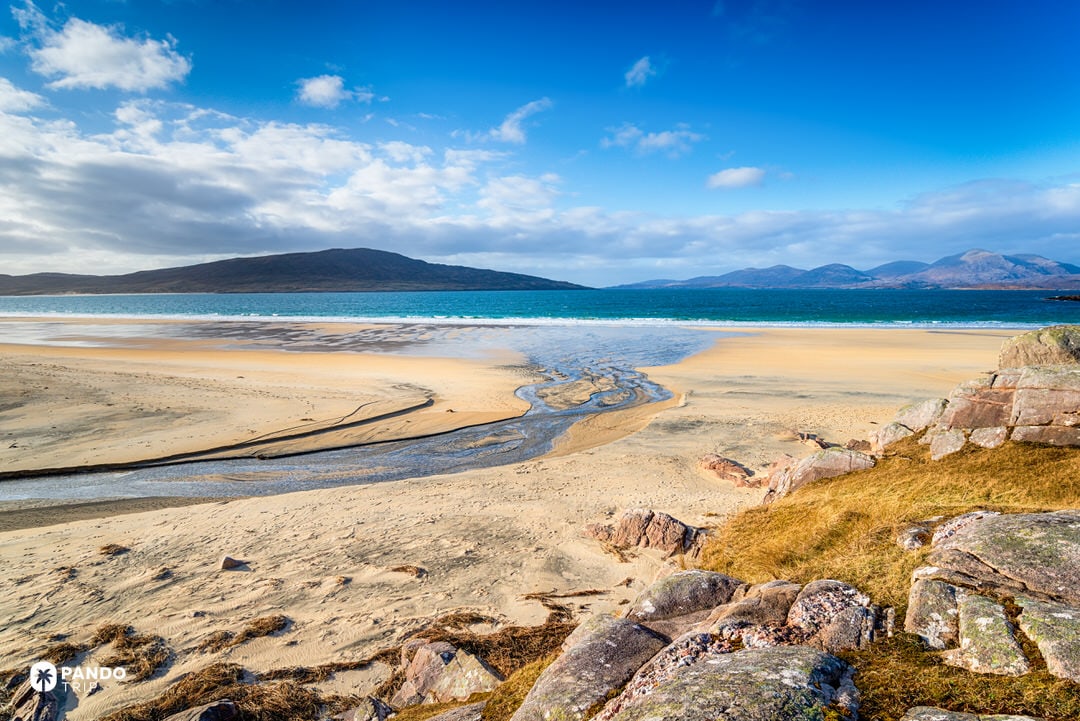
Britain’s extreme tidal ranges mean timing matters. Check tide tables religiously – the difference between high and low tide transforms the beach entirely. That Instagram-famous shot of turquoise channels threading between sandbars? That’s a mid-to-low tide exclusive.
Daylight Considerations
Summer’s gift to the Hebrides: near-endless daylight. Around the June solstice, sunrise creeps in at 4:30am, sunset lingers past 10pm. Photographers, pack spare batteries.
Winter reverses the equation dramatically – daylight squeezes into a mere 6.5 hours (roughly 9am-3:30pm in December).
Crowd Dynamics
Even peak summer never brings Benidorm-style crowds, but July and August see steady streams of campervans and rental cars. The car park tells the story – full by 9am in high season, yours alone in November. But here’s the crucial bit: these “crowds” are really just a parking issue. Once on the beach itself, Luskentyre’s vast scale means everyone disperses quickly. Walk 10 minutes beyond where others stop and you’ll have your own private stretch of sand.
For full solitude: visit October through May, or simply venture further along the beach. Luskentyre rewards the curious.
How Long Should I Spend There?
Quick Photo Stop: 1-3 hours suffices for the “been there, done that” crowd. Park, gasp, photograph, leave.
Proper Visit: 4-6 hours allows the beach to work its magic. Walk the dunes-to-sandbar loop, explore tidal pools, let the Atlantic rhythms slow your pulse.
Full Immersion: Make it a day. Pack lunch (no cafes on the beach), bring a windbreak, download a book. Many visitors arrive planning an hour and leave six hours later, slightly sunburned (yes, even through clouds) and thoroughly bewitched.
Things to Do at Luskentyre
Swimming (For the Brave)
Let’s be clear: this is Scotland, not Santorini. Water temperatures peak at 14°C (57°F) in August – what wetsuit manufacturers diplomatically call “challenging.”
No lifeguards patrol these waters. Atlantic currents and sudden weather changes demand respect. Most visitors settle for ankle-deep paddling, shrieking at the cold like Victorian bathers. Those determined to swim properly should pack a 5mm wetsuit and common sense in equal measure.
Beach Walks and Hikes
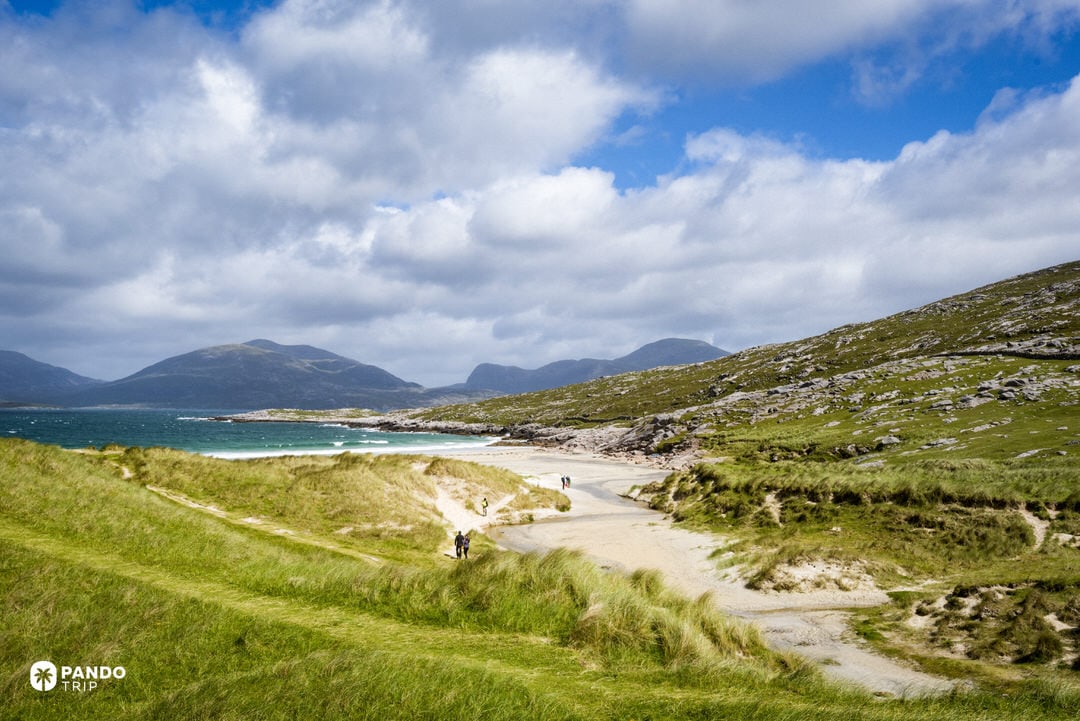
The Classic Dunes & Sandbar Loop This 3.5-4km (2.75-mile) circuit defines the Luskentyre experience. Starting from the car park, a sandy path threads through marram-grass dunes and across a small burn to reach Tràigh Rosamol, the beach’s northern extent. From here, turn south along sands that seem to stretch to infinity.
The dunes tower up to 10 meters high in places, their faces sculpted by Atlantic winds into flowing curves. In summer, orchids dot the machair (coastal grassland) behind them. The walk takes about an hour at a leisurely pace, though many spend longer, hypnotized by the play of light on water.
For Serious Hikers:
- Beinn Dhubh Circuit: A 400m ascent rewards with aerial views of both Luskentyre and Seilebost beaches
- Ben Luskentyre (Roineabhal): At 293m, modest by Highland standards but offering 360-degree panoramas
- Taransay Viewpoint: Just past Horgabost village, this roadside pullout frames what many call “Scotland’s greatest view”
Wildlife Watching
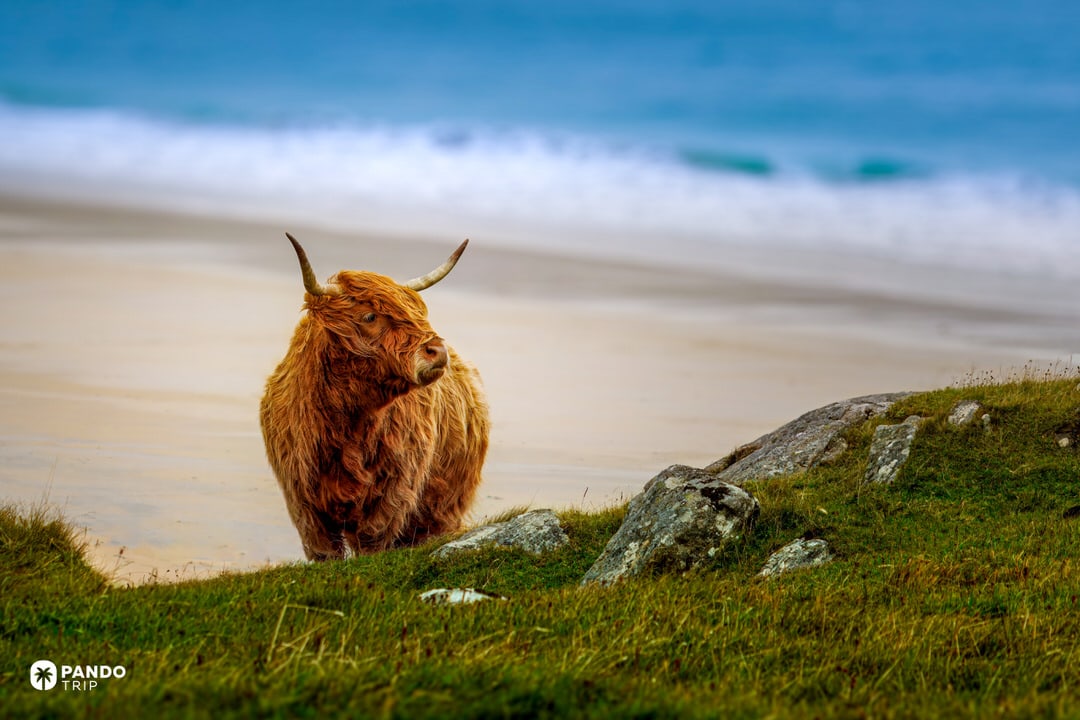
The Outer Hebrides support wildlife densities that would shame many nature reserves. Golden Eagles and White-tailed Eagles patrol the skies – Harris hosts one of Europe’s highest concentrations of breeding pairs. The North Harris Eagle Observatory, a purpose-built hide 7 miles northwest of Tarbert, offers near-guaranteed sightings from spring through autumn.
Otters work the shoreline at dawn and dusk, their distinctive rolling gait unmistakable. Grey and common seals bask on exposed rocks at low tide. Offshore, scan for dorsal fins – bottlenose dolphins are regulars, while minke whales and harbour porpoises make occasional appearances.
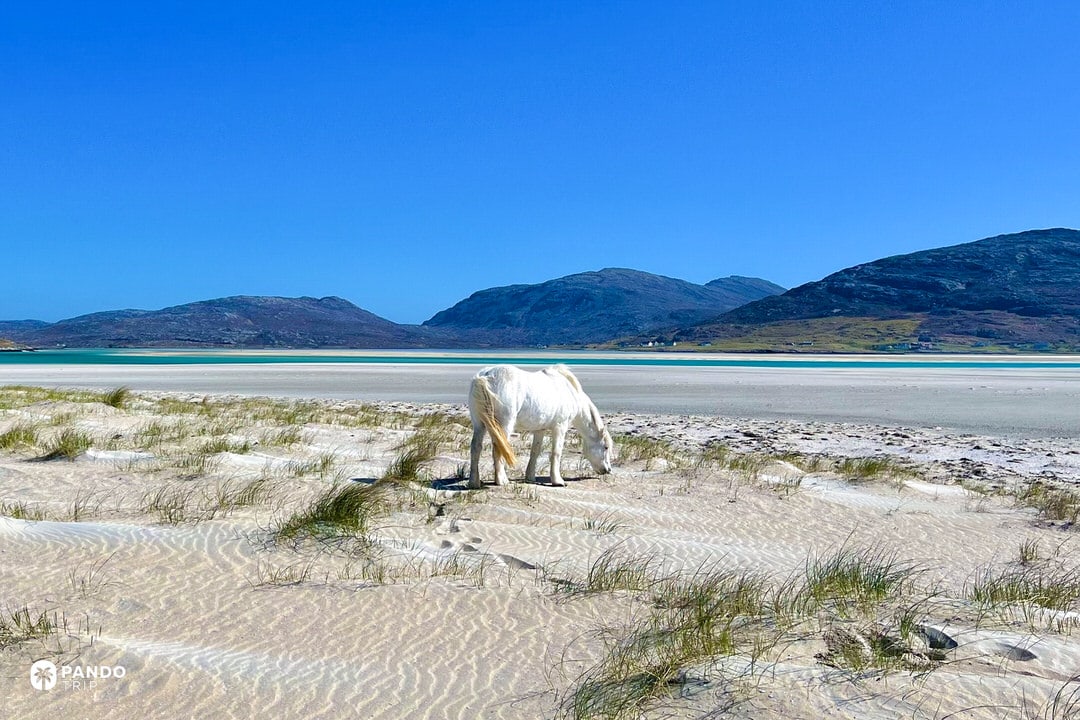
The famous beach ponies – Toby and Isla – deserve special mention. These white Highland ponies roam freely across the dunes and sands, owned by the local MacKay family but answering to no schedule. They’re gentle and photogenic but remain working animals, not tourist attractions. Admire, photograph, but don’t attempt to ride.
Photography at Luskentyre
Luskentyre has launched more photography careers than any Scottish beach has a right to. Something about the quality of light here – filtered through fast-moving Atlantic weather systems – creates conditions that make even phone snapshots look professional. The interplay of white sand, turquoise water, and those brooding North Harris mountains offers compositions that work in any weather.
The beach reveals different moods throughout the day. Morning light turns the sands pearl-pink, midday sun intensifies those Caribbean blues, while evening golden hour transforms the entire scene into something from a fantasy novel. Even grey days have their magic – storm light can create more drama than any sunset.

Prime Viewpoints:
Seilebost Viewpoint (GPS: 57.867471, -6.965508; Google Maps)
Pull off the A859 just past Seilebost School for the classic elevated panorama. This is the shot that launched a thousand screensavers – Luskentyre’s sands sweeping north toward Taransay island, the North Harris hills providing moody backdrop.
The Cemetery Angle (GPS: 57.884863, -6.946103; Google Maps)
The old burial ground along Losgaintir Road offers foreground interest – ancient headstones against turquoise water creates compelling compositional contrast.
Tide Timing for Photographers:
- Low Tide: Maximum exposed sand, intricate channel patterns, reflection opportunities
- Mid Tide: Best color saturation in the water, especially 2-3 hours either side of low
- High Tide: Waves crashing on dunes, dramatic but limiting beach access
Drone Photography
UK regulations apply. Register drones over 250g with the CAA. Recreational flying needs no permit, but commercial work does. Respect privacy – many visitors come here specifically to escape technology.

Facilities & Amenities
Food & Drink
Luskentyre keeps it simple. The seasonal Beach Hut near the car park sells hot drinks, ice cream, and basic snacks when open (check current hours – they’re weather-dependent).
The Cake Shed – a Harris institution – sits five minutes up the road. This unmanned wooden shed operates on trust: homemade cakes and treats with an honesty box for payment. Cash only, exact change appreciated. It’s charmingly Hebridean.
For proper meals, drive to Tarbert (10 miles north):
- Pierhouse Restaurant at Hotel Hebrides: Contemporary Scottish cuisine with harbor views
- The Deli: Excellent coffee and local produce
Practical Considerations
Mobile Signal: Essentially non-existent. Download offline maps before arriving. That important call can wait.
Dogs: Welcome year-round, but keep them under control during bird nesting season (April-July). The vastness means even energetic dogs can run themselves tired.
Toilets: Basic facilities at the main car park. No showers except one coin-operated unit that may or may not work.

Where to Stay Near Luskentyre
Wild Camping
Scotland’s progressive access laws permit wild camping on unenclosed land. Pitch your tent among the dunes (not in the car park) for up to three nights. Follow the code: leave no trace, bury waste, no fires. The morning view from your tent flap – Luskentyre at dawn – justifies any midnight gale.
Campsites
- Seilebost Campsite: Basic but beautifully located on Luskentyre’s southern edge. Run by Harris Rangers.
- Horgabost Campsite: More facilities including showers and a shop. Family-friendly with easier beach access.
Hotels
In Tarbert (10 miles):
- Hotel Hebrides: Boutique 4-star with excellent restaurant and whisky selection
- The Harris Hotel: Traditional Scottish hospitality in renovated lodges
Closer to the Beach:
- Scarista House: The nearest proper hotel, about 5 miles south. This 3-star establishment sits minutes from its own spectacular beach.
Guesthouses and Self-Catering
- Tigh mo Sheanair B&B: Closest B&B to Luskentyre, from £45 per person. Traditional Highland hospitality.
- Luskentyre Beach Holidays: Offers both B&B and self-catering options. Their “Atlantic Cottage” sits right on the dunes – as close as you can legally sleep to the beach.
Other Beaches Nearby
Luskentyre may grab the headlines, but Harris packs its coastline with white-sand wonders:
Seilebost Beach: Immediately north, merging with Luskentyre at low tide. More intimate, equally spectacular, with Taransay island floating offshore like a Scottish Bali Hai.
Horgabost Beach: Family favorite with better facilities and slightly more shelter. The machair blooms spectacularly in summer – orchids and wildflowers creating natural gardens.
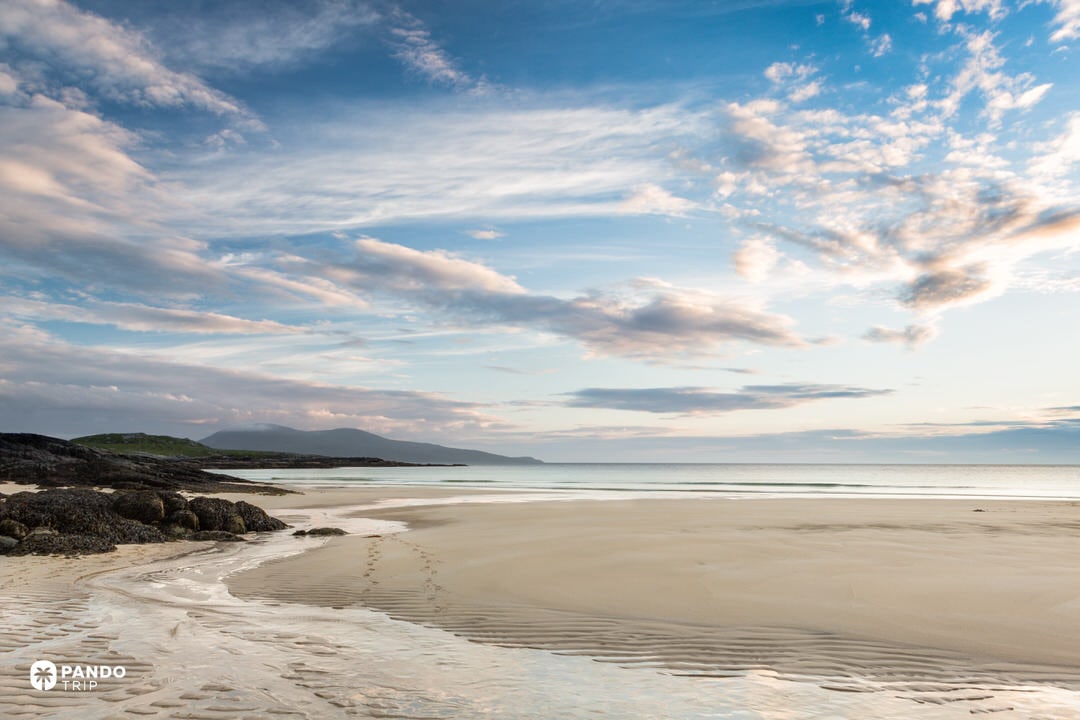
Scarista Beach: Three miles of sand with resident seals and reliable surf. The adjacent Isle of Harris Golf Club must rank among the world’s most scenic courses.
Nisabost: Wilder, more remote, with golden rather than white sand. Fewer visitors, more seaweed, but authentic Hebridean atmosphere.
Harris Attractions Beyond Luskentyre
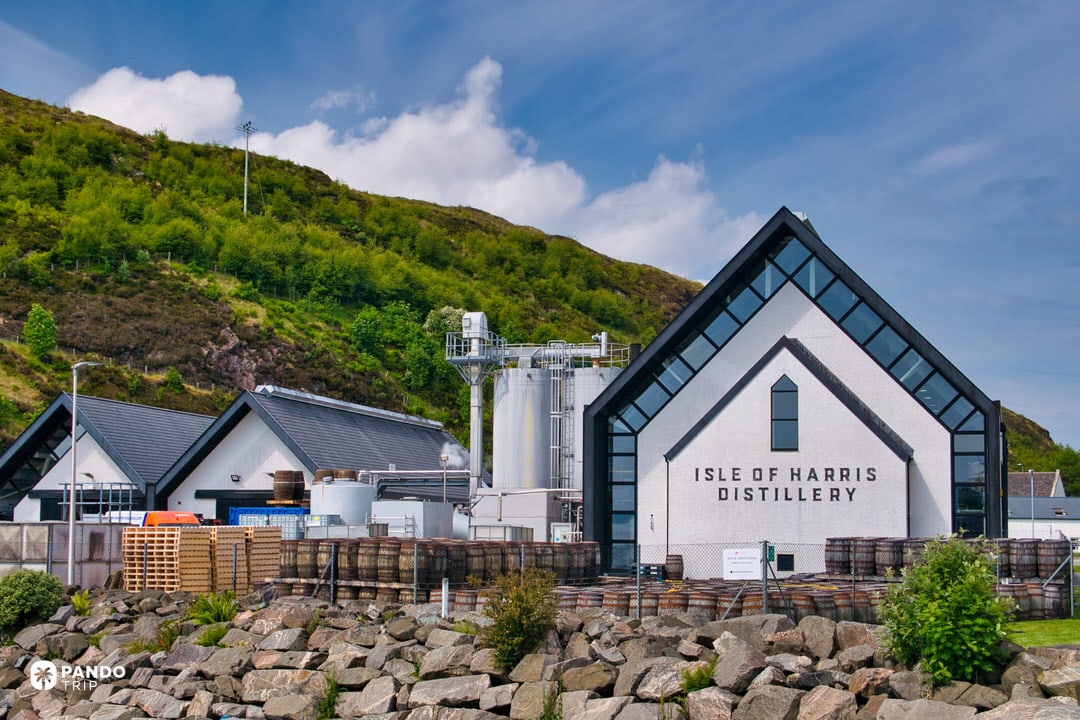
Harris Distillery (Tarbert): This community-centered operation crafts gin that tastes of the Hebrides – sugar kelp, juniper, and dreams. Their whisky matures patiently in seaside warehouses. Tours run Monday-Thursday (£20-30), though the real pleasure is in their canteen, where locals gather over coffee and gossip.
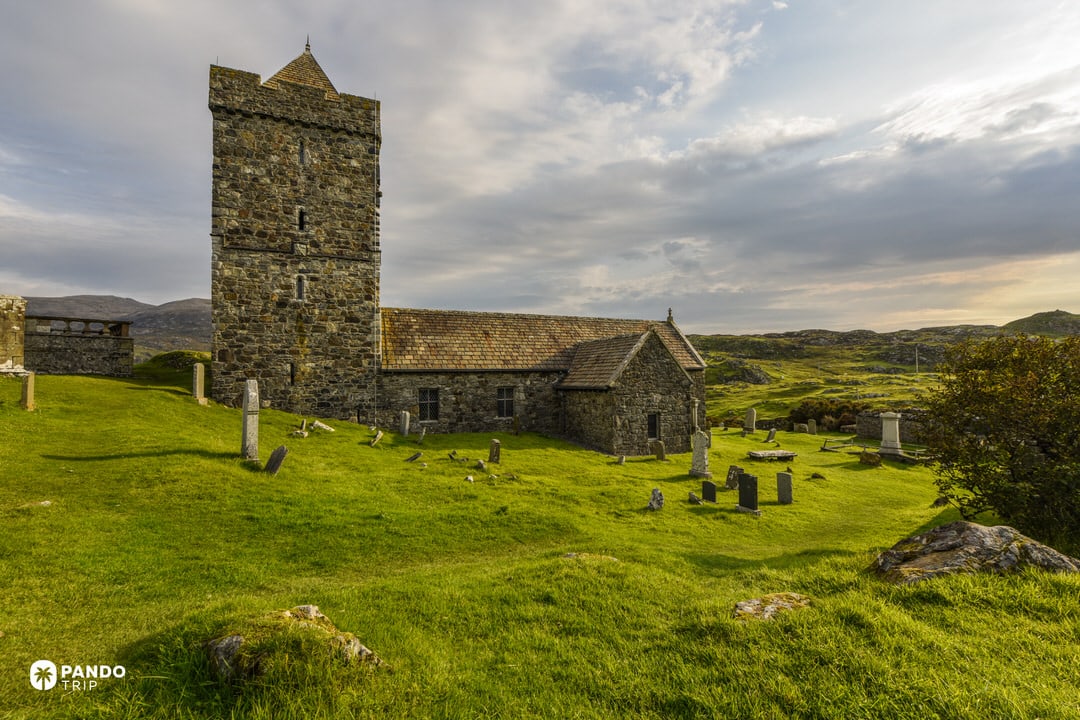
St. Clement’s Church (Rodel): Dating from 1520, this medieval masterwork stands at Harris’s southern tip. The tomb of Alasdair Crotach MacLeod, carved when Shakespeare was a boy, remains the finest medieval sculpture in the Western Isles.

The Golden Road: This serpentine single-track threads along South Harris’s eastern coast, through a moonscape of exposed rock and tiny crofting communities. Named for its astronomical construction cost (locals joke it was “paved with gold”), the 20-mile route demands patience – passing places are frequent, progress slow, views extraordinary.
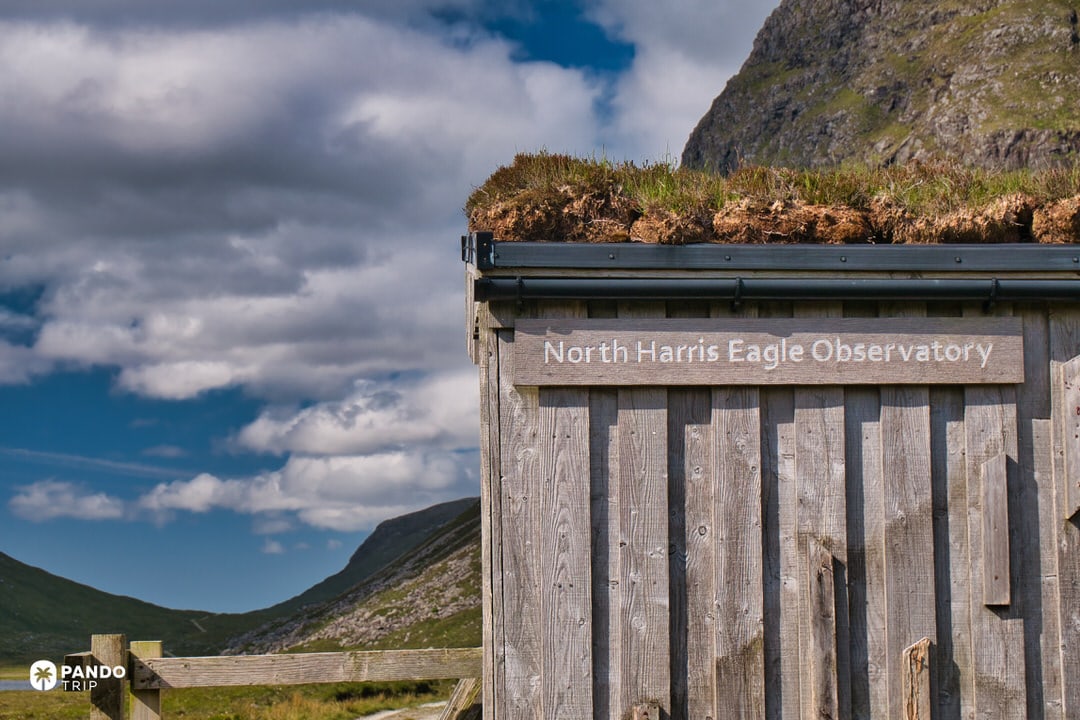
North Harris Eagle Observatory: A timber hide overlooking Glen Meavaig offers Scotland’s most reliable eagle watching. Both golden and white-tailed eagles patrol these skies. Free access, open year-round, best April-August.
Luskentyre Beach delivers something rarer than beauty – it delivers wonder. In an age of overtourism and Instagram homogeneity, this Hebridean shore remains stubbornly, gloriously itself. Yes, the water’s cold. Yes, it might rain. No, there’s no beach bar.
But stand on these sands as Atlantic light transforms the world into shades of blue you didn’t know existed, and none of that matters. Some places remind us why we travel. Luskentyre reminds us why we’re alive.