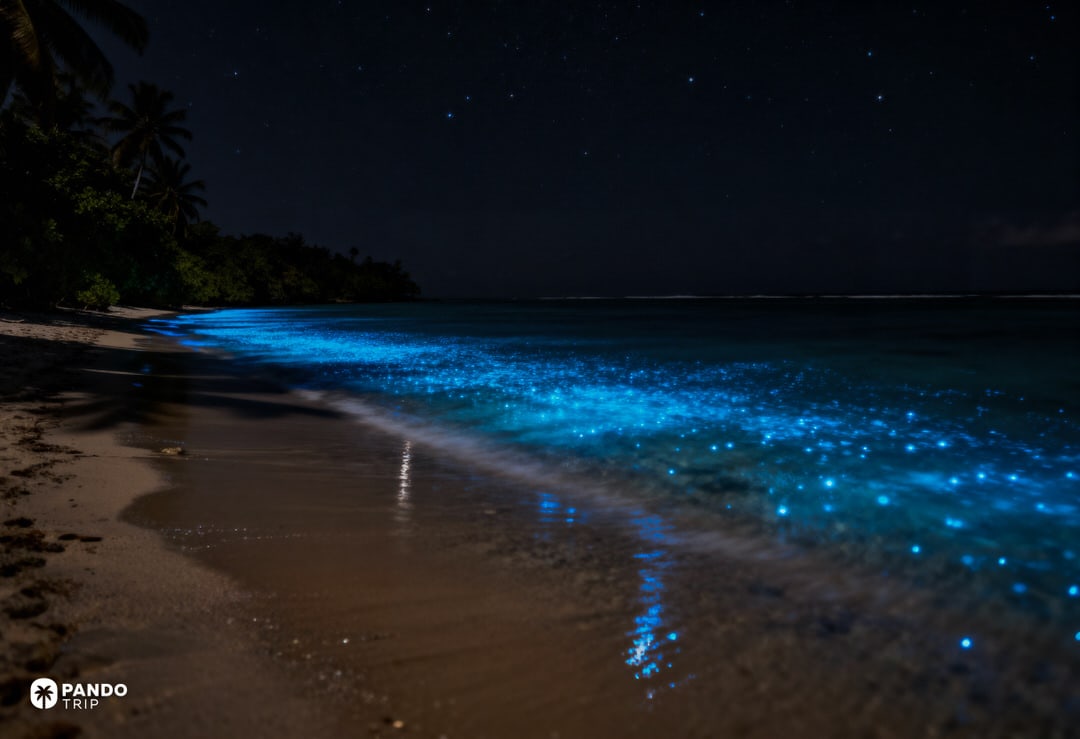
In 2013, photos of a glowing beach appeared online.
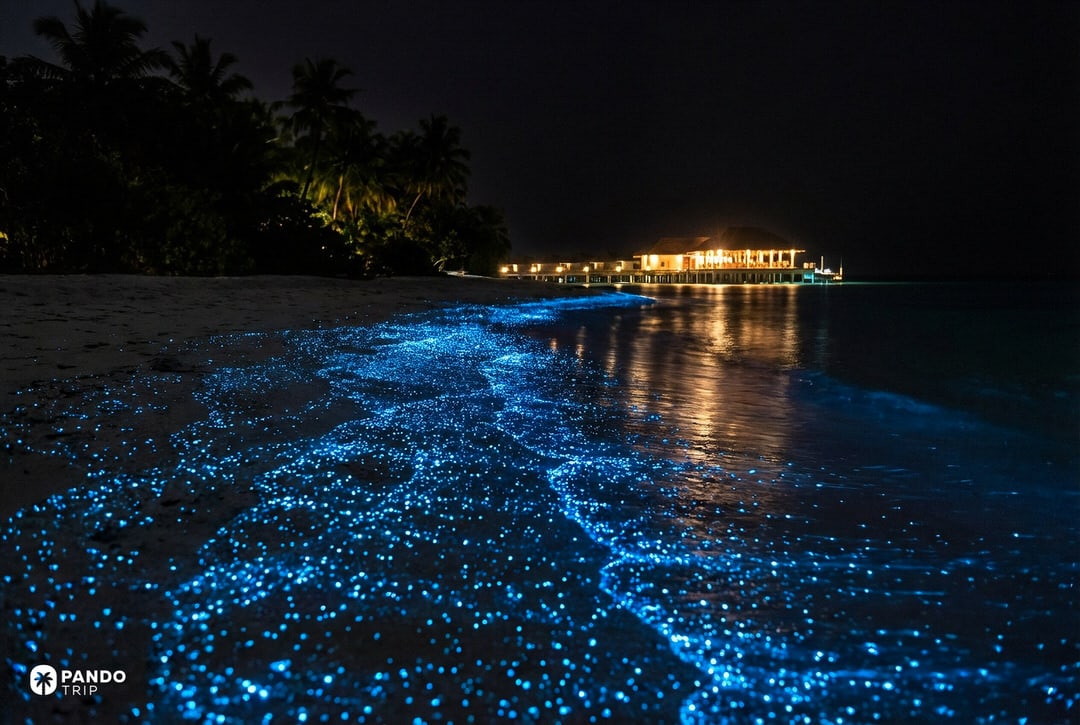
Blue lights scattered across wet sand like fallen stars. Waves rolled in, each one illuminating the shoreline in electric blue. The images looked photoshopped. They weren’t.
Someone captioned the photos with a location: Vaadhoo, Maldives. Or maybe Vadoo. The spelling varied. Within months, travel blogs copied the photos. Pinterest boards multiplied. TripAdvisor threads filled with questions about how to get there. “Sea of Stars” became shorthand for this specific beach that glowed at night.
A decade later, people still search for it.
They book hotels near Vaadhoo. They ask resort staff on other islands how to arrange day trips. They assume there’s a particular stretch of beach where this happens reliably, like a natural landmark you can visit during scheduled hours.
The problem is simple: bioluminescent plankton doesn’t work that way.
The Vaadhoo Confusion
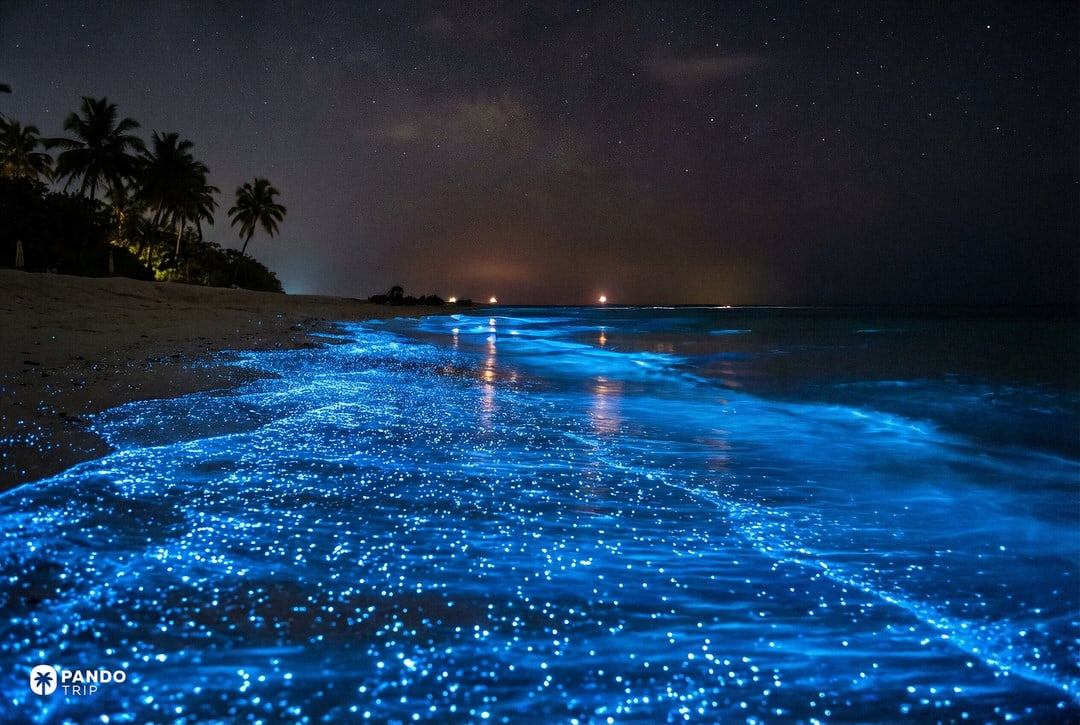
Vaadhoo is a real island. Population 452. Located in Raa Atoll in the northern Maldives. The original viral photos were traced back to a distinctive coconut-fringed beach there.
But some sources cited “Vadoo” instead, which turned out to be Adaaran Prestige Vadoo, a private resort island in South Male’ Atoll, roughly 120 miles south. The glowing plankton never showed up there in any significant amounts, though small traces were photographed years ago.
Most likely explanation: someone misspelled Vaadhoo. The internet didn’t care. Both names circulated. Both became “the place” to see glowing water in the Maldives.
The viral photos didn’t lie. That beach did glow that night. But treating Vaadhoo as the Sea of Stars location is like trying to book accommodation at the Northern Lights.
You Can’t Book a Hotel at a Chemical Reaction
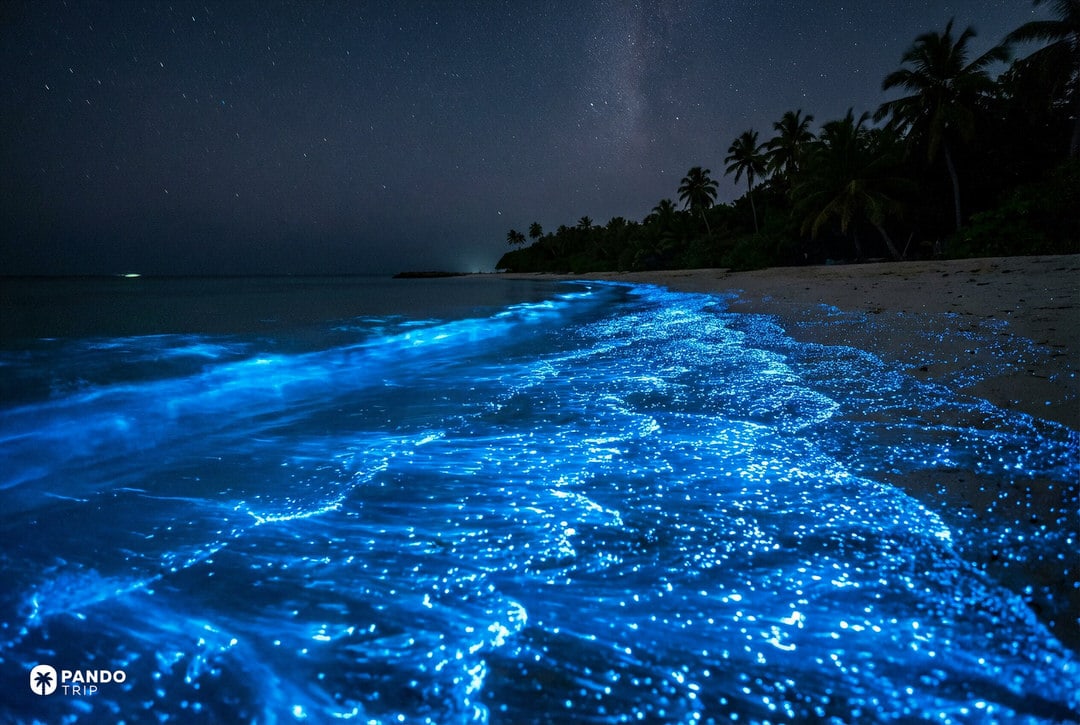
Here’s what everyone misunderstood: you’re not looking for a beach. You’re looking for a phenomenon.
Bioluminescent plankton is the tropical equivalent of aurora borealis. Both involve natural light displays. Both appear unpredictably. Both can happen across vast geographic areas. Neither has a permanent address.
The Northern Lights don’t “live” in Iceland – they appear there when solar activity, atmospheric conditions, and darkness align. Same principle applies to glowing plankton in the Maldives. It’s not a destination. It’s a moment.
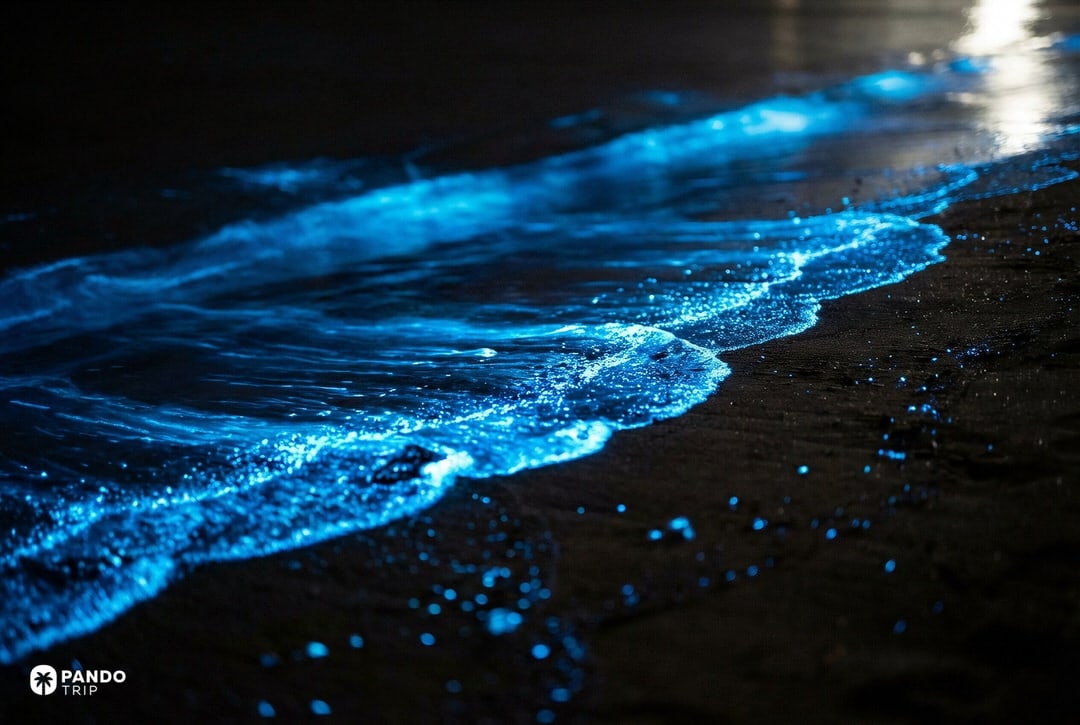
The glow comes from microscopic organisms drifting in ocean currents. Plankton is just the catch-all term for tiny sea life that can’t swim against the flow – they go wherever the water takes them. Some species produce light through a chemical reaction when they’re disturbed. A wave crashes. A fish swims past. A person moves through the water. The disturbance triggers the glow.
The key word is “some.” Not all plankton lights up. The ones that do only emit light when something bothers them. And they’re constantly moving with currents.
This happens anywhere in the Maldives. Also in the Caribbean. The Mediterranean. The North Sea. Warm tropical water helps certain species thrive, but geography doesn’t control where the plankton goes on any particular night. Ocean currents do.
The internet wanted a pin on a map. Nature doesn’t work that way.
What Increases Your Chances to See the Sea of Stars
Seeing bioluminescent plankton in the Maldives is entirely possible. Timing matters more than location.
The best window runs from April through October during the Southwest Monsoon. Currents during this period push plankton from the southwest toward the northeast, bringing larger concentrations through the atolls. Outside this season, you might still see small amounts, but the monsoon months offer better odds.
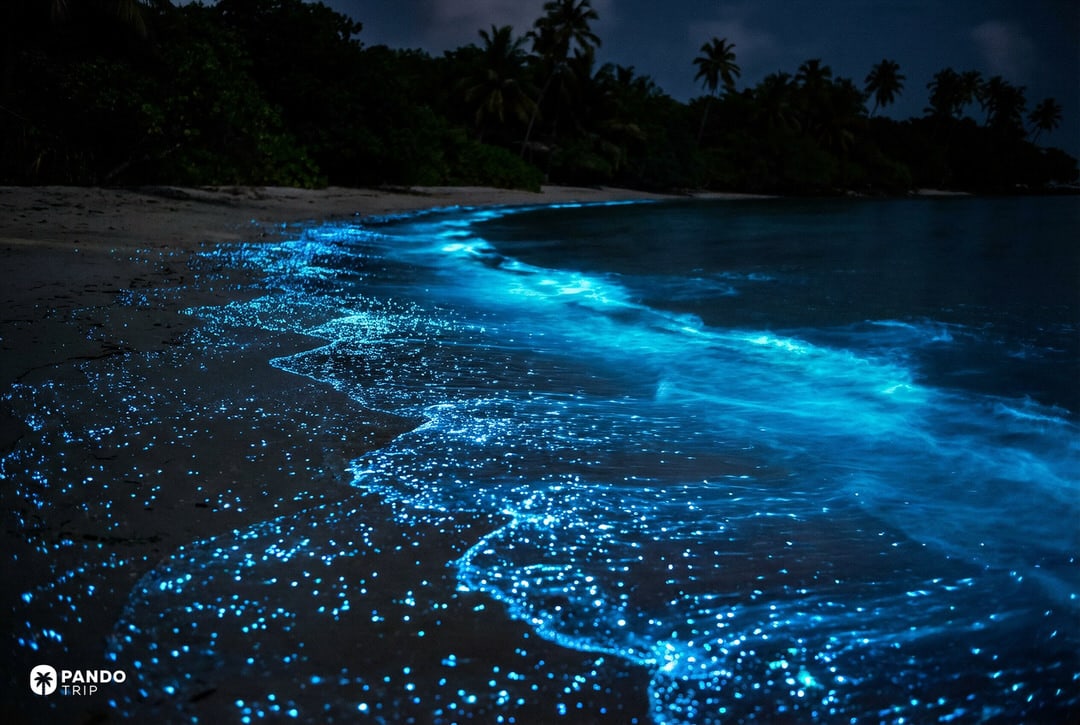
Get in the water. You can spot bioluminescence from the beach if you’re lucky – a wave crashes, the sand glows briefly, you feel momentarily vindicated for staying up past midnight. But the real show happens underwater when you’re surrounded by it.
The motion disturbs the plankton, which triggers the light emission. If there’s enough of it in the water around you, you’ll be floating in a cloud of tiny blue-white sparks.
Book a night diving trip at a local diving center. Night dives are not only about finding bioluminescent plankton, but also other aquatic wonders such as sleeping fish, basket stars, and anemones. As with northern lights tours, there is no 100% guarantee that you will see glowing beaches, but experienced guides know the seasonal patterns and which areas tend to have stronger currents.
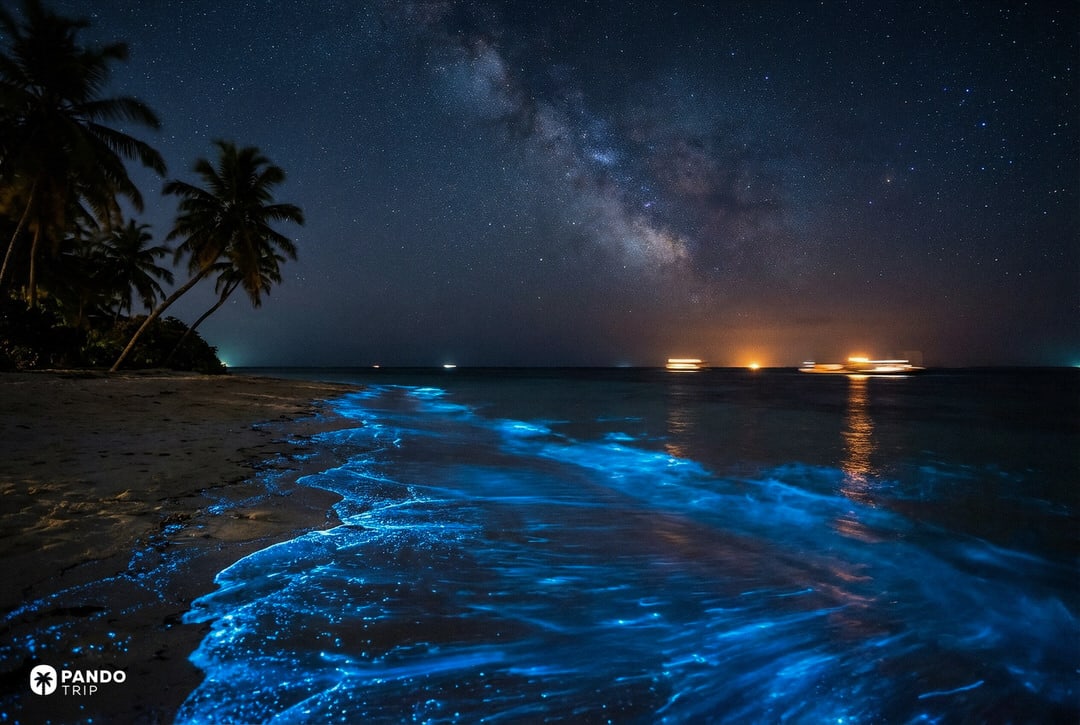
Light pollution matters. This is where island choice becomes relevant – not because certain islands “have” bioluminescence, but because darker beaches make it easier to spot when it does appear.
Most Maldivian resort islands build directly on the shoreline. Beach villas. Overwater restaurants. Infinity pools with underwater lighting. All of this creates artificial light that washes out the beach at night. The bioluminescence might be there. You just can’t see it against the competing light sources.
Local inhabited islands typically have less development right on the shore. Maldivians don’t traditionally build beach-front – they leave the coastline relatively dark. Islands like Fulidhoo in Vaavu Atoll, or Dhangethi and Dhigurah in South Ari Atoll, have particularly dark beaches. Dhigurah has a two-mile undeveloped stretch.
This doesn’t mean the plankton prefers these islands. It means if the plankton happens to be drifting past that night, you’ll actually be able to see it glow.
The Irony of Vaadhoo
In 2024 (a full decade after those viral photos) Vaadhoo Island opened its first guesthouse, Vaadhoo View Inn. Previously, tourists searching for the “Sea of Stars” could only stay at nearby resort islands and boat over to Vaadhoo for visits. Now they can stay on the island itself.
The myth created real tourism. Money that goes into the guesthouse, into local cafes and grocery shops, into boat operators offering night trips. The phenomenon doesn’t belong to Vaadhoo any more than it belongs to any other island. But the viral photos accidentally built an economy there anyway.
Vaadhoo does have one genuine advantage: it’s a small island with minimal beachfront development, which means dark shores. If bioluminescent plankton drifts past during your visit, you’ll have good conditions to see it.
Just don’t expect it to be there because you showed up. That’s not how chemical reactions work. Even when they look like magic.