
In March 2012, 200 people sat on recycled wood rafts in Thailand’s Phang Nga Bay, watching films projected onto a screen wedged between limestone cliffs. German architect Ole Scheeren had created Archipelago Cinema – a floating auditorium that existed for just five nights but redefined what outdoor cinema could be. That temporary experiment in the Nai Pi Lae lagoon sparked a movement that continues today in different forms across Thailand’s resort islands.
The Pioneer: Archipelago Cinema (2012)
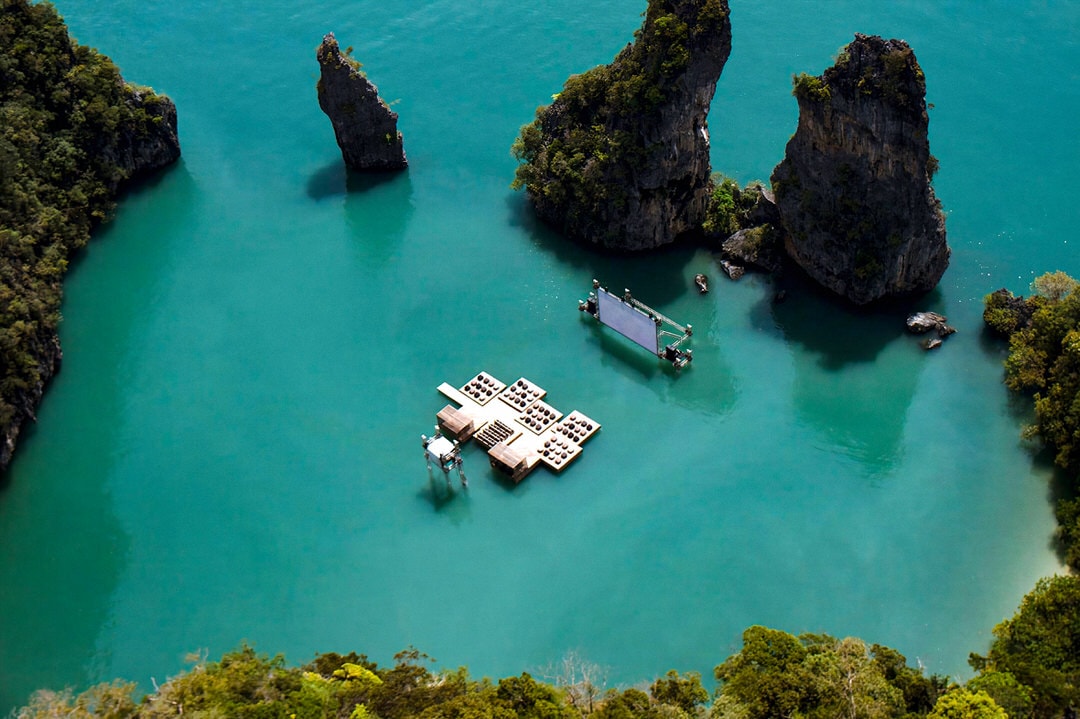
For the inaugural Film on the Rocks Yao Noi festival (March 9-13, 2012), Scheeren transformed the Nai Pi Lae lagoon off Kudu Island into an outdoor cinema unlike any before. The structure consisted of modular rafts assembled from recycled wood and foam blocks, tied together with rubber straps – techniques borrowed directly from local lobster farmers who built the rafts alongside Scheeren’s team.
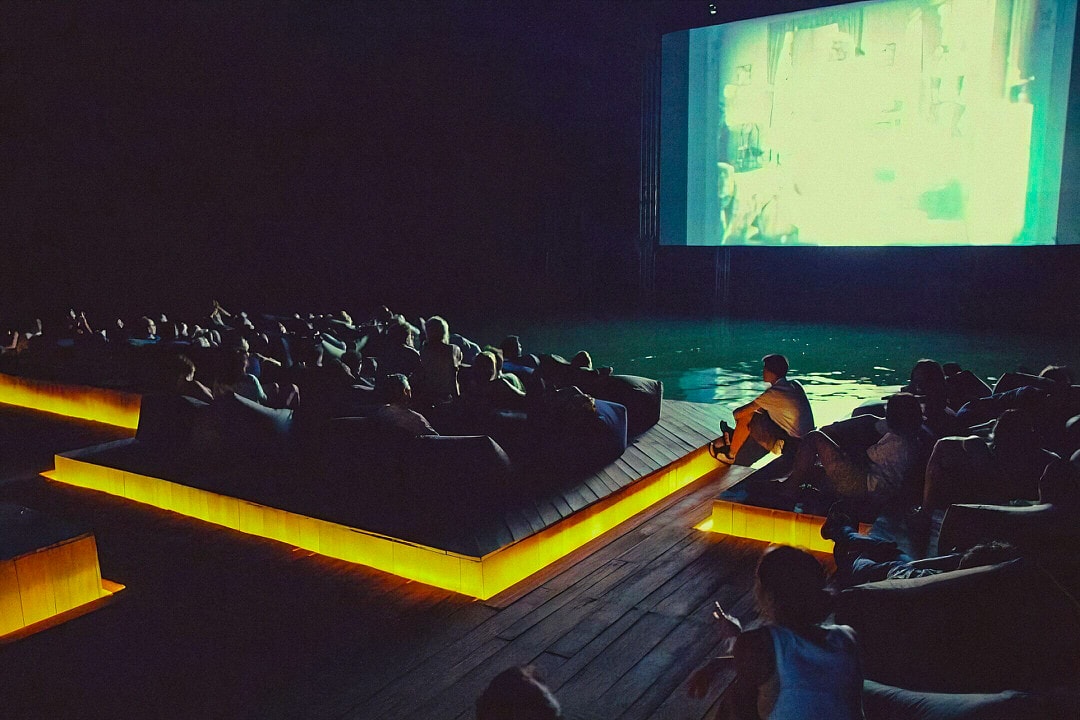
The screen stood between two towering limestone formations, while the audience sat on the floating platform, ferried by boat to their seats. Films curated by Tilda Swinton and Apichatpong Weerasethakul played under open skies, natural sounds of water and wind becoming part of the experience. The entire structure measured roughly 20 by 30 meters, accommodating about 200 viewers per screening.
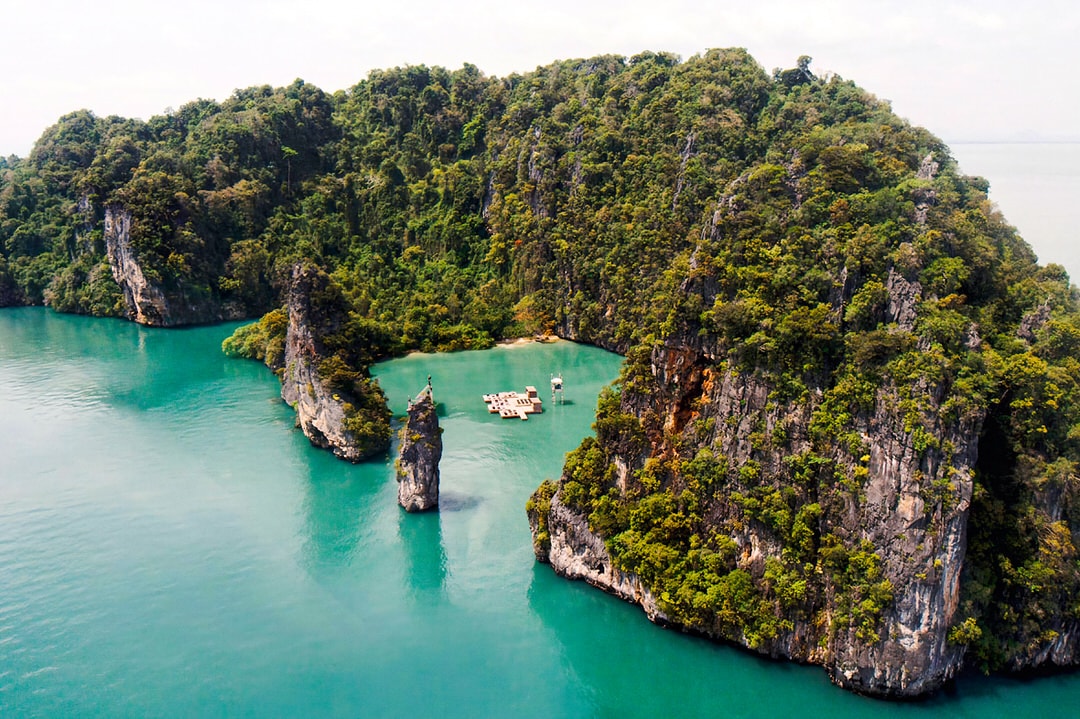
What set Archipelago Cinema apart was its community integration. Local fishermen didn’t just assist with construction – they inherited the structure after the festival. The modular rafts became a playground, performance stage, and gathering space for the village, ensuring the project’s benefits lasted beyond its five-night run. Scheeren called it “a congregation of rafts as an auditorium,” emphasizing architecture’s potential for temporary, flexible, community-oriented design.
The project appeared later at the Venice Architecture Biennale and influenced architects worldwide to reconsider how public spaces could engage with natural environments. But despite global acclaim, Archipelago Cinema was never recreated in its original floating form.
Water Cinema Experiences in Thailand in 2025
While no resort has replicated Scheeren’s floating auditorium, two Thai properties have adapted the water cinema concept into sustainable, regular programming that captures the original’s spirit of watching films surrounded by water.
Cinema Paradiso, Soneva Kiri, Koh Kood
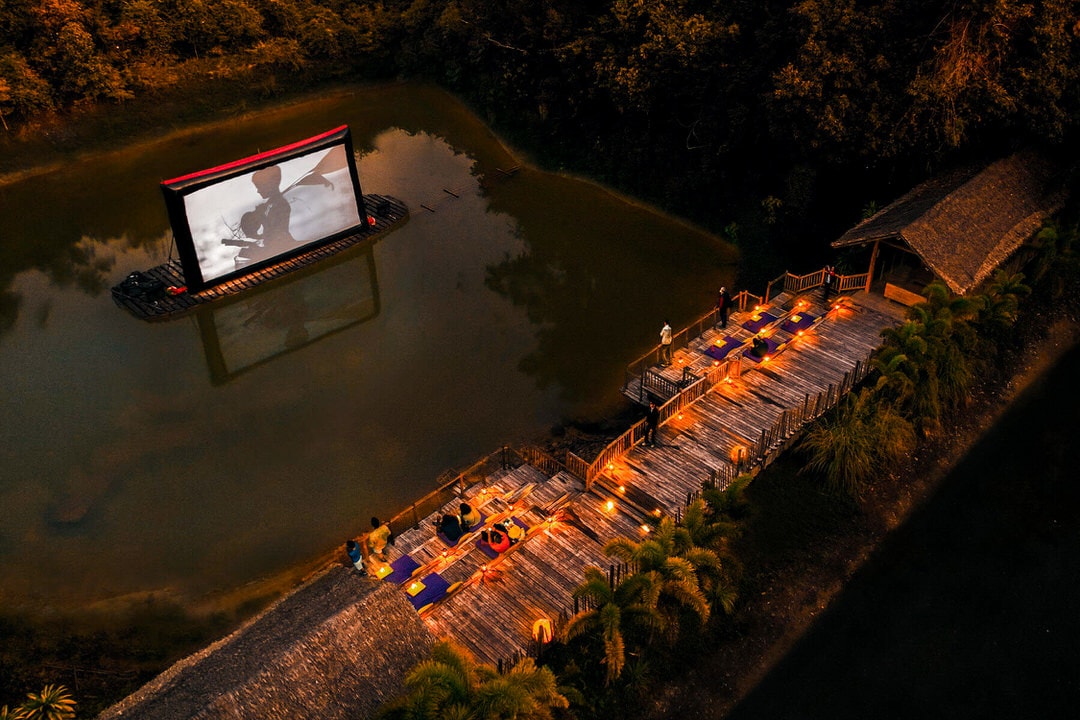
On remote Koh Kood island, Soneva Kiri transformed a jungle lagoon into Cinema Paradiso, operating every Monday, Thursday, and Saturday. Rather than floating the audience, they positioned viewers on a stilted deck overlooking the water, with the screen mounted across the lagoon. The evolution from floating to over-water solved practical challenges while maintaining the essential experience.
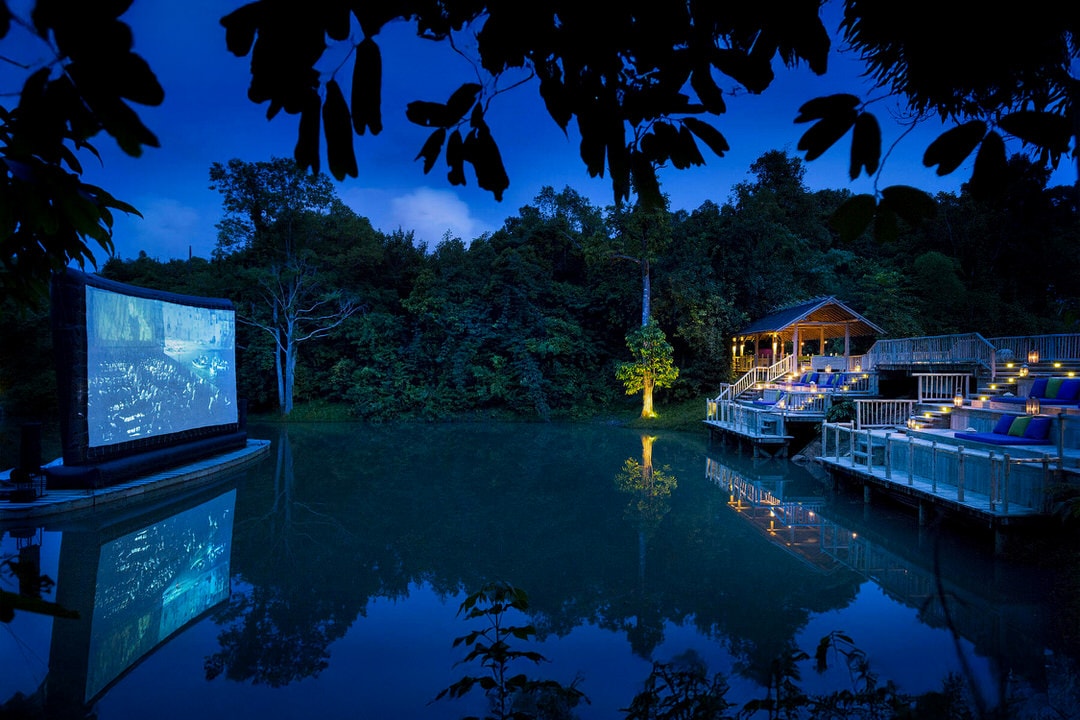
Guests recline on cushioned daybeds, using wireless headphones that preserve the rainforest soundtrack – cicadas, frogs, and rustling palms remain audible between dialogue. The screen measures six meters across, visible from every angle of the curved deck. Classic films play most nights, though private groups can arrange custom screenings. The lily-covered lagoon reflects the screen’s glow, creating the illusion that films float on the water’s surface.
Dive-In Movie Nights, Anantara Mai Khao, Phuket
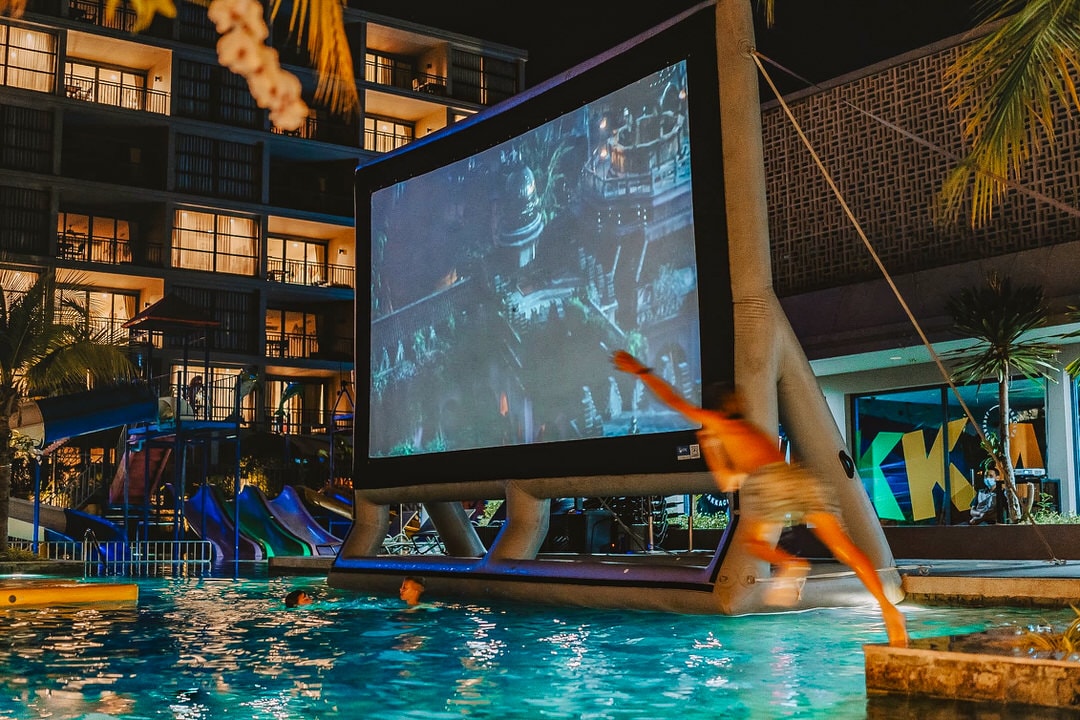
Anantara’s Mai Khao property took a different approach, bringing the cinema into their 47-meter pool. Every Tuesday, Friday, and Saturday at 7:00 PM, a six-meter inflatable screen rises at one end while guests watch from floating beanbags or the swim-up bar. Sound transmits via FM frequency to waterproof speakers around the pool edge.
The format suits families particularly well – children receive complimentary popcorn and mocktails, while parents can order dinner from the poolside menu. The Andaman sunset provides natural pre-show entertainment, the sky shifting from gold to pink to purple behind the screen. Unlike Soneva Kiri’s curated classics, Anantara programs recent releases and animated features, maintaining a relaxed, accessible atmosphere.
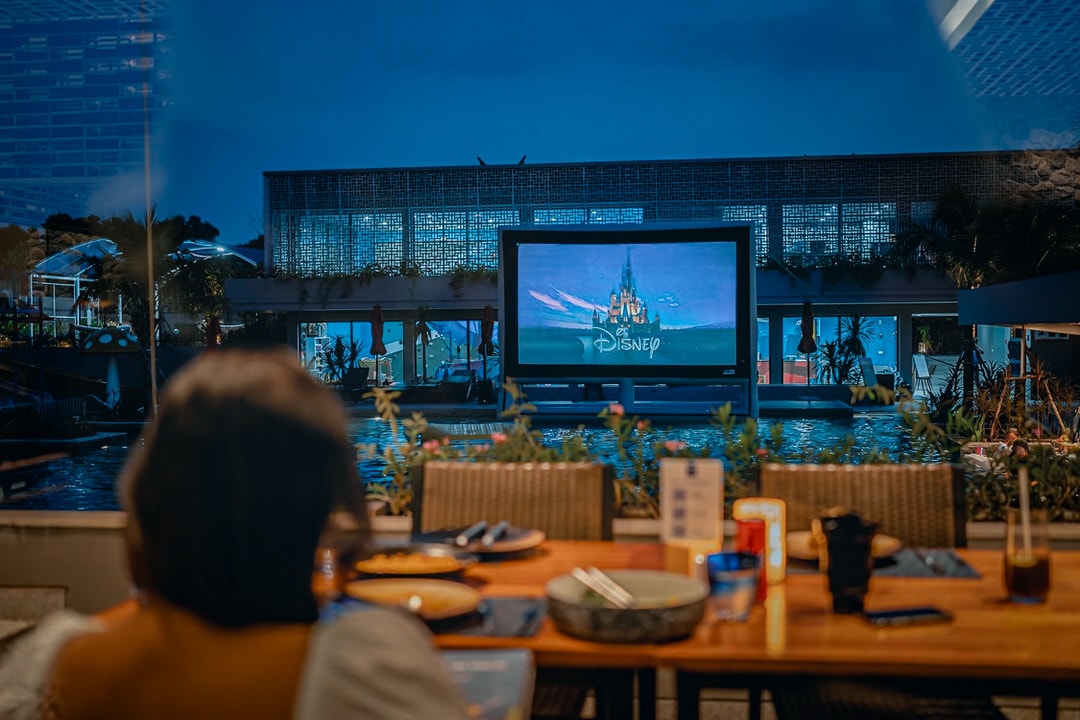
Both venues demonstrate how Archipelago Cinema’s core innovation – merging film with water settings – continues evolving. While neither offers the raw immediacy of floating in an open lagoon, they provide reliable, weather-resistant alternatives that honor the original’s vision: cinema as experience, not just screening. The temporary became permanent, the experimental became established, but the essential magic of watching movies on water in tropical Thailand endures.