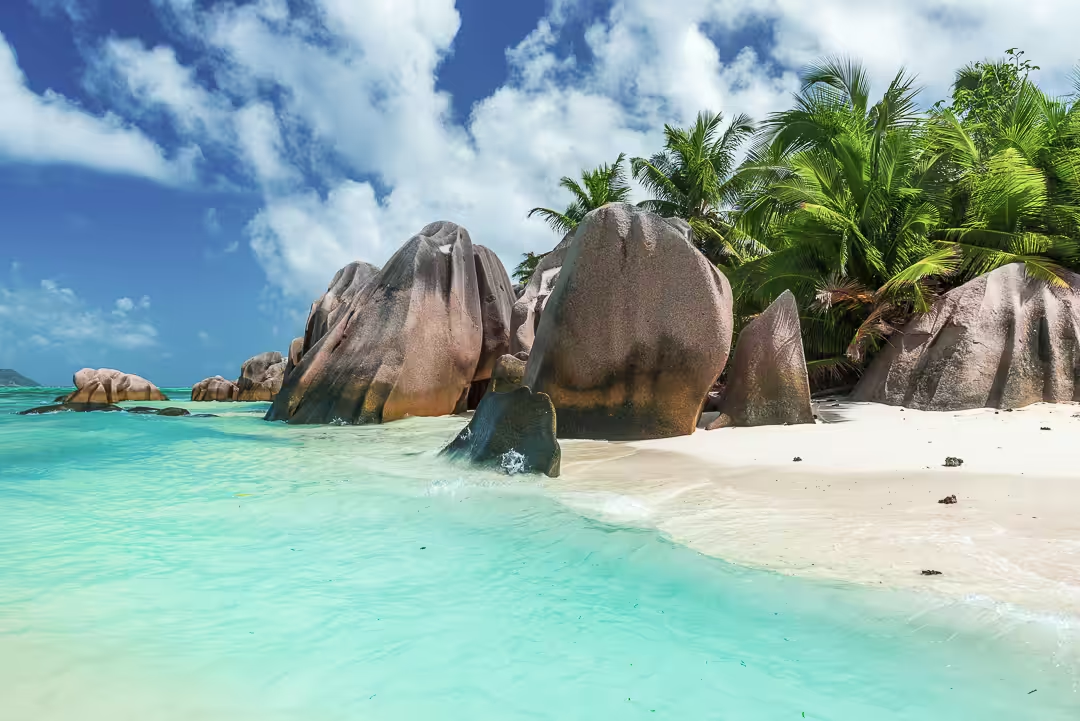
You pay a plantation toll and pedal past giant tortoises to reach one of the most photographed beaches on earth.
You cannot simply walk onto Anse Source d’Argent the way you walk onto every other beach on earth. You buy a ticket — 150 rupees, about ten euros — at a wooden hut, wheel your rented bike past an ox-driven copra mill and a timber plantation house the color of weak tea, and roll down a sandy track under the takamaka trees, past a walled pen where Aldabra giant tortoises, a couple of hundred kilos apiece, work through the grass at the speed of continental drift. Only when the path gives out do the boulders part and the water turns the shade of a swimming pool lit from below.
The beach is famous — routinely called one of the most photographed on the planet, and the Bacardi and Bounty ad crews of the 1990s got there long before your phone did. What almost no one mentions is the gate. Anse Source d’Argent sits inside L’Union Estate, a 300-hectare coconut-and-vanilla plantation worked since the 18th century, its copra pressed by ox until the 1980s, its vanilla pods pollinated by hand because the flower has no natural partner this far from Mexico. The estate is a national monument now, with plans afoot to add La Digue’s first proper history museum, a fleet of electric quad bikes, and — because someone has a sense of humor — a rack of penny-farthing bicycles. You are, in other words, paying to cross a working piece of history to get to the sand. It is the strangest entrance to a beach I know, and it turns out to be the best part.
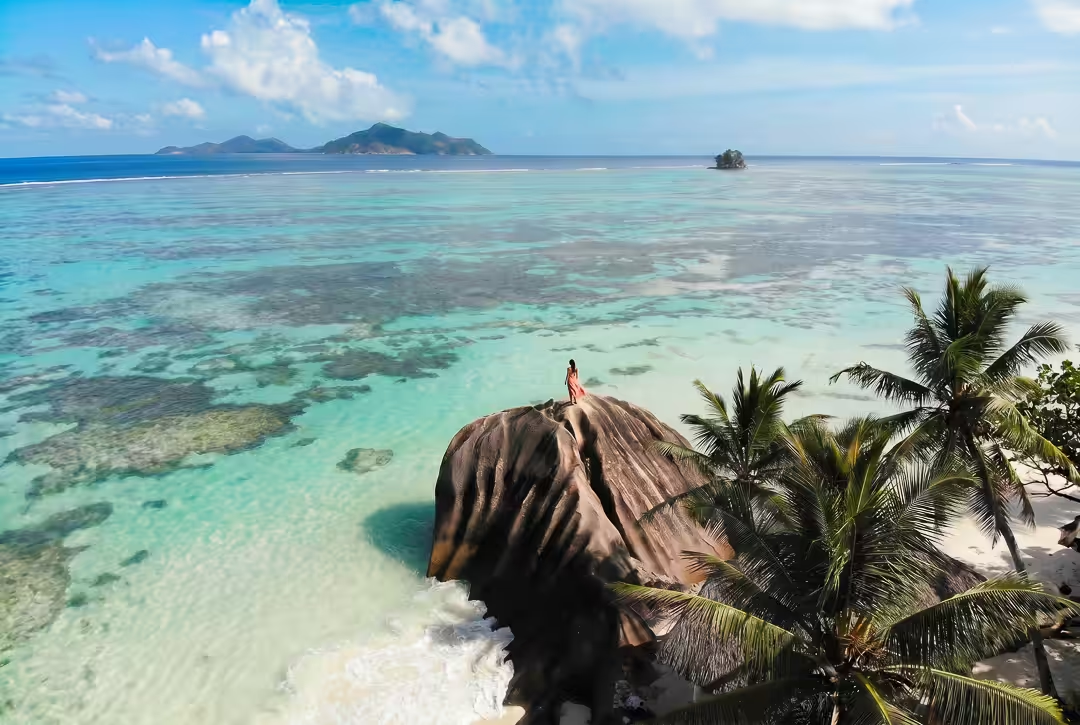
What the ticket actually buys
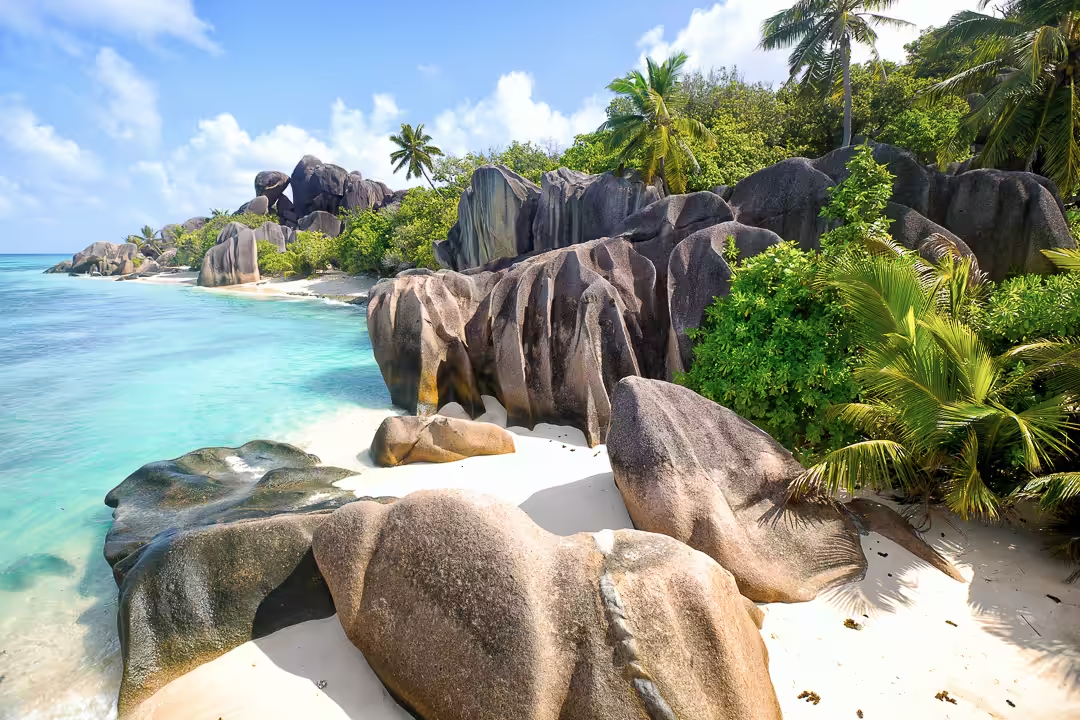
The boulders are the point. Not the sand, which is fine and pale and behaves like sand everywhere; the granite. These rounded, rose-and-grey giants are a shard of Gondwana — Precambrian rock roughly 750 million years old, left behind when the Seychelles microcontinent tore away from India some 66 million years ago and drifted off alone. The pink is potassium feldspar, and it is at its deepest right here on La Digue’s southwest shoulder, where the granite happens to be a coarse porphyry rather than the plain grey of the other islands. Millions of years of rain and salt have sanded the blocks into the soft, sagging shapes you see — less like rock than like something poured and left to set. Lay a palm flat against one at midday and it is warm the way a loaf is warm. That is the ten euros, really: not a beach, but the chance to lie down on a continent that no longer exists.
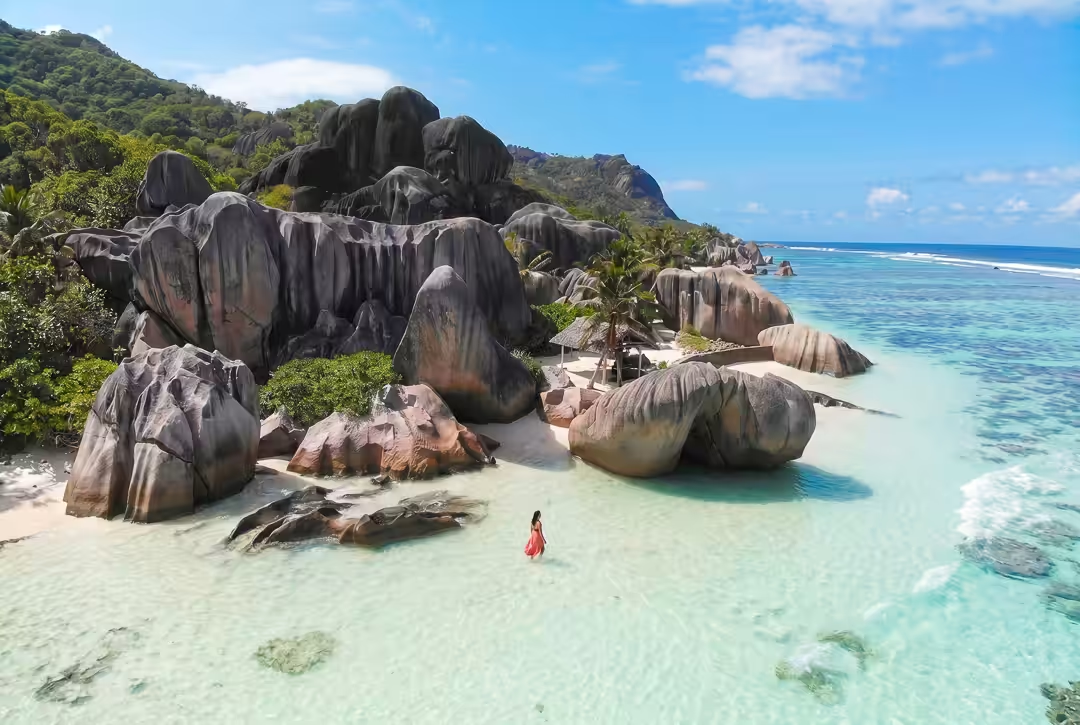
The tide runs the day
Here is the catch nobody Instagrams: at the low tide that produces the postcard — glassy turquoise skimming over pale sand — the water is barely knee-deep and you cannot properly swim. Come at high tide to swim, and half the beach is gone. Check a tide table before you check anything else.
Come at the ragged ends of the day
Anse Source d’Argent faces west, into the sunset, which tells you two things. The light is best at the edges: early, around nine or ten, a low side-light sets the pink feldspar glowing; late, from four onward, the boulders warm to orange and throw long shadows down the sand. And the middle of the day belongs to the day-trippers, who own the place from ten to five and photograph each other in front of the same rock. The good news is that they self-evict — the crowd files out to catch the afternoon ferries back to Praslin around four, which is exactly when the gold light arrives. The one complication is that the estate gate closes near five, so the sunset itself you’ll watch from somewhere else; aim for that hour between the exodus and the lock-up. One consolation, and a useful one: a ticket bought after half past four is valid the next day as well — two evenings of gold light for one entry fee. Shoulder season — April and May, or September and October — thins the crowds further and calms the sea.
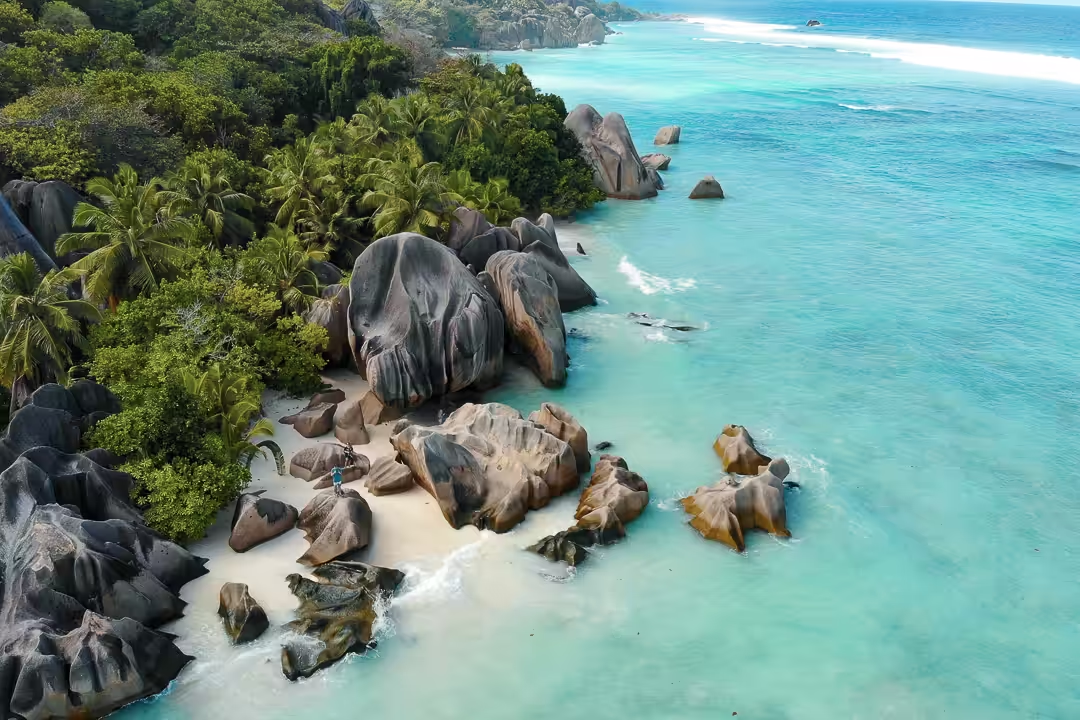
Keep pedalling past the postcard
Almost everyone stops at the first, famous stretch and turns around. Don’t. The sand carries on south for the better part of two kilometres through a chain of near-empty coves — Anse Pierrot, Anse aux Cèdres — where the granite is more dramatic and the snorkelling is better, the reef ledge sitting close enough to shore to reach on a held breath. At a big spring tide you can round the headland dry-footed; the rest of the time you wade. Push all the way to the island’s southern tip and you reach Anse Marron, a set of natural rock pools you can only get to with a licensed guide and a couple of hours of scrambling — the reward for the small percentage of visitors who treat this beach as a trailhead rather than a backdrop.
Where to sleep, and how the sand ends up under your feet
La Digue is a bicycle island — its cars are still counted in the low hundreds and outnumbered many times over by bicycles, the last ox-carts surviving as heritage rides near the jetty — so base yourself anywhere near the little port at La Passe and everything is a short, flat pedal away. At the top of the range, Le Domaine de L’Orangeraie spreads hillside Creole villas around a spa and two restaurants, a few minutes from the ferry with bikes at the door. For roughly half the money, Villa Authentique is a friendly guesthouse a two-minute walk from where the boat lands, bikes included. If you want a table with a view and a good kitchen without leaving your hotel, Le Repaire has both.
Getting to La Digue is its own small voyage: fly into Mahé, then take the Cat Cocos fast ferry — about 75 minutes to Praslin, then a short hop across to La Digue, the whole chain running you a little under two hours and worth booking ahead in high season, because the seats sell out before the sunsets do. Once you’re on the island, rent a bike for a hundred rupees a day and point it at the estate gate. Bring water and something to eat; there is nothing on the sand itself but a scatter of fruit-and-coconut stalls down at the far southern end, and after an afternoon on warm granite you will want both.