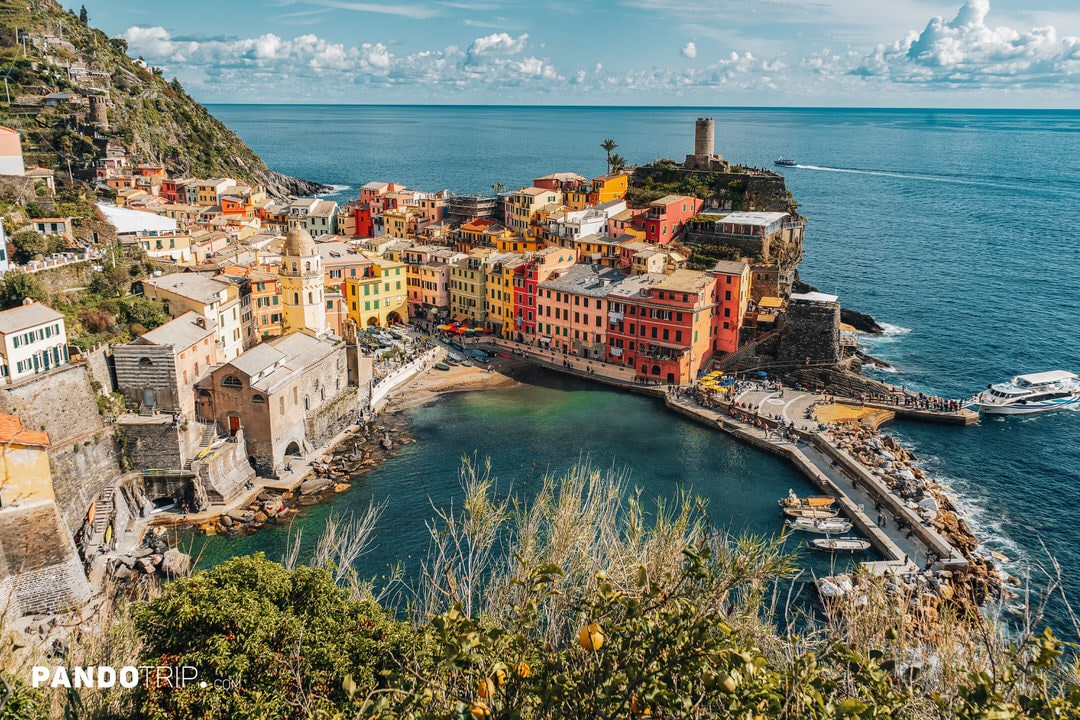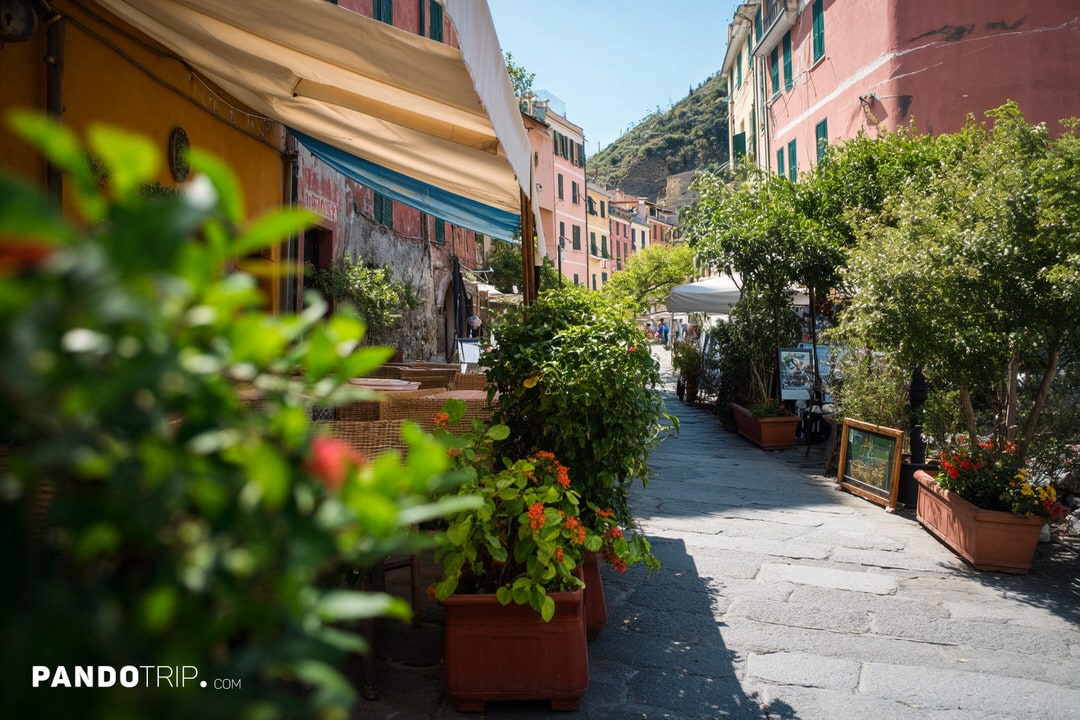
When the regional train sighs to a halt on Italy’s Ligurian coast – roughly halfway between Genoa and Pisa – and you step from the tunnel’s cool breath into sunlight, Vernazza feels petite enough to cup in two hands. A single ribbon of stone, Via Roma, slopes toward a harbour no larger than a public square; nets dry beside skiffs and the bells of Santa Margherita d’Antiochia toll over about 700 year-round residents – barely a suburb’s worth today. For an hour or two the rhythm remains provincial: focaccia still crackles at Batti Batti’, and Ligurian dialect drifts over the clatter of espresso cups. But late-morning ferries discharge the first wave of day-trippers and baristas pivot to German, French, Mandarin – a linguistic quick-step that hints at how radically this cliff village has changed.
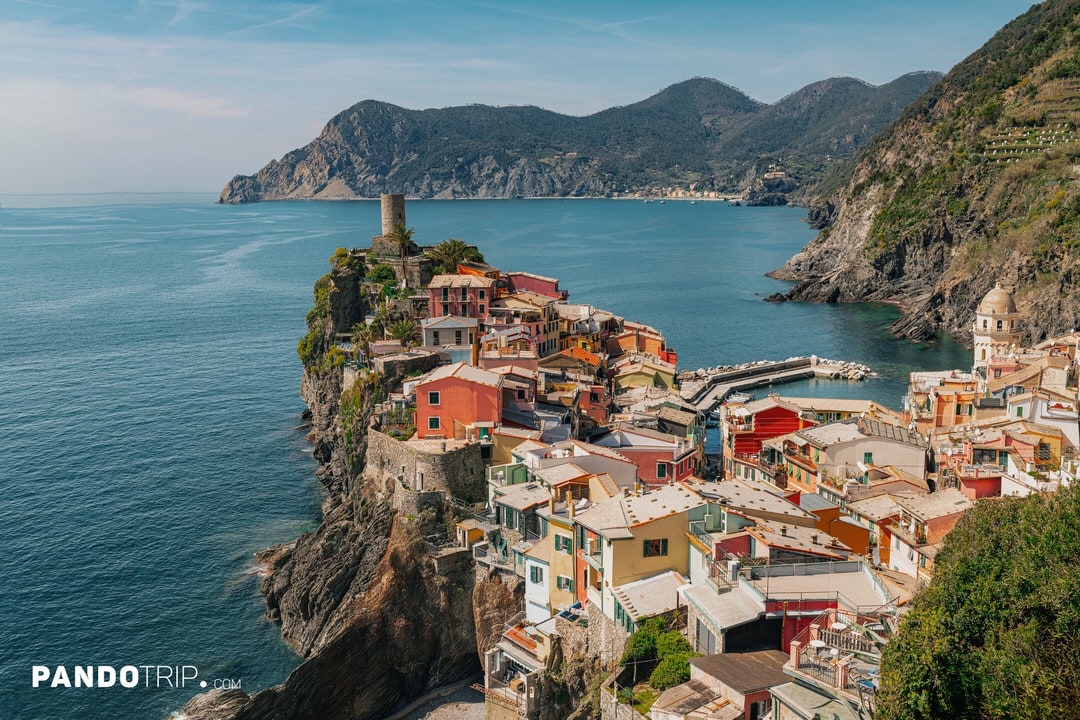
Vernazza’s story began almost a millennium ago, when documents of 1080 record a port called Vulnetia sheltering under the Obertenghi counts. By the thirteenth century it raised the flag of Genoa; the republic crowned the headland with the Belforte tower and ringed it with ramparts, turning the inlet into a military mirror for Tyrrhenian convoys. With arable land scarce, residents hacked hundreds of terraces into slopes that often exceed forty degrees. Each dry-stone muretto – laid by hand so vines and olives could root – still reads like a ledger of winter afternoons spent hauling slate on human backs.
Modernity announced itself not with tourists but with catastrophe. On 25 October 2011 a cloudburst unloaded a third of the region’s annual rainfall in six hours – a danger here because rain races down steep terraced slopes and has nowhere to spread. A four-metre torrent of mud funneled through Via Roma, suffocating ground floors and ripping open the beach. Three people died, homes were ruined, and Vernazza seemed finished. Recovery became a civic epic: local group Save Vernazza rallied international donors, and architect Richard Rogers drafted a plan that widened the canal, stabilised hillsides, and repaved Piazza Marconi without erasing its patina. By Easter 2012 the village was welcoming guests again – proof that stone and human stubbornness can be allies.
Resilience soon met the test of popularity. UNESCO World-Heritage status (1997) and the rise of Instagram funneled unprecedented numbers onto a headland of less than one square kilometre. The Cinque Terre – literally “Five Lands,” of which Vernazza is the fourth – registered about four million visitors in 2023: more than 5,000 per resident. Pressure shows in subtle distortions: storerooms reborn as B&Bs, groceries priced for Nordic wallets, vineyards abandoned because labour has moved into hospitality. Park authorities now improvise triage. The cliff-hugging Sentiero Azzurro(“Blue Trail”) becomes one-way on summer holidays; the famous Via dell’Amore reopened in 2024 behind timed tickets capped at 400 walkers an hour and rangers who turn back flip-flops at the gate. Vernazza is learning, daily, how thin the line can be between postcard and pressure-cooker.
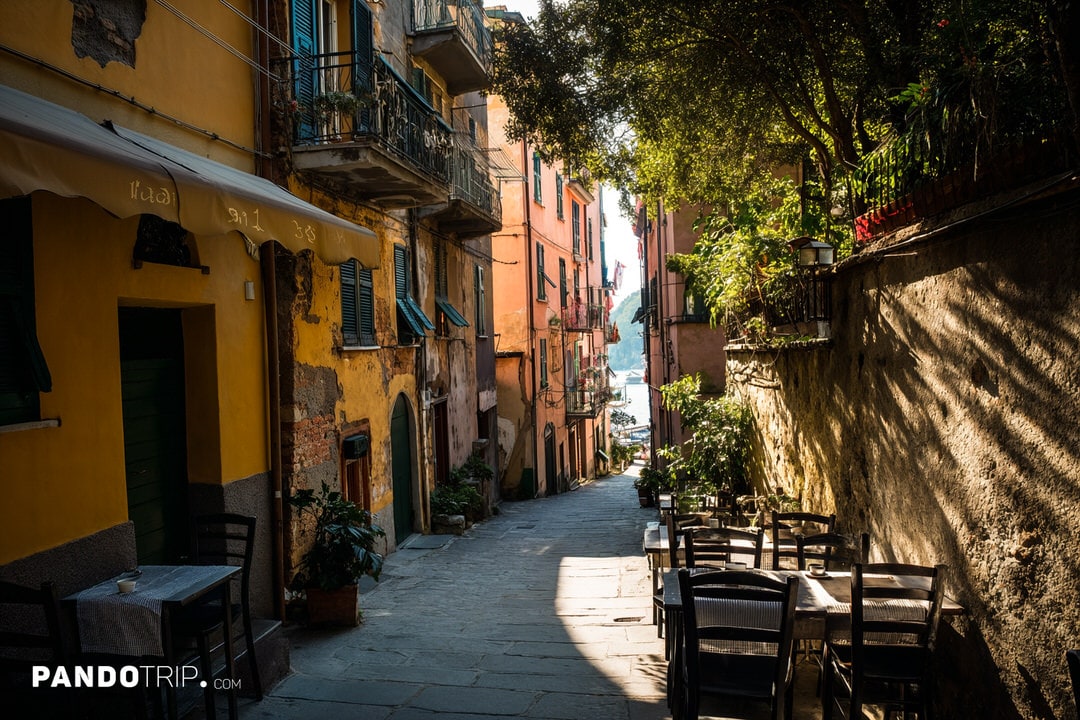
Yet authenticity has not vanished; it simply keeps bankers’ hours and back-street addresses. You’ll meet it at dawn, when the harbour is a mirror for gulls and fishermen fillet silvery acciughe. You’ll taste it on the mule track to the sanctuary of Nostra Signora di Reggio, where a terrace farmer—re-building a wall toppled by winter storms—may pause to offer a sip of amber Sciacchetrà (sha-keh-TRAH), the local dessert wine that rarely travels beyond Liguria. It lingers in November, during olive harvest, when the piazza smells of wood-smoke and laundry rather than sunscreen. Even on a midsummer evening, after the last excursion boat casts off, old men reclaim benches outside the alimentari to argue brìscola, and the village briefly rights its balance.
Getting here is disarmingly simple: regional trains run every 20–30 minutes between La Spezia and Levanto (cars are banned inside the core), and ferries ply the coast from Easter through October. Once you arrive the covenant is equally plain. Walk, don’t shout. Keep to marked paths. Remember that every pastel façade is a home first and a backdrop second. Honour that—and arrive early or linger late—and Vernazza will still reveal its most lucid moments: basil crushed beneath a mortar, the slap of water against the quay, the last pink flare of sunset on slate roofs. In those instants a thousand years of salt, stone, and human tenacity feel improbably whole, and every photograph you take becomes a footnote to a story still unfolding.