Built on the islet where Christiania hanged its thieves, now hung with Blake, Hirst and a Richard Prince called The Horse Thief.
On a raw January morning in 1730, two Swedish army deserters were hanged on a low skerry at the mouth of Christiania’s harbour. The spot had a job: it was where the young city put its thieves and its criminals to death, in full view of everyone sailing in, a warning nailed to the water. People called it Tjuvholmen — Thief Islet — and the name is on the maps by 1616. After the hangings stopped it kept working for its living: a pottery, a match factory, sheds where the city came to bathe, then plain working harbour that nobody photographed.
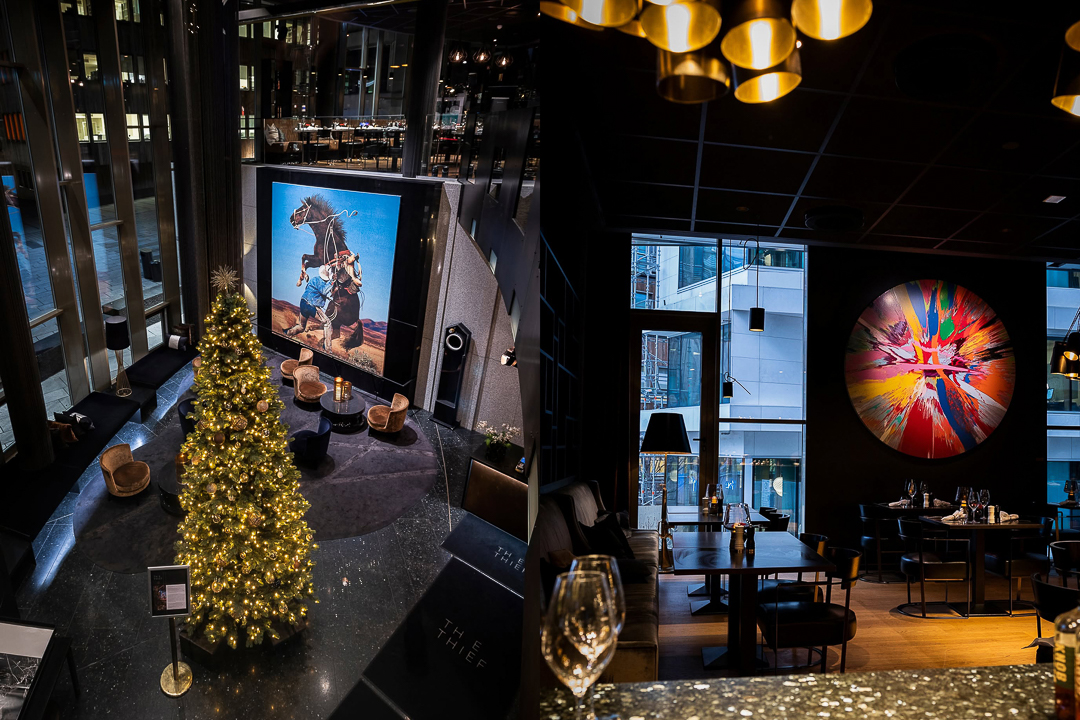
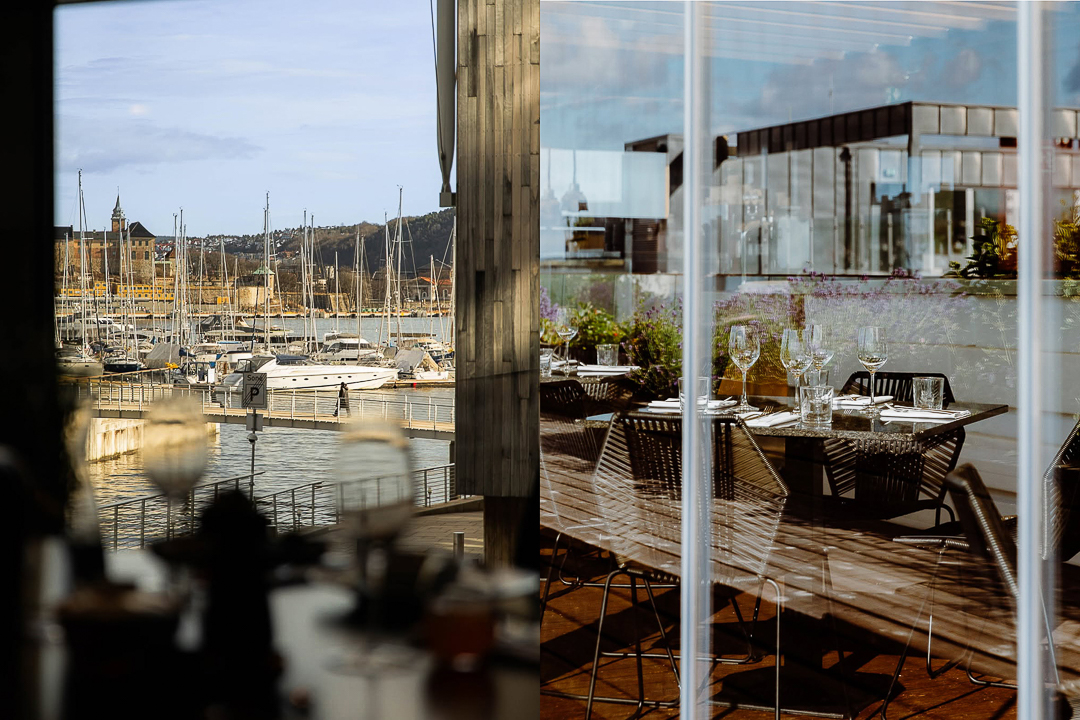
Then Oslo turned to face its own fjord. Between 2006 and 2012 the islet was rebuilt into the sharp end of the city’s waterfront — canals, a sculpture park, a sandy bathing spot, and some of the priciest addresses in Norway. On the far tip of it someone built a five-star hotel and gave it the islet’s oldest name and its blackest joke. The Thief. In the lobby, against the light off the water, hangs a Richard Prince canvas titled The Horse Thief.
The hotel’s own telling of that history is, fittingly, a little larcenous. The developers’ version has the islet sheltering thieves rather than hanging them — a refuge story Norwegian historians point out appears in no source at all — and by the time a prime minister walked Bill Gates past the door, the history had loosened further still. The record is darker, and better. You could read the whole performance as a hotel being pleased with itself. What redeems it is that the art is real.

One original to a room
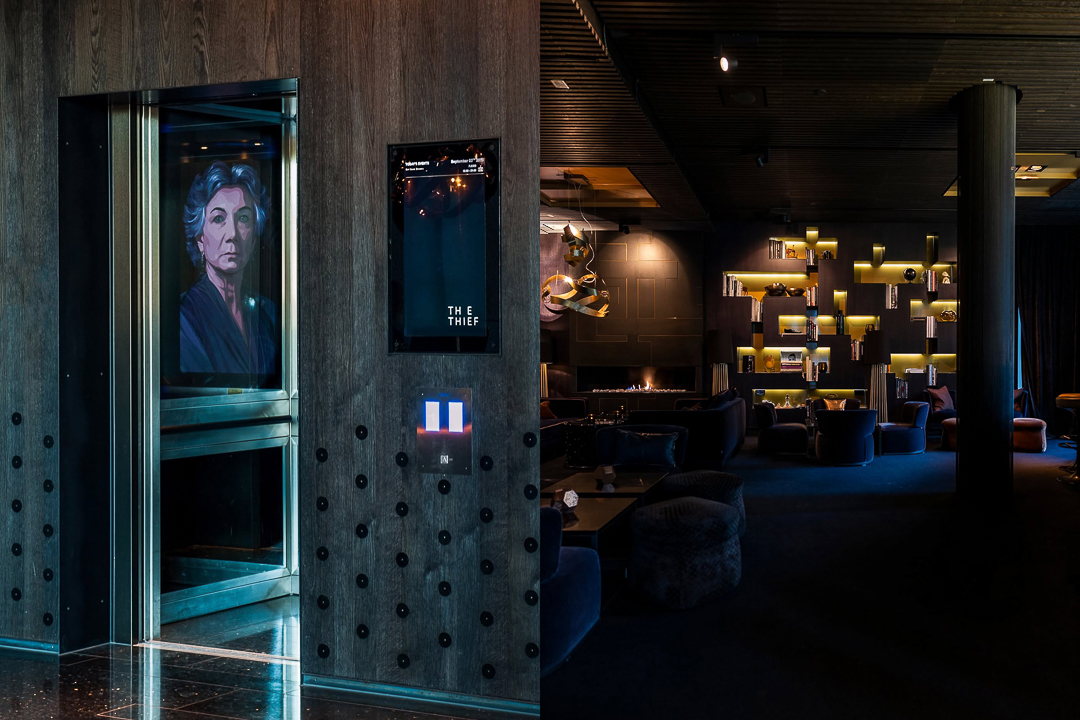
The person who assembled it was Sune Nordgren, a Swedish curator who used to run Norway’s National Museum — not the sort of name a hotel usually rents. He hung the place the way you’d hang a gallery: one original work to a room, more of them through the corridors and public floors, chosen rather than ordered by the metre. Peter Blake, Damien Hirst, Cindy Sherman and Niki de Saint Phalle are among the names on the walls; the collection has run to Warhol too. The Norwegian critics who’ve actually stayed — not the ones recycling the press kit — are the ones who clock the Prince and the Hirst; the recycled version stops at the headline names and moves on.
The clincher isn’t inside The Thief at all. Renzo Piano’s Astrup Fearnley Museum sits next door — three timber-clad blocks under a long sail of fritted glass, finished the year before the hotel opened — and your room key gets you through its doors for nothing. Sleep here and you are, functionally, staying in the annex of a contemporary-art museum, with a curator on hand to walk you through the works and tell you which deserter got hanged where. For an art traveller that is close to the whole argument for coming.
What hangs over the bed
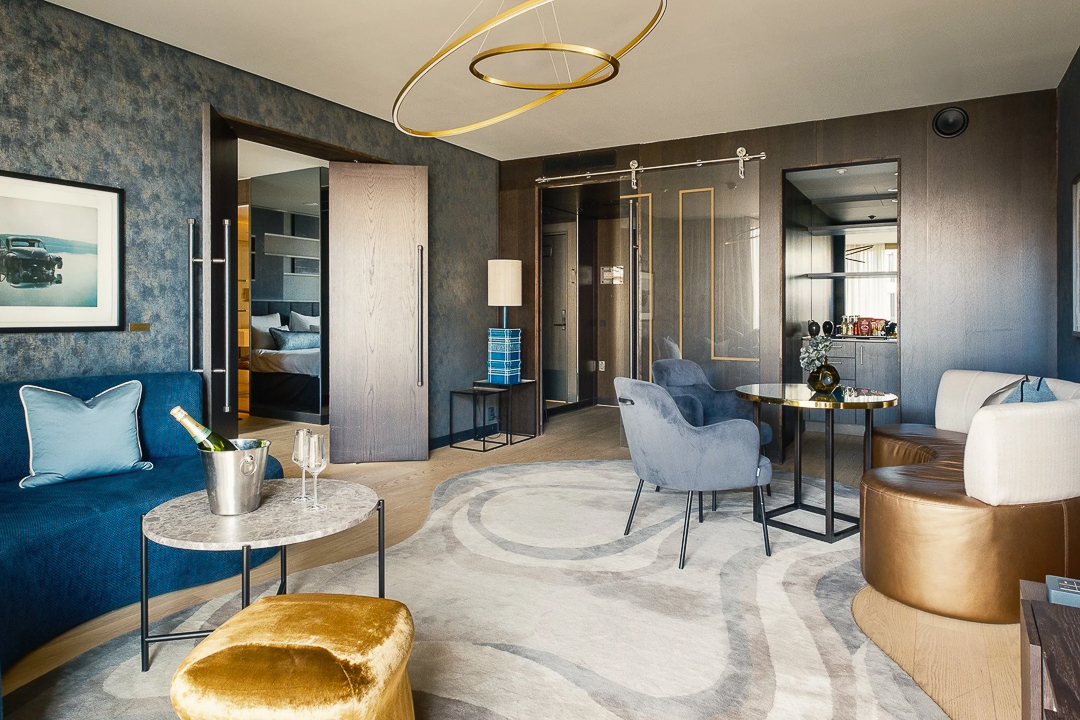
The building itself is quieter than its contents: Mellbye Arkitekter drew the glass shell, Anemone Wille Våge did the interiors in dark wood, marble and a house shade of green, and the Apparatjik collective — Magne Furuholmen of a-ha among them — scored the place, down to the wake-up music on the in-room vinyl. Rooms run from a compact 24 square metres up through junior and one-bedroom suites, and what you’re really paying up for, past the extra floor space and the second balcony, is how much art comes with the room.
At the top, the 94-square-metre Oslo Suite takes the eighth floor’s corner with two private balconies out over the fjord and the canals; its walls carry Sir Peter Blake’s Oslo Suite series, which the hotel bought outright — Blake, by the hotel’s telling, was the suite’s first guest. There’s an Apparatjik Suite too, kitted out by Furuholmen with video work and installations, for people who’d rather sleep inside the concept than beside it.

Below the waterline
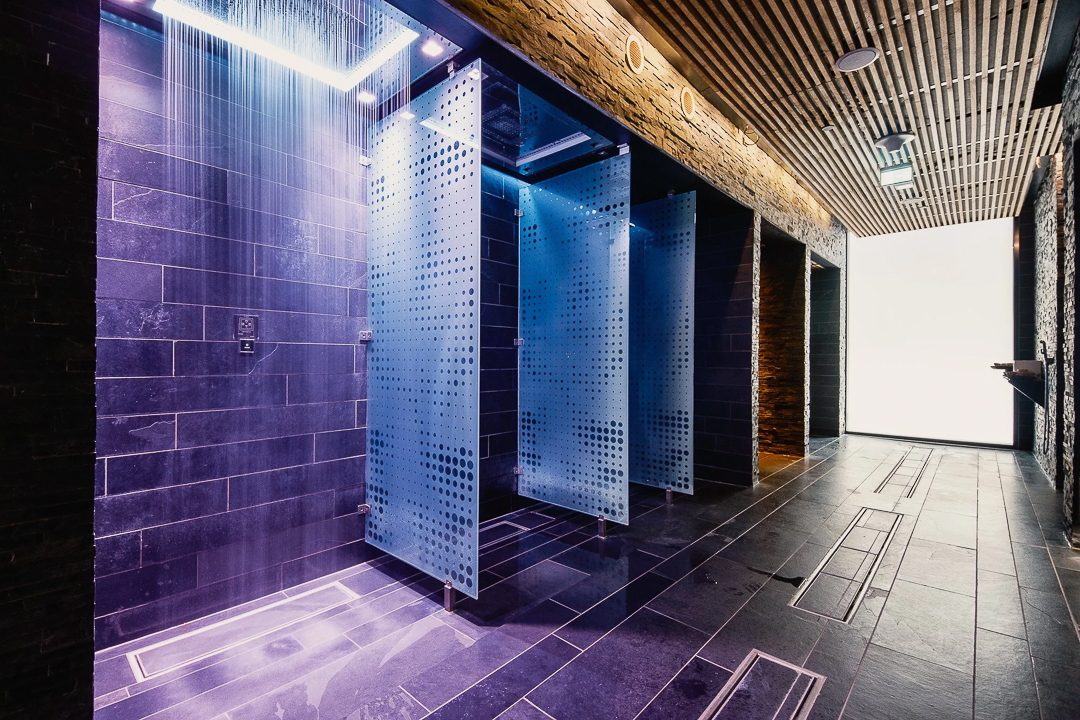
Down in the basement is the part that surprises people: a 12-metre heated pool under a fibre-optic ceiling pricked out like a night sky, a hammam with a heated marble slab, saunas, and showers rigged to throw shifting light and cold. It closed for a refurbishment over a fortnight in late 2025 and reopened sharper. Book a treatment; it’s the room the day melts in.
What the locals come up for
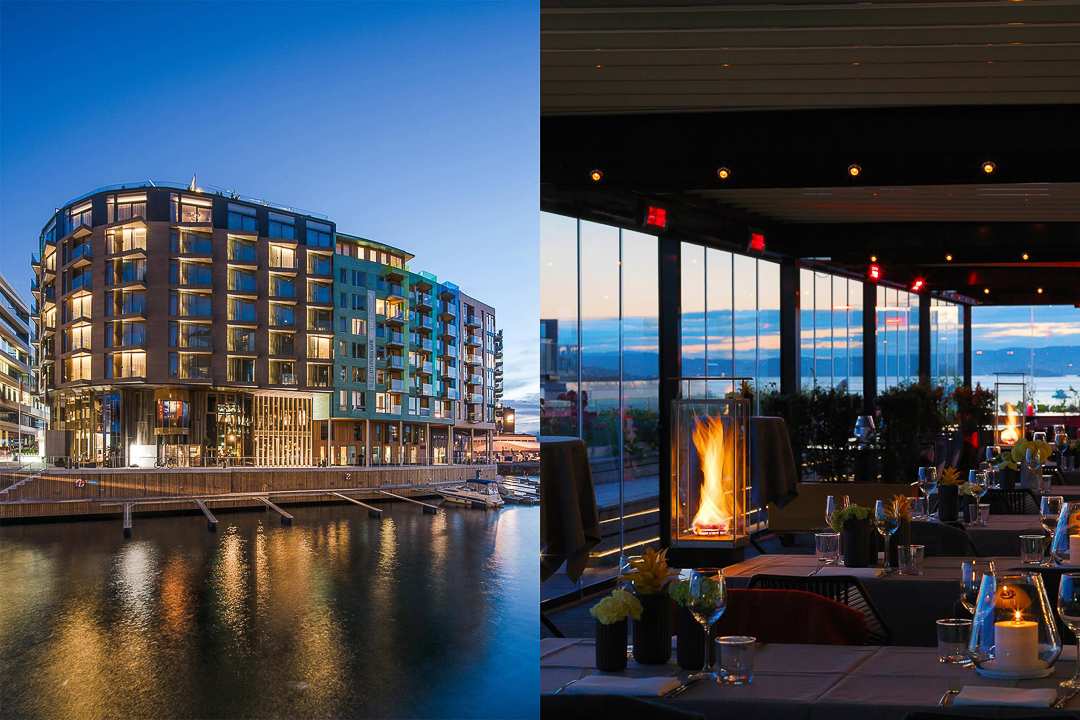
Here’s the tell that a hotel restaurant is any good: whether the city bothers to show up when it isn’t sleeping there. Oslo does. The ground-floor dining room — fine-dining Fru K in the early years, now simply THIEF Restaurant — pulls a local crowd, the bar mixes for people who live nearby rather than just guests, and the breakfast is the thing regulars actually rate: eggs cooked to order, properly cured fish, Norwegian cheeses, none of the chain-buffet resignation. In summer the top of the building opens into a rooftop bar with grill smoke and glass walls and a view that runs from the Oslofjord to the ski jump at Holmenkollen. Time it wrong and you’ll miss it — the roof shuts from roughly November to March, which in a city this far north is a long time to have the best seat in the house boarded up.
The reckoning
You reach it easily: the Flytoget airport express runs to Nationaltheatret in under half an hour, and it’s a fifteen-minute walk from there across the water to the islet, five to the cafés of Aker Brygge. The catch is the bill. This is among the most expensive places to sleep in Oslo, entry doubles routinely landing north of US$250 and the suites climbing out of sight, and you should discount the froth around it — the “six-star” tag was a British newspaper’s flourish, not a rating, and the hotel is a straight five stars. What you’re paying for is specific and, unusually, delivers: a serious art collection you can wake up next to, a museum through a side door, a spa worth the descent, and a fjord you can walk into by lunchtime. For a design-minded couple with the budget, it’s Oslo’s most convincing splurge. For anyone chasing the rooftop, book between May and September or don’t bother — the ghosts on Thief Islet keep winter to themselves.