
Paris has a reputation problem. Everyone expects it to be magical, which creates impossible pressure for a city that’s just trying to go about its daily business of being French. We land at Charles de Gaulle armed with Pinterest boards and camera batteries, convinced every croissant will taste like enlightenment and every lamppost will sparkle on cue. Cue the first reality check: Paris also deals with unglamorous stuff like trash days, scooter traffic, and that 7 a.m. baguette queue. Yet somehow, even while hustling to work or muttering about Metro delays, the city keeps tossing confetti – golden light on Haussmann balconies, accordion riffs drifting over the Seine – like it can’t help itself.
That’s why we’re still signing up for the classics. Sure, there are tourist swarms dense enough to get their own zip codes, but the Eiffel Tower hasn’t lost an ounce of iron-willed drama, and the Louvre’s glass pyramid still photobombs every attempt at a casual stroll. The crowds just prove the hype has receipts. So we’ll embrace the elbows, dodge the selfie sticks, and lean into Paris’s greatest hits – because clichés earn that title by delivering, again and again, the exact swoon we secretly came for.
1. Eiffel Tower – The Iron Giant That Hijacks Your Inner Child
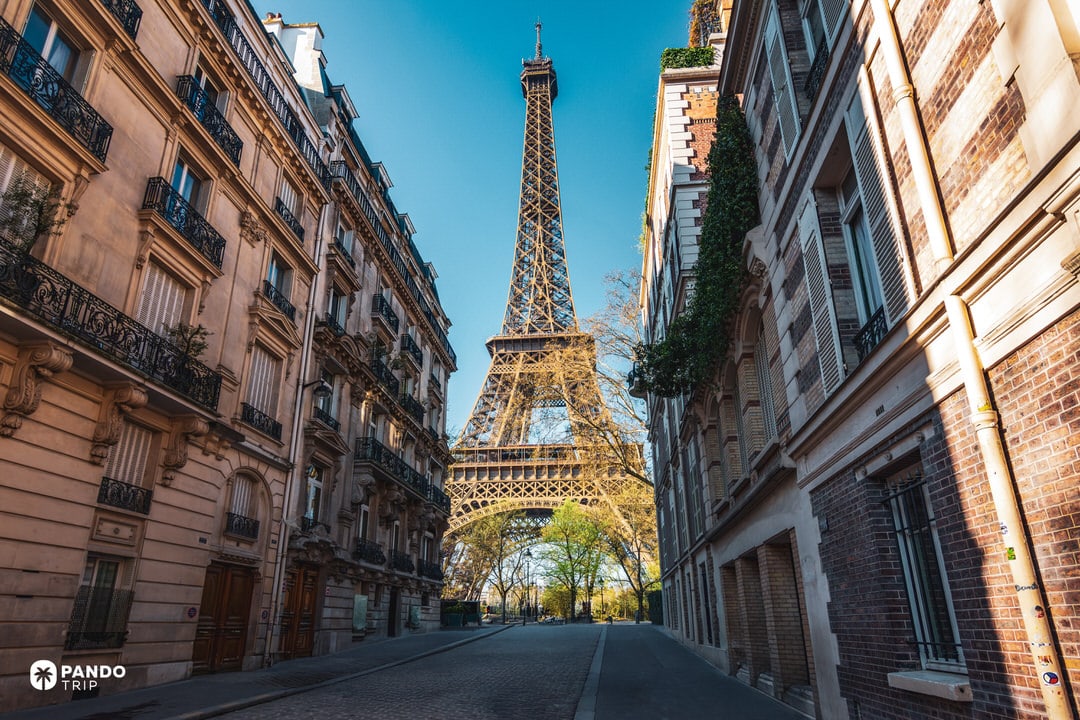
You think you’ve outgrown it. You’ve seen the iron giant in every rom-com, video game, and screensaver. By the time you reach the Champ-de-Mars you’re ready to shrug and move on. Then you look up. The 330-metre tower fills the sky and, just like that, your inner child forgets to play it cool.
The feeling is really about scale. Each brown beam that looked thin in photos is thicker than a tree trunk, and the lifts crawling up its legs suddenly seem toy-size. This was the tallest thing on Earth when it opened in 1889, and it still pulls in about six million visitors a year – proof the show still works.
If you’re set on walking, the staircase to the second floor opens up 674 steps of steady cardio: about 20 minutes at a relaxed pace, with wide landings to catch your breath and peek through the ironwork. The rest of the 1 665 steps are closed to the public, so from Level 2 everyone – athlete or couch potato – rides the elevator.
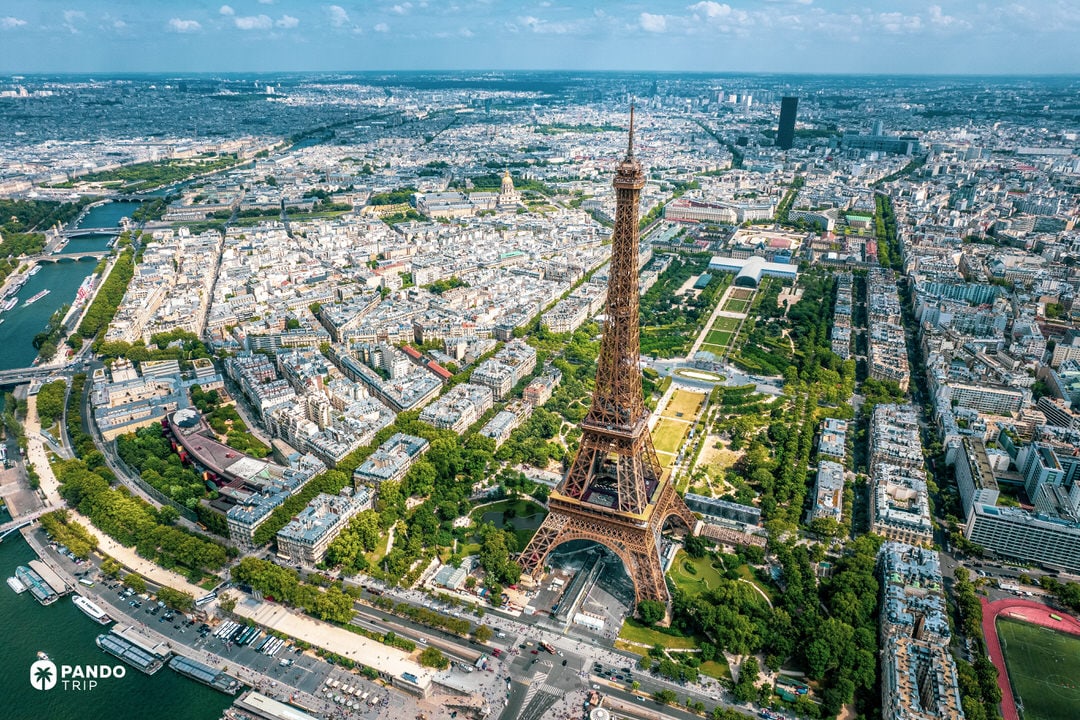
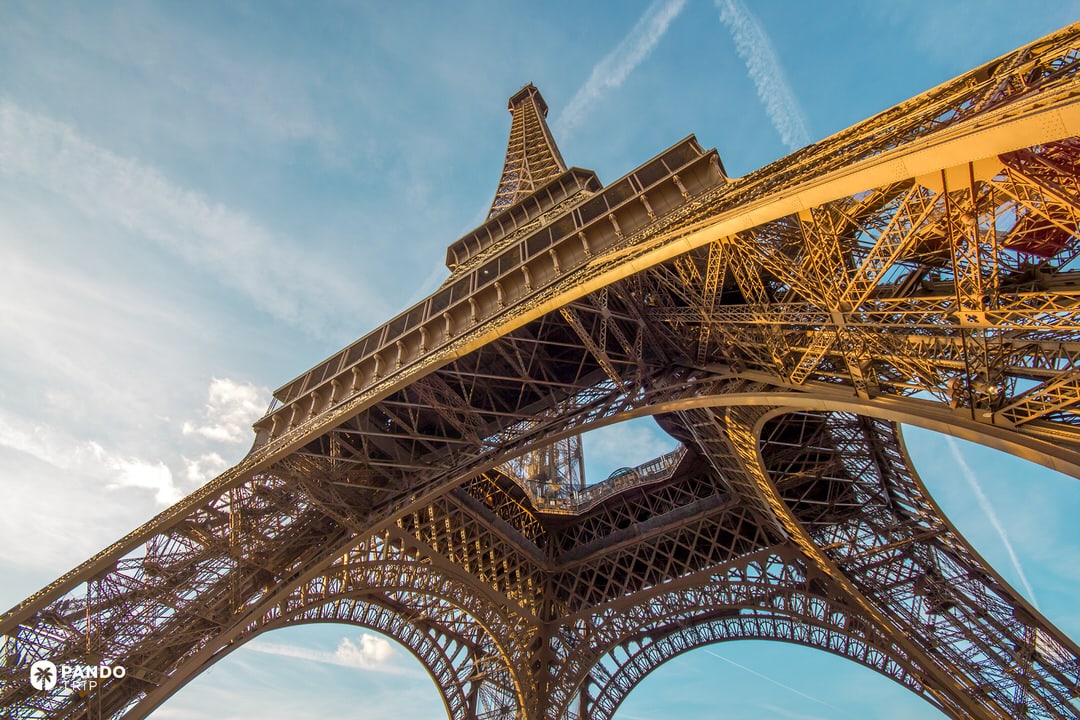
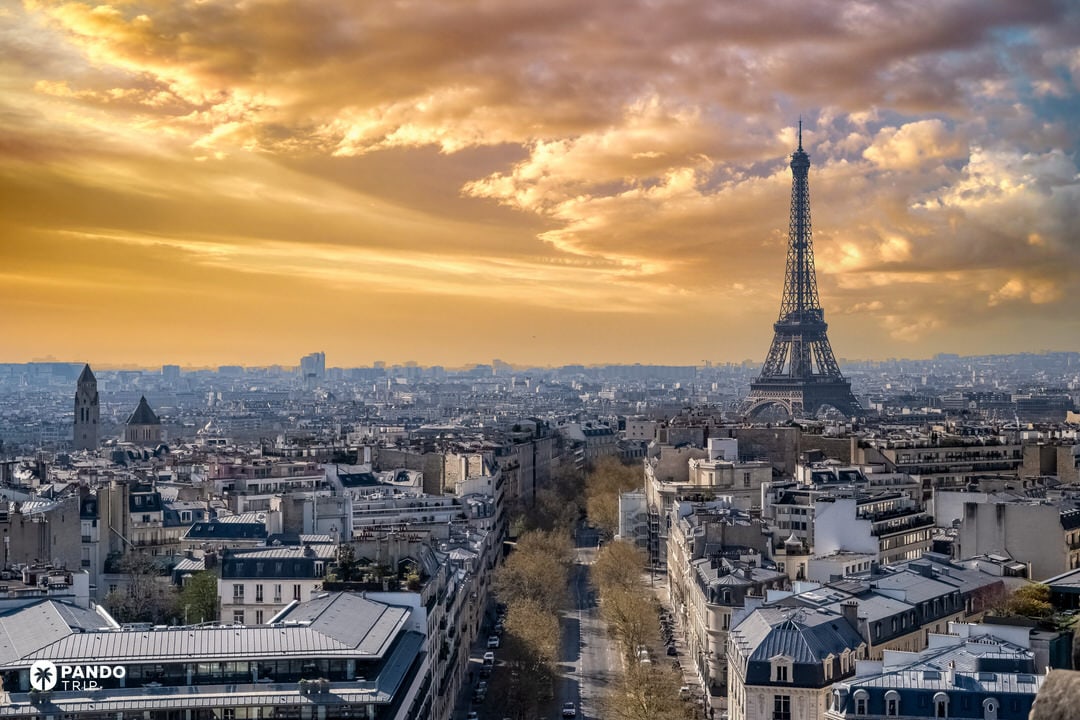
Prefer to glide all the way? Summit tickets now cost up to €36.10 for adults, a post-2024 bump that helps fund the tower’s never-ending repaint job. Aim for an hour before sunset: you’ll watch the rooftops turn honey-gold on the ascent and catch the five-minute sparkle show on your way down.
Stairs or lift, the result is the same – you walk off with a stiff neck, a camera roll of duplicates, and the sweet shock that the cliché lives up to itself.
2. Louvre & Pyramid – The Crystal Controversy That Became Paris’s Calling Card

The crystal triangle in the courtyard feels timeless today, but in 1984 it lit up Parisian talk-shows like a five-alarm fire. Architect I. M. Pei’s plan to drop a 21-metre glass pyramid into a Renaissance palace was branded everything from “architectural joke” to “McDonald’s inside Notre-Dame.” Fast-forward four decades and that same 673-pane prism is the Louvre’s calling card, bouncing sunlight into an underground lobby big enough to swallow a football field and guiding nine million art-hungry humans a year to the right queue
Step inside and the numbers only get wilder: 35,000 pieces on display (out of more than 600,000 in storage) spread over 60,600 m² of galleries. We sprint toward the Mona Lisa for the obligatory selfie, then drift past Winged Victory, Egyptian mummies, and a Mesopotamian lion that suddenly feels more interesting than our inbox. Give it two hours if you’re skimming, two days if you’re serious, and a lifetime if you plan to read every label.


Practical cheat sheet: book a timed €22 ticket online and enter via the lesser-known Porte des Lions – the security line is often half as long as the pyramid queue. Wednesdays and Fridays the museum stays open till 9:45 p.m.; show up after 6 p.m. and the crowds thin, the marble floors echo, and the glass pyramid glows like a night-light for grown-up art nerds. Because Paris loves a comeback story – and this once-ridiculed pyramid might be the city’s best.
3. Notre-Dame de Paris – The Phoenix That Rose Right on Schedule

On 15 April 2019 the world watched in horror as flames clawed through Notre-Dame’s roof and toppled her spire. Five frantic years and roughly 250 craft guilds later, the Gothic landmark reopened on 8December 2024 – right on schedule, thank you very much, President Macron. Step onto the parvis today and you still catch the tang of fresh oak and copper, but the twin bell towers look freshly scrubbed and the new spire gleams like a sword lifted back into its sheath.
Stats time: construction started in 1163, the towers rise 69 m (226 ft), and the belfry climb packs 387 spiral steps – a workout rewarded by gargoyle-level views of the Seine. Pre-fire, the cathedral drew about 12 million visitors a year, more than Disneyland Paris.
After reopening numbers are even more jumped – jumped: roughly 29,000 visitors a day – about 800,000 in the first month alone and continue something like Entrance remains free, yet you’ll want to book a gratuit time-slot on the cathedral’s website; reservations open 48 hours ahead and vanish almost as fast.


A heads-up for climbers: the famous 387-step bell-tower ascent is still under restoration and scheduled to resume later in 2025, so save those quads for Sacré-Cœur. For now, explore the polished interior, the Treasury (reopened June 2025), and if you looking for immersion, book the “Éternelle Notre-Dame” VRexperience in the pavilion on the forecourt.
Pro tip: arrive just before dusk. The setting sun back-lights the flying buttresses, refurbished stained glass flickers alive, and street musicians cue up Ave Maria on instinct. For a fleeting minute the crowds hush, scaffolding fades into shadow, and Paris’s boldest comeback story feels like it’s playing just for you.
4. Montmartre & Sacré-Cœur Basilica – The 130-Meter Climb to Paris’s Film Set

Montmartre isn’t just a hill; at 130 m / 427 ft above sea level it’s Paris’s built-in viewing platform, an old artists’ village that still feels a bit like a film set left standing after wrap-day. Getting up there is a choose-your-own-adventure: we puff up the for the street-musician soundtrack, while sanity-savvy travellers tap a single €1.99 T+ ticket and let the glass-walled funicular whisk them skyward in 90 seconds.
At the summit, the Sacré-Cœur Basilica shines like a sugar-cube fortress. Built between 1875 and 1914 and finally consecrated in 1919, its travertine stone oozes calcite whenever it rains, which is why the exterior stays photo-shoot white even after a century of Parisian smog. Step inside and tilt your neck: the “Christ in Glory” mosaic spans 475 m², one of the largest in the world, shimmering with 25,000 gilded tiles that catch even candlelight.
Feel like earning the panorama? Pay the €5 coin and tackle the 300-step corkscrew climb to the dome – no lift, no mercy. The payoff is a 360-degree sweep that lines up the Eiffel Tower, Notre-Dame’s new spire, and (on a clear day) suburbs you didn’t know existed. Not into calf burn? Grab a green-metal chair on the basilica’s terrace, let accordion riffs float by, and watch locals debate whether that streak of sunset pink is worthy of an Instagram post.


Before you head back down, detour to Place du Tertre, two minutes behind the basilica. Painters still hawk portraits for €30-ish, and yes, half are cheesy – but the other half capture your jet-lagged grin better than any filter. When twilight hits, cafés switch on fair-y-light necklaces and Montmartre, cliché or not, delivers the kind of sigh that travels home with you long after your thighs stop complaining.
5. Seine & Pont Alexandre III – The 13-Kilometer Spine That Stitches Paris Together

We like to think of the Seine as Paris’s slow-moving spine: 13 kilometres of water that keep the left and right brains of the city talking, stitched together by 37 bridges. From Pont de Sully to Pont d’Iéna the embankments form a 7-km UNESCO World Heritage walk – part open-air museum, part picnic blanket that just happens to run past Notre-Dame, the Louvre and the Eiffel Tower
Mid-way along sits Pont Alexandre III, the span that makes every other bridge look like it forgot dress code. Built for the 1900 Exposition Universelle, its single steel arch stretches 160 m while four 17-metre pillars hoist gilded winged horses that catch the sun like oversized Oscar statues. The deck itself is 40 m wide – room for cars, cyclists, and half of Instagram to pause for that Eiffel-meets-Grand-Palais frame.


The river is levelling up, too: after a €1.4-billion clean-up sprint for the 2024 Olympics, swimming in the Seine is finally reality. For the first time in more than a century you can dive in at three lifeguarded spots – Bras-Marie by Île Saint-Louis, Port de Grenelle beneath the tower, and Bercy farther downstream. If you’d rather keep your clothes dry, grab a Batobus pass (about €23 for a day) and hop on and off at nine stops. Drift under Alexandre III at blue hour as the lamps flicker on and the winged horses glow molten gold in the river’s mirror – a reminder that Paris’s finest boulevard is made of water.
6. Sainte-Chapelle – Paris’s Pocket-Sized Rainbow

First, you queue at the Palace of Justice security gate and wonder if you’ve taken a wrong turn into jury duty. Then you climb one plain stone stair and – boom – every colour Crayola ever named erupts at once. The upper chapel of Sainte-Chapelle is only about the size of a tennis court, yet it feels like stepping inside a gemstone: 15 windows, each 15 m high, stack 1,113 stained-glass scenes that retell the Bible from Genesis to Glory in what looks like medieval 4K.
Built in a speed-run seven years flat (1242-1248) to house King Louis IX’s prized relics, the chapel doubles as a brag about Gothic engineering: the walls are basically glass, with ribs so thin you can wrap a hand around them. No wonder sunlight turns the place into a floating kaleidoscope – morning light fires up ruby and topaz tones; late afternoon leans into sapphire and emerald.
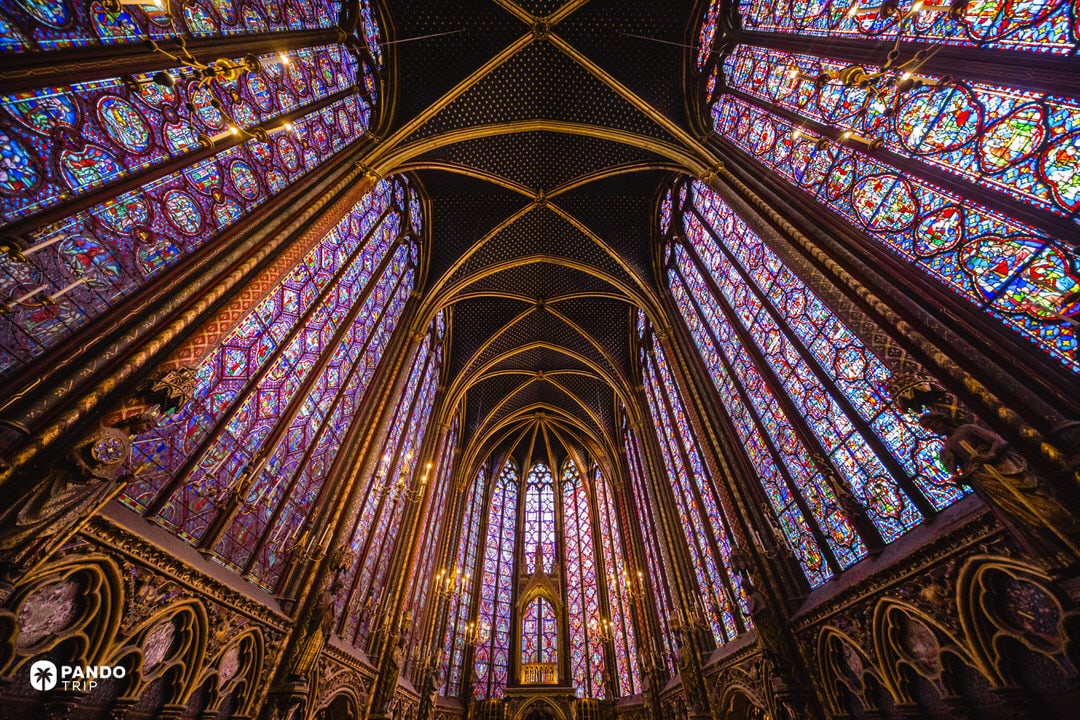


Practical magic: summer tickets run €19 but drop to €13 on Wednesdays; off-season standard price is €13 year-round, and a €25 combo pass bags neighbouring Conciergerie too. Book a 10 a.m. slot (fewer tour groups, clean beam angle) or come after 5 p.m. when the crowd thins to a hush and the glass goes full jewel-box with the lowering sun. Evening classical concerts happen most nights—strings under star-painted vaults sound exactly as epic as you’re imagining, and tickets from about €60 feel like the smartest splurge in town.
Step back outside and your retinas need a second to recalibrate to ordinary Paris daylight. It’s the rare attraction that leaves us both speechless and a little colour-drunk – evidence that, even in a city overloaded with icons, the sharpest gasp can come from a chapel that barely holds a hundred people.
7. Musée d’Orsay: The Train Station That Became an Art Gallery

Step off the Seine’s Left Bank and you’re staring at a Beaux-Arts railway hangar that looks ready to cough up a steam engine. Instead, you walk into a barrel-vault nave flooded with light and realise the trains left ages ago – what remains is a launchpad for art history. The building went up in a two-year sprint for the 1900 World’s Fair, then swapped locomotives for Manets when it reopened as a museum in 1986. Last year 3.8 million visitors rolled through, proving we’ll happily queue for Monet if the platform is pretty enough.
Numbers worth pocketing: roughly 20,000 m² of gallery space, the planet’s largest stash of Impressionist and Post-Impressionist hits, and ceilings so high Van Gogh’s starry skies feel like they could keep climbing. Somewhere between Degas’s ballerinas and Gauguin’s Tahitian daydreams you remember this place once echoed with departure whistles – now it’s acrylic “shush” signs instead.
Don’t leave without riding the escalator to the top-floor clocks. Peer through their glass faces and Paris lines up like a time-lapse: the Louvre across the river, Sacré-Cœur up on its hill, tour boats tracing slow commas on the water. It’s the selfie spot that makes every other museum clock feel like it needs a nap.


Practical stuff: book online for €16 and, if crowds give you hives, come on Thursday after 6 p.m. when a €12 late-entry ticket buys almost empty aisles until the 9:45 p.m. close. First Sundays are free but elbow-heavy; Wednesdays around 6 p.m. hit the sweet spot between school trips and dinner reservations. Finish with a lemon tart at Café Campana under one of those giant clocks. Sweet, sharp, and framed by ticking iron giants, it’s the kind of layover that makes you grateful the last train left a century ago.
8. Palais Garnier – The Opera House That Makes Your Pulse Take the Stair

We pop out of the Métro at Opéra and – bam – Paris drops the gaudiest calling card in its deck: a Napoleon-III palace armoured in gilt and marble. Composer names shimmer across the façade like a 19th-century Spotify playlist, while four winged horses rear on 17-metre columns, daring the traffic below to look ordinary.
Step inside and the famous Grand Staircase instantly hijacks your posture. Two curling flights of white, red, and green marble rise under gas-lit torches; climb them and your shoulders square up, your pace slows, and suddenly you’re starring in your own overture. Instagram knows it – search the tag and nine out of ten posts are these steps – but the screen can’t relay the hush of murmured tickets, the perfume swirl of velvet drapes, or the way the balustrades feel cool as river stones under your palm.
At the top, the horseshoe auditorium opens like a jewellery box: 1,979 crimson seats facing a bronze-and-crystal chandelier that hangs mid-air like a glittering wrecking ball. Its 1896 mishap – one tonne of metal crashing into the stalls – inspired The Phantom of the Opera, and you can still sense a collective inhale as the house lights fade. Look up: Marc Chagall’s 1964 ceiling floods the dome with jewel-tone dancers and floating violins, a dream sequence that makes the overture feel pre-scored.


Tours run daily (€15 self-guided). Take the first slot, wander through velvet boxes, and eavesdrop on the stagehands rehearsing scales; the building hums even when the curtain sleeps. If you’re here for an evening performance, budget for the Champagne intermission in the loggia – Paris rooftops on one side, gold leaf and gossip on the other. As you descend the staircase after the final bow, every marble step seems to echo back the city’s own grand finale: applause rolling through stone.
Because some opera houses impress with acoustics alone; this one gets your heart to match the tempo before the orchestra even tunes.
9. Arc de Triomphe – The Monument That Accidentally Became a Roundabout

Napoleon had big plans when he ordered the Arc de Triomphe in 1806 to trumpet his victories. What he probably didn’t foresee was that his triumphal arch would end up at the bull’s-eye of what locals now call the most terrifying traffic circle in Europe. Twelve avenues shoot out from Place Charles-de-Gaulle like spokes on a cosmic bike wheel, and somewhere beneath the swirl of horns and scooter klaxons stands a 50-m-tall, 45-m-wide slab of Neoclassical swagger.
The stats impress, but the feeling hits harder. Take the pedestrian tunnel (jay-running across six unmarked lanes is for stunt doubles only) and the street noise drops away. Relief sculptures of charging soldiers and winged victories bulge from the stone, and the marble carries a faint mix of warm dust and exhaust. Climb the 284-step spiral, a tight stone corkscrew, and Paris unspools beneath you: Eiffel Tower to the south, Sacré-Cœur peeking from the north, and ribbons of headlights looping around you in slow motion. It’s the only lookout in town where the view keeps moving.
Not everything here is motion. Under the central vault lies the Tomb of the Unknown Soldier and an eternal flame rekindled each evening at 6:30 p.m. The brief ceremony drops a hush over the plaza; even the motor-mad carousel seems to exhale while the flame flickers back to life.
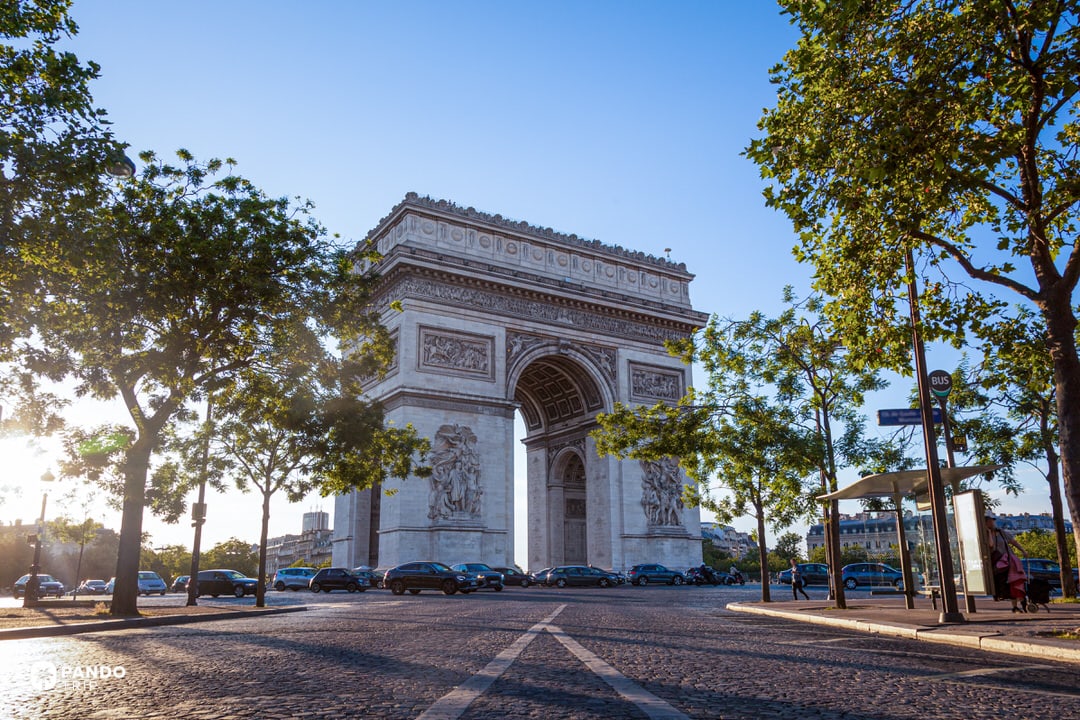


Practical playbook: terrace access isn’t one-price-fits-all this year. From 2 June to 30 September 2025 the ticket tops out at €22, though every Wednesday it slides to €16. Once autumn settles in – 1 October 2025 through 31 March 2026 – the standard rate stays at €16 every day. EU residents under 26, plus the first Sunday of the month November–March, still stroll in free. Time your climb for the last hour before sunset; the golden light chisels every sculpted muscle, and the city’s headlights ignite just as you step back down. Napoleon imagined triumphal parades marching straight through his arch; we settle for a rooftop breeze and the smug glow of having survived the world’s liveliest roundabout.
10. Luxembourg Gardens: The Place Where Parisians Mastered the Art of Doing Nothing Beautifully

Here’s what nobody warns you about Parisian life: the magic isn’t that locals are born sophisticated, it’s that the city hands them settings where sophistication happens without trying. The Luxembourg Gardens are Exhibit A. Spread over 25 hectares (about 60 acres) of ruler-straight hedges and stately alleys, the park turns the simple act of sitting in a green metal chair into a cultural achievement – not laziness, but leisure elevated to an art form.
Marie de’ Medici kicked things off in 1612, importing Tuscan garden dreams to the Left Bank. Four centuries later her layout still plays a clever double game: on one side, French parterres line up tighter than a Guardsmen drill; on the other, English lawns sprawl just enough to invite picnics and afternoon cartwheels. At the octagonal pond – epicentre of civilized dawdling – kids rent toy sailboats for €6 a half-hour and prod them along with bamboo sticks while the statues of 106 French queens look on like amused referees.
Grab one of those spindly green chairs – free, first-come, first-seated – and park yourself near the Medici Fountain. The city’s daily variety show rolls past on cue: law students rehearsing arguments, retirees hammering chess clocks, joggers timing laps to the palace bell. Spring drops blossom confetti, summer cues brass bands in the gazebo, and autumn crunches underfoot with bronze chestnut leaves—you set the tempo simply by staying put.


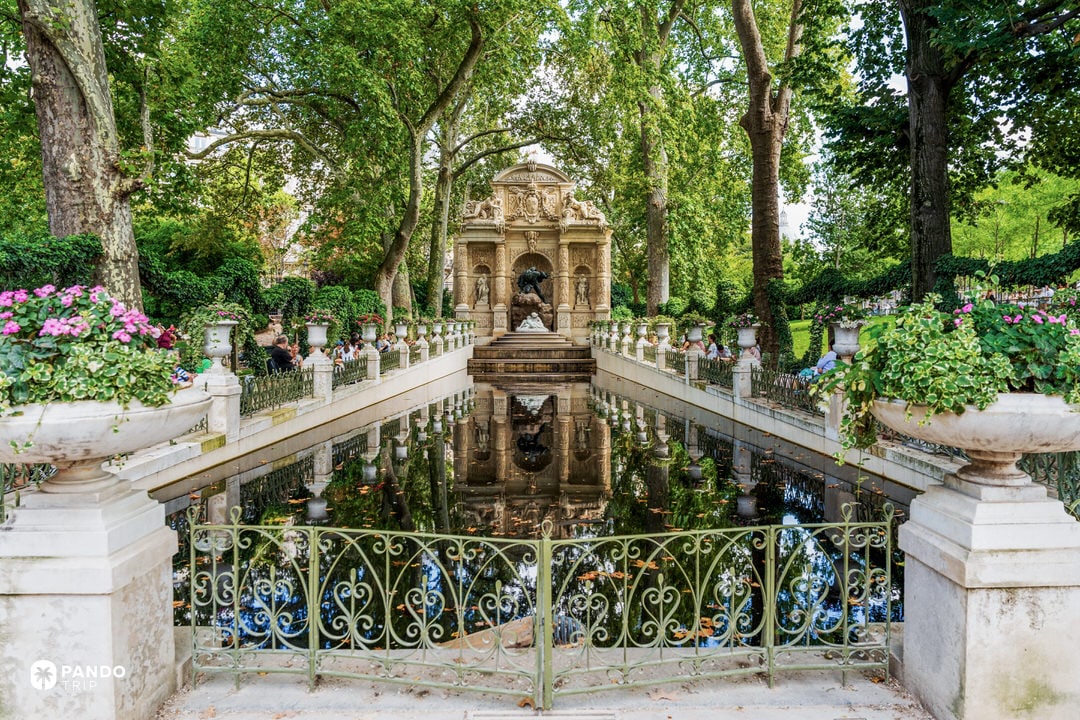
Hours drift with daylight – roughly 7:30 a.m. in midsummer, 8:15 a.m. in winter, closing at dusk – so early birds can have the gravel paths to themselves. Pack a baguette and a paperback, or swing by Le Fournil for a takeaway crêpe in the €4–5 range before you claim your throne. In a city famous for high drama, Luxembourg Gardens earn the final sigh by proving that doing nothing, done right, can feel like everything.