
Who really has the oldest village in Italy, the oldest city in Europe and the oldest in the Americas — plus the beautiful ones that miss two thousand years.
Say ancient town and most people picture rubble: a ticket booth, a rope, a column lying where it fell, and a guide explaining what used to be there. The fifteen below have all of that and a bin day as well. People have lived in every one of them without a break for at least two thousand years, and are living in them this afternoon — three thousand of them inside a Roman palace in Split, eleven of them on a pillar of tufa in Lazio. We have not ranked them by age. Age is the one thing every old town lies about, and some of the lying below is spectacular.
What counts as ancient here
Two thousand years of unbroken habitation, and somebody still living there. Guinness gives its oldest-city record to Jericho on an eleven-thousand-year figure the archaeology does not support, which tells you how firm the ground is under everything that follows. The figures below are the defensible ones, not the ones on the signs.
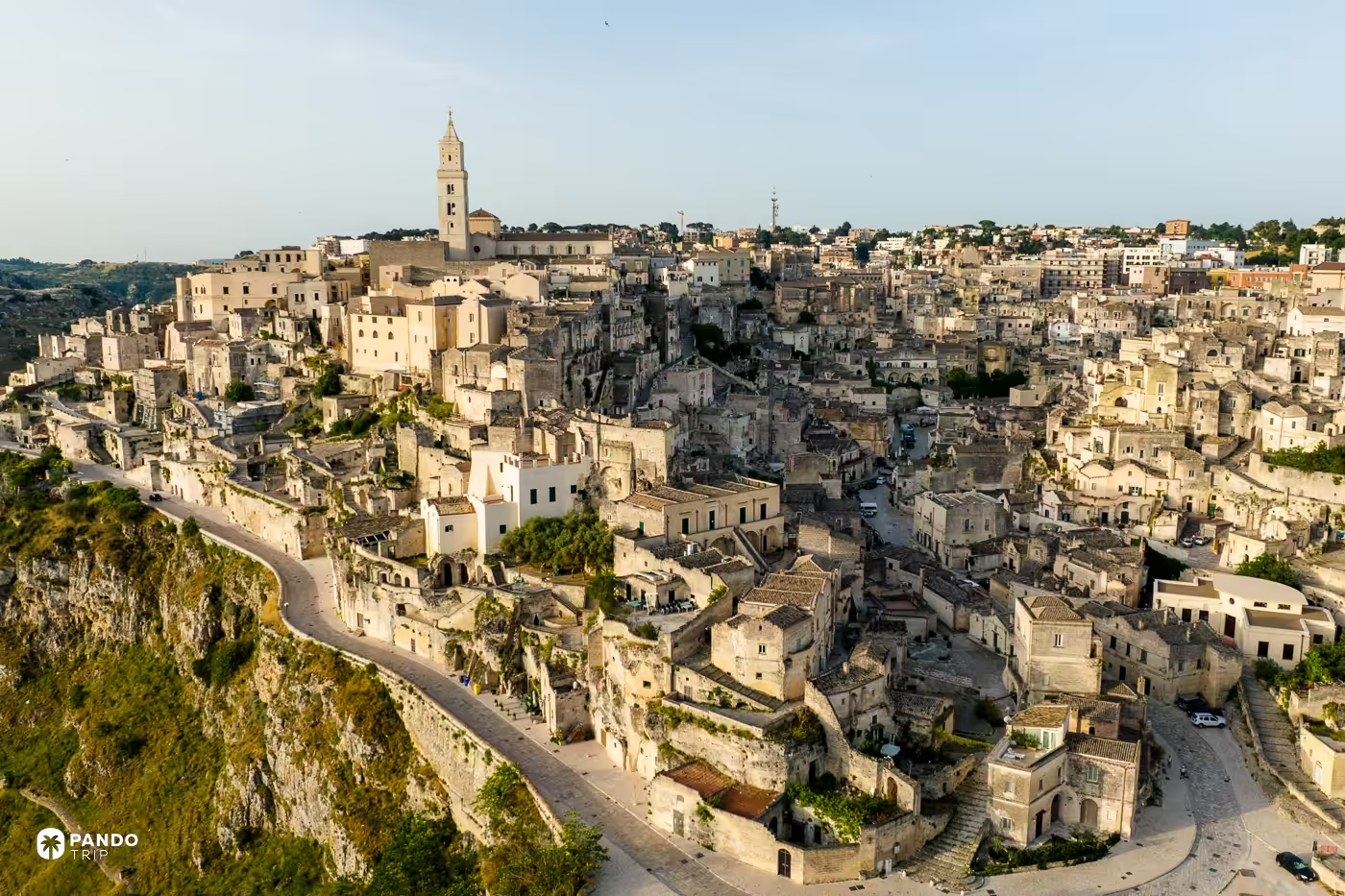
Matera, Italy — inhabited for at least 3,000 years
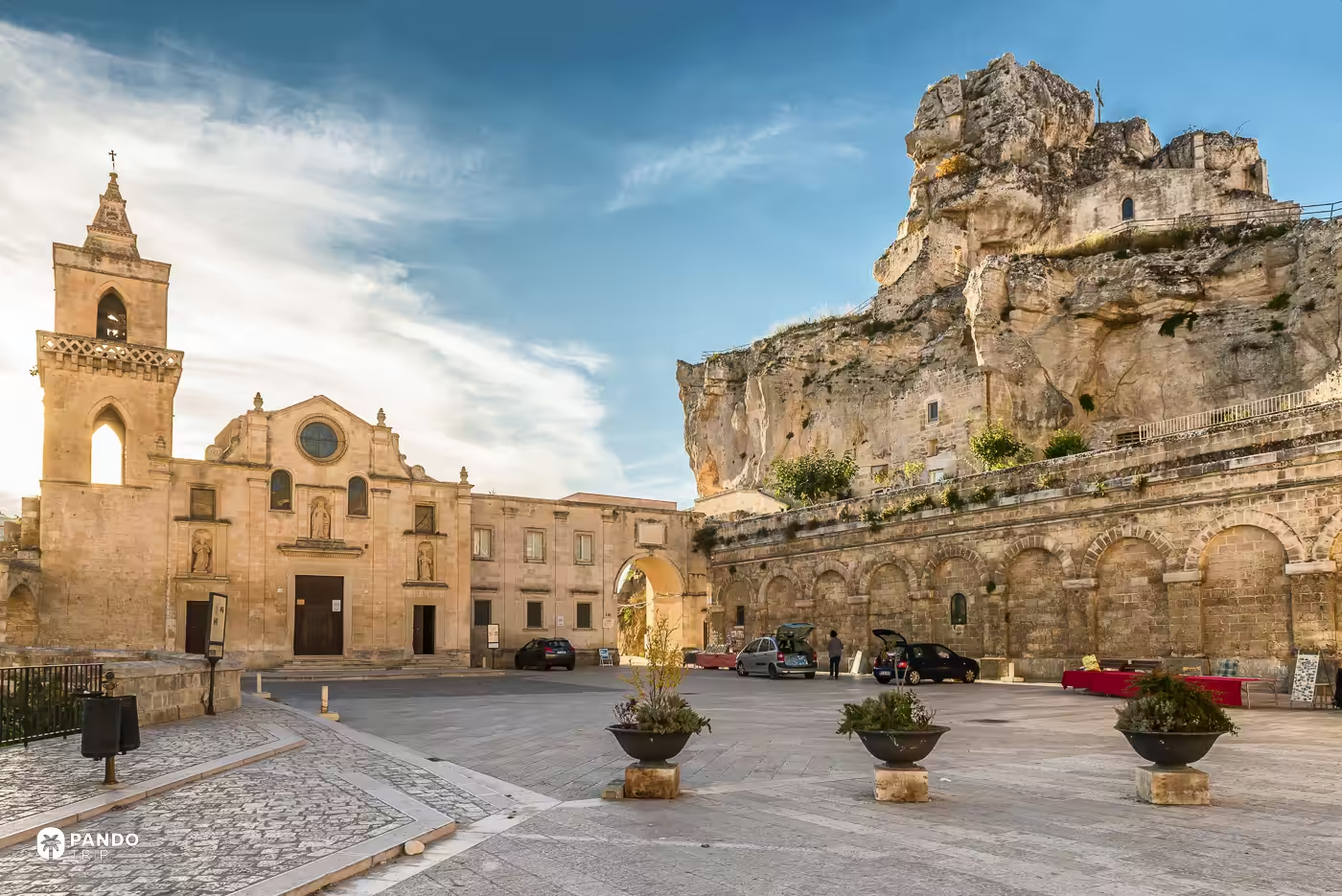
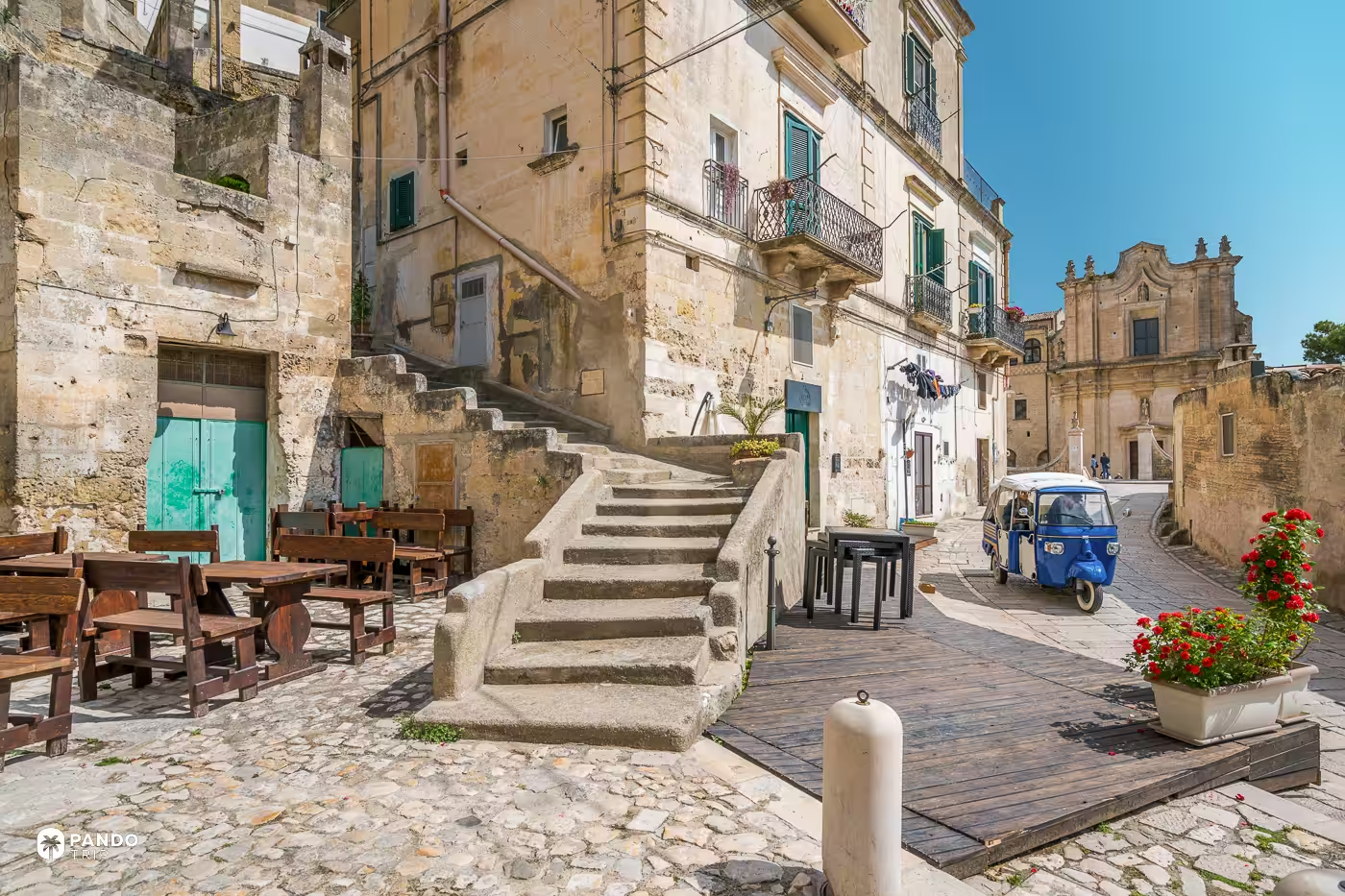
On 17 May 1952 the Italian state made it illegal for about 17,000 people, two-thirds of the city, to go on living in the Sassi, and moved them out to new villages on the plateau; De Gasperi handed over the first set of keys at La Martella the following spring. Seventy years on, the caves are still emptying: 1,624 residents in 2013, 1,285 in 2022. Stand on the Murgia side at dusk and the whole evacuated city comes up at once — two ravines of tufa dwellings going amber, each one stacked on the roof of the last, the gorge black underneath. Sextantio Le Grotte della Civita will rent you one of the caves, candlelit, with a former rock church for a dining room. Best bed on this list.
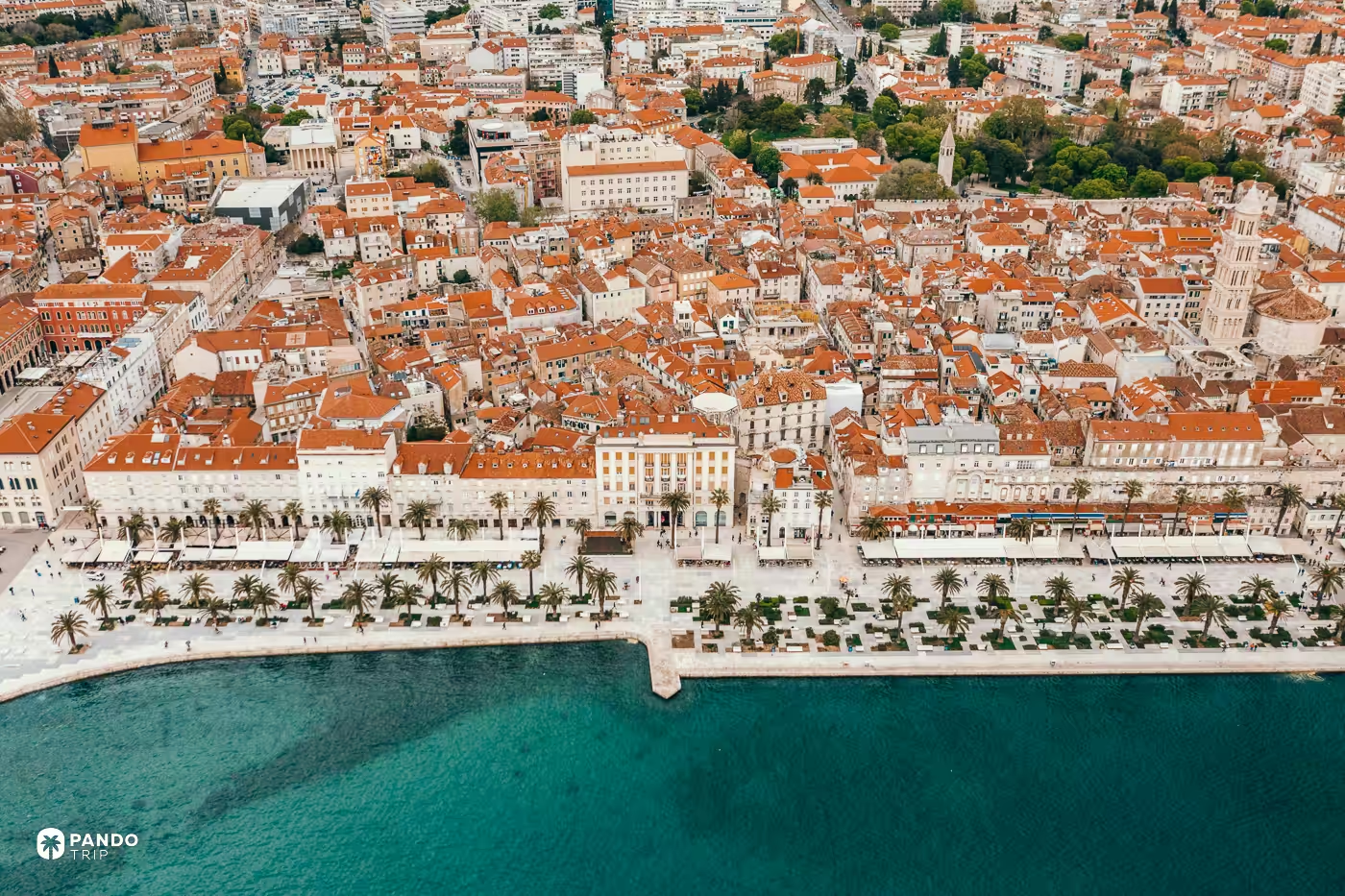
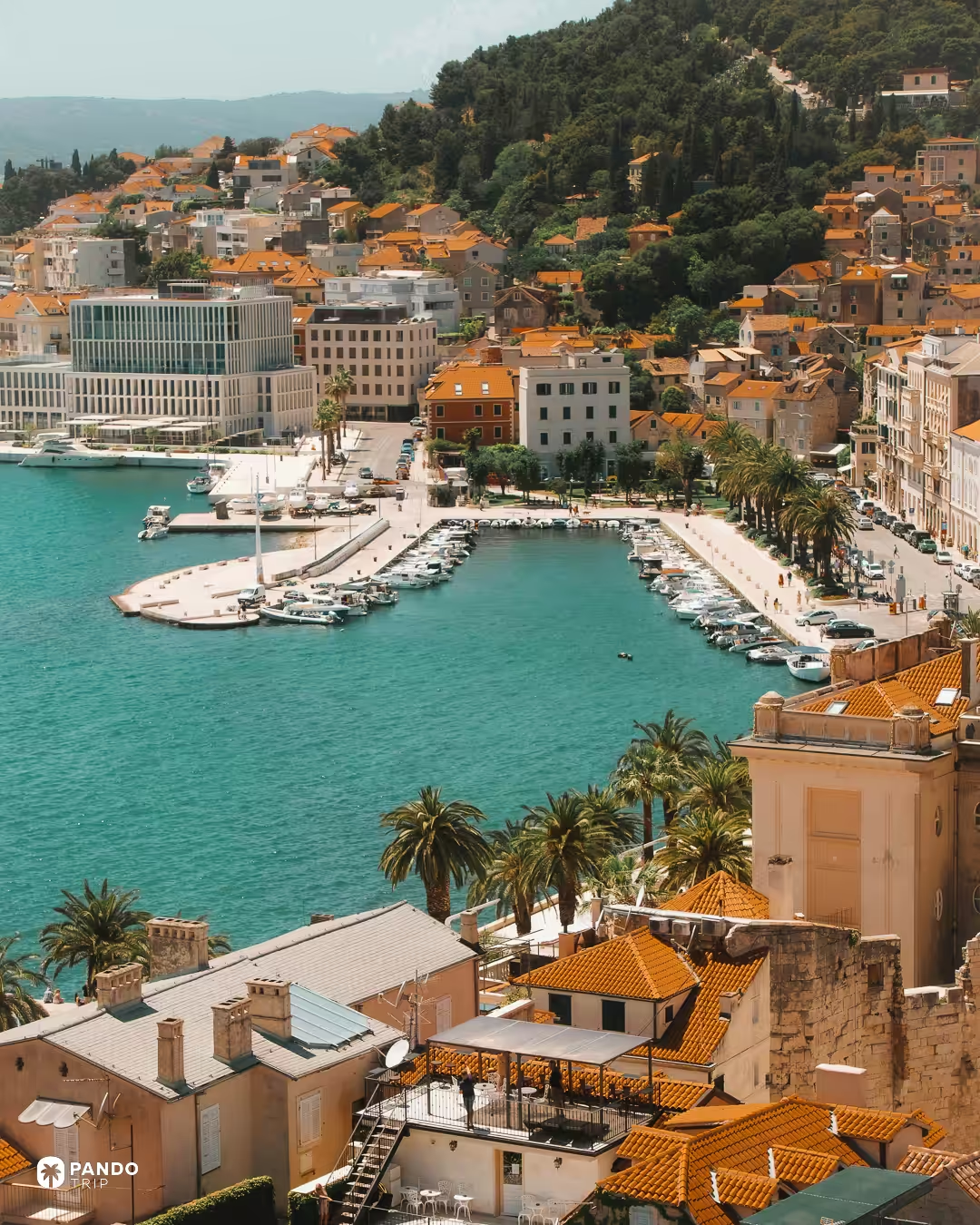
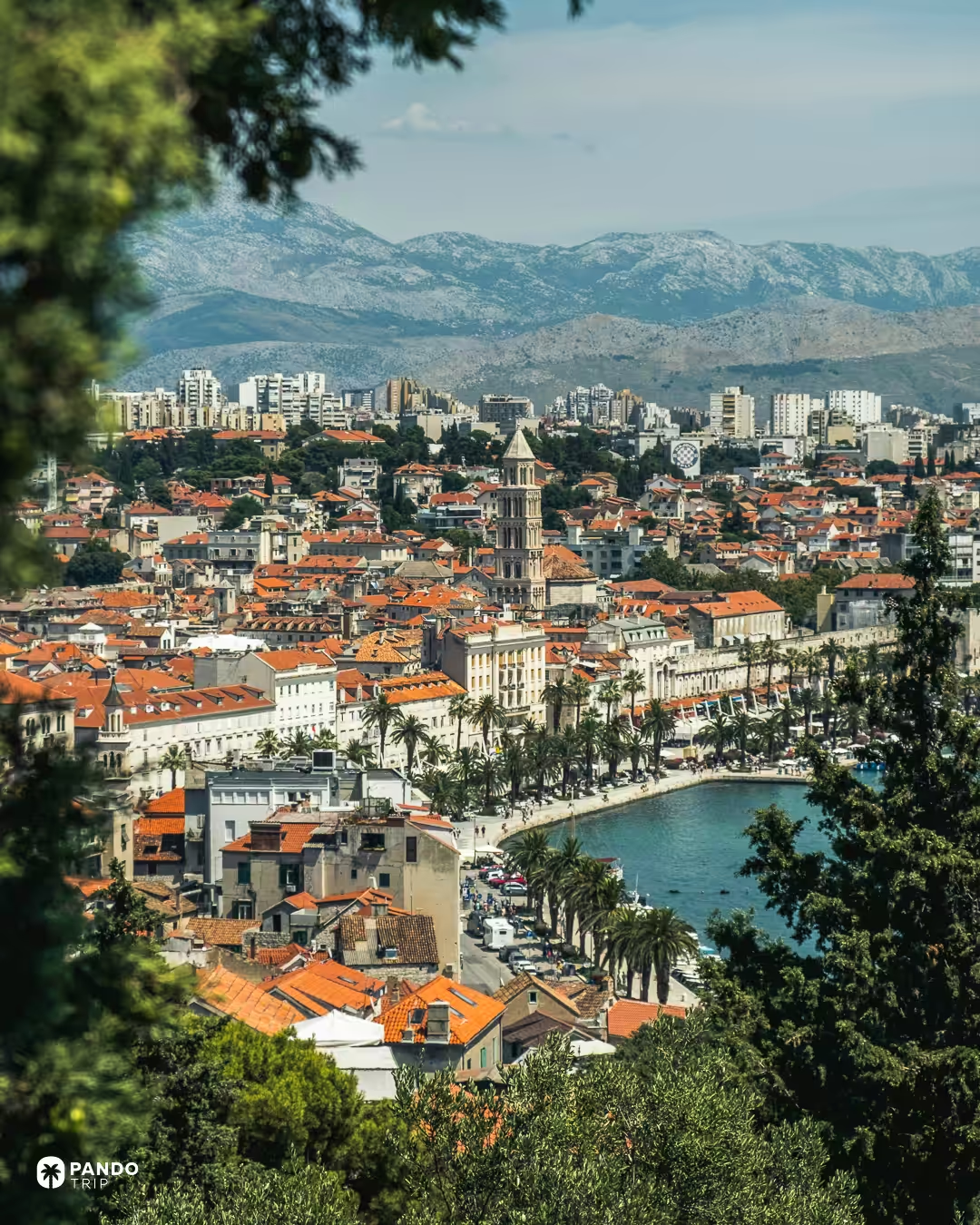
Split, Croatia — the site is 2,200 years old, the palace 1,720
Roughly three thousand people have their home address inside Diocletian’s palace. Half of Split’s old town is one late-Roman building of about four hectares, which means the Peristyle — the emperor’s colonnaded forecourt in Egyptian granite, with a black granite sphinx in it — is also a residential courtyard, with washing out over the columns and live music in it some two hundred days a year. Hotel Vestibul Palace, built into the Roman wall itself, puts you in the middle of that. The people who live around it have been asking the city to stop for years. The art historian Ana Peraica put it that the Peristyle “should be an exclusive location, not one where everything is mixed and brought down to the level of petrol-station music”.
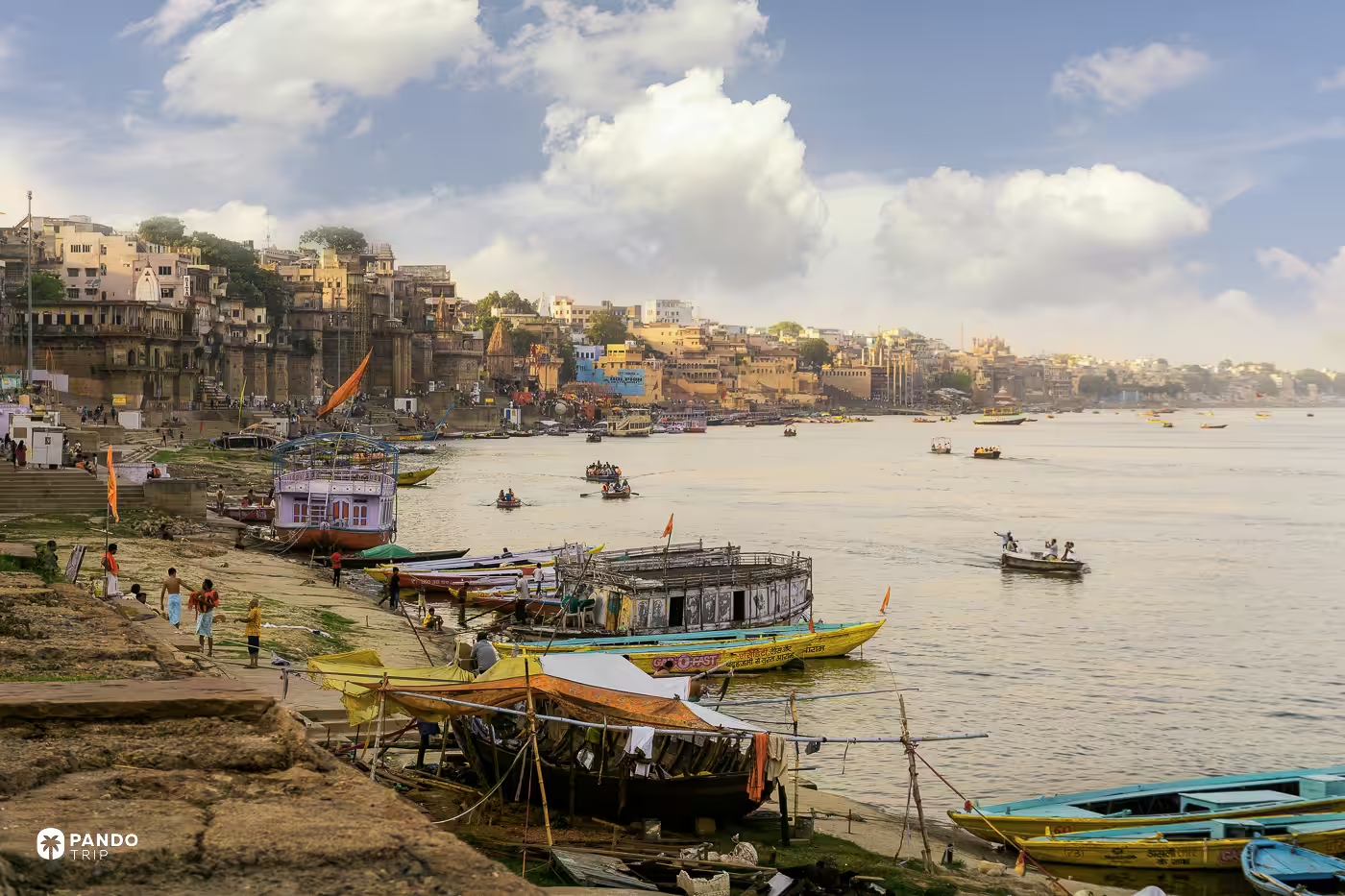
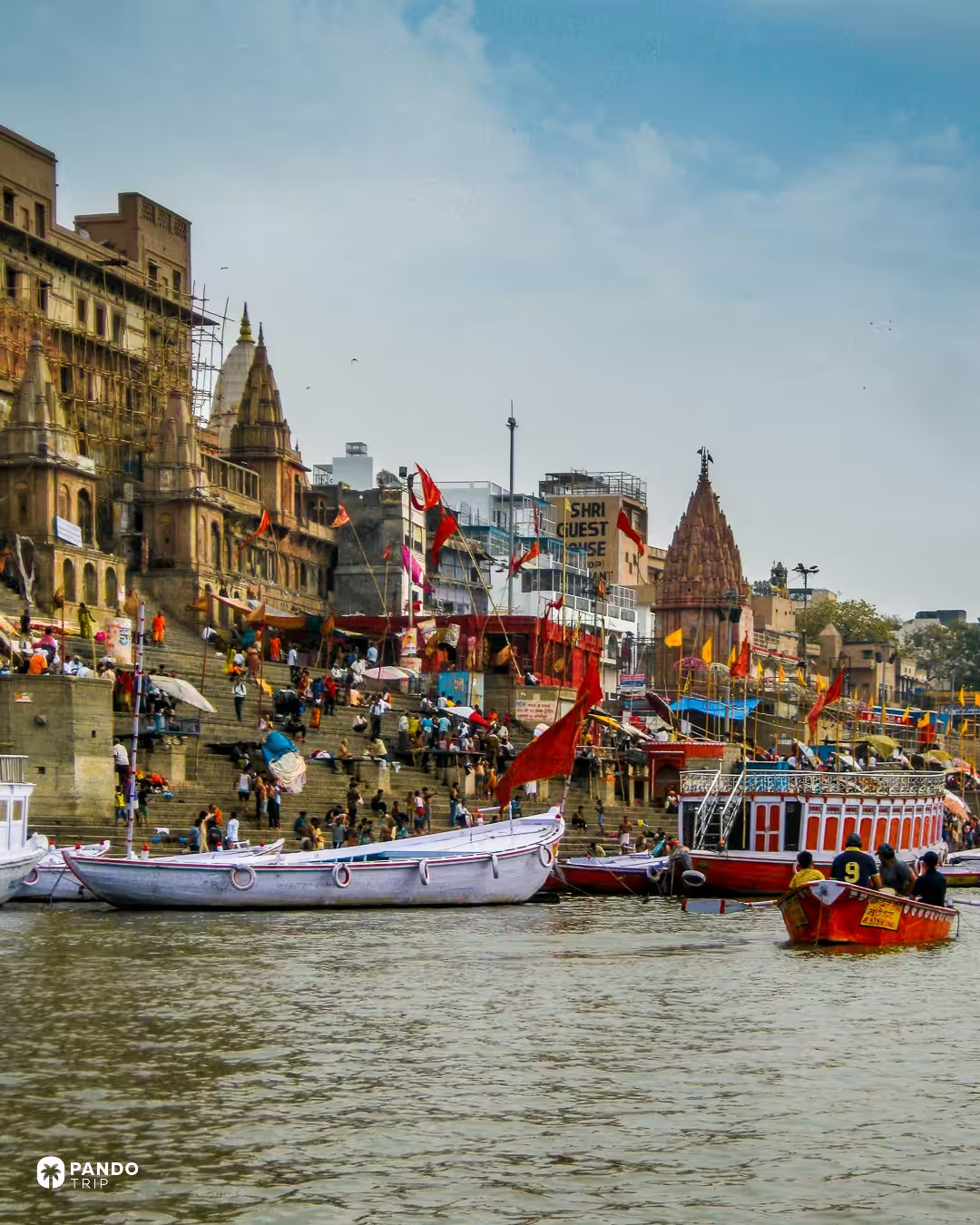
Varanasi, India — settled at Rajghat since the 8th century BC
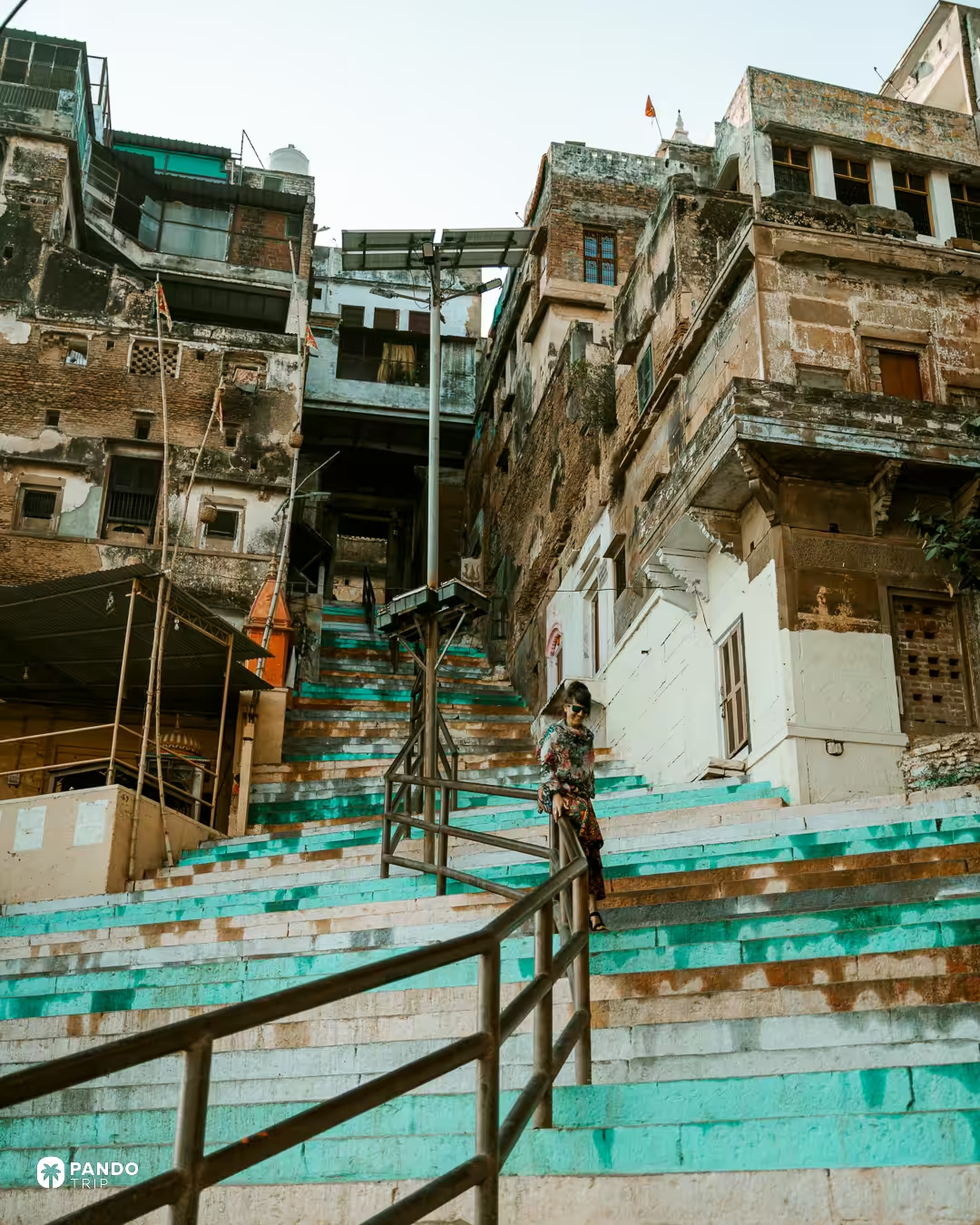
There is a simple test of whether you have come to Varanasi at the right time of year: walk into Chowk at seven in the morning and see whether anyone is selling malaiyo. Milk is boiled, left out under the open sky overnight so the dew settles on it, then whipped with cream, saffron and cardamom into a foam that collapses the moment it touches your tongue. It cannot be made without cold nights, so it exists from about November to February and not otherwise. Those are also the only comfortable months on the ghats — by May the river city runs to 45°C, and by July the Ganges has climbed the lower steps and taken the boat landings with it. Come for the foam. Stay for the sunrise from midstream, which does earn the alarm.
Plovdiv, Bulgaria — inhabited for about 8,000 years, it says here
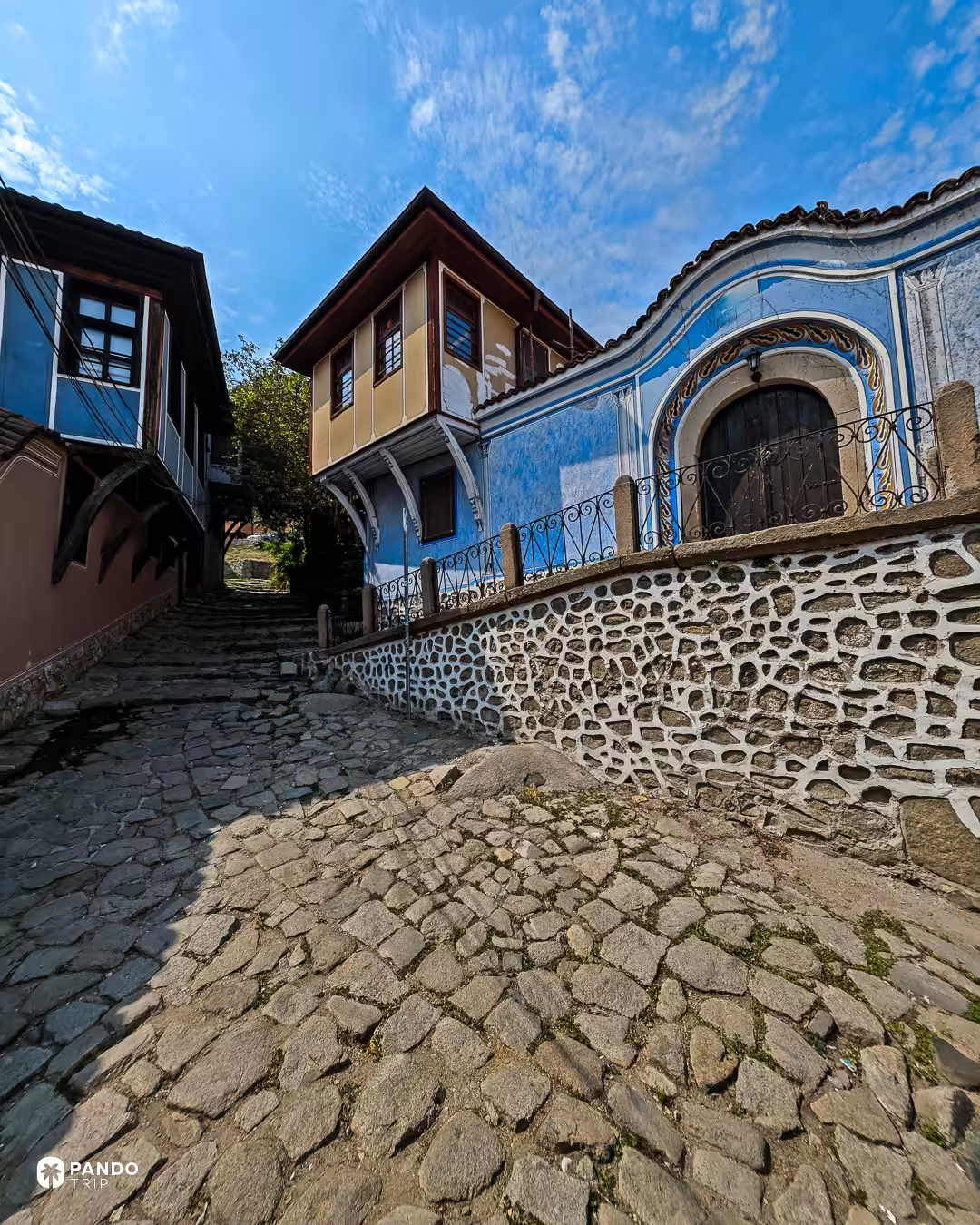
Plovdiv’s claim to be the oldest continuously inhabited city in Europe is repeated so often that a Plovdiv non-profit runs a web domain for it, theoldestcityineurope.eu, which is not the behaviour of a place that feels secure. The archaeology underneath is real enough: the tell at Nebet Tepe carries traces from the sixth millennium BC. So does Argos, down in the Peloponnese, from around 5000 BC — the same claim, made quietly. Plovdiv has the earlier date and the better photograph, a Roman theatre still cut into the hillside with the modern city sitting below its top tier. Take Plovdiv. Know that Argos has the same claim and less of the marketing.

Cholula, Mexico — occupied since about 500 BC
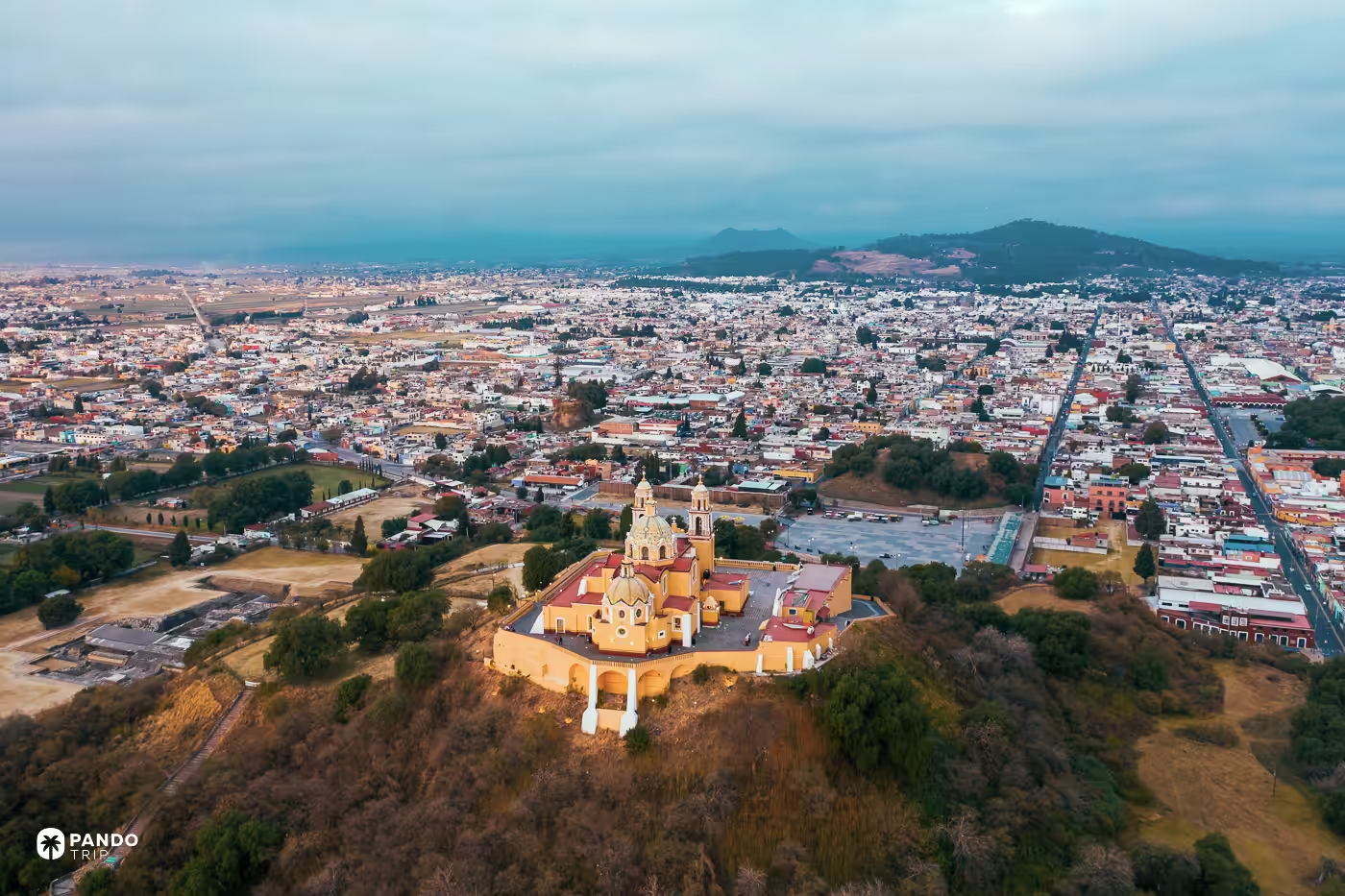
The yellow-domed church above Cholula is Nuestra Señora de los Remedios, and the Spanish put it up there in the sixteenth century. The hill it stands on is a building. Tlachihualtépetl is the largest pyramid on earth by volume — roughly 4.45 million cubic metres against Giza’s 2.4 million, about 450 metres to a side, built in phases from the third century BC to the ninth AD and now completely grassed over. Mexican archaeology makes Cholula the oldest living settlement in the Americas, and it beats Acoma Pueblo, the answer you will usually be given, by some sixteen centuries. Archaeologists have driven around eight kilometres of tunnels into the pyramid; after six years shut, about 800 metres of them reopened in March 2026. Popocatépetl stands behind the church, smoking.
Civita di Bagnoregio, Italy — Etruscan, and down to eleven
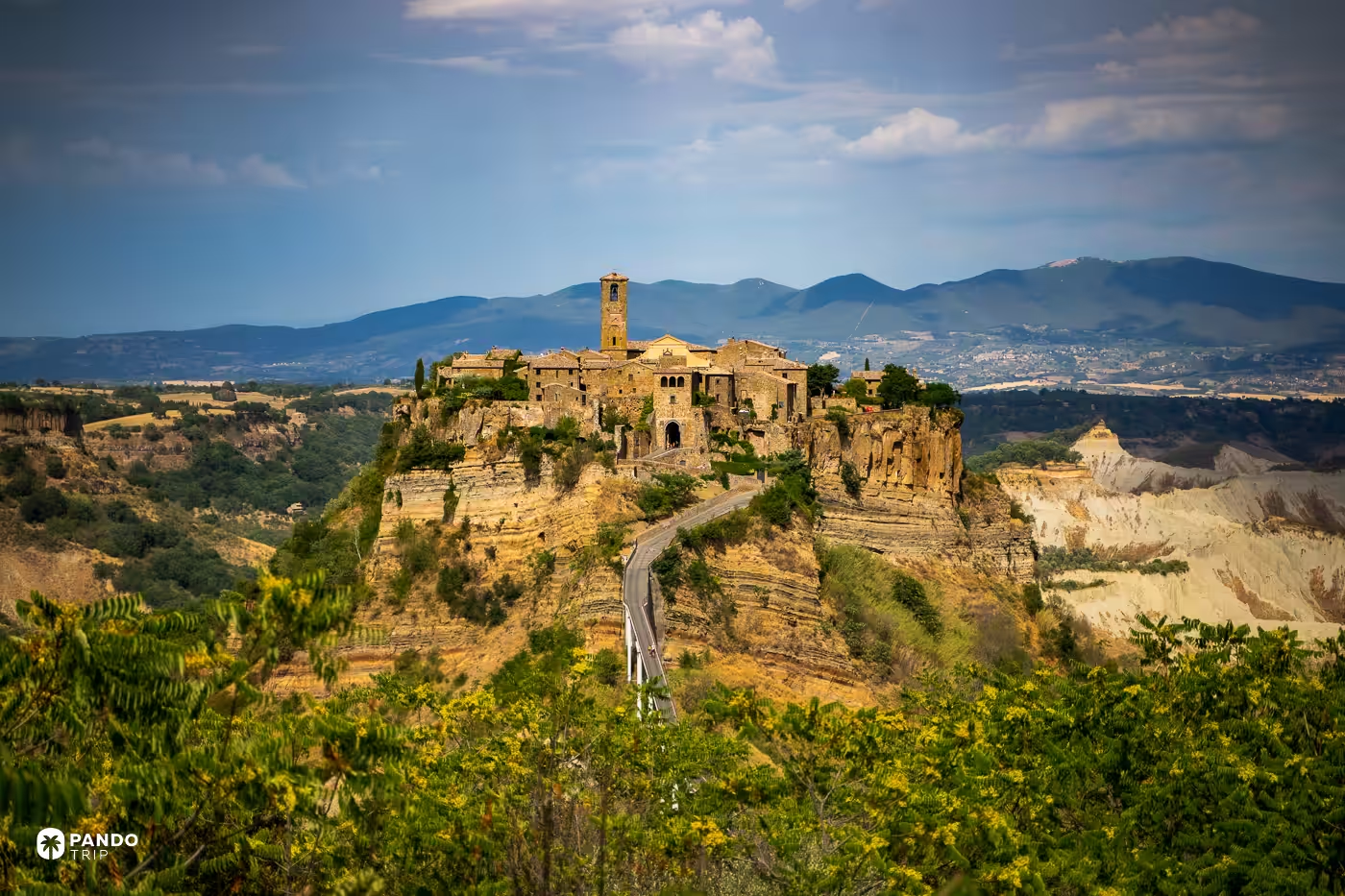
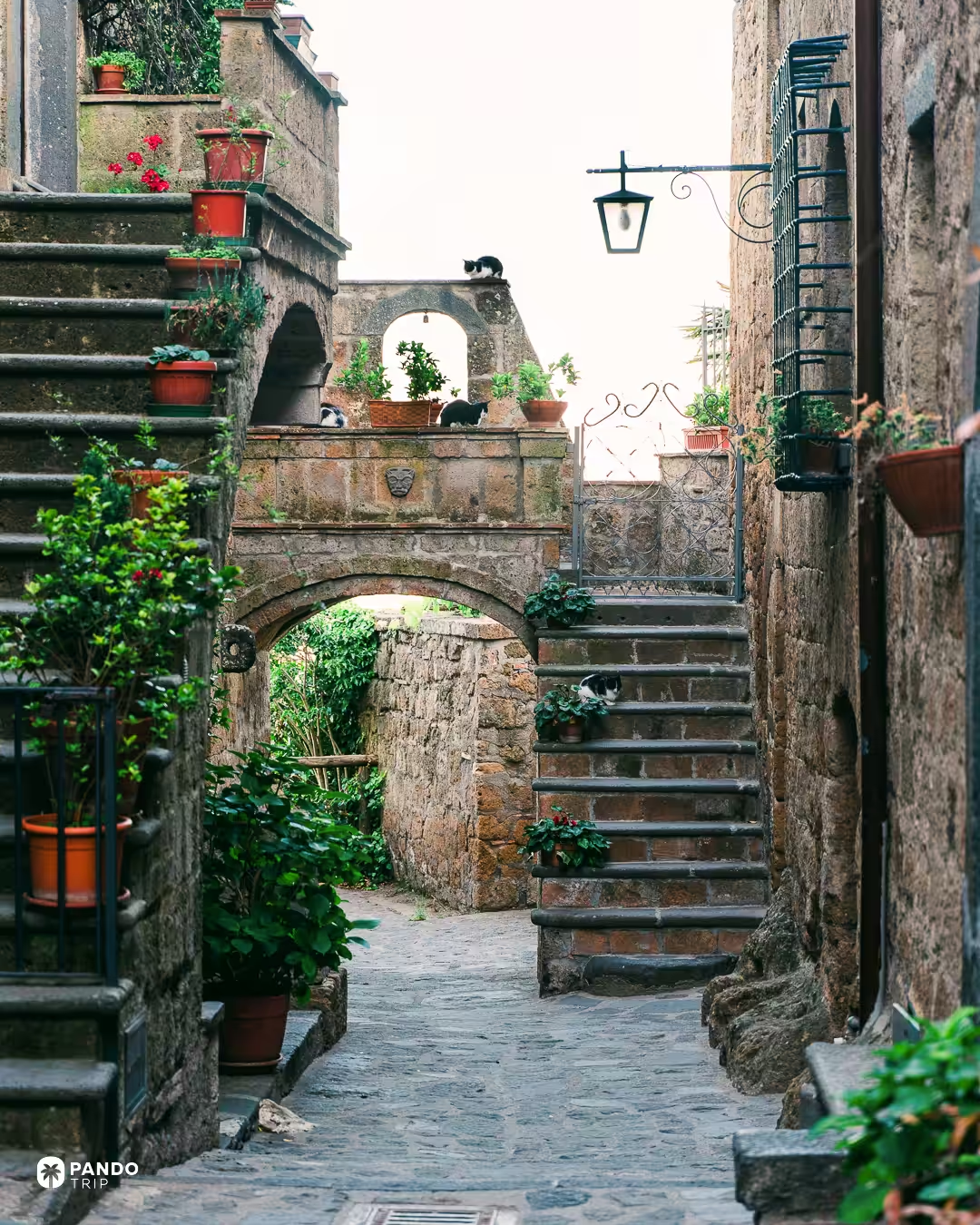
A pillar of tufa standing out of a valley of eroded clay, one footbridge running to it and nothing else touching it at all: Civita has eleven residents at the last count. Everyone else pays €5 at a turnstile at the far end of that bridge — and that turnstile has abolished Bagnoregio’s municipal income tax surcharge, its school-bus charges and its resident parking fees. A village of eleven funding a town of three thousand raises the question we ran into on Burano: at what point is a village a set?

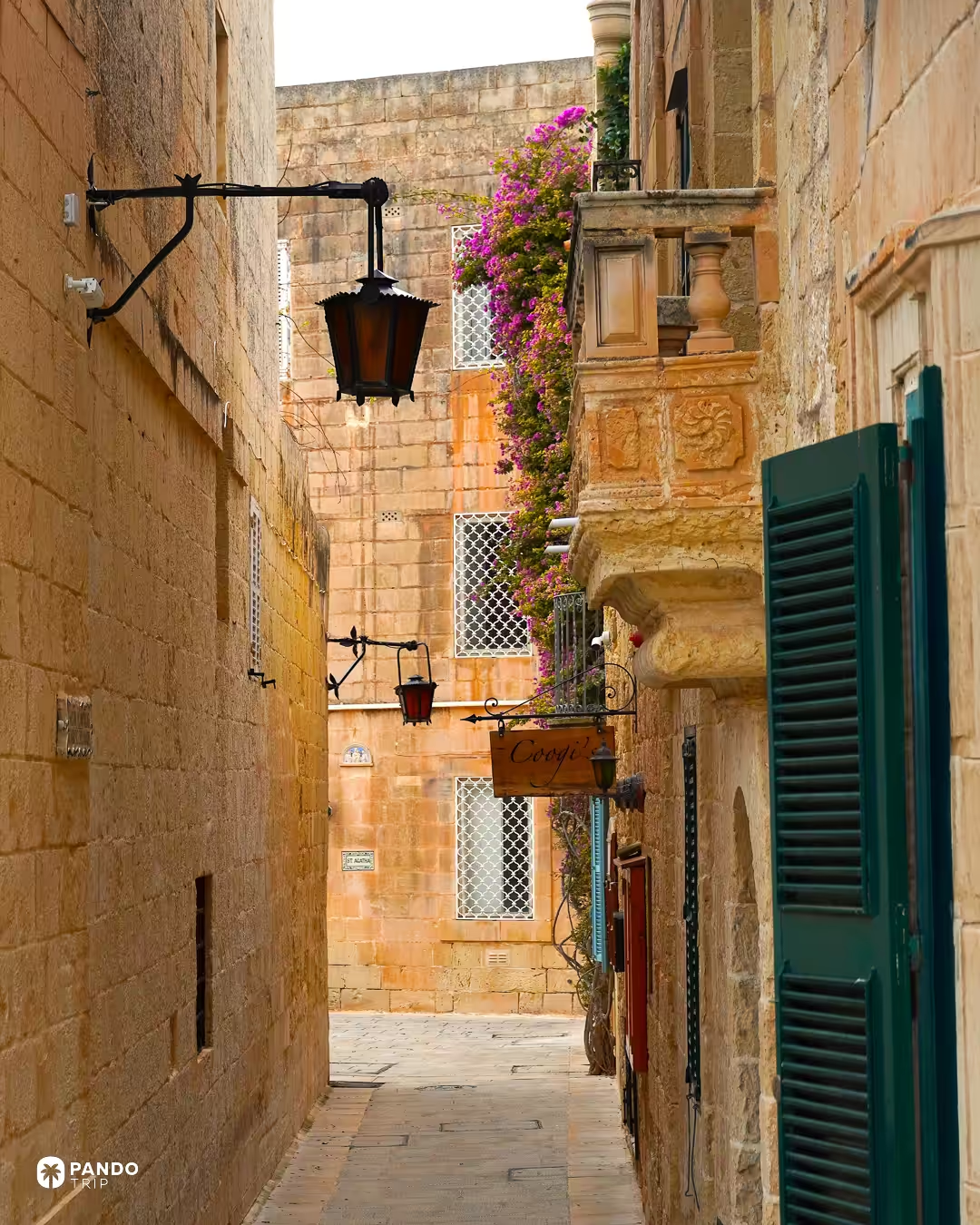
Mdina, Malta — population 242, at the last count
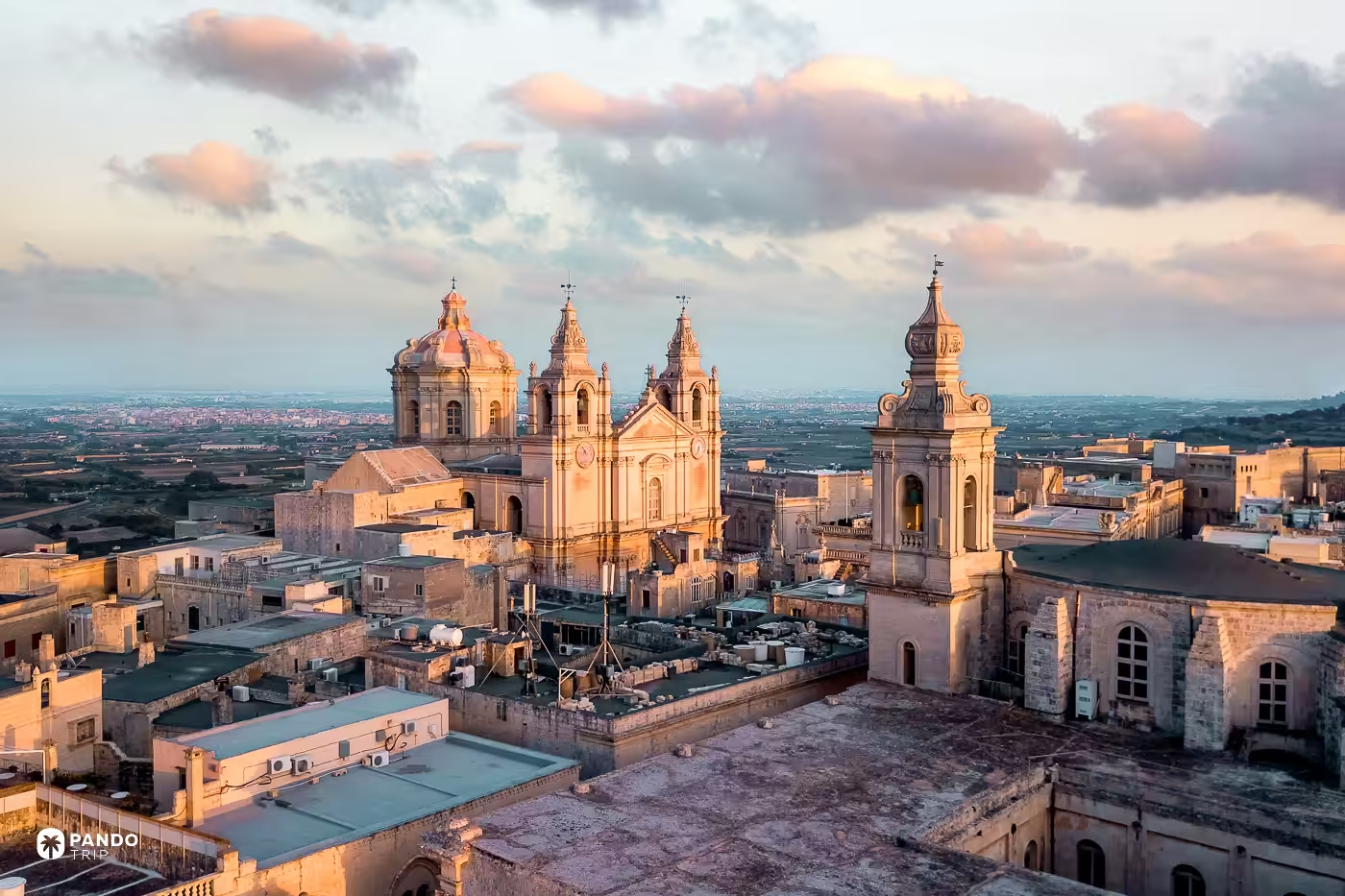
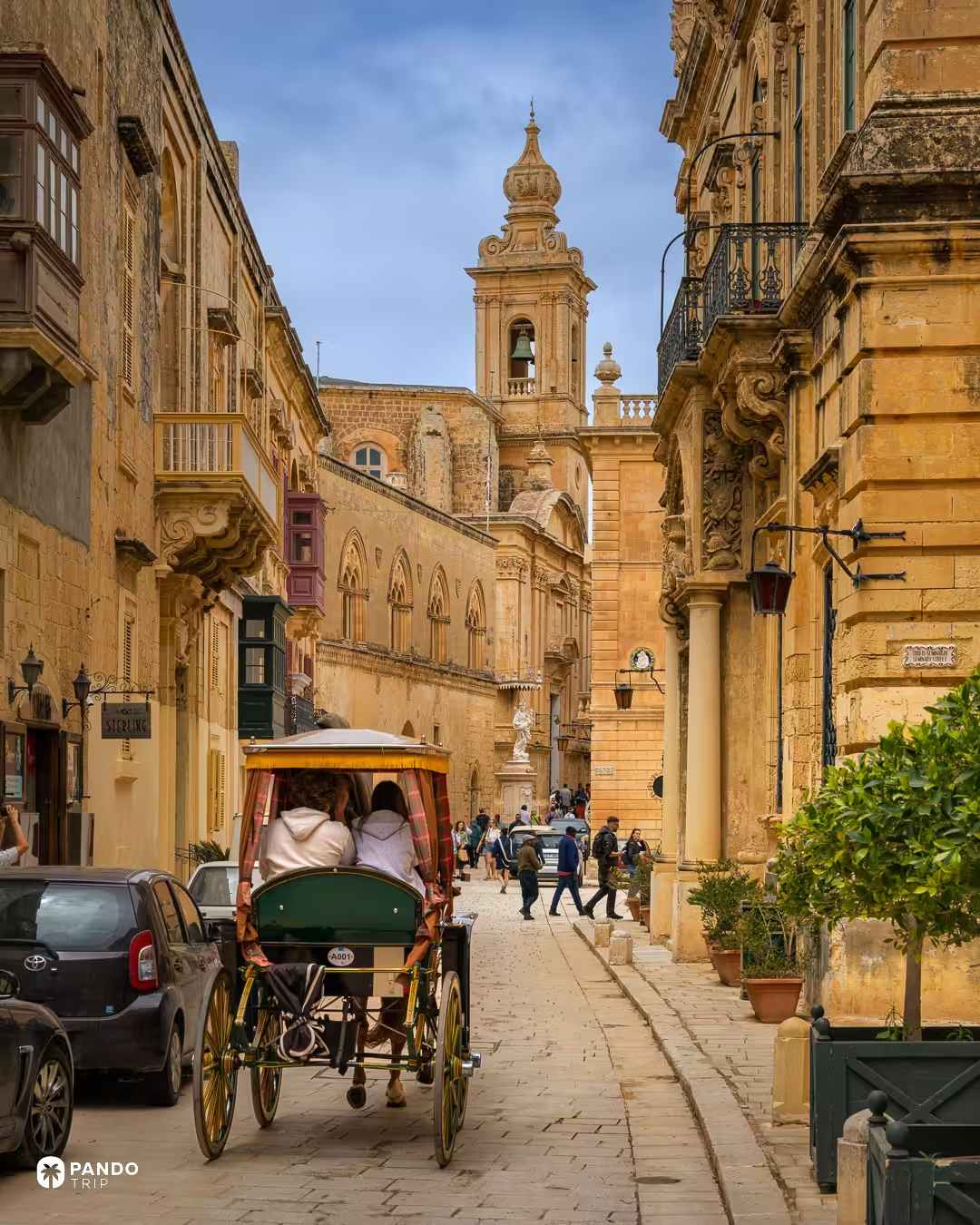
Nothing goes through Mdina’s gate except residents’ cars, emergency vehicles, wedding cars and horses. That is a written rule, which is why a walled city on a Maltese plateau sounds like a village in a power cut: hooves on limestone, and a door somewhere. The lanes are narrow enough that Triq Villegaignon after dark is a honey-coloured canyon. Come after five, when the last coach has gone — Mdina sits on every island tour’s schedule between ten and five, and it is a different building in the evening. Which is the argument for staying the night: The Xara Palace, a seventeenth-century palazzo on the bastions, is worth the money.
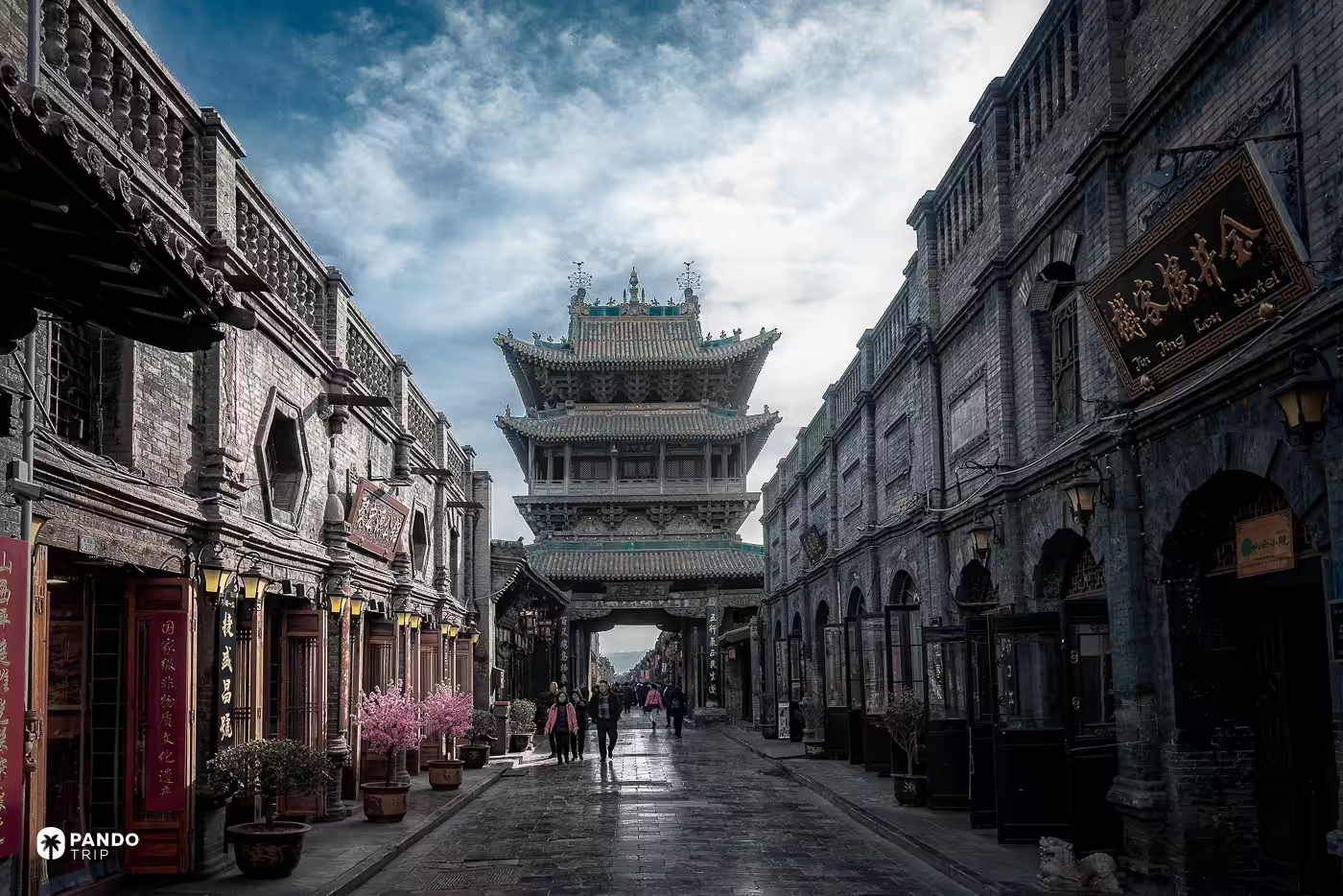
Pingyao, China — walled under the Zhou, rewalled by the Ming
Six kilometres of wall, twelve metres high, run right round Pingyao and enclose 225 hectares of grey-tiled courtyard houses — close to 3,800 of them, Ming and Qing, their roofs running out to the ramparts in every direction like a ploughed field. UNESCO’s citation dates the city to the fourteenth century. Chinese sources date the county seat to the reign of King Xuan of Zhou, 827–782 BC. The wall you walk on is the later one. Who lives inside is decided upstairs: about 45,000 people did at inscription in 1997, some 20,000 were moved out by 2007, and the conservation plan now caps the walled city at around 22,000. Xinhua’s reporting on the back lanes behind the main streets describes what is left: the old, and families renting to get a child into a local school.
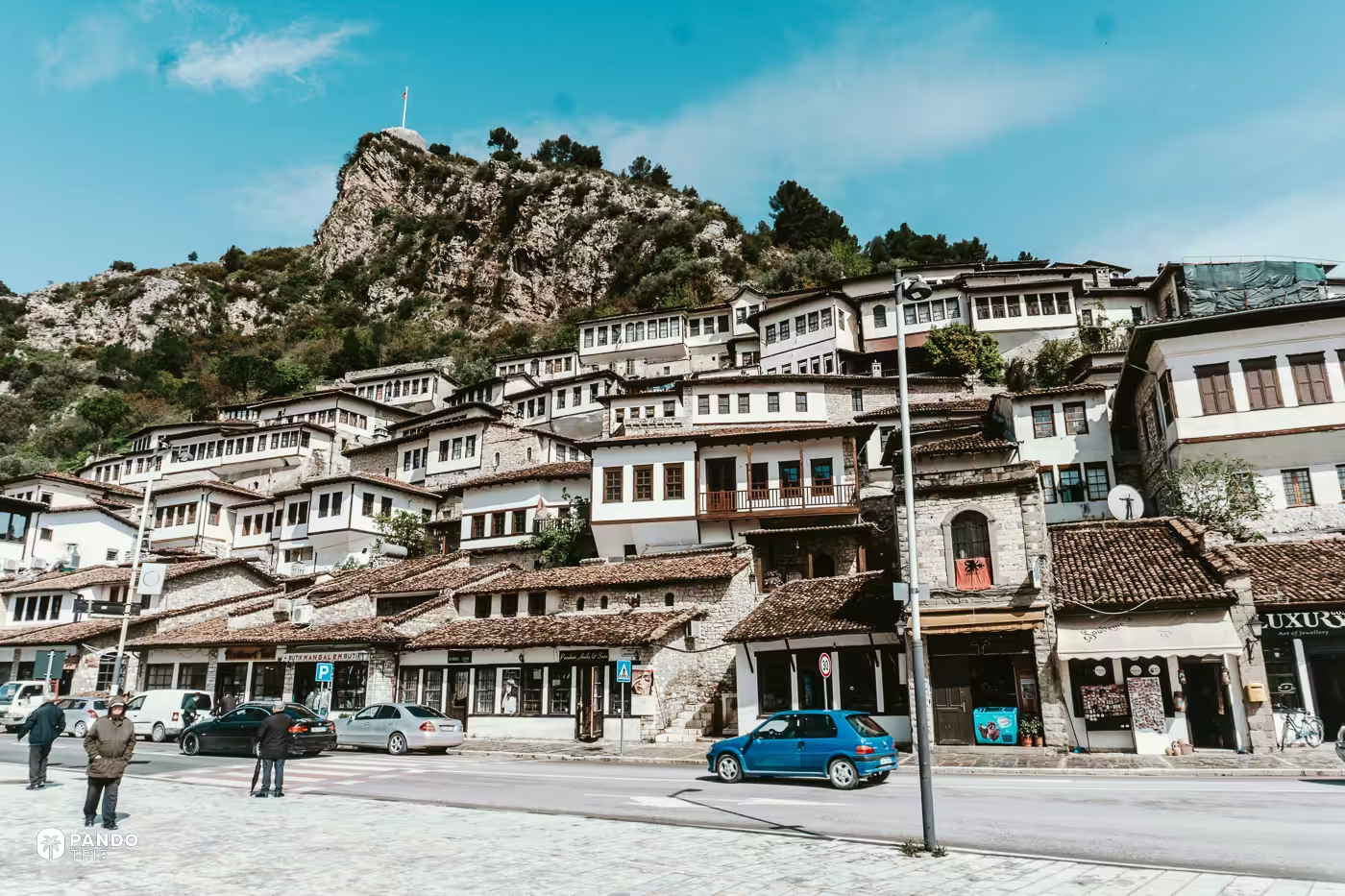
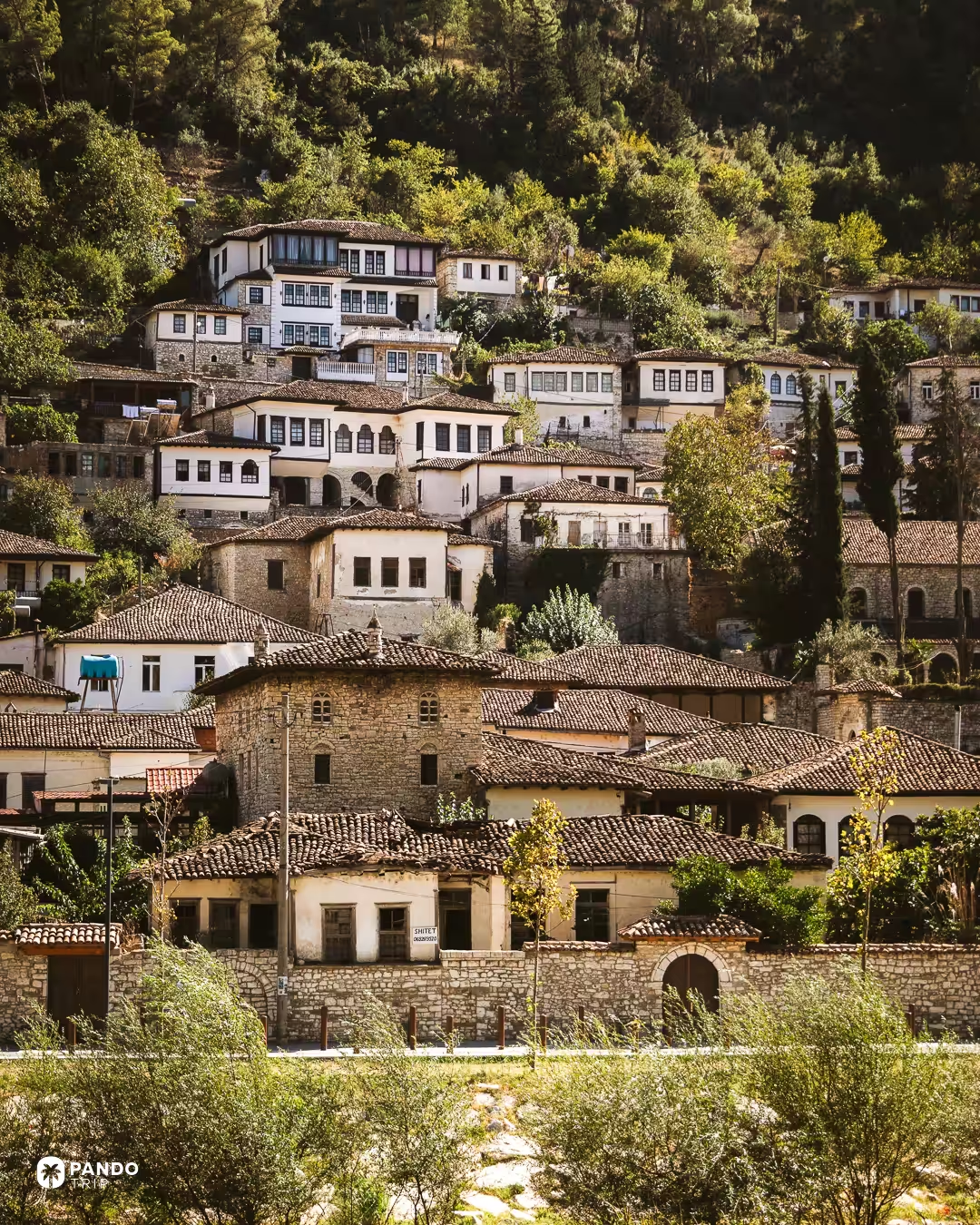
Berat, Albania — a museum city since 1961, with 210 listed monuments
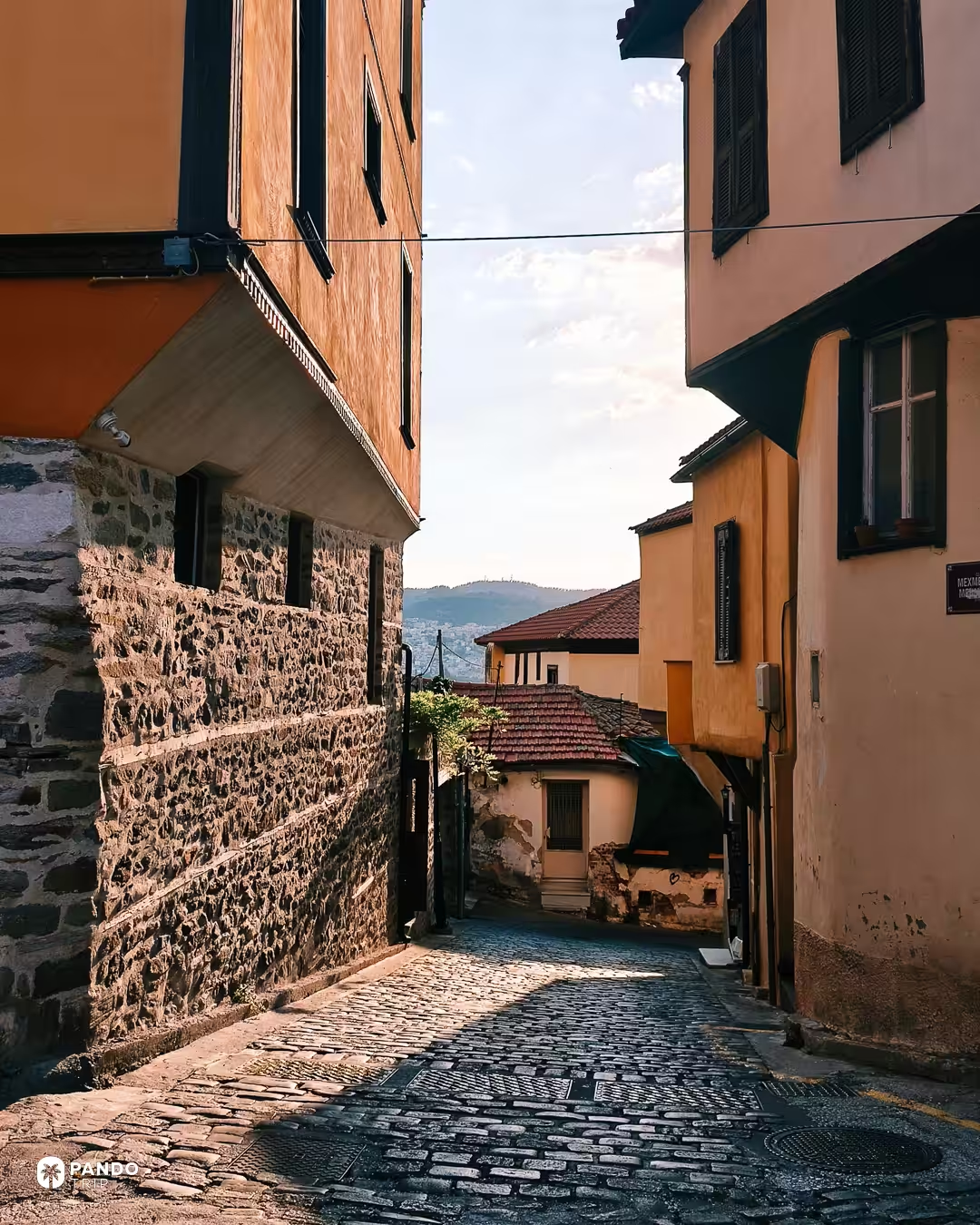
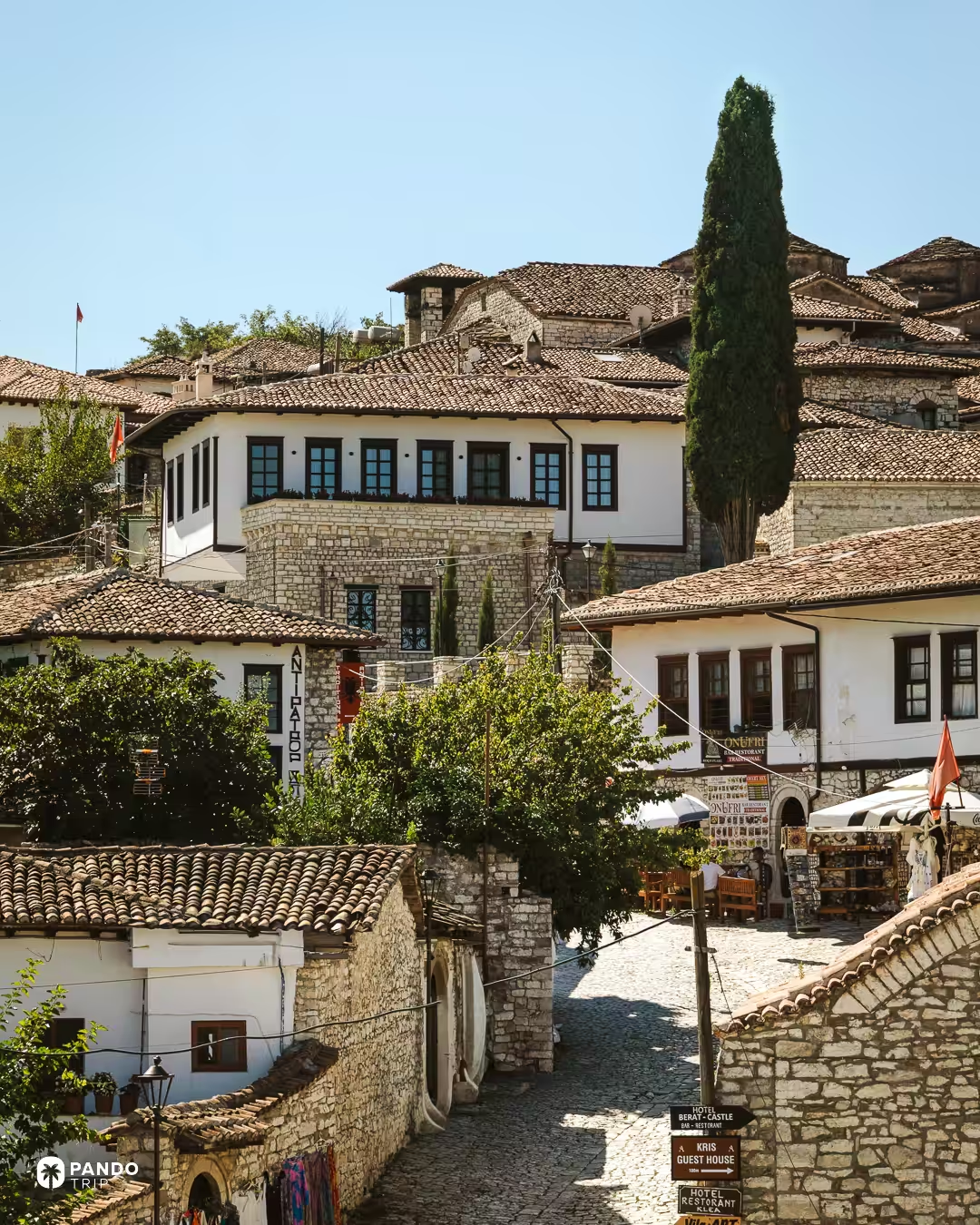
White Ottoman houses climb the hill above the Osum so tightly packed that their windows line up in tiers, which is where the town of a thousand windows comes from — and it only reads that way from the Gorica bank, across the river. Mangalem lights in the morning; Gorica takes the late afternoon. Above them the castle still has residents, roughly a hundred families by local count, inside 1,440 metres of wall with Byzantine churches standing between the houses. Eat down in the town at Homemade Food Lili, where Lili’s wife cooks, the family says it has been in Berat two hundred years, and you book by WhatsApp or you don’t eat.
Byblos, Lebanon — 7,000 years, and a Level 4 advisory
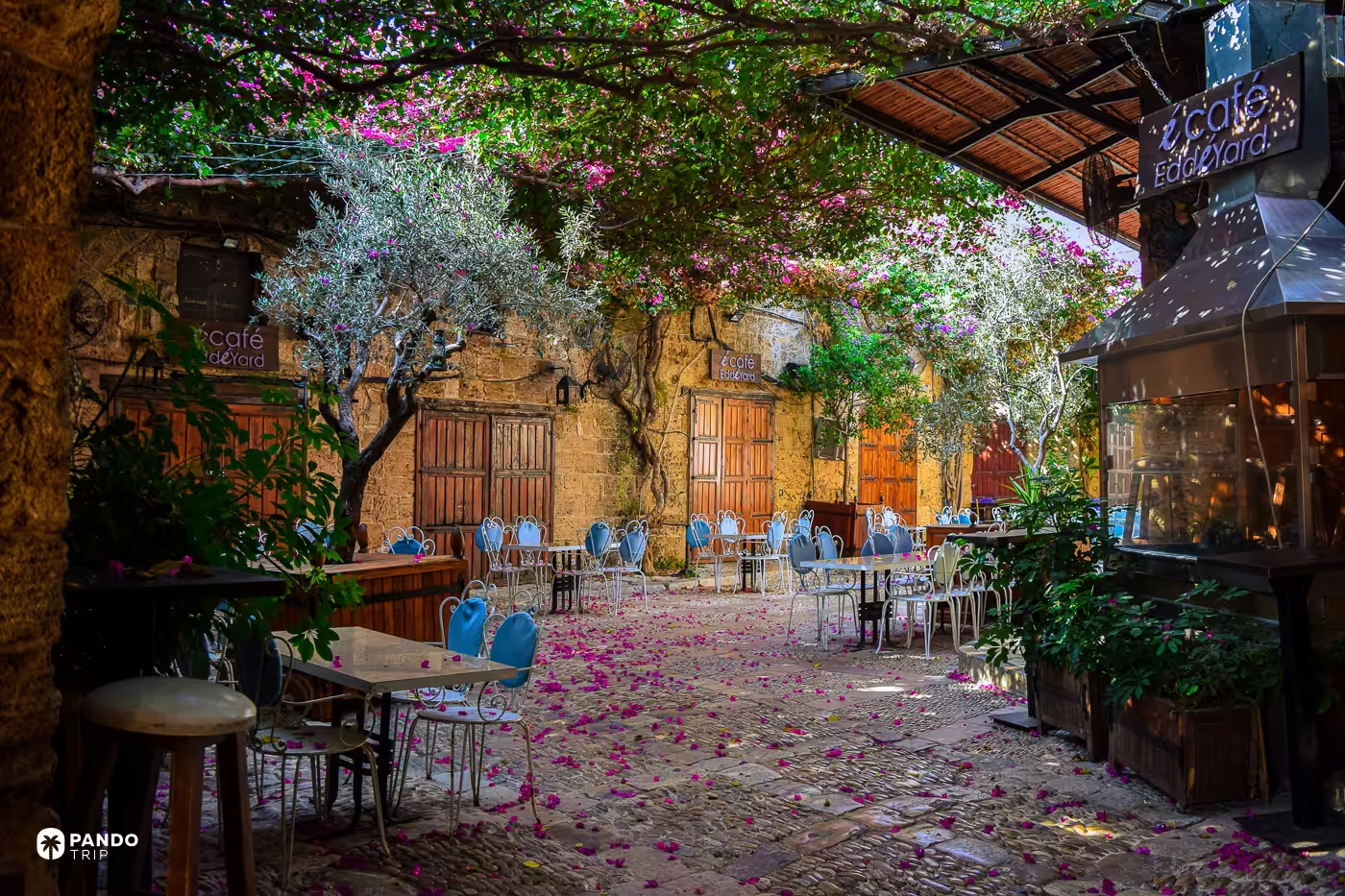
Start with the problem. The US State Department has Lebanon at Level 4, Do Not Travel; it ordered the departure of non-emergency government staff in February 2026 and left the advisory exactly where it was in May. Byblos stays on this list anyway, because it has been lived in continuously since about 5000 BC and because the mound behind the harbour holds at least seventeen distinct occupation phases stacked on one another, prehistory to the Arab conquest. On top of them sit a Crusader keep and a souk that sells clothes and crafts by day and turns over entirely to cafés after dark — the same lanes running two economies twelve hours apart. Go when you can. Not, at the time of writing, now.

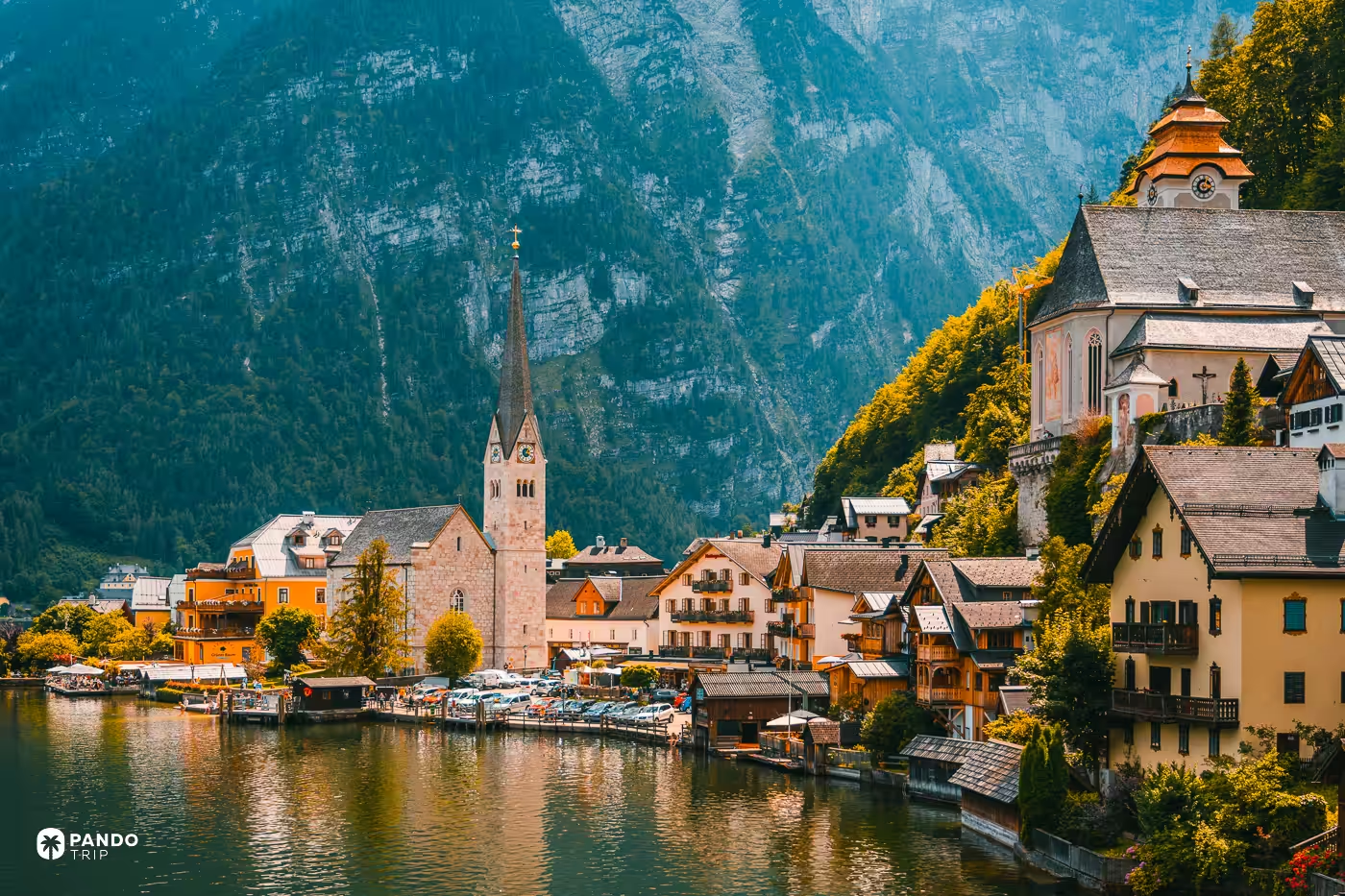
Hallstatt, Austria — 7,000 years of salt
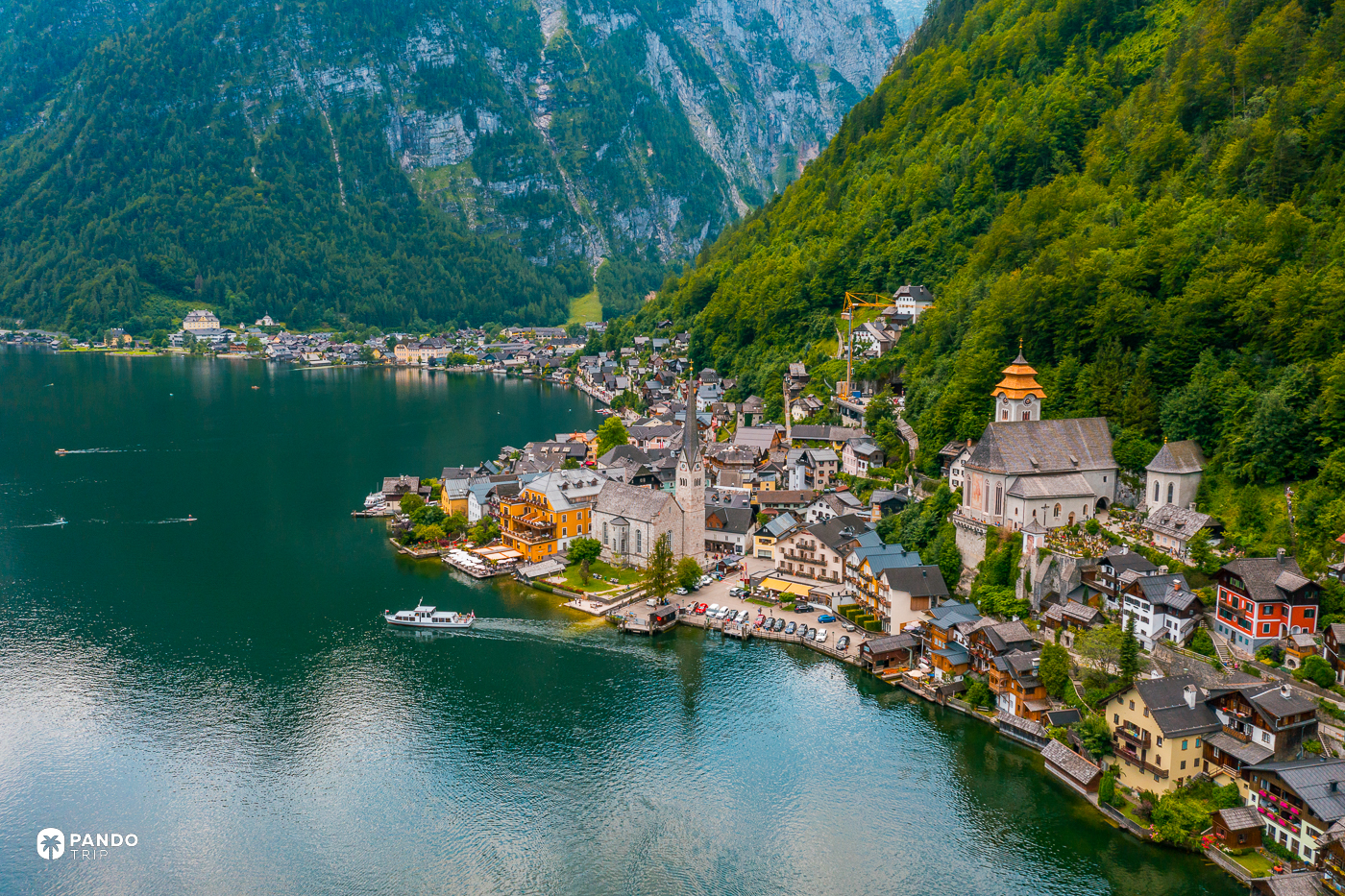
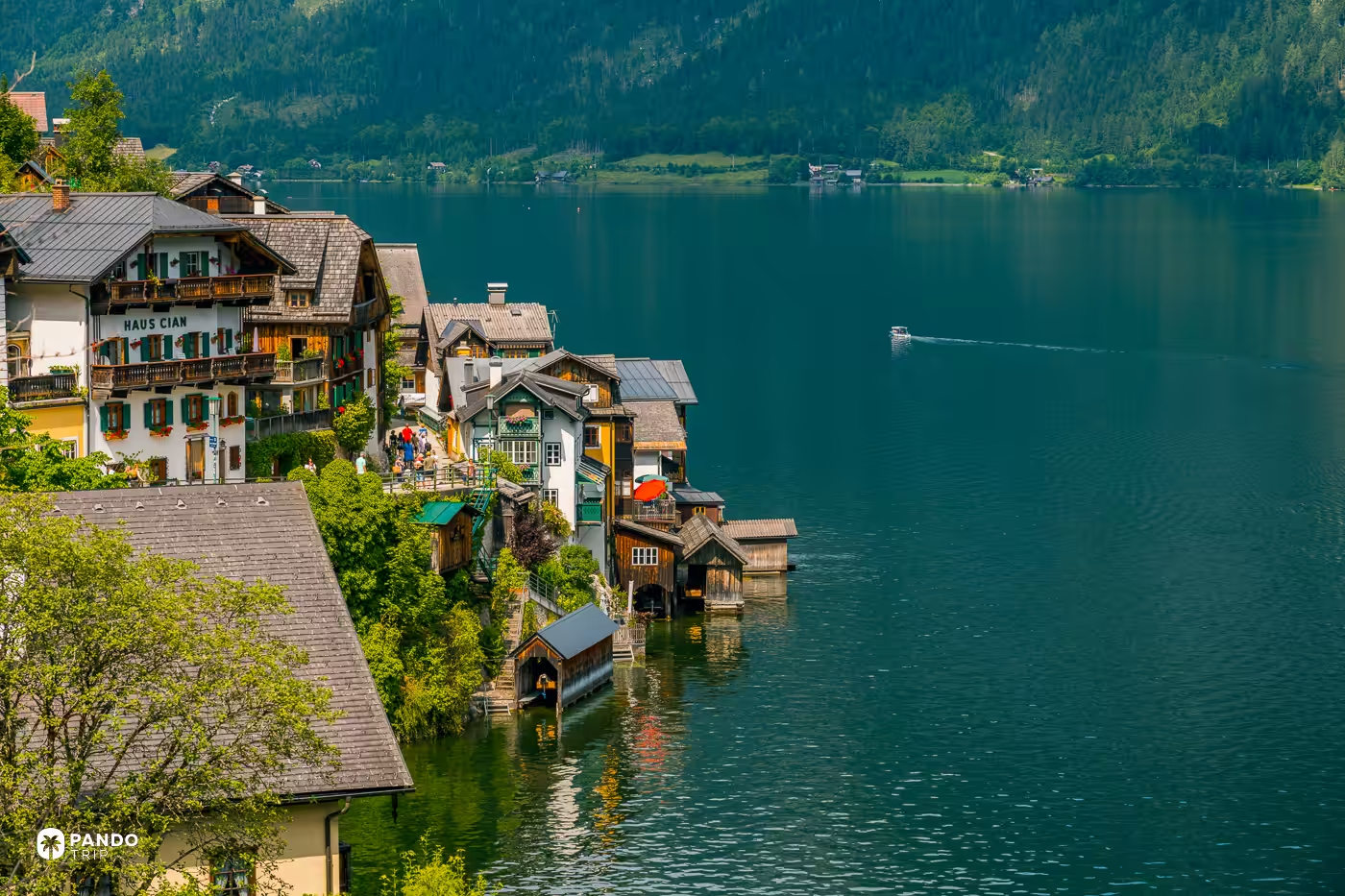
Hallstatt has nowhere to put its dead. The village has been mining salt here for seven thousand years and is pinched between a cliff and the lake we have written about before, so the graveyard cannot grow: bones were dug up after ten or fifteen years, cleaned, bleached in the sun and carried into the charnel house under St Michael’s chapel. From 1720 the skulls were painted with the family’s flowers, the name and the date of death. There are 1,200 of them in there now, 610 of them painted, sorted by family. The last one arrived in 1995: a woman who had died in 1983 and had asked for it.
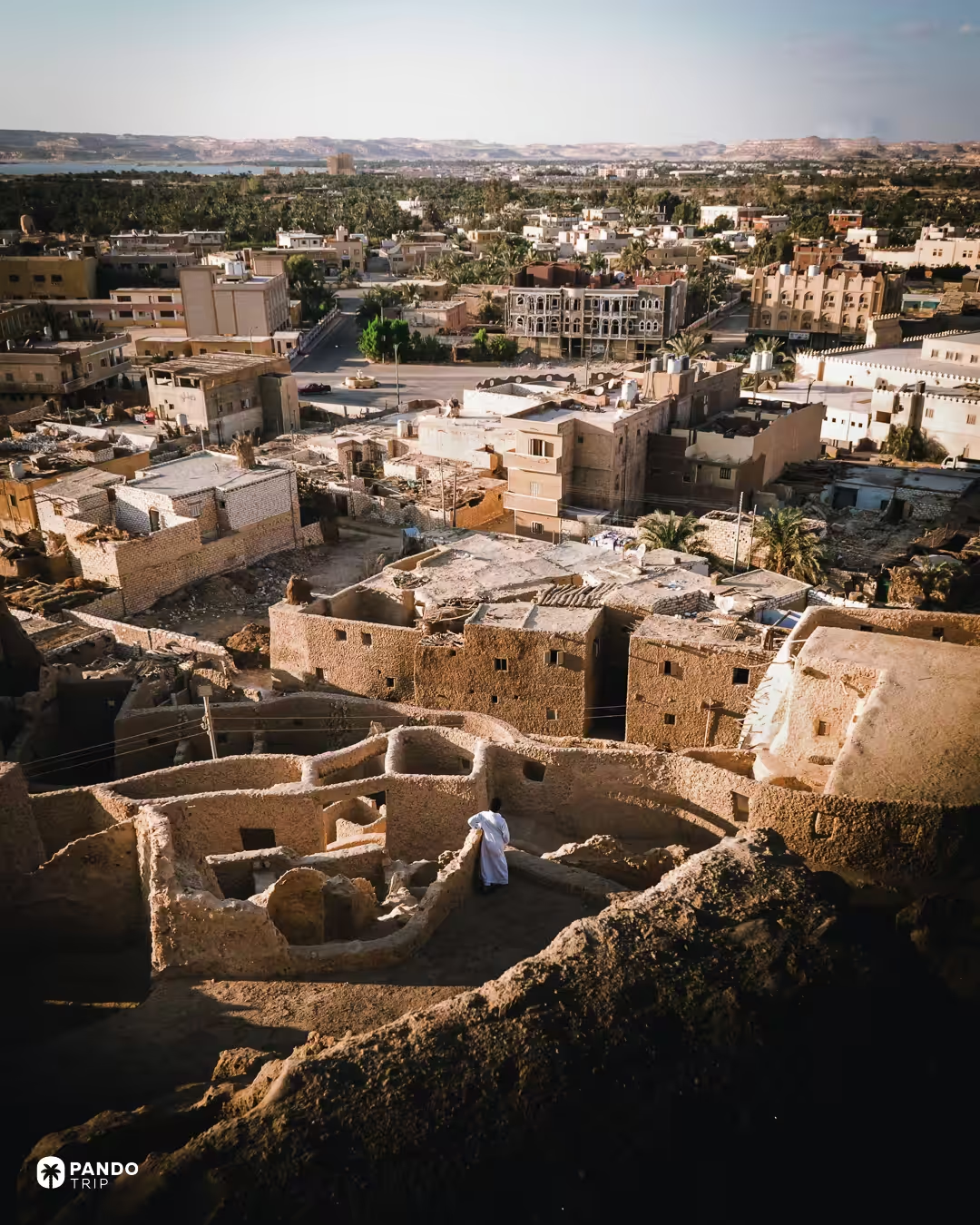
Siwa Oasis, Egypt — the oracle is 2,600 years old, the fortress is not
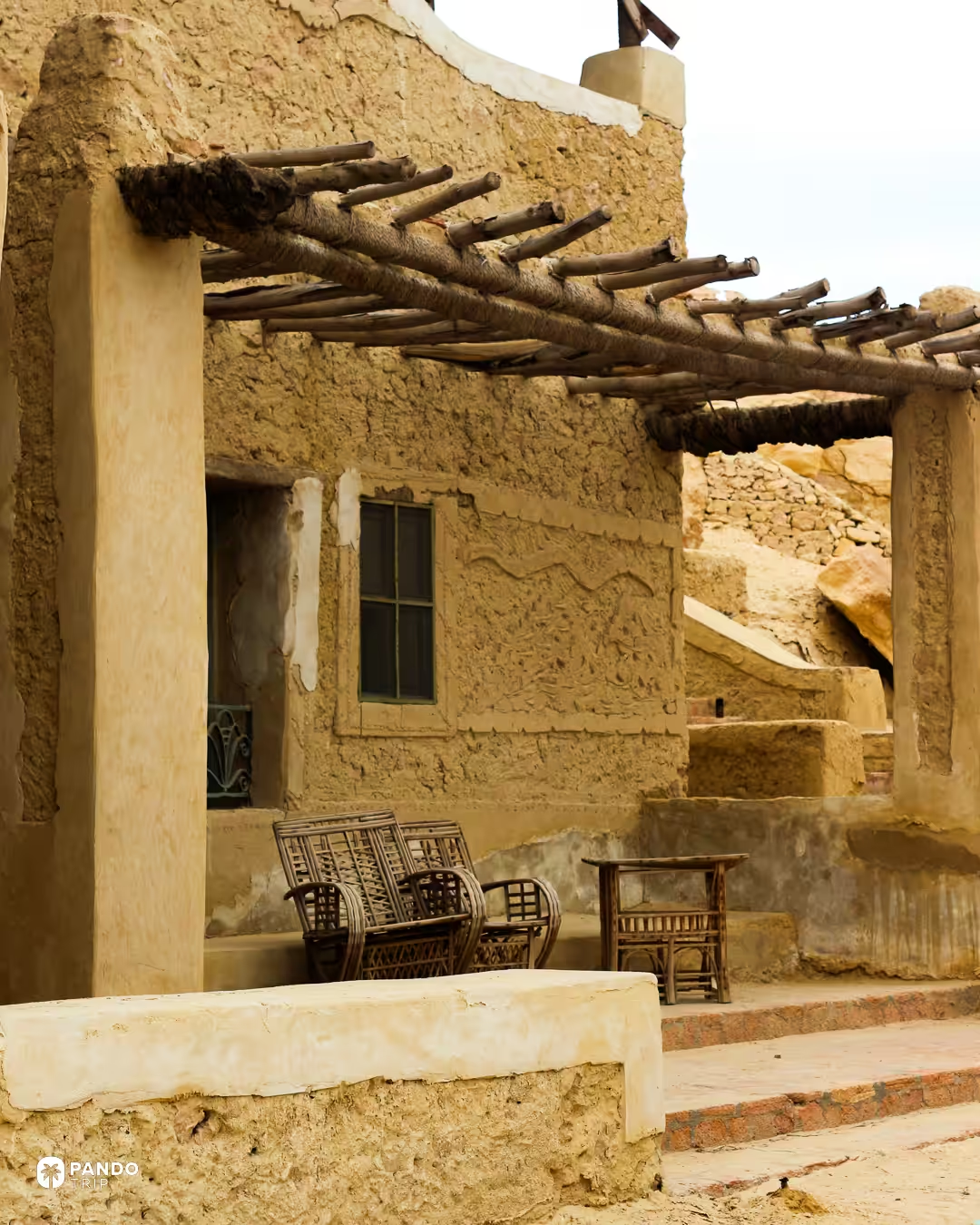
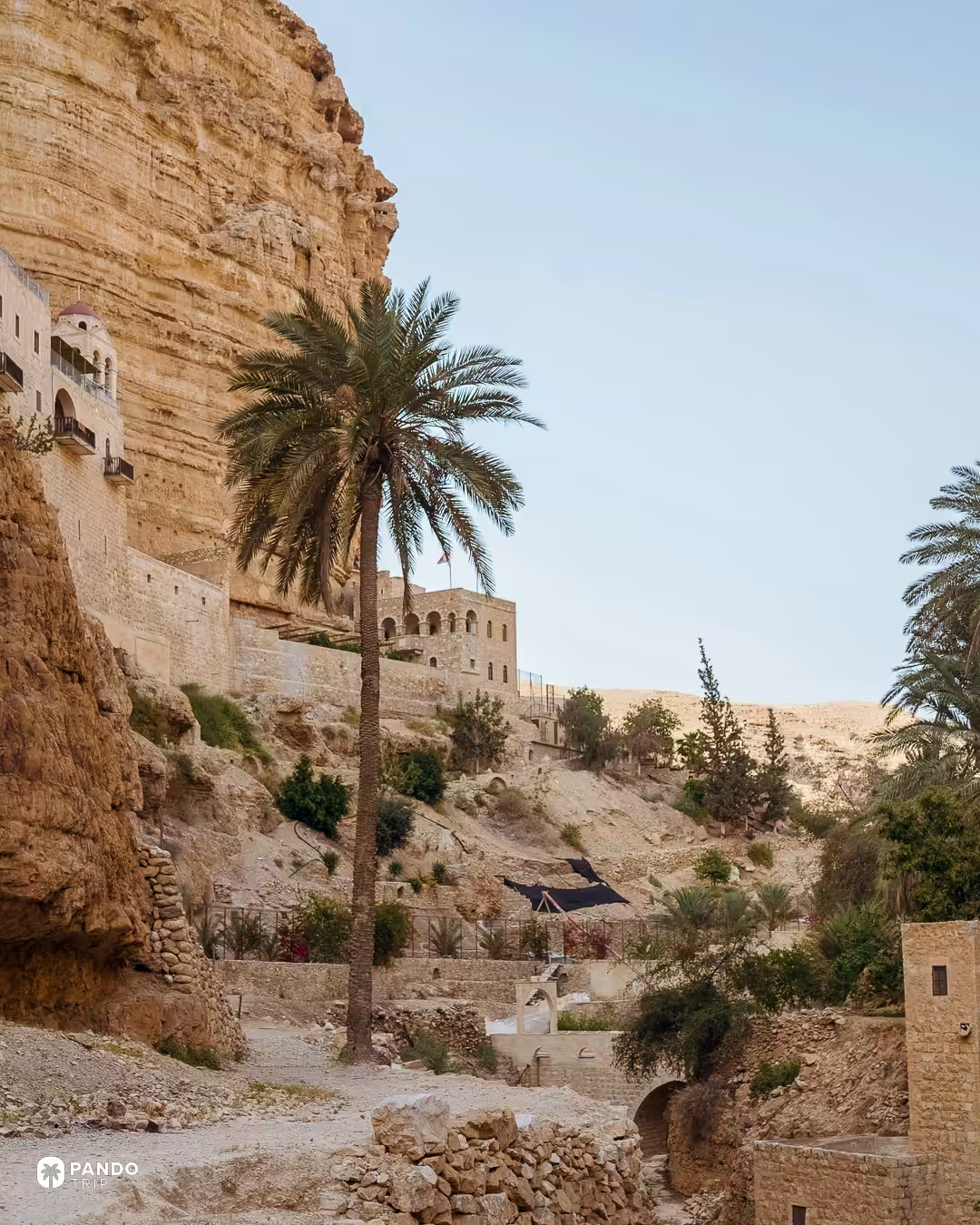
Shali is built of kershif — mud dug from the salt lakes, which sets like cement and, in rain, does what mud does. Three days of unseasonal downpour in 1926 dissolved most of the fortress, which is why the thing you photograph is a range of melted towers standing orange above the palm groves with the modern roofs at their feet. The old part of Siwa is somewhere else and much older: the Temple of the Oracle of Amun at Aghurmi, sixth century BC, the one Alexander crossed the desert to consult in 331. The community moved a few kilometres and kept going. Shali Lodge is built of kershif too, in a palm grove under the ruin.
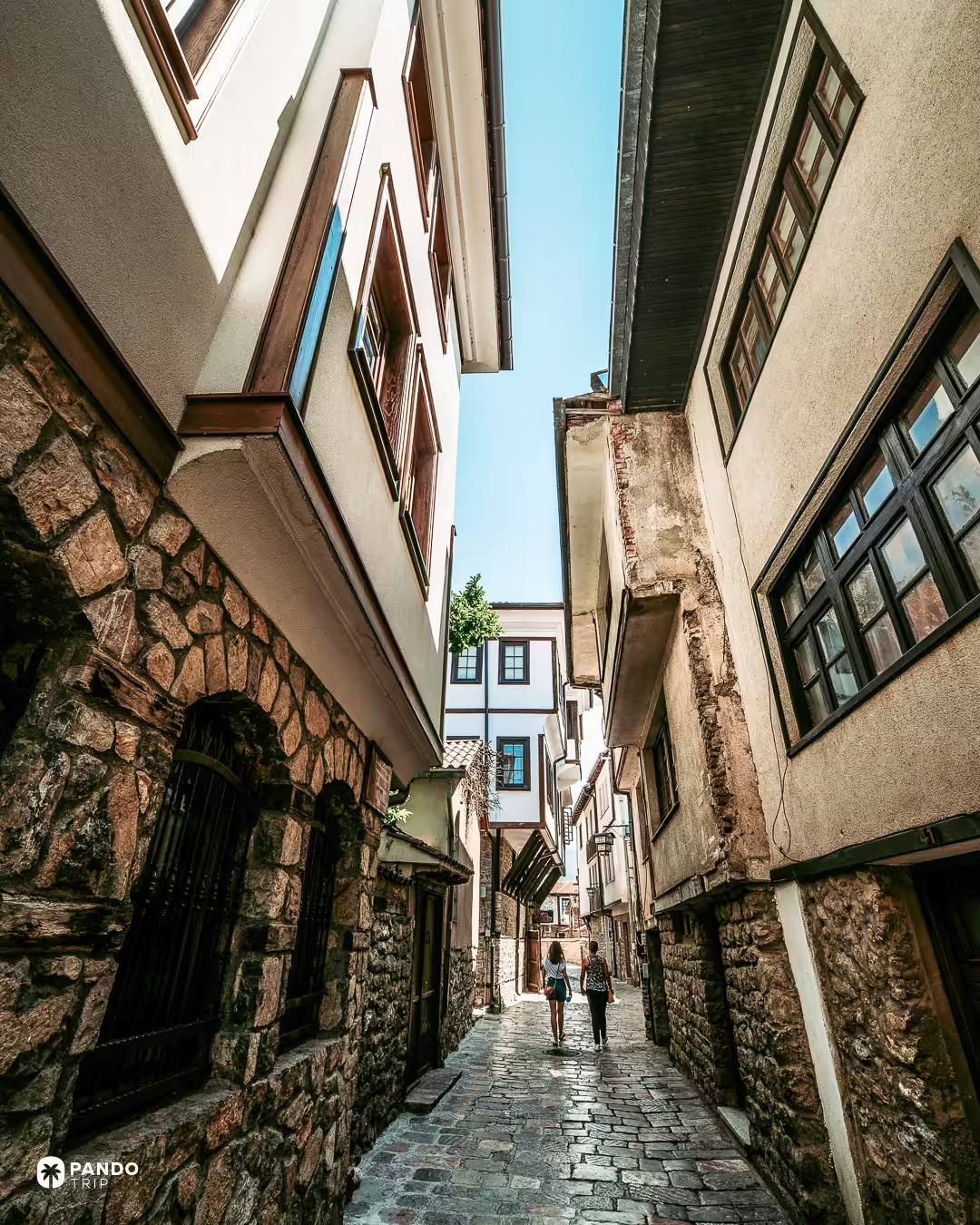
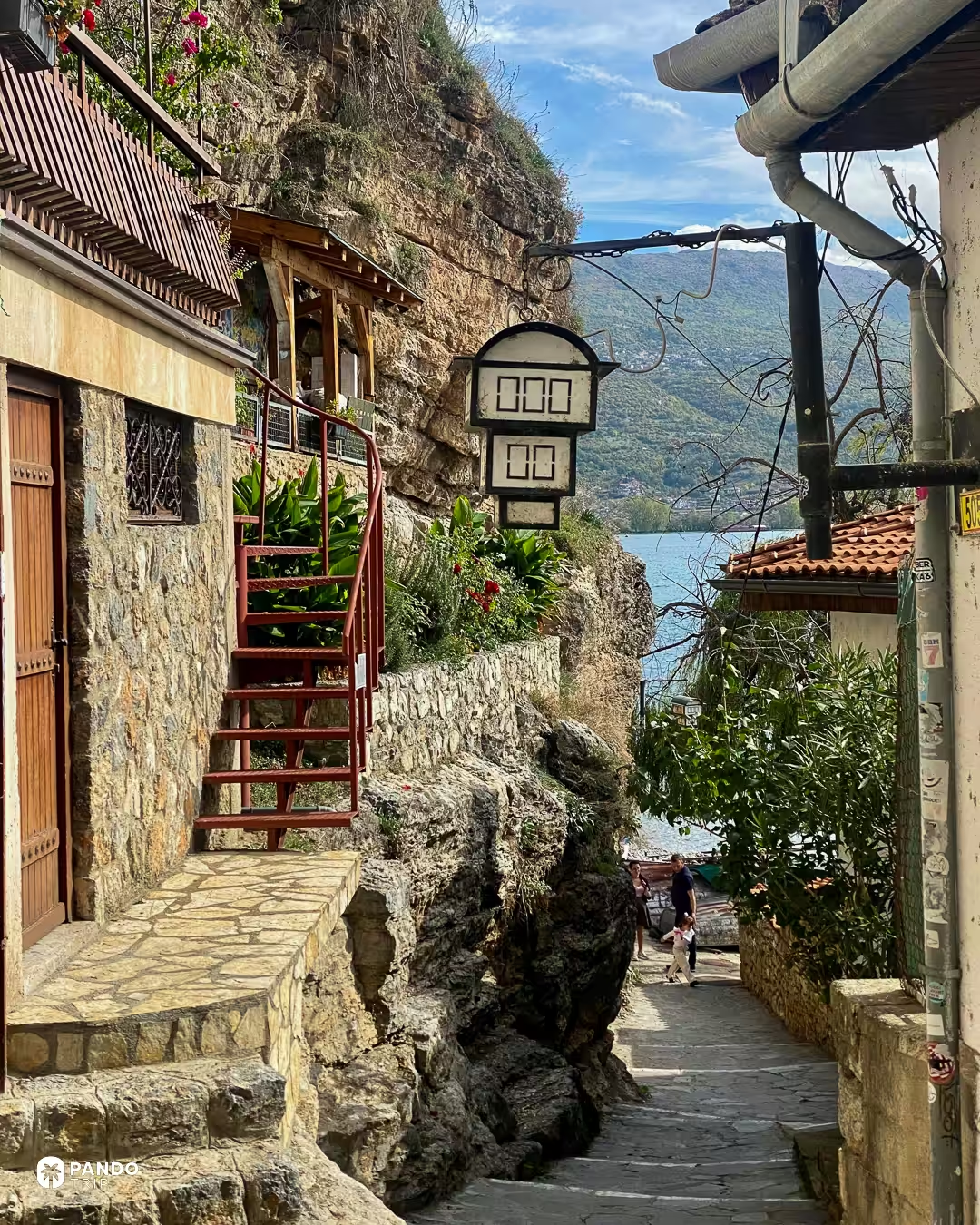
Ohrid, North Macedonia — the written record goes quiet for 350 years
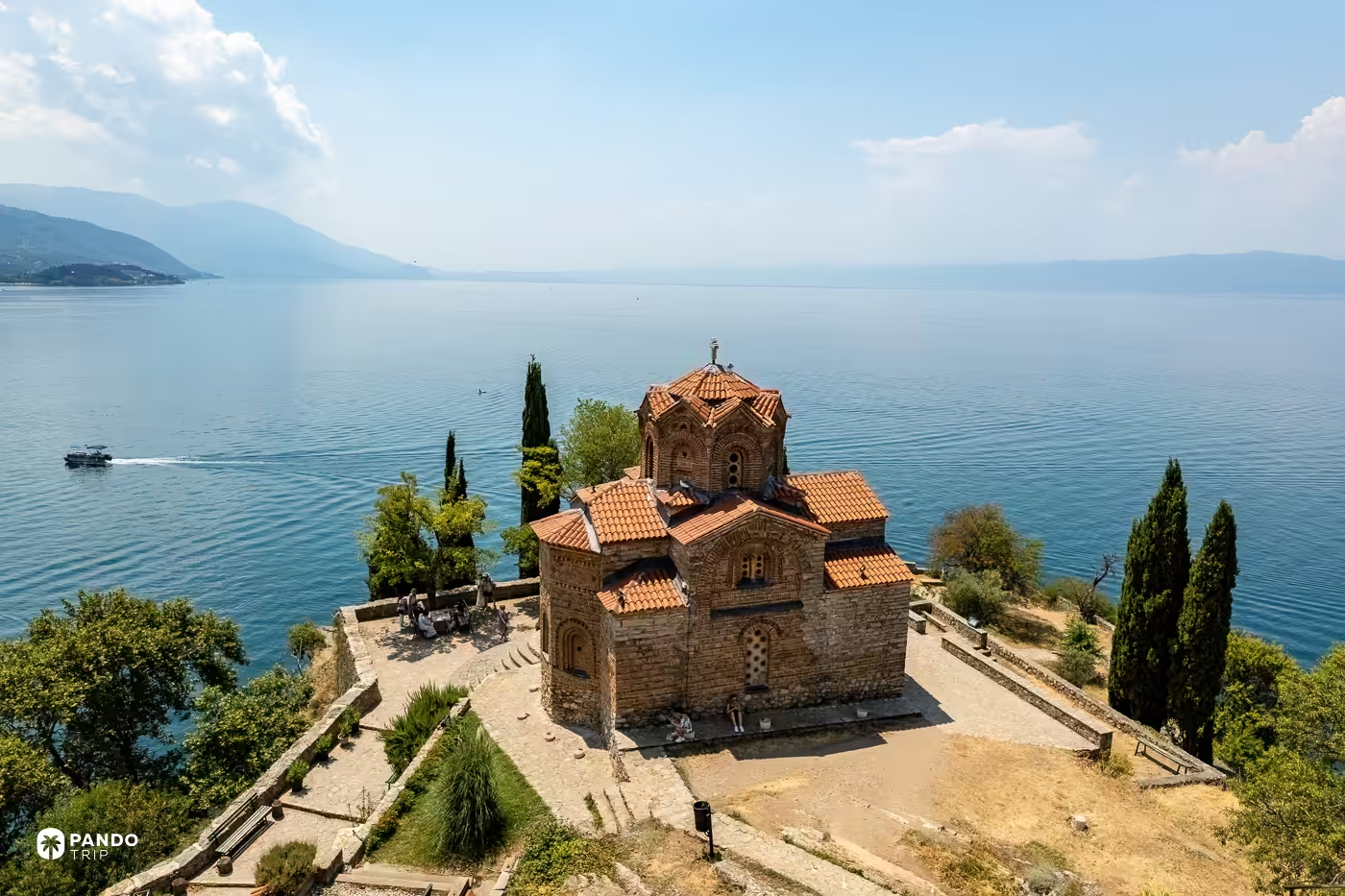
The theatre cut into this hillside at the end of the third century BC still has a programme. Every July and August the Ohrid Summer Festival puts about 1,600 people back on its stone tiers, which makes it a Hellenistic building doing the job it was cut for. What has changed is everything around it. The municipality has logged 869 illegal buildings between 2006 and 2024, and UNESCO has now twice voted against moving Ohrid onto its danger list, most recently in July 2026. The theatre will outlast the argument. Villa Kale is up in the old town among the stone-and-timber houses.
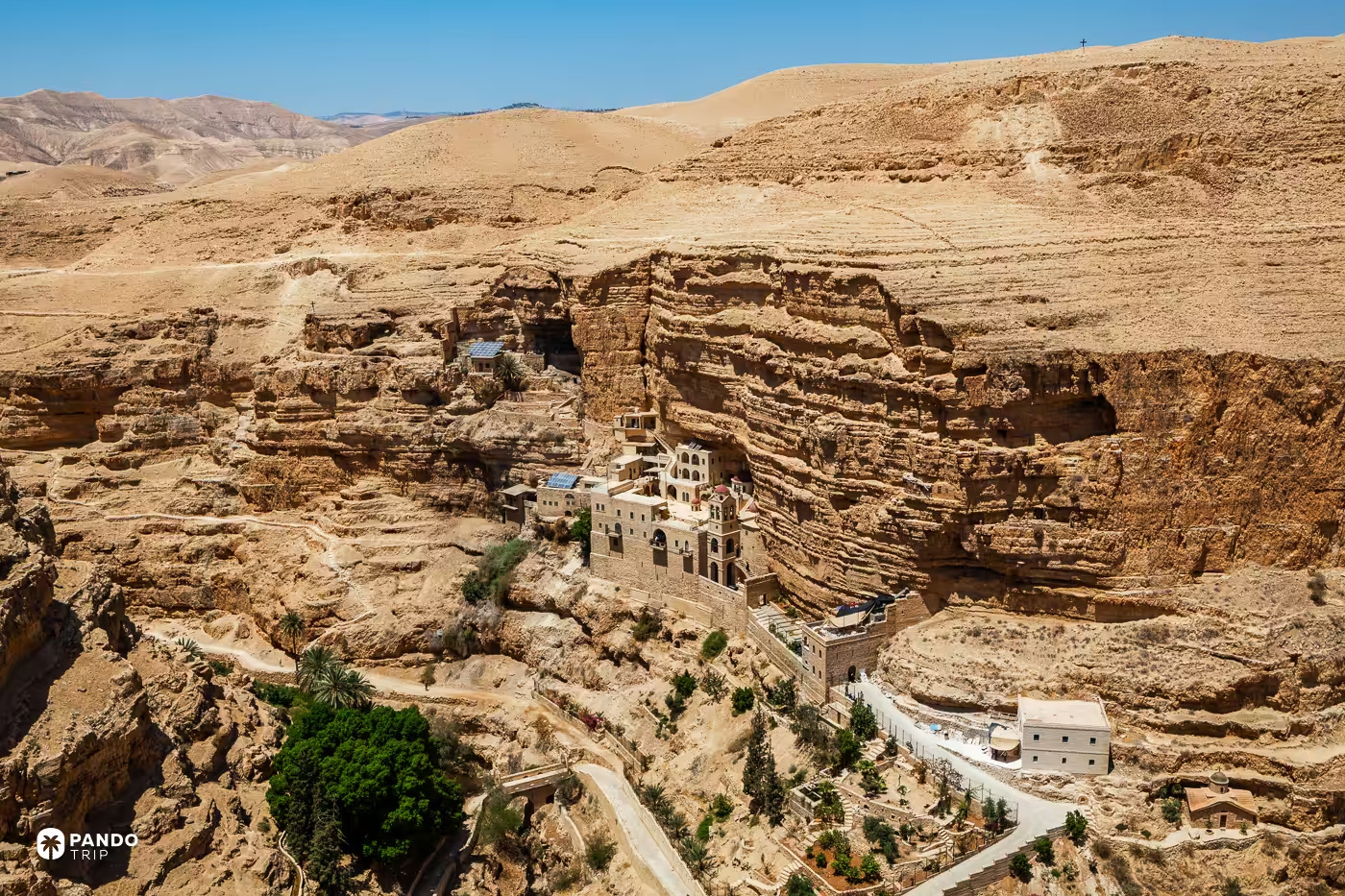
Jericho, Palestine — about 2,900 years, if you insist on “continuously”
You will read that Jericho is eleven thousand years old. The tell’s earliest layers do run to roughly 9600 BC, and the Neolithic tower dug out of them stands 8.5 metres, which is a startling thing to find anywhere. But Kathleen Kenyon’s stratigraphy showed the Late Bronze Age left almost nothing here, and there is no occupation level between the collapsed wall and reoccupation in the ninth century BC. Applied strictly, the rule makes Jericho about 2,900 years old, which still puts it near the top of this list. Go in winter; the Jordan Valley is unusable from May to September. The tower stands about 250 metres below sea level, with the modern town’s rooftops and palms directly behind it.
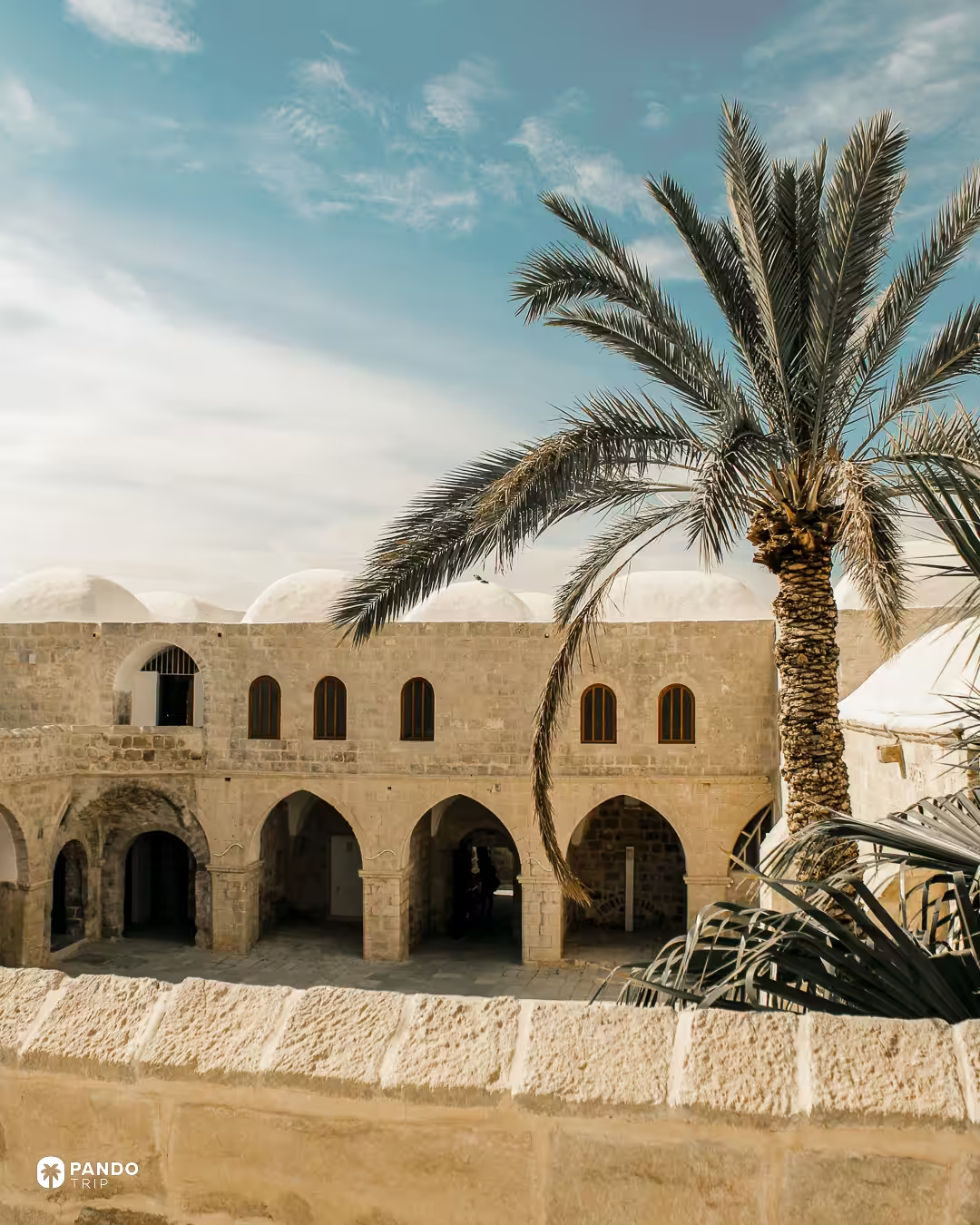
Cádiz, Spain — a contender for the oldest city in western Europe, on the archaeology
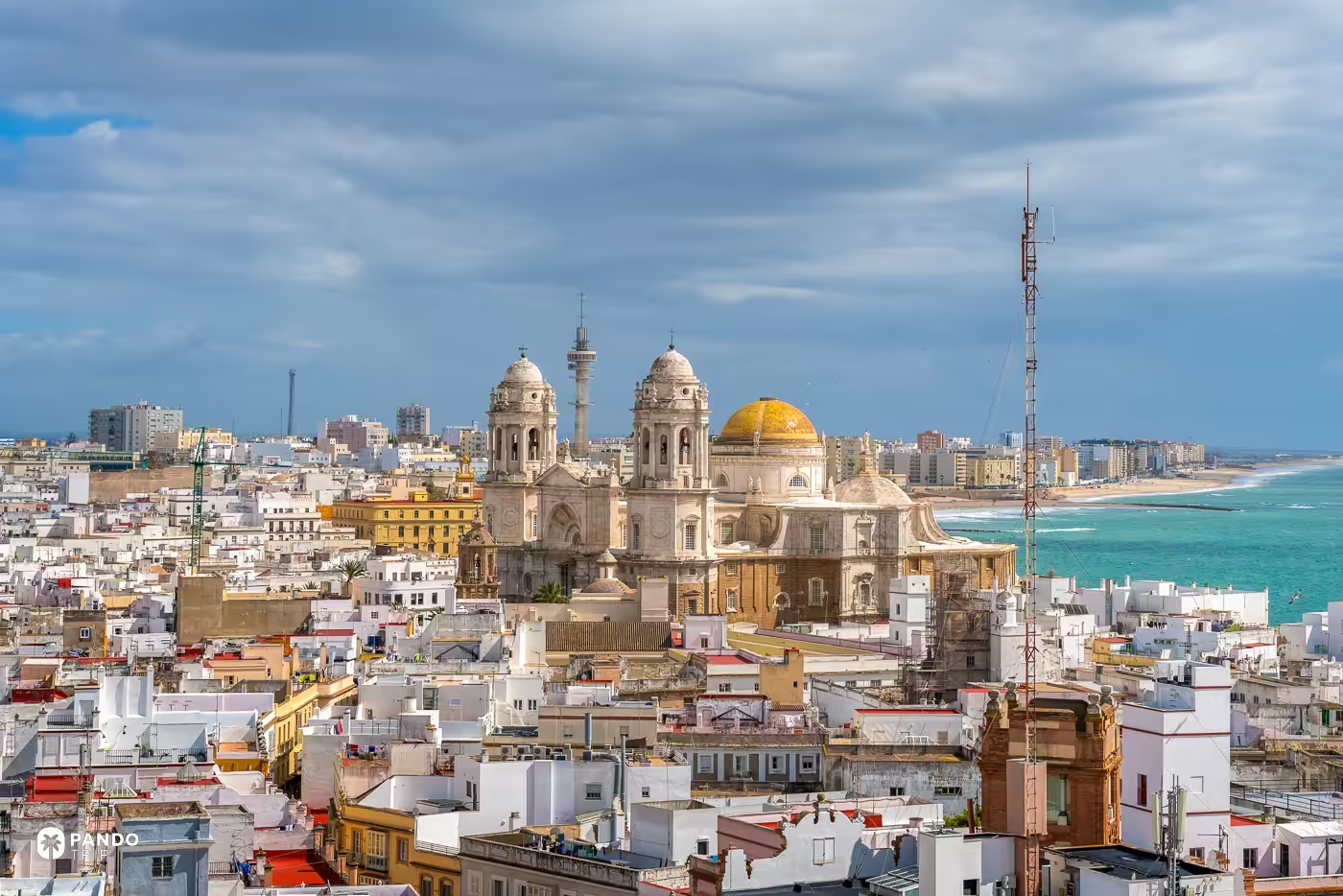
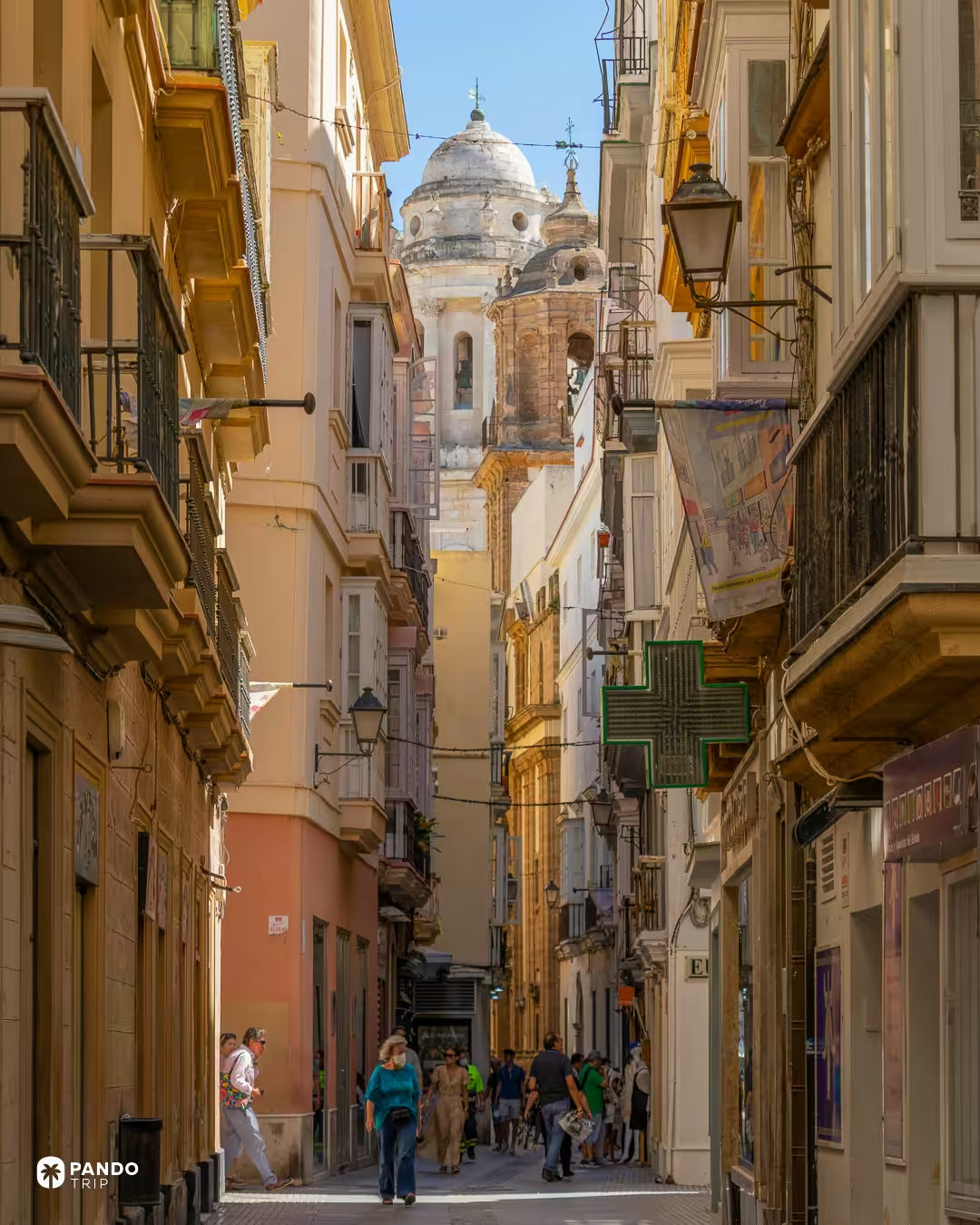
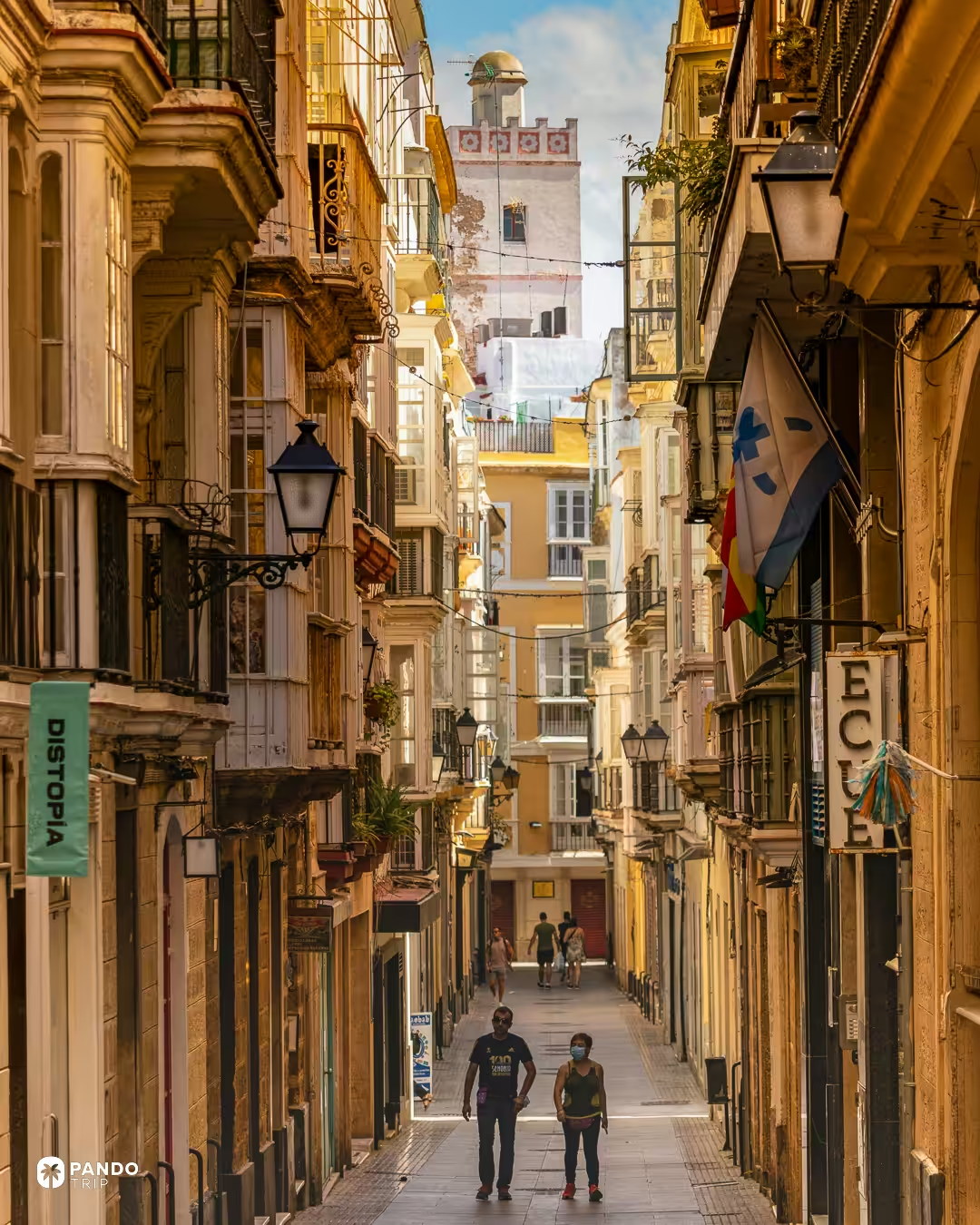
Under a puppet theatre in the El Pópulo quarter, beneath a modern block of flats, there is a Phoenician street: eight houses on two terraces around two paved lanes, occupied from roughly 820 BC, and you walk over them on a glass floor. Entry is free and needs booking a day ahead. The visit is told through Mattan, a Phoenician man who died in a fire here in the sixth century BC and whose remains came out of this ground. The legend has Cádiz founded in 1104 BC, eighty years after Troy fell; that comes from Velleius Paterculus, writing a millennium later, and the excavated date is a couple of centuries after his and a great deal more solid. Either way, only Huelva up the coast claims to have got here first.
The beautiful ones the rule turns away
Lijiang, Bhaktapur and Shirakawa-gō are all younger than the rule allows: 1253, the twelfth century, and gasshō farmhouses mostly raised in the seventeen and eighteen hundreds. UNESCO’s own citation for Aït Ben Haddou is blunter still — the oldest constructions there “do not appear to be earlier than the 17th century”. And Çatalhöyük fails the other half of the rule altogether: occupied from 7100 BC, abandoned by 5700, nobody home since.
Of the fifteen we would go to Matera, where the caves empty a little further every year and the best bed on the list is one of them. The one to skip is Pingyao — the wall is extraordinary, and the town inside it has been thinned to a plan.
The ones that would pass without an argument are the ones your government tells you not to go to. Damascus has been inhabited since about 2500 BC. Aleppo’s claim runs to 5000 BC. Shibam’s mud towers are up to eleven storeys of sixteenth-century high-rise. All three sit at Level 4, Do Not Travel, and Shibam is on the World Heritage in Danger list. Which is the honest answer to the oldest-town question: probably one you are told not to go and see.